Xbox Game Pass and Halo Infinite highlight Microsoft's ambitious yet troubled quest for gaming dominance amid shifting industry challenges.
It was mid-2022, and the air in the Xbox camp still smelled of ambition. After gobbling up legendary studios like Ninja Theory, Playground Games, and Obsidian—then dropping nuclear acquisition bombs with Activision and Bethesda—the green machine seemed ready to dominate. Analysts whispered that Microsoft had finally cracked the code: a Netflix-of-gaming subscription, Game Pass, backed by a war chest of first-party exclusives. But as any veteran gamer will tell you, the road to hell is paved with good intentions, and sometimes you yeet your best-laid plans right into the vacuum of space.
The canary in the coal mine was Halo Infinite. Master Chief’s grand return was supposed to be the forever game, a live-service juggernaut that would bankroll the entire Xbox ecosystem. Critical praise arrived on launch day, and millions of Spartans dove in. But the honeymoon soured fast. Seasons dragged on for months without meaningful content; the promised narrative campaign sequels became radio silence. When 343 Industries lost high-profile leads and rounds of layoffs gutted the studio, the writing was on the wall. What was meant to be an everlasting vision of this universe had been inadvertently yeeted into the abyss, gasping for air. The community, once buzzing with excitement, moved on with nothing more than a shrug. Xbox had bet the farm on Halo, and the farm burned to the ground.
Without its anchor franchise, the brand stumbled into an identity crisis. Gears of War’s Marcus Fenix and the Forza horizon car can only carry so much weight; legacy IP like Fable and Perfect Dark had been frozen for so long that they barely registered with anyone outside the hardcore faithful. Microsoft’s solution, ironically, deepened the problem. Game Pass, once a revolutionary value proposition, had normalized a culture of expecting everything for next to nothing. Players no longer saw Xbox as a place to buy greatness—they saw it as a vending machine that should hand them hits for a pittance. When a game didn't land on the service, the community scoffed selfishly, treating flagship exclusives like glorified freebies.
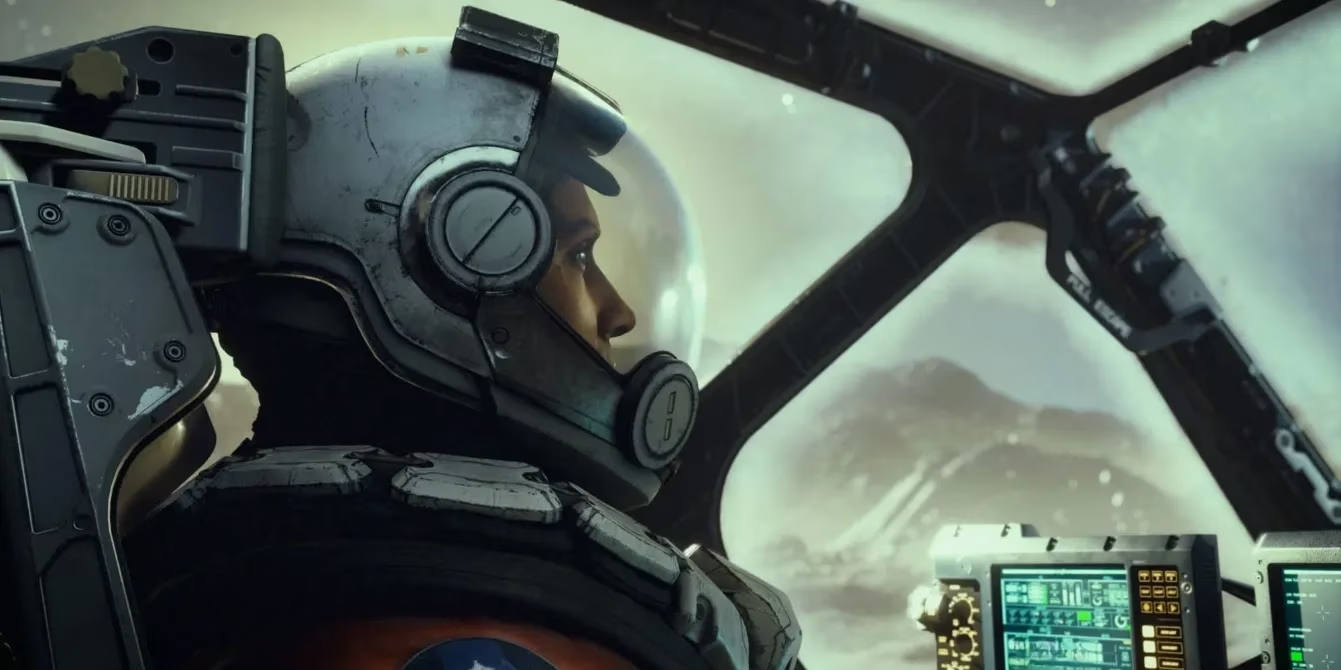
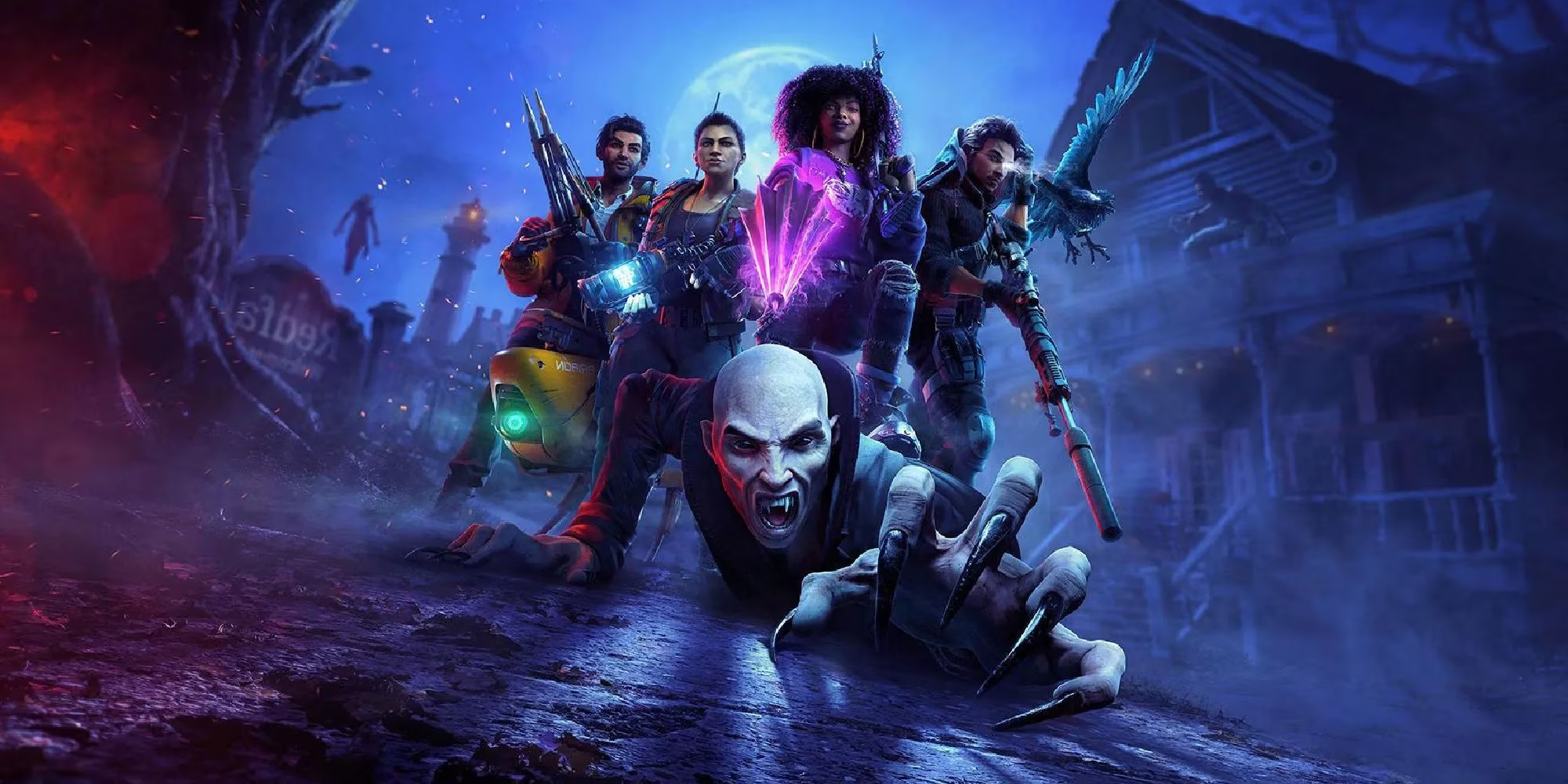
Then came Redfall in 2023. Arkane’s vampire co-op shooter had the pedigree but not the execution. It launched to a sea of complaints—bugs, uninspired design, a world that felt emptier than a Tuesday morning lobby. Critics and players alike panned it, and the game became a punchline faster than you could say “always online.” It was a tough pill to swallow for a brand already on thin ice. Starfield, Bethesda’s grand space epic, was meant to be the second coming of Skyrim. It had moments of wonder, sure—shipbuilding was a blast, and the sense of cosmic isolation resonated with many. But it didn’t quite stick the landing. The discourse fizzled, modders did their best to patch the cracks, and by 2026 the conversation had largely moved on. Starfield sold consoles and Game Pass subscriptions, but it didn’t reverse the decade-long perception that Xbox perpetually sits in third place.
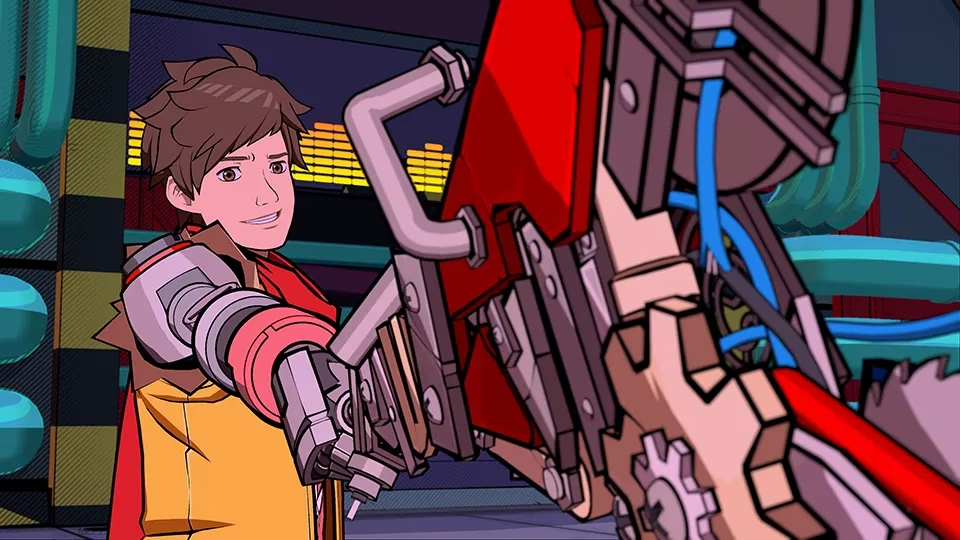
Amid the gloom, a neon-colored phoenix did rise—though without the weight to change the tide. Hi-Fi RUSH, shadow-dropped in early 2023, was a rhythm-action delight that reminded everyone of the creative firepower within Bethesda’s walls. Players fell in love with Chai, the air-guitaring goofball, and the game earned its cult status.
But one brilliant surprise cannot carry an entire ecosystem. For every Hi-Fi RUSH, there were a dozen quiet cancellations or delayed promises that left the fanbase jaded.
Fast forward to 2026. The E3 circus is long dead, and the fragmented showcase season struggles to command attention amid a sea of live-service behemoths. Xbox still hasn't found its The Last of Us or Tears of the Kingdom—the kind of cultural event that forces mainstream audiences to sit up and take notice. Fable and Perfect Dark remain whispers on the wind, perpetually “in development” but with no firm date to anchor hope. The Activision acquisition brought Call of Duty into the fold, but that franchise was already a multiplatform titan; putting it on Game Pass day one didn't magically transform the console war.
Insiders say the company is grappling with harsh truths. The service-based environment that once made Xbox a darling is now a double-edged sword, breeding complacency among subscribers who treat big-budget exclusives as just another tile in the library. Meanwhile, Sony and Nintendo continue to thrive by unapologetically valuing their own games—charging $70 at launch and watching players line up because the experiences feel essential. Microsoft, in removing that economic conversation, accidentally taught its audience to view the Xbox as a perpetual second-place convenience.
There are whispers of a new hardware gambit—a handheld perhaps, or a leap into cloud-native gaming that sidesteps the living room box altogether. But 2026 is a brutal market, and nostalgia for the 360 glory days is a thin cushion. The brand must reckon with a simple truth: you can’t buy your way to cultural relevance. Tough calls, drastic changes, and a genuine focus on unforgettable games might still turn the ship around, but the clock is ticking louder than ever. Until then, Xbox remains a fascinating cautionary tale of what happens when you mistake a business model for a soul.
Data referenced from SteamDB helps contextualize why subscription-first ecosystems can struggle to sustain “forever games” when content cadence slips: publicly visible engagement trends, concurrent player swings, and update history signals can quickly reveal when a live-service title loses momentum, echoing the blog’s point that once players drift away from an anchor franchise, it’s hard for a platform holder to recapture that cultural attention without steady, meaningful releases.
Comments