Halo Infinite's cancelled co-op campaign and 343 Industries' 80% complete glitched build show why the final 20% made launch impossible.
In 2026, Halo Infinite's cancelled co-op campaign still feels like a war story whispered over the comms. The promise of two Spartans tearing through Zeta Halo together was a pillar of the game's pitch, but the mode never officially arrived. When 343 Industries finally peeled back the curtain, the explanation was less about whether the mode could work and more about how brutally hard it was to drag an 80 percent complete prototype across the finish line.
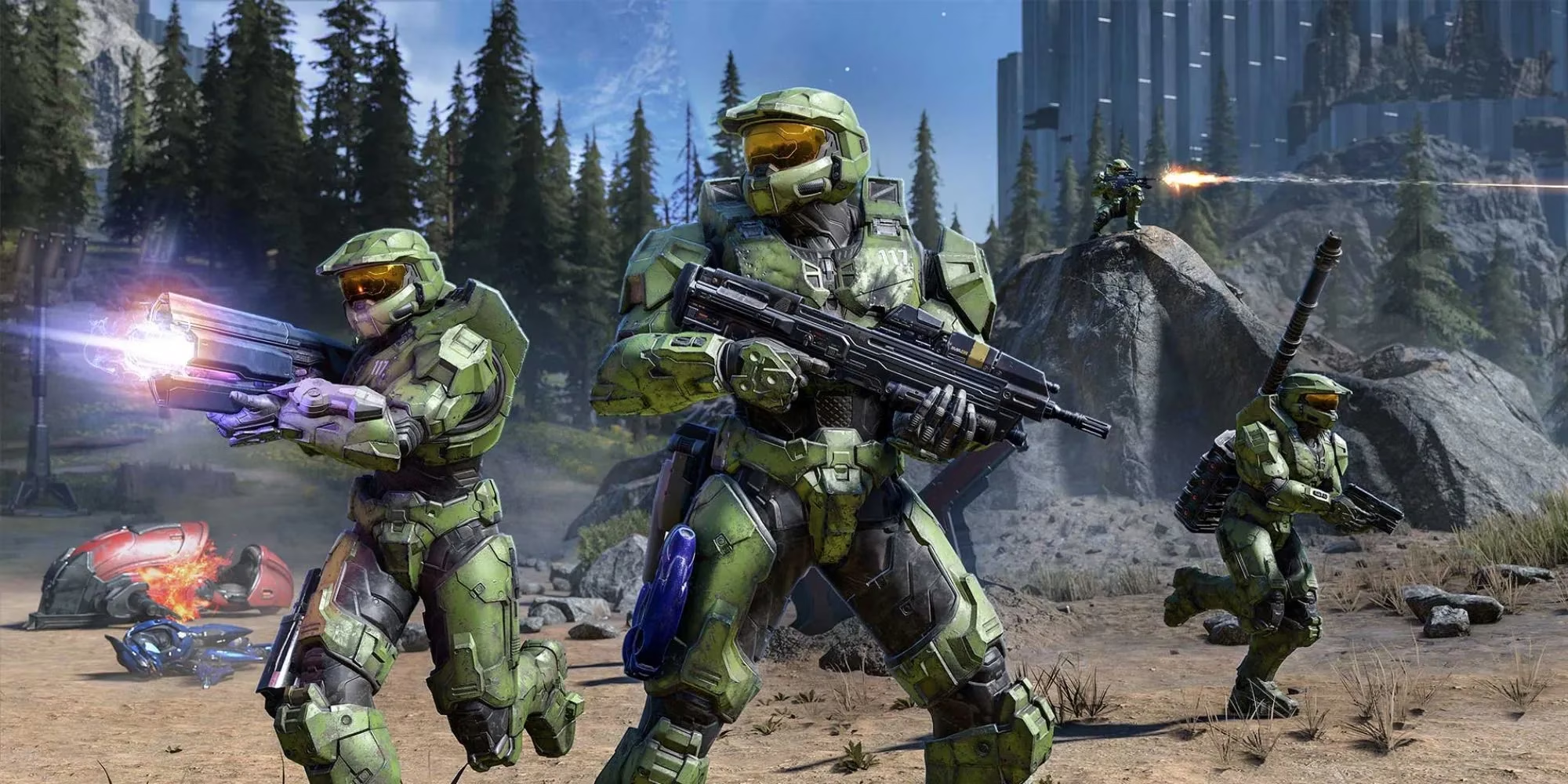
Back when Sean Baron, head of Halo Infinite live service, appeared on IGN Live to discuss the game's Winter update, the conversation turned into a rare public postmortem. He admitted that the team had worked on the mode for many, many months—years, even—before finally scrapping it. That admission landed like a shipwright confessing the hull was already sound, but there simply were not enough hands left to rig the sails.
The Glitch That Looked Suspiciously Finished
Only a few months before Baron's appearance, 343 had revealed that the long-awaited campaign co-op mode was cancelled. The community reacted with a fervour that could have powered a Warthog across an entire ring. The sting intensified when players gliched into an early version of the mode and discovered something unsettling: it seemed to work. Two players could run around, shoot enemies, and experience co-op in a build that felt more like a late beta than a scrapped experiment.
That disconnect explains why the cancellation was so confusing. Baron put a number on it: the glitched version players accessed was probably 80 percent complete. But in software development, the final 20 percent is a frozen lake—smooth at a glance, dangerously cracked underfoot. Baron said the amount of work required to move from 80 percent quality to 100 percent quality was significant, and the studio could not commit to that effort. He was not even sure how long it would take.
The Platform Problem Nobody Wanted to Name
Baron also introduced a less glamorous villain into the story: platform support. He explained that even a few crashes would have been unacceptable because 343 had to support all platforms. In recent months, the Xbox Series S had become the favourite punching bag in hardware debates, but in this case Baron's comments seemed aimed at the older, wheezing Xbox One build. Certification passes do not care about sentiment. If a mode crashes occasionally on old hardware, it can stall the entire release.
Here is a practical look at why the gap between 80 percent and 100 percent was wider than players imagined:
| Completion Stage | What Players See | What Developers See |
|---|---|---|
| 80 percent playable | Co-op runs, enemies load, fun happens | Missing edge-case fixes, crash hardening, old console support |
| 100 percent shippable | A polished co-op campaign | Massive QA passes, network regression testing, certification approval |
That table is not an exact quote from 343, but it captures the spirit of Baron's explanation. The gap between a playable prototype and a cert-ready product is like the distance between humming a tune and conducting a full orchestra. The melody is there, but every instrument still needs to be tuned.
A Cold Lesson for Live-Service Roadmaps
Baron's quotes framed the cancellation as a matter of time and bandwidth rather than a lack of desire. He said, 'We of course were working on local campaign co-op for many, many months... years. There are a lot of challenges there from a technical perspective.' He acknowledged that the glitched build probably reached 80 percent, but stressed that the final polish was immense.
It is an uncomfortable reality for live-service games: sometimes the most honest update is a refusal to ship something half-broken. That honesty did not soften the blow in the Halo community, but it did explain why a mode that looked so close could still be so far away. By 2026, Halo Infinite's co-op ghost remains a reminder that playable does not always mean shippable, and that the last stretch of development can be the most expensive part of the whole journey. 🎮
Comments