Halo Infinite's catastrophic decline, from 250k to 3.3k players, stems from 343 Industries' misguided priorities on battle passes over core content, neglecting the casual community and the franchise's vibrant soul.
As a lifelong gamer who practically grew up with an Xbox controller in my hand, I witnessed what I call the golden era of Xbox firsthand. Back then, the hype around Xbox exclusives was REAL. The air was electric when Halo 3 dropped, and that energy didn't fade until Halo Reach came along to take the torch. I devoured every second of those games. They weren't just titles you played; they were events, community hubs, a part of your identity. So, when the reins passed from Bungie to 343 Industries, I wasn't too worried. I mean, come on, it's Microsoft! They have all the resources in the world. How could they possibly mess up Halo?
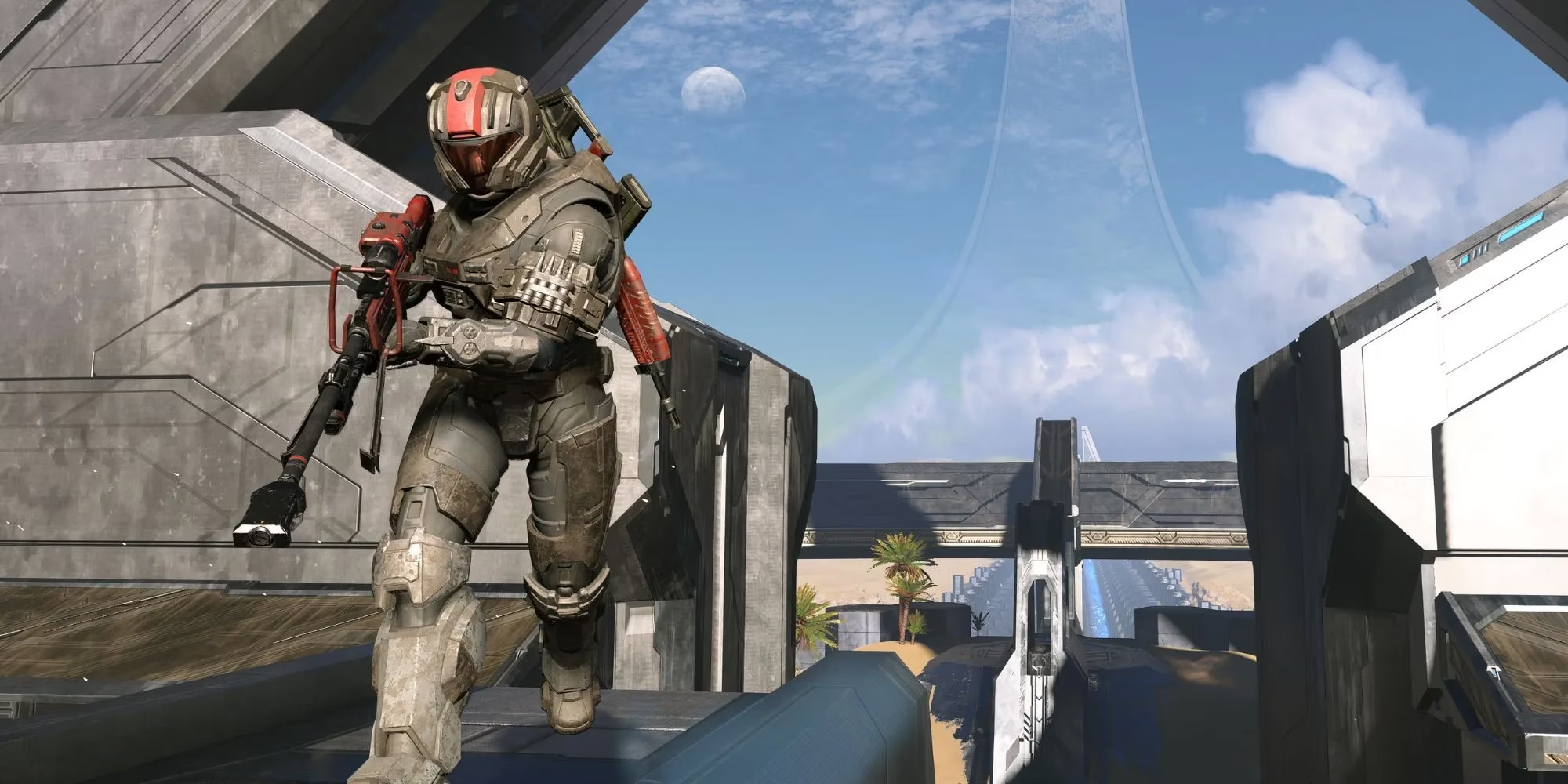
Well, Halo 4 and Halo 5: Guardians answered that question for me. They just... didn't grip me. The story of the Master Chief had a perfect ending in Halo 3. Bringing him back felt forced, almost like a betrayal of that iconic conclusion. Gotta give credit where it's due, though. 343's one undeniable win is the Master Chief Collection. It's an incredible, polished package of the classics. Honestly, that's where I spend 90% of my Halo time in 2026. It's a testament to what was, and a painful reminder of what could have been with the new stuff.
Let's talk about Halo Infinite. Man, the hype at release was something else. The multiplayer beta felt buttery smooth, and they promised a campaign with couch co-op "soon." That promise hit me right in the nostalgia. My brother and I spent countless childhood hours glued to the screen playing Halo together. We were ready to recapture that magic. Of course, we all know how that went. Couch co-op got the axe—another casualty of Infinite's famously fractured development. A huge bummer, but not a deal-breaker on its own.
I was genuinely enjoying the multiplayer at first. The core gameplay? It's genuinely fantastic. The grapple hook is a blast. But something felt... off. The playlists felt barren. Empty. The whole vibe had shifted. It felt like Halo's soul had been surgically removed and replaced with a focus on the hyper-competitive scene. Where was the fun? The chaos? The vigor? It was like nobody at the studio was truly invested in the experience of playing the game.
This is where I put on my nostalgia-tinted glasses, but hear me out. When Halo 3 launched, there was a BUZZ. A genuine cultural moment. The energy was palpable, and it lasted for YEARS. Halo Infinite had that chance. It peaked at 250,000 concurrent players on Steam alone at launch! That's a massive player base waiting to be nurtured. But 343 completely fumbled it. As of 2026, it's averaging a pathetic 3.3k concurrent players on Steam. That's a catastrophic drop. Why? Because they prioritized all the wrong things.
-
Battle Passes & Cosmetics Over Content: Every season is just a new grind for armor coatings nobody asked for.
-
Neglecting the Casual Community: The focus is all on ranked play and esports, leaving the fun, social players behind.
-
Piecemeal Release: The game launched incomplete. Forge mode took a YEAR. A proper custom game browser took even longer. The menus at launch were a barren wasteland.
Let me paint a picture of why Halo 3 worked so well. It wasn't just about strong gameplay (which it had). It was a community playground.
Your average day on Halo 3 in 2008 went like this: Hop into a few public matches. Get a random invite from someone you just played with. Suddenly, you're spending the next six hours in a custom game of Cops-and-Robbers or Fat Kid with a bunch of hilarious randoms on Xbox Live. Bungie fostered this. They featured user-created maps on their website. They released Map Packs that were events, with new achievements and hidden secrets (like the Sandbox Skull!). There was a constant, organic conversation between the developers and the players. Passion flowed both ways.
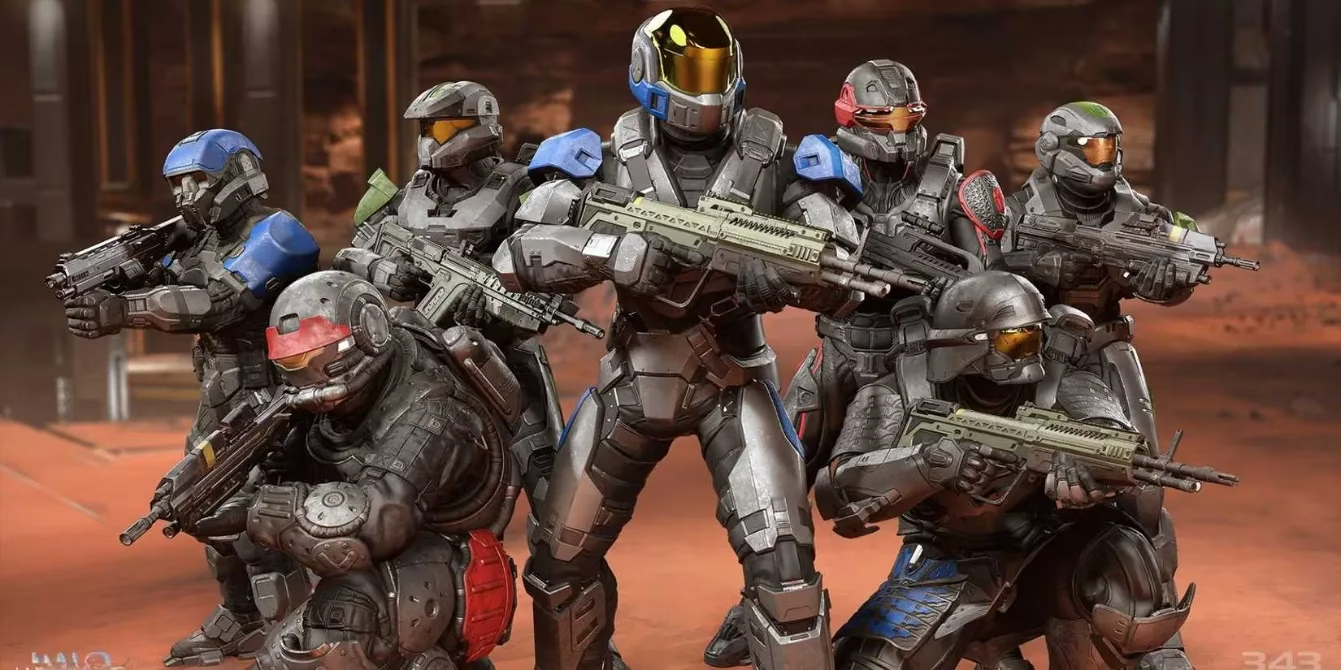
| Halo 3 (2007) | Halo Infinite (2021-2026) |
|---|---|
| Forge & Custom Games at LAUNCH | Forge mode added 1+ year later |
| Community-driven content features | Focus on monetized Battle Passes |
| Map Packs as community events | Cosmetics as seasonal "content" |
| Strong casual & social focus | Overemphasis on competitive/ranked |
| Passionate dev-player relationship | Distant, service-model relationship |
The success of Halo 3 was also a perfect storm of timing—a moment in internet history we can't get back. It was the dawn of YouTube, fueling an explosion of community content like Red vs. Blue, Arby 'n' the Chief, and Machinima. Halo wasn't just a game; it was a cultural phenomenon. The hype machine was player-driven and authentic.
Halo Infinite's direction is the polar opposite. It's a sterile, live-service product. The soul is gone. Except for the esports circuit, it doesn't feel like it has a community because 343 isn't trying to build one. Every update is front-loaded with new ways to grind, not new ways to play and create. The live-service model has infected a once-proud series, sucking the life out of it.
So here we are in 2026. Halo Infinite is a shell of what it could have been. Its priorities were all wrong from the start. It chased trends instead of honoring what made Halo special. It forgot that Halo's heart was never about ranked ladder climbing or cosmetic unlocks; it was about shared, unpredictable, hilarious experiences with friends and strangers alike. That magic is why I, and so many others, have simply given up. We've gone back home—to the Master Chief Collection. Because sometimes, you just can't replicate the past, and you shouldn't try to sell its hollow imitation as the future. 😔🎮
Comments