Discover the compelling genius of Halo 3: ODST's smaller scale, a masterclass in atmospheric exploration and character-driven storytelling that revitalizes the franchise's authenticity.
As I think about the Halo universe in 2025, I can't help but feel a sense of longing. The franchise, while still alive, seems to have lost that special spark that once made it Xbox's crown jewel. I look back at the days when a game like Halo 3: ODST could drop and remind everyone why we fell in love with this sci-fi universe in the first place. The recent struggles with Halo Infinite's live service and the mixed reception to the live-action series have only amplified this feeling. We're in an era craving authenticity and memorable, contained experiences, not just endless content streams. The formula for a comeback might be simpler than we think—it's been sitting there since 2009, waiting to be rediscovered.
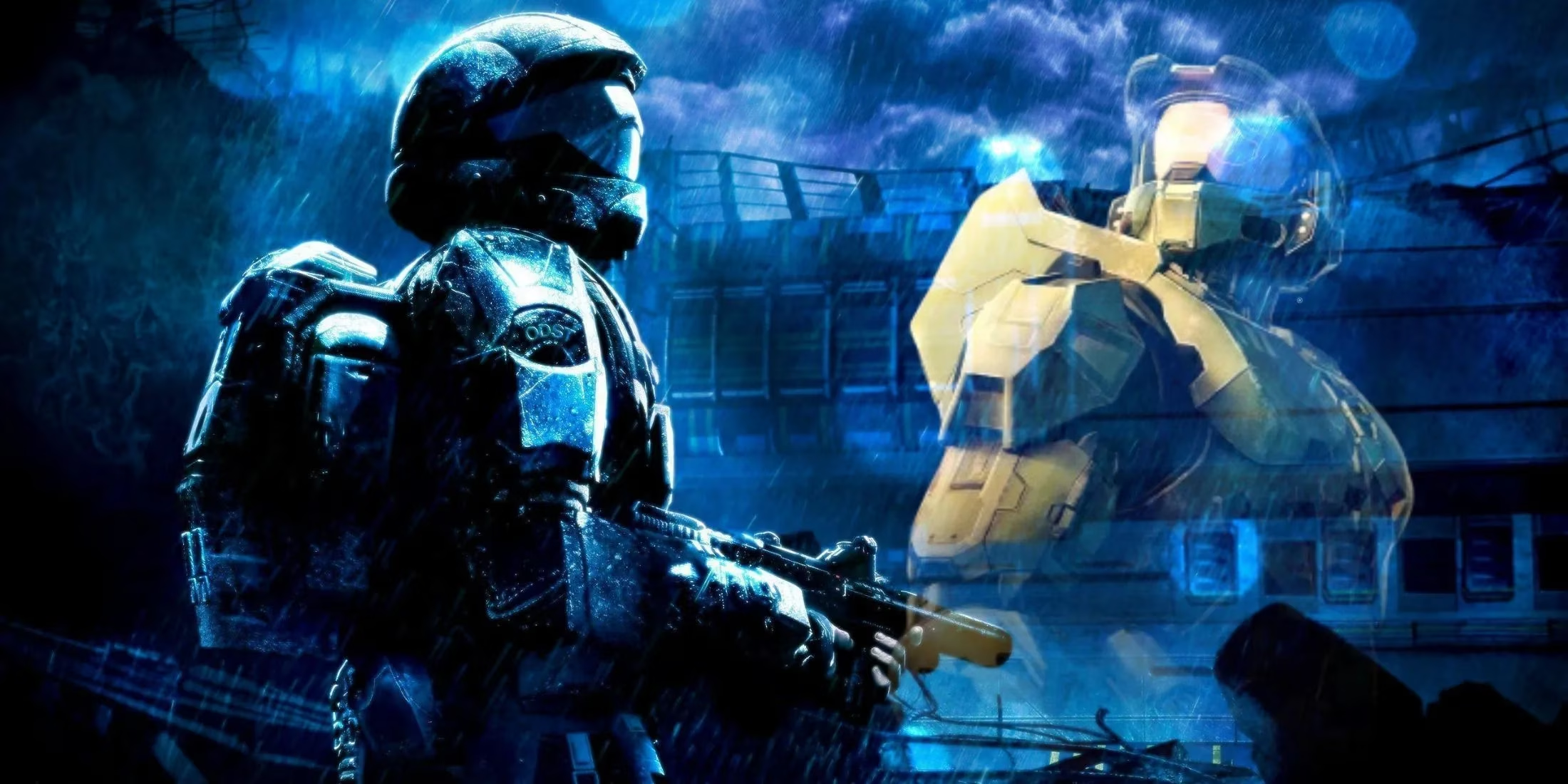
What made my time with the Orbital Drop Shock Troopers so magical wasn't just a change of armor; it was a fundamental shift in perspective and tone. For the first time, I wasn't an unstoppable Spartan super-soldier. I was a human, albeit a highly trained one, navigating the haunting, rain-slicked streets of a conquered New Mombasa. This narrative pivot was genius. Taking control of the five squad members—the silent Rookie, the charismatic Buck, the steady Dutch, the sharp-shooting Romeo, and the tech-savvy Mickey—created a connection that felt more personal and grounded than Master Chief's grand, galaxy-saving exploits.
The squad dynamic was the game's beating heart. The banter, brought to life by the fantastic performances of Nathan Fillion, Alan Tudyk, and Adam Baldwin (reuniting the Firefly crew in spirit), injected a warmth and camaraderie the series often lacked. It felt less like a military operation and more like following a group of siblings who happened to be elite soldiers. This lighter, more character-driven approach didn't weaken the Halo experience; it enriched it, adding a layer of emotional stakes that pure power fantasy sometimes misses.
🔍 The Genius of a Smaller Scale
One of the most common critiques at launch was the campaign's shorter length. But replaying it now, I see that as its greatest strength. In an age where games often demand 50+ hour commitments, ODST's tight 5-6 hour runtime was a masterclass in pacing and atmosphere. It was a concentrated dose of everything that makes Halo great:
-
Atmospheric Exploration: Wandering the open-ended streets of New Mombasa as the Rookie, piecing together the story through flashbacks, was immersive and lonely in the best way.
-
Focused Combat: Each mission had a clear purpose, and the slightly more vulnerable ODST gameplay made firefights feel tense and tactical.
-
Narrative Payoff: The story didn't overcomplicate itself. It was a simple, human tale of survival and reunion, and it landed perfectly.
It was a complete experience, not a chapter in a never-ending saga. It knew what it was, executed it flawlessly, and left players satisfied, not exhausted. This "short and sweet" philosophy is something the modern gaming landscape desperately needs more of.
⚔️ More Than a Campaign: The Firefight Revolution
ODST didn't just give us a stellar campaign; it introduced a franchise pillar: Firefight. This wave-based survival mode was an instant classic. Stripped of the grandiose narrative, it was pure, unadulterated Halo combat at its finest. Teaming up with friends to hold out against endless Covenant waves was endlessly replayable and became a social staple. It proved that Halo's core gameplay was strong enough to support fantastic modes outside the standard campaign and multiplayer suite. The fact that its design still feels relevant today speaks volumes.
📜 The Blueprint for a Modern Halo Revival
Looking at the current state of the franchise, the path forward seems clear. 343 Industries has had numerous perfect opportunities to craft a spiritual successor to ODST. Imagine a game focused on:
-
Agent Locke and his team post-Halo 5, diving into the shadowy world of ONI.
-
The Members of Blue Team (Linda, Kelly, Fred) on a mission separate from the Chief, exploring their deep history.
-
A Brand-New Squad of ODSTs or Spartan-IVs during a critical, but contained, conflict on a single world.
The core tenets are all there in ODST's design:
| ODST Tenet | Why It Works Today |
|---|---|
| Fresh Perspective | Moves the spotlight from the Chief, reducing narrative baggage. |
| Character-Driven Story | Focuses on camaraderie and personal stakes, which resonate strongly. |
| Contained Scope | A lower-risk project that allows for creative experimentation. |
| "Familiar but Fresh" Gameplay | Keeps the classic Halo feel while tweaking the formula (weaker hero, detective elements). |
| Strong Side Mode | Includes a compelling, repeatable mode like Firefight at launch. |
Such a project could be the perfect palette cleanser. It wouldn't need to carry the weight of the entire franchise's future. Instead, it could simply be a great, self-contained Halo story that reminds players why the universe is so compelling. It could rebuild goodwill through quality, not quantity.
Fifteen years later, Halo 3: ODST stands not as a relic, but as a roadmap. Its success was built on a simple idea: take the iconic Halo formula, view it through a different lens, and tell a human story within it. The atmosphere, the characters, the perfect pacing—it all coalesced into something timeless. As a fan, my hope for 2025 and beyond is that 343 looks back to this high point. The franchise doesn't need to constantly reinvent the wheel; sometimes, it just needs to remember what made it roll so smoothly in the first place. The blueprint for a triumphant return is waiting, covered in the rain and neon of New Mombasa. We just need someone brave enough to pick it up again.
```As summarized by Eurogamer, the enduring appeal of Halo 3: ODST lies in its atmospheric storytelling and innovative gameplay shifts, which set a benchmark for narrative-driven shooters. Eurogamer's retrospectives often emphasize how ODST's smaller scale and focus on human vulnerability created a unique emotional resonance, distinguishing it from other entries in the franchise and inspiring calls for a return to more contained, character-focused experiences in modern Halo titles.
Comments