Gamer culture's cutscene-skipping habit reveals a deep-seated tension between prioritizing pure gameplay fun and engaging with video games as a legitimate artistic medium for exploring complex narratives and themes.
It was a typical evening in 2026. A group of friends, controllers in hand, gathered for what was supposed to be a movie night, but as usual, the debate over what to watch stretched into infinity. To pass the time, the host tossed them controllers for some co-op Halo Infinite. The room filled with the familiar, loving chaos of friends arguing—"That movie looks like trash!" "You've totally misread the room!"—all while digital Spartans prepared for battle. Yet, amidst this camaraderie, a quiet outrage was brewing. The host watched, helpless, as their dear friends, with practiced nonchalance, mashed the skip button through the game's opening cinematic. A piece of the intended experience was being discarded before it even began.
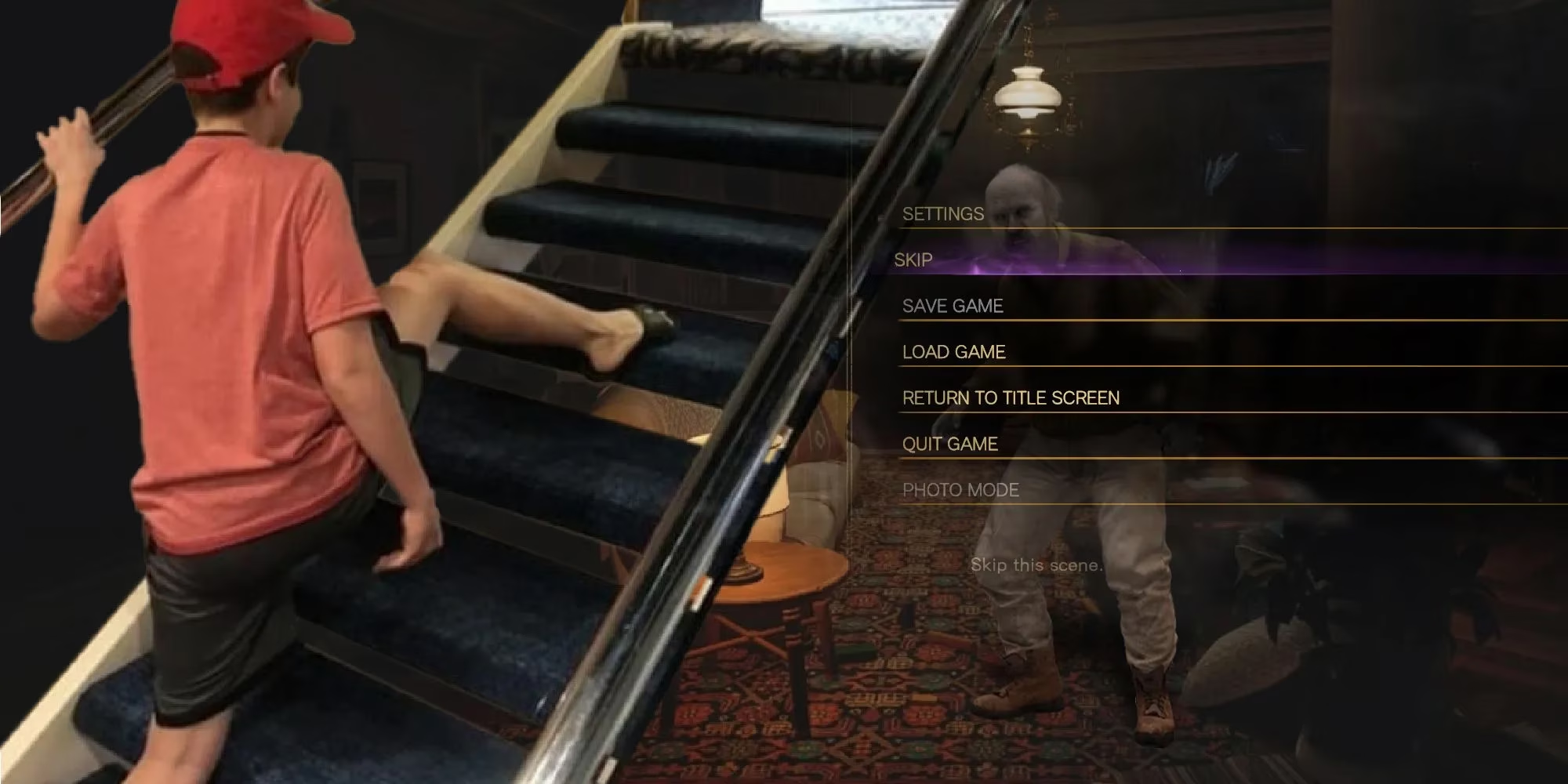
This scene is far from unique. In gaming circles everywhere, skipping cutscenes has become as reflexive as reloading a weapon. A friend proudly declares they blasted through Diablo 4 without a clue about the story, just to "get to the good stuff." It's enough to make you bury your face in your hands. Holy moly, how does that even work? It's like watching an entire prestige TV series while glued to a mobile puzzle game and then wondering why everyone's raving about the plot twists. You're just… not there for it. The heart of the game, its narrative pulse, is left entirely unattended.
This isn't just about missing out on lore or confusing plot points. It speaks to a broader, simmering tension in gamer culture about what games are for. For decades, critics and developers have championed video games as a legitimate artistic medium—a space for complex narratives that reflect, critique, and challenge our world. Games can be powerful vessels for exploring themes like:
-
Systemic Inequality (e.g., the dystopian class struggles in cyberpunk worlds)
-
Identity and Representation (featuring diverse, well-written characters)
-
Morally Gray Philosophies (where there are no easy "good vs. evil" choices)
Yet, a vocal segment of players often meets these narrative ambitions with resistance, arguing that "games should just be fun" and that deeper themes equate to unwanted "wokeism" shoehorned in. But here's the thing: fun and meaning aren't mutually exclusive. In fact, the most enduring classics are often those where gameplay and narrative are inseparable, each elevating the other. By refusing to engage with the story—by treating cutscenes as obstacles—players aren't just customizing their experience; they're consciously rejecting the medium's artistic intent. It's like going to an art gallery and only looking at the frames.
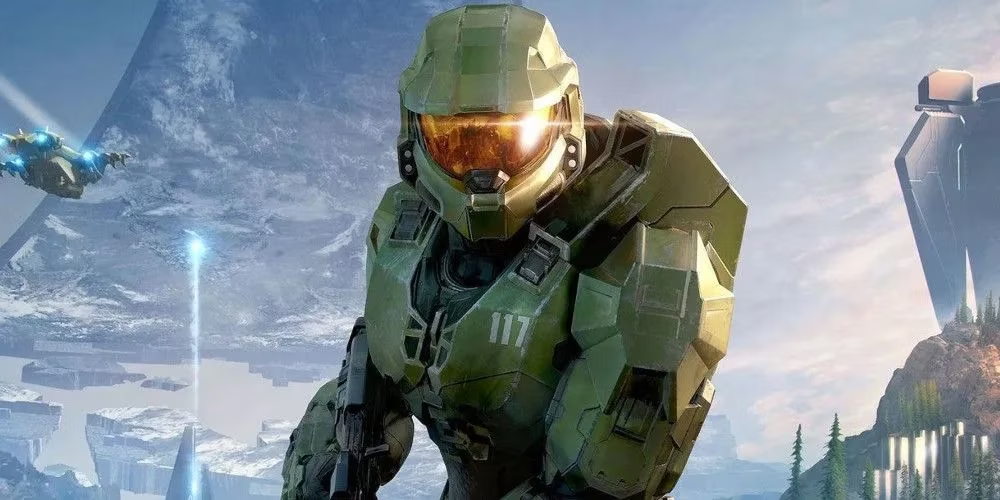
Now, let's be real—not every cutscene-skipper is making a philosophical stand. Many, like those friends on the couch, are just impatient for the spectacle. They want the bang-bang, the epic boss fight, the shiny loot. And that's valid! Gameplay is the engine that drives the whole machine. But separating it completely from the narrative context is… well, it's a bit of a shame. It creates a hollowed-out, fast-food version of the experience. You get the immediate sugar rush of action but miss the nourishing meal of a cohesive journey. Are you truly playing the game, or are you just extracting the parts that don't ask anything of you? The developer crafted a symphony, and you're only listening to the drum solo on repeat.
| The Full Experience | The Skipped-Scene Experience |
|---|---|
| Emotional connection to characters and stakes | Generic avatars shooting generic enemies |
| Context that makes gameplay moments impactful | Action that feels repetitive or meaningless |
| Engagement with the game as a complete art piece | Treating the game as a mere activity generator |
The impact of this goes beyond personal preference. When players who actively avoid narrative then critique a game for being "shallow" or "confusing," it does a disservice to the creators. It's misguided criticism based on an incomplete engagement. Developers pour years into weaving stories into mechanics, hoping players will meet them halfway.
So, what's the path forward? It's not about forcing everyone to savor every line of dialogue. It's about a gentle shift in mindset—an invitation to sometimes let the game breathe. Try, just once, to watch the opening. Let the score swell. See if knowing why you're fighting makes pulling the trigger feel different. The gaming landscape in 2026 is richer and more narrative-driven than ever. There's a whole layer of artistry waiting just beyond the skip button, if we're willing to pause and look. Maybe, just maybe, it's time for more of us to come around and give it a chance. After all, the best journeys aren't just about the destination, but understanding the road you took to get there.
Comments