Halo Infinite and Xbox face immense pressure as unmet expectations and a shifting industry challenge the franchise’s legendary legacy and future.
For over two decades, the name Halo has been synonymous with the Xbox brand itself. From its serendipitous origins as a potential Mac exclusive to becoming the defining killer app of the original Xbox console, Master Chief and his saga were the reason countless gamers chose the green box over its competitors. The franchise's legacy is monumental, a towering pillar supporting Microsoft's gaming identity. Yet, as the industry landscape shifts dramatically in 2026, that once-unshakeable pillar now shows deep cracks, its foundation stressed by the colossal weight of unmet expectations and a future filled with daunting new pressures. The journey from flagship to fixer-upper has been a sobering one for fans and developers alike.
A Stumble at the Starting Line: The Halo Infinite Paradox
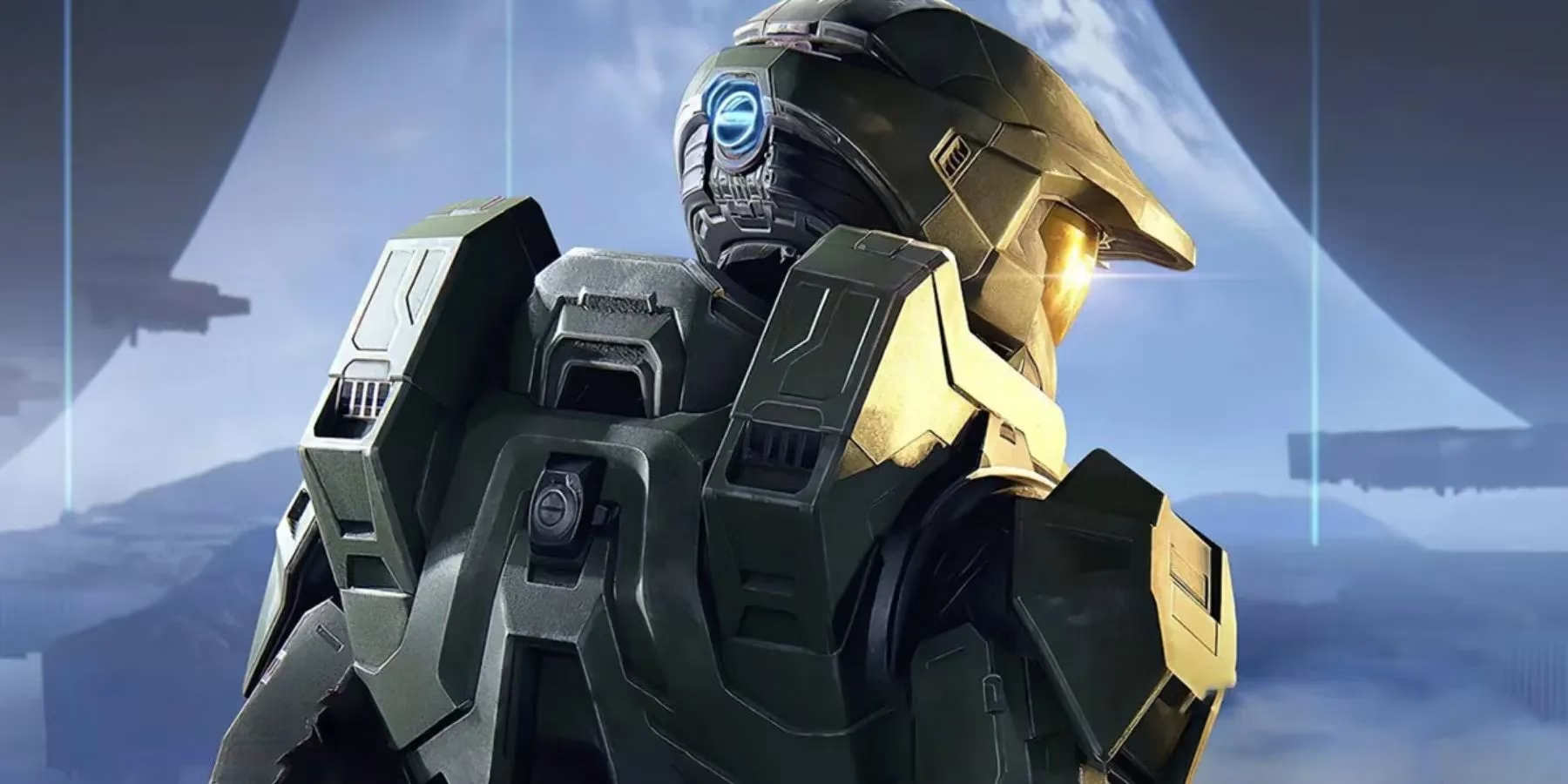
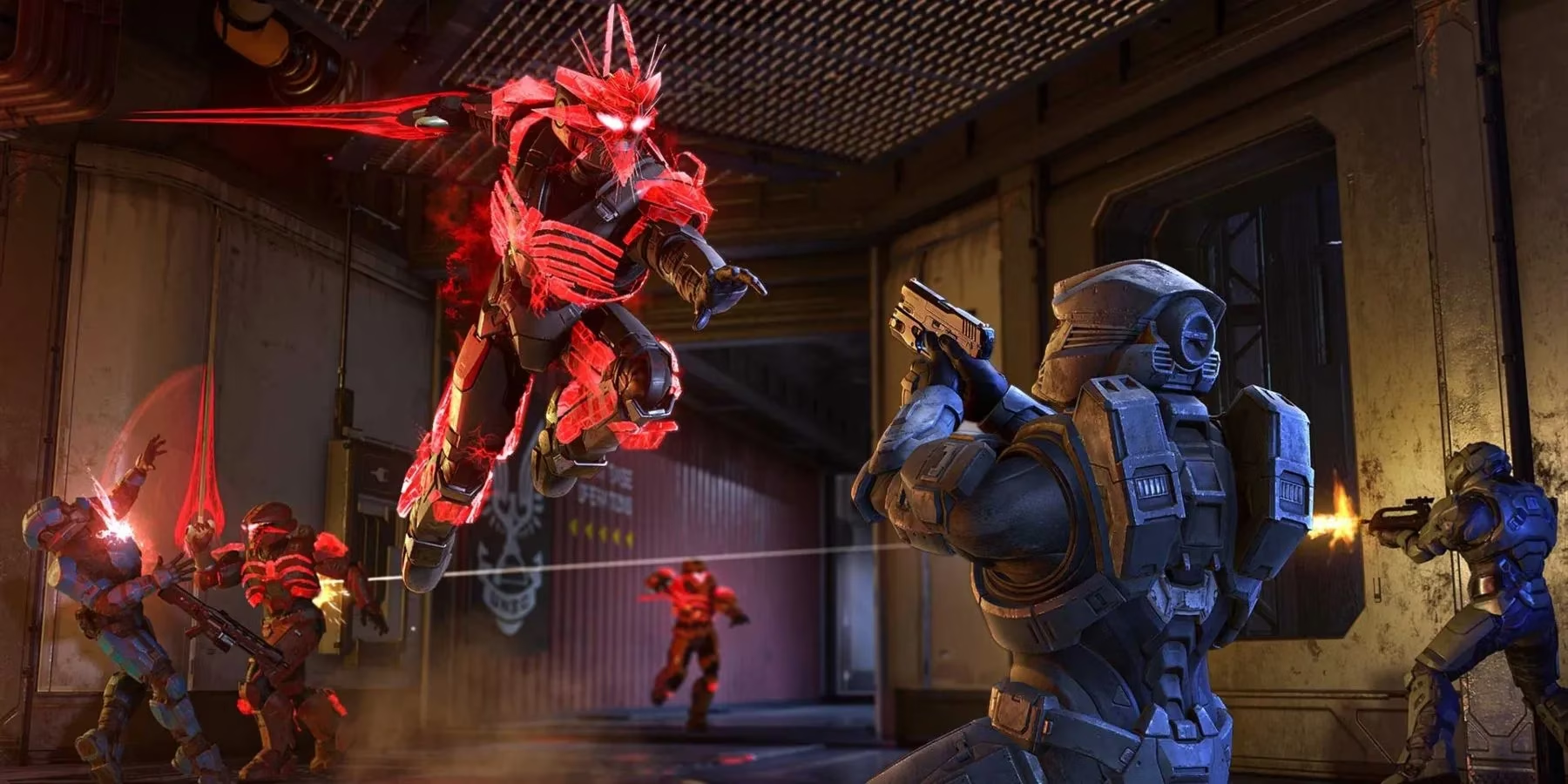
Halo Infinite was positioned to be the glorious return, the "next evolution" that would showcase the power of the Xbox Series X and reaffirm the franchise's dominance. Its initial reveal promised a nostalgic yet fresh experience, with a multiplayer component that brilliantly echoed the golden era of Halo 3 and a campaign that embraced a bold, open-world structure. The world was, quite literally, at its feet. So, what happened? The game launched with a solid core but was critically hamstrung by its live-service ambitions. Key franchise staples—beloved modes, a robust map selection—were conspicuously absent at launch. 343 Industries adopted a painfully slow seasonal update model, delivering a mere four substantial updates in over eighteen months. This wasn't the content firehose players expected from a modern live-service titan; it was a drip feed. The question became unavoidable: did 343 Industries fundamentally misunderstand the live-service model, or were they simply unable to execute it at the required pace?
The Legacy of Disappointment and the Mountain of Expectations
The aftermath of Halo Infinite's launch has created a daunting new reality for 343 Industries. The studio maintains its commitment to fixing the game, but for a significant portion of the fanbase, the damage is perceived as deep and potentially irreparable within Infinite's framework. Many now clamor for a clean slate—a brand-new Halo game that can start afresh. But here lies the crux of the problem: the next Halo title will shoulder more pressure than any entry in the franchise's history.
Fan expectations are now at an all-time high and incredibly specific. The next game cannot afford a 'good foundation'; it must be feature-complete and practically flawless from day one. The community's checklist is clear and non-negotiable:
-
✅ A full suite of legacy game modes (Infection, Firefight, Assault, etc.) at launch.
-
✅ A generous and varied selection of maps for all core playlists.
-
✅ Robust social and customization systems (forge, theater, cross-core customization).
-
✅ A compelling, well-paced campaign narrative.
-
✅ A clear, sustainable post-launch content roadmap.
The trust that allowed previous Halo games some leeway has been severely eroded. 343 Industries is no longer seen as the eager steward of a legacy but as a studio that must prove it can deliver a complete product. Can they rebuild that trust with a single release?
The New Sibling Rivalry: An Internal Xbox Showdown
Just when the path forward seemed challenging enough, the tectonic plates of the industry shifted with Microsoft's landmark acquisition of Activision-Blizzard. This move brings an unprecedented new dynamic into play: Halo and Call of Duty now reside under the same corporate roof. For years, these franchises existed in a state of friendly, indirect competition, appealing to overlapping but distinct audiences. Now, they are siblings in the Xbox first-party family. This creates an intense internal pressure to perform. Budgets, marketing focus, and developer support within Microsoft will inevitably be influenced by which franchise demonstrates greater strength and potential.
Will Halo be forced to directly compete with Call of Duty's relentless annualized output and massive cultural footprint? Or can it carve out a distinct, premium identity that coexists? The pressure to be the "better" or more successful sibling could dictate creative and business decisions for 343 Industries in ways never before considered. The stakes are no longer just about satisfying fans; they're about securing the franchise's priority and future within its own parent company.
The Path Forward: Redemption or Reinvention?
As 2026 unfolds, the Halo franchise stands at a critical crossroads. The path to redemption is steep and narrow. 343 Industries must not only address the technical and content shortcomings highlighted by Infinite but also recapture the intangible magic—the "feel," the social hub, the iconic sandbox—that made Halo a phenomenon. It requires a level of execution and consistency the studio has yet to demonstrate in the post-Bungie era.
The next game must be more than a sequel; it must be a statement. A statement that 343 has listened, learned, and is capable of shepherding the Master Chief into a new era worthy of his legacy. The alternative—another misstep—could see the franchise relegated from flagship to footnote within the Xbox ecosystem, especially with a powerhouse like Call of Duty now sitting at the same table. The weight of the past and the fierce competition of the present have created a moment of truth. The next time Master Chief boots up his helmet display, the entire gaming world will be watching, waiting to see if he can once again become the hero Xbox needs him to be. 🎮💥
Comments