Master Chief's iconic helmet and legendary status define Halo's enduring mystery, with his concealed identity and Steve Downes' voice creating a uniquely compelling super-soldier mythos.
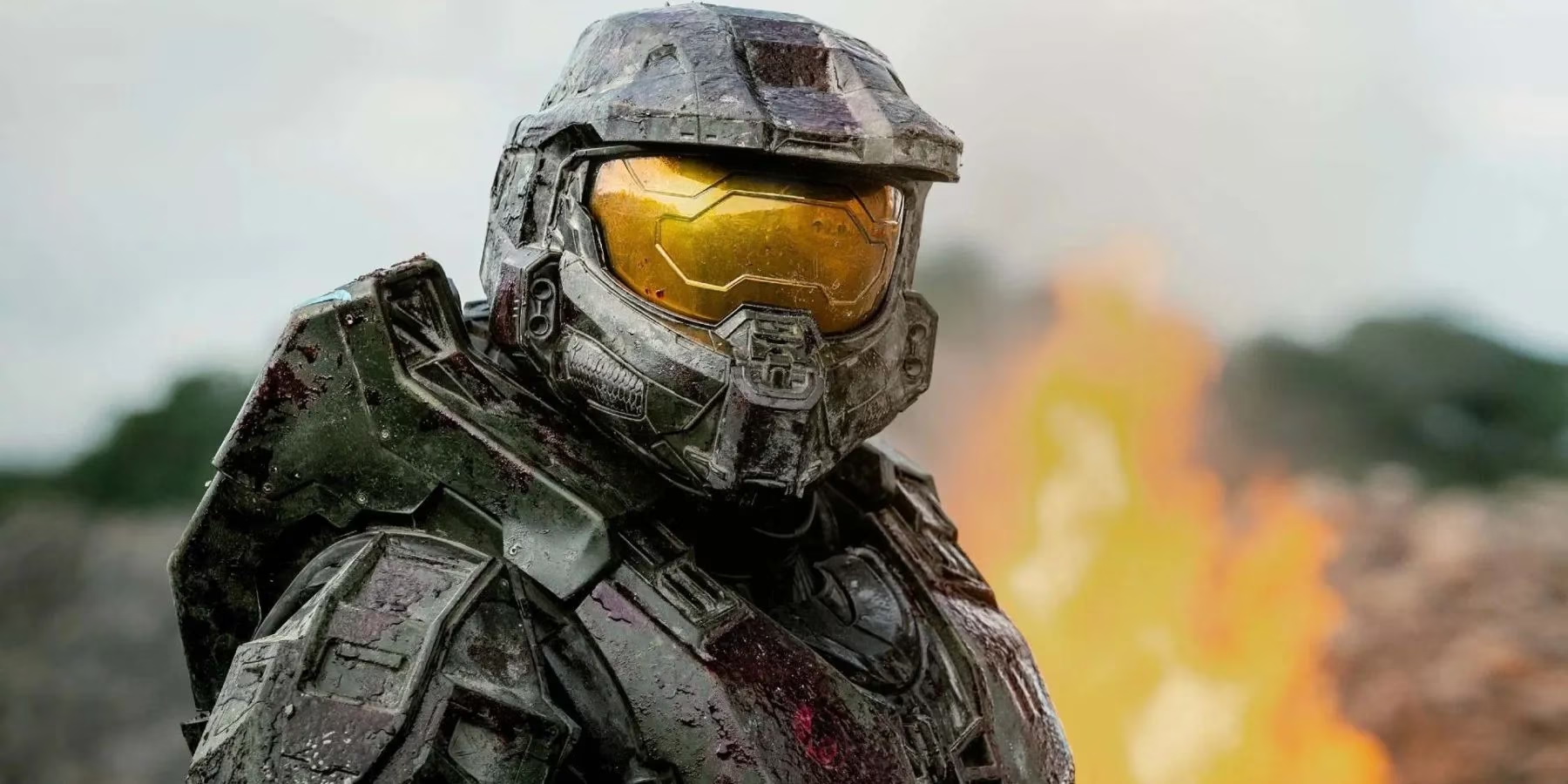
In the vast universe of gaming legends, few figures command a presence as instantly recognizable and enduring as Halo's Master Chief. 🎮 Debuting in 2001, he became Xbox's flagship hero. His silhouette—a hulking form of green Mjolnir armor—is iconic. While characters like Mario or Sonic have longer histories, the Chief carved his own legendary status in a relatively short time. The design is peak super-soldier aesthetics: bulky, imposing, and eternally cool. A key part of this mystique? He never removes his helmet on-screen in the games. For over two decades, this has been a sacred franchise tradition, one that has arguably strengthened his mythos rather than hindered it. The 2022 Paramount TV show's controversial choice to reveal his face early on only cemented the games' original approach as the superior path for character integrity.
The Helmet Stays On: A Legacy of Mystery
The Master Chief’s concealed identity is a deliberate creative choice that places him among characters like Judge Dredd. It transforms the armor from mere equipment into his literal face. This isn't about hiding a lack of character depth. Quite the opposite! By never showing his face, the games force characterization through other, more nuanced means. The player projects onto that visor, while the narrative conveys his humanity through voice and action. The 2026 perspective shows this decision has aged like fine wine. In an era of hyper-realistic character models and constant close-ups, the Chief’s enduring mystery makes him stand out. The failed experiment of the TV adaptation proves that breaking this core tradition often signals a deeper mistrust of the source material's strengths.
Voice as the Window to the Soul: The Steve Downes Effect
If the helmet is the mask, then the voice is the soul. Veteran voice actor Steve Downes has been the Chief's voice since 2001, and his performance is a masterclass in subtlety. 👏 He proves a faceless protagonist doesn't have to be dull or robotic. Through slight intonations, measured pauses, and a cool, stoic delivery, Downes conveys a vast emotional spectrum.
Let's break down how this works:
-
Stoicism with Depth: The Chief is famously reserved, but listen closely. A slight strain in his voice can hint at immense physical burden or grief.
-
Leadership Through Tone: His commands are clear and calm, inspiring confidence without needing to yell or emote wildly.
-
Hidden Vulnerability: The most powerful moments come when that stoic facade shows the tiniest cracks, suggesting a history of profound trauma and loss.
The recent Halo Infinite campaign (2021) provides some of the best examples. While the story had its flaws, it gave us a more emotionally complex Chief—all without removing his helmet. Downes's performance masterfully conveys the Chief's remorse after being defeated by Atriox and the devastating loss of his allies. His interactions with the AI "The Weapon" and the pilot Esparza are layered with a weary sense of duty and burgeoning paternal protectiveness. You feel the weight on his shoulders through voice alone.
Why Showing the Face Was a Misstep: The TV Show Lesson
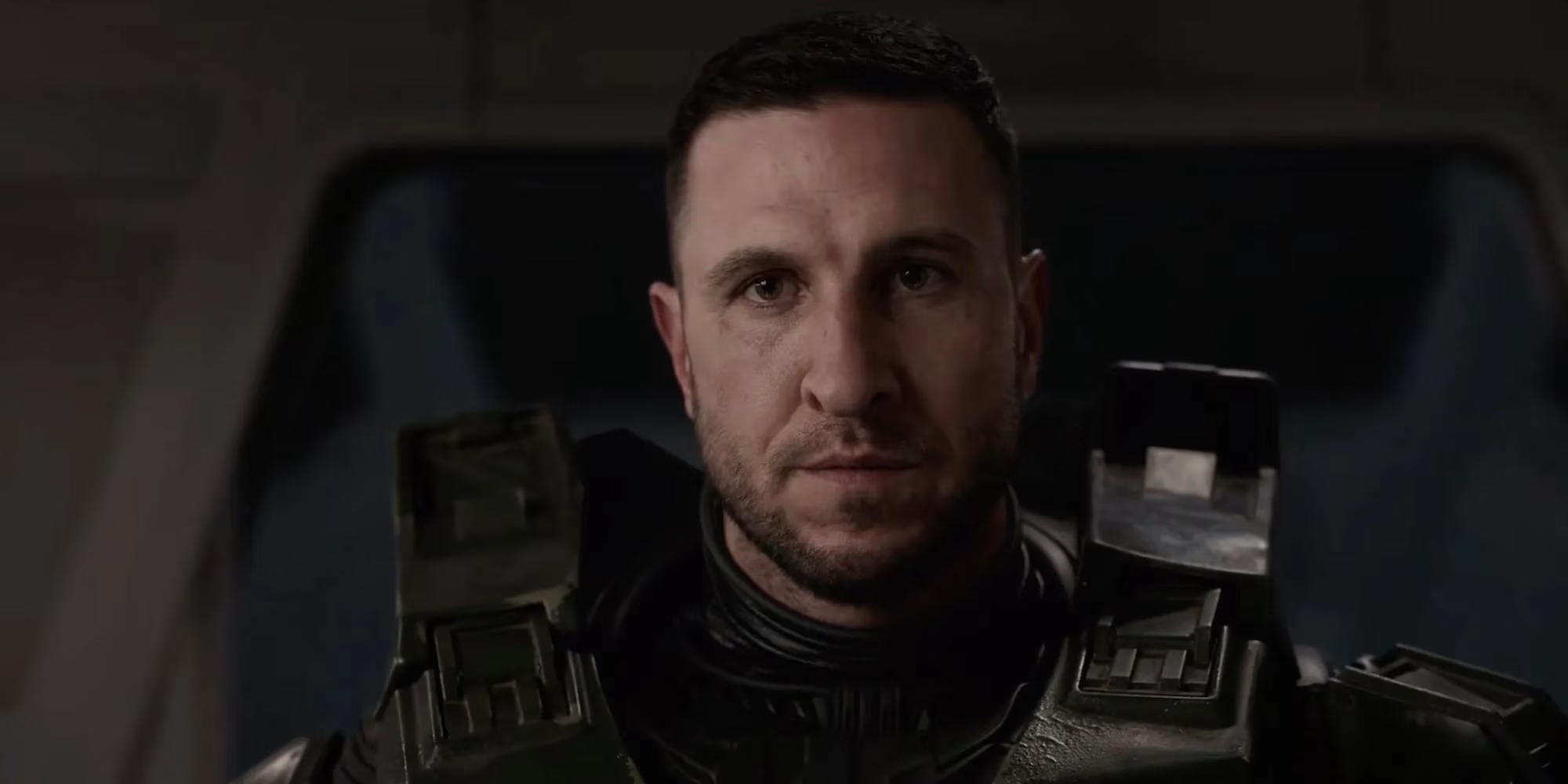
Paramount's Halo TV series (2022) made the pivotal—and widely panned—decision to have the Chief (played by Pablo Schreiber) remove his helmet in the very first episode. 🙅♂️ While Schreiber's performance was commendable, the narrative impact was largely negative. Here’s why it didn’t work:
| Game Tradition (2001-2026) | TV Show Departure (2022) | Fan & Critical Reception |
|---|---|---|
| Helmet stays on. Face is a mystery. | Helmet comes off frequently. Face is fully shown. | Positive: Builds mythos, allows player projection. |
| Character conveyed via voice, action, and lore. | Relies on actor's facial expressions for emotion. | Negative: Broke core tradition; felt like a lack of trust in the source material. |
| The armor is the character. | The armor is just costume the actor wears. | Result: Games maintain iconic status; show faced backlash for this and other lore changes. |
The show's choice undermined a fundamental pillar of the character's design. It sent a message that the original, game-tested method of storytelling wasn't "good enough" for television, requiring a more conventional, face-forward approach. The subsequent liberties taken with established Halo lore only reinforced this perception. In 2026, looking back, the show's mixed reception highlights how the games' restraint is actually a narrative strength.
The Power of Suggestion: More Impactful Storytelling
Not showing the Chief's face forces more creative and often more powerful storytelling techniques. It's the difference between telling and showing in a uniquely interactive medium.
-
Environmental Storytelling: The state of his armor—scratches, cracks, battle damage—tells a story of each conflict.
-
Body Language: The way he stands, reloads a weapon, or looks at a fallen comrade speaks volumes.
-
Dialogue Subtext: What he doesn't say becomes as important as what he does, with Downes's delivery filling in the gaps.
This approach treats the audience as intelligent collaborators. We piece together the man inside the machine through clues and context, which creates a deeper, more personal connection. It’s a lesson that extends beyond Halo: in a medium obsessed with graphical fidelity, sometimes what you don't see is far more impactful.
Conclusion: An Icon Defined by What We Don't See
As of 2026, Master Chief remains one of gaming's most iconic figures. His unseen face is not a deficit but the cornerstone of his legend. 😎 The games have consistently proven that a character's heart can be revealed through a masterful voice performance, strategic writing, and visual design that invites projection. The controversial TV adaptation serves as a cautionary tale: some mysteries are best left preserved. The helmet isn't just a piece of armor; it's a narrative device, a symbol of resilience, and the key to the Chief's timeless appeal. For over two decades, players have fought alongside a hero defined by his actions, not his appearance—and that is a legacy no reveal could ever hope to improve upon.
Comments