Experience the enduring magic of Halo split-screen co-op, a cherished tradition, and the ongoing quest for true Halo Infinite campaign couch play.
I remember the first time I squeezed onto a worn-out couch, a chunky controller in my hand, the screen split right down the middle. It was 2001, and my friend and I were diving into the rings of Halo: Combat Evolved. That wasn't just playing a game; it was a shared adventure, a ritual. The laughter, the frantic shouts when one of us died, the collective triumph—it was magic woven directly into the fabric of Halo. For over two decades, that magic, the tradition of split-screen cooperative play, has been the soul of this franchise for players like me. Yet, here we are in 2026, and the journey to reclaim that full, shared-campaign experience in Halo Infinite feels like a story still waiting for its final, satisfying chapter.
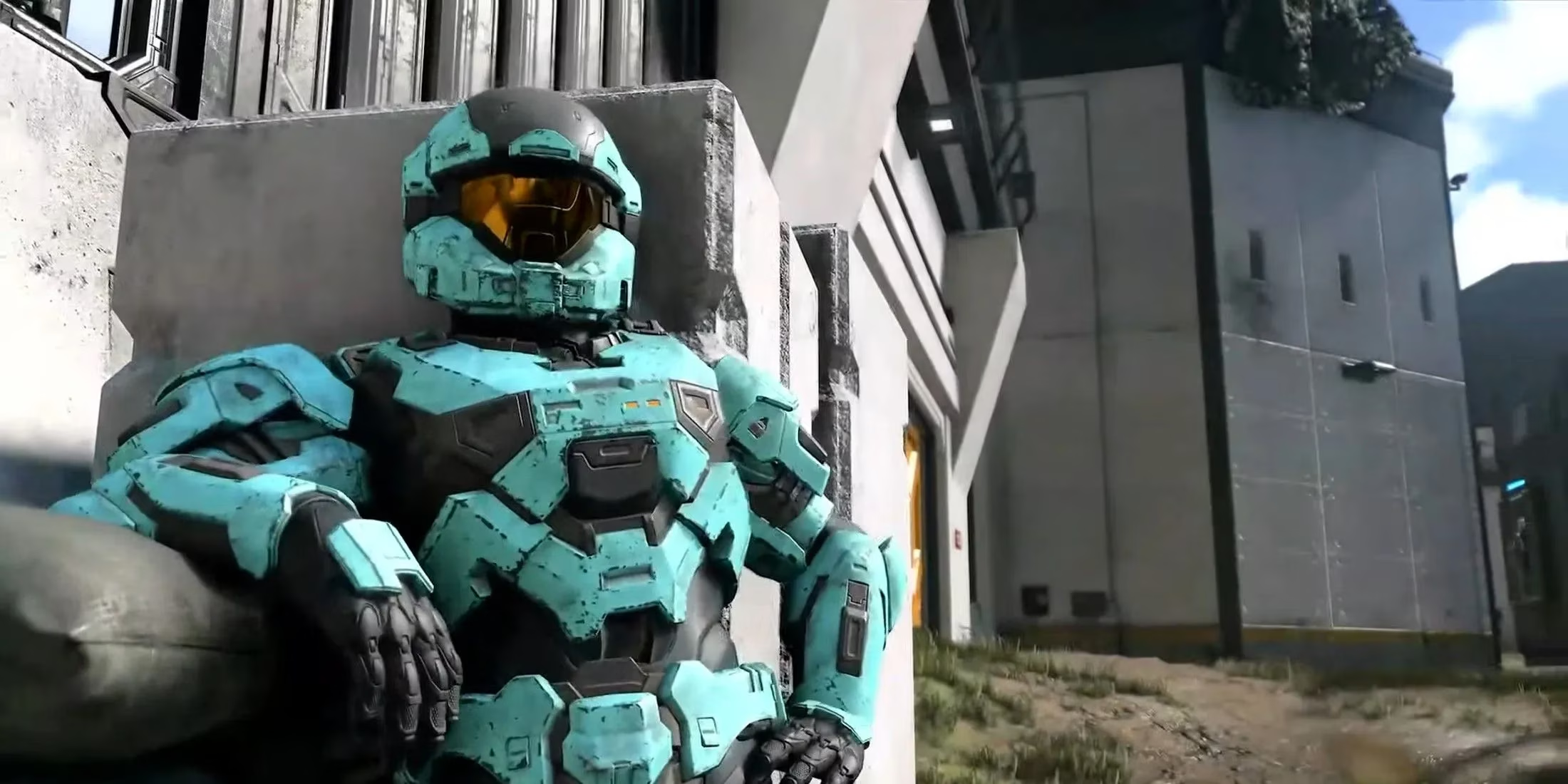
The legacy is rich and personal. After that first adventure in Combat Evolved, the tradition grew. 😊 By the time Halo 3 arrived, my living room was a chaos of four players, each of us not just a copy of the hero, but a unique character in the story—the Arbiter, the Rookie, or a member of the Master Chief's legendary Blue Team. That evolution made the campaign feel truly collaborative, like we were a squad making history together. This formula, this precious couch-coop DNA, held strong through Reach and Halo 4. It was more than a feature; it was the primary way my friends and I experienced the epic Halo universe. We didn't need multiple consoles or online subscriptions; we just needed one TV, some pizza, and a weekend.
Then came the dark age. The launch of Halo 5: Guardians in 2015 felt like a betrayal of that trust. Suddenly, the couch was empty. To play the campaign with my brother, we needed two Xbox Ones, two copies of the game, and two Live subscriptions. The irony was painful—the game emphasized squad mechanics and unique co-op characters like Buck and Kelly, yet it physically separated us. The community's outcry was immense, and I was right there with them. It felt like a corporate maneuver, sacrificing our tradition for console sales. The promise from 343 Industries in 2017 was a beacon of hope: "every future Halo FPS" would have split-screen. We held onto that.
So, when Halo Infinite launched, the disappointment was a familiar sting. 🤨 Yes, we got split-screen back... but only for multiplayer. And even that was a shadow of its former self:
-
Console Limits: Series X|S allowed four players, but the older Xbox One was locked to two.
-
Mode Restrictions: Want to experience the chaos of Big Team Battle together on the couch? Forget it—capped at two players.
-
Guest Lockout: The simple joy of handing a controller to a visiting friend was gone. Everyone needed a full Xbox account.
It was a half-measure, a token gesture that only highlighted what was missing: the campaign. The grand, story-driven adventure that started it all remained a solitary, online-only experience. It wasn't until 2022 that online campaign co-op arrived, and while fun, it lacked the immediacy and camaraderie of sharing a physical space.
But then, we discovered a glitch—a glimpse into what could have been. Through a series of menu exploits involving custom games and LAN settings, players could access an unfinished, scrapped version of split-screen campaign co-op. It was janky and unofficial, but it worked. It proved the feature was once in development. When 343's Sean Baron later confirmed they had worked on it but canceled it to focus on live service content, it was a bittersweet revelation. We had touched the ghost of a promised feature.
Now, as Halo Infinite's major seasonal support has transitioned to smaller operations, its lifecycle feels complete. Yet, that one piece of unfinished business remains. For a franchise that built its community on shared sofa adventures, the absence is a glaring omission. I believe, with all my heart, that 343 Industries should gift this to the faithful. Completing and releasing split-screen campaign co-op would be the perfect, heartfelt farewell to Infinite. It would allow a new generation of families—parents who grew up with Halo and their kids—to create those same memories I cherish.
| Halo Title | Split-Screen Campaign Co-op? | Player Limit | Unique Characters? |
|---|---|---|---|
| Combat Evolved | ✅ Yes | 2 Players | ❌ No (Multiple Chiefs) |
| Halo 2 | ✅ Yes | 2 Players | ❌ No |
| Halo 3 | ✅ Yes | 4 Players | ✅ Yes! |
| Halo 3: ODST | ✅ Yes | 4 Players | ❌ No (Multiple Rookies) |
| Halo: Reach | ✅ Yes | 4 Players | ✅ Yes! |
| Halo 4 | ✅ Yes | 4 Players | ❌ No (Multiple Chiefs) |
| Halo 5: Guardians | ❌ Removed | Online Only | ✅ Yes (But pointless offline) |
| Halo Infinite | ❌ Missing | Online Only | ❌ No (Multiple Chiefs) |
Looking ahead to the rumored Halo 7, the mandate is clear and non-negotiable. It must launch with full split-screen support for both campaign and multiplayer. This isn't nostalgia talking; it's a fundamental understanding of what makes Halo, Halo. It's the ultimate social gaming tool, a system-seller that works through joy and shared experience, not enforced hardware duplication. It's how you build a community that lasts for another 23 years.
The couch co-op tradition is a sacred thread in Halo's tapestry. Abandoning it once was a mistake. To ignore its return would be to forget the franchise's heart. We, the players who have laughed, shouted, and triumphed together in the glow of a single screen, deserve to have that legacy honored and restored. For the future of the franchise, and for the memories yet to be made, split-screen must never be left behind again.
As reported by Digital Foundry, the practical reality of couch co-op in modern engines often comes down to performance and memory budgets—exactly the pressures that can make split-screen campaign support difficult to ship in a large, streaming open-world like Halo Infinite. Their technical breakdowns of console rendering and frame-time stability help explain why maintaining a smooth experience with multiple simultaneous views can force compromises, making the community’s longing for a fully supported split-screen campaign both a nostalgia issue and a demanding engineering challenge.
Comments