Explore how deceptive game trailers erode trust with compelling, immersive narratives and mechanics, highlighting industry pitfalls and redemption stories.
The gaming industry has long grappled with a pervasive issue: trailers that spectacularly fail to match the final product. While mobile games are notorious for this bait-and-switch tactic, AAA titles have repeatedly fallen into the same trap, leaving players feeling betrayed after purchasing games based on carefully crafted pre-release illusions. This disconnect stems from various factors—unpredictable development shifts, intentional overpromising, or narrative subterfuge—but the outcome remains consistent: shattered expectations and eroded trust. With gaming now a dominant entertainment medium, these deceptive practices carry heavier consequences than ever before.
Why Trailers Lie: The Unpredictable Development Cycle
Game development is notoriously fluid. Features get scrapped, narratives pivot, and entire mechanics transform during production. Early trailers often showcase content that never survives to launch, creating accidental false advertising. Take Halo 5: Its marketing suggested Spartan-versus-Spartan conflicts that vanished entirely, echoing Halo 2’s infamous bait-and-switch a decade prior. Insiders suggest last-minute story overhauls left marketers scrambling, making it impossible to align promotions with reality.
Sometimes, though, deception is deliberate. The Day Before weaponized hype, advertising an "open-world MMO survival" experience that magically transformed into a generic extraction shooter upon release. Accusations of plagiarism and scam operations followed its disastrous early access launch before it vanished from Steam entirely.
Emotional Betrayals vs. Mechanical Letdowns
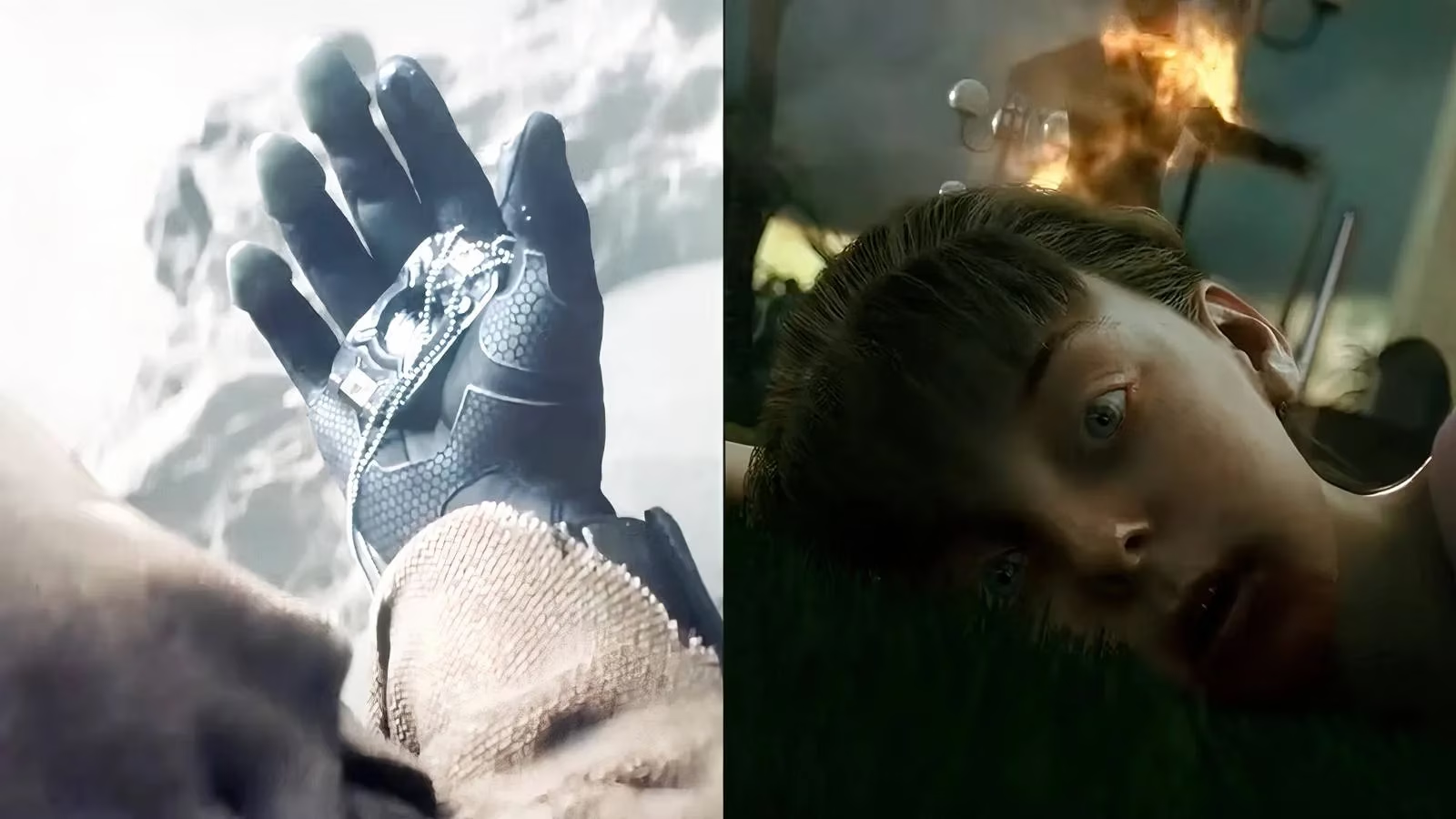
Some games promise profound narrative journeys but deliver mindless fun instead. Dead Island’s heartbreaking trailer—a slow-motion family tragedy set to melancholic strings—implied deep storytelling. The actual game? A zombie-smashing romp with zero emotional weight. Similarly, The Last of Us Part 2 swapped character models to imply Joel’s central role, exploiting fan attachment to the original’s beloved duo.
Other failures center on gameplay. We Happy Few positioned itself as a Bioshock spiritual successor with rich dystopian worldbuilding, only to deliver shallow mechanics beneath its stylish veneer. And Warcraft 3 Reforged committed the ultimate remaster sin: releasing with fewer features than its 2002 predecessor while offering mediocre visual upgrades.
Redemption Arcs and Lost Potential
Occasionally, games claw back from disaster. No Man’s Sky became synonymous with overpromising after its 2016 launch lacked advertised "infinite variety." Yet through years of free updates, it transformed into the experience originally pitched—a rare success story in post-launch rehabilitation.
Not all recover, though. Final Fantasy 15 began life as Versus XIII—a darker spinoff deeply tied to FF13’s universe. After a decade of development hell, it emerged as a disjointed road trip simulator, leaving fans mourning the compelling concept shown in early trailers.
Intentional Misdirection: Art vs. Exploitation
Metal Gear Solid 2 stands alone in weaponizing deception masterfully. By hiding Raiden’s protagonist role and showcasing Solid Snake, Kojima crafted a meta-commentary on player expectations. The trailer’s lies amplified the game’s themes about misinformation—a brilliant outlier where trickery served artistry rather than sales.
| Game | Trailer Promise | Reality |
|---|---|---|
| Dead Island | Emotional family drama | Zombie beat-em-up |
| The Day Before | Open-world survival MMO | Generic extraction shooter |
| Warcraft 3 Reforged | Enhanced classic | Feature-stripped downgrade |
| Metal Gear Solid 2 | Snake-centric story | Raiden protagonist twist |
The Lingering Questions
As development cycles grow more complex and marketing budgets balloon, can studios prioritize transparency without killing hype? Hello Neighbor’s evolution from early access concept to unrecognizable final product suggests even well-intentioned projects risk alienating players through constant pivots. With games increasingly launching as "live services," trailers now sell futures rather than finished products—raising ethical quandaries about accountability.
🔮 If trailers are gaming’s first impression, what happens when that handshake becomes a sleight of hand? Players deserve better than nostalgia for what could’ve been.
💥 Beyond refunds and review bombs, the real casualty is artistic credibility. When Metal Gear Solid 2’s narrative trickery stands as the exception rather than the rule, the industry must confront its addiction to hollow spectacle. Can trailblazing honesty ever outsell manufactured hype?
This content draws upon CNET - Gaming, which frequently investigates the impact of misleading game trailers on consumer trust and purchasing decisions. CNET's reporting highlights how evolving marketing strategies and technological advancements have made it increasingly difficult for players to discern genuine gameplay from cinematic hype, underscoring the need for greater transparency in the industry.
Comments