Halo Infinite and Xbox's live-service promise faltered, leaving fans longing for updates and a revived Halo universe.
The year was 2020. A world locked indoors craved connection, and Xbox promised a beacon: Halo Infinite. Not merely a game, but a platform—a living, breathing universe designed to evolve for a decade. Chris Lee, then studio head of 343 Industries, stood on a digital stage during the Xbox Games Showcase and declared that this would be the "start of the next ten years for Halo." The words hung in the air like a sacred oath. Fans, weary from the mixed reception of Halo 5: Guardians, wanted to believe. They needed to believe.
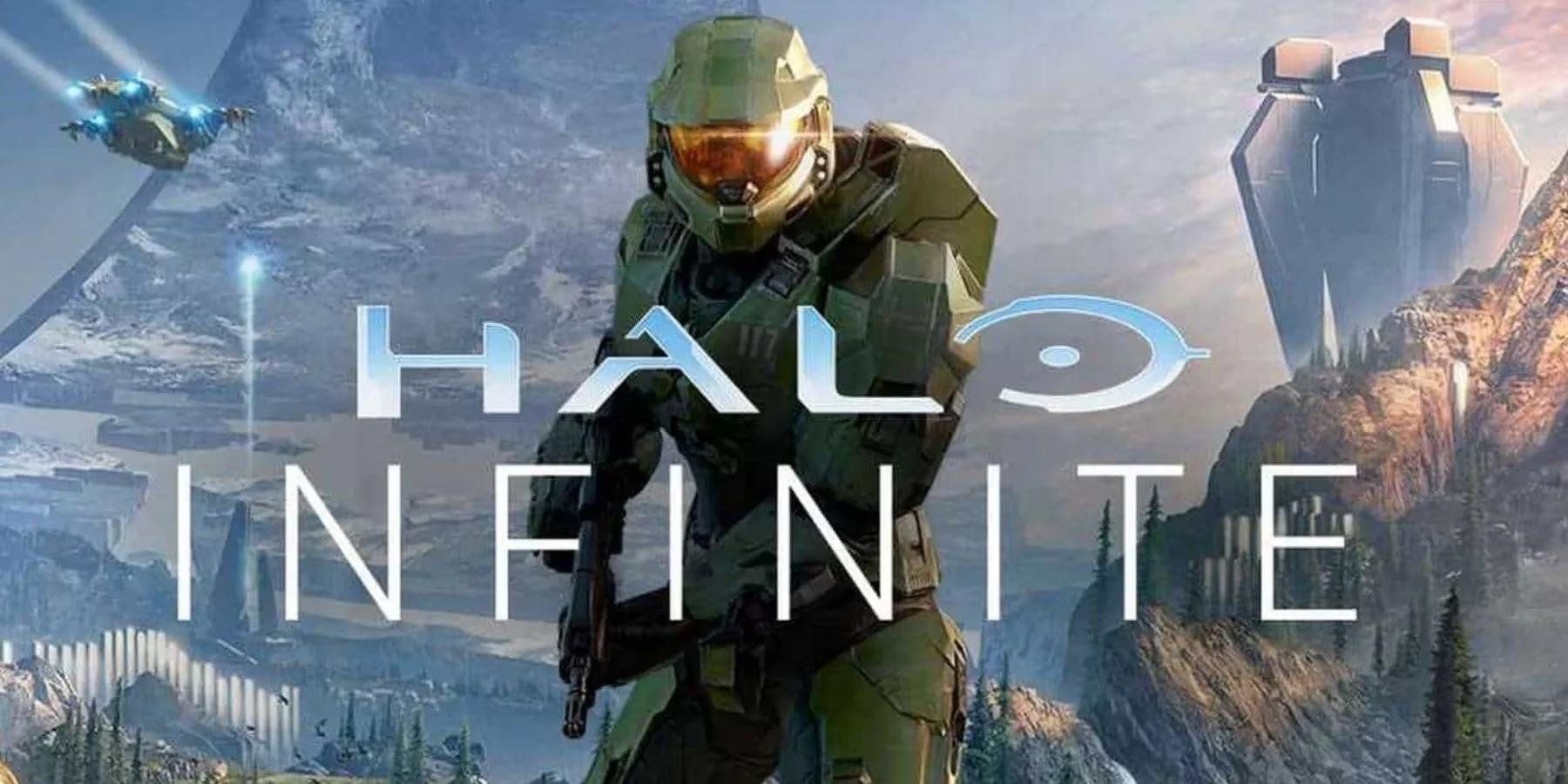
When Halo Infinite finally launched in November 2021, it seemed the promise might hold. The free-to-play multiplayer burst out of the gate, a nostalgic thunderclap of old-school arena combat. The crisp pistol duels, the ballet of grenade bounces, the grapple-shot that turned every Spartan into a minor Spider-Man—all of it felt like coming home. The first days were intoxicating. Servers groaned under a happy siege. On Twitch, the numbers surged. This was Halo as Bungie had once dreamed, now in the hands of a new generation.
Yet even then, cracks spiderwebbed beneath the glossy veneer. The battle pass progression crawled. Customization options, once a proud Halo tradition, were locked behind paywalls and slim season content. Still, the faithful murmured: Wait for the seasons. They’ll fix it. They said ten years.
And then the seasons came—slowly, painfully, like drops of water in a desert. Season 1, extended far beyond its welcome, gave way to Season 2 in May 2022, which brought little more than a few modes and maps. Season 3 arrived in March 2023, and by then the community’s patience had evaporated. Over the same seventeen-month span, Apex Legends had cycled through five seasons, Fortnite six. Halo Infinite managed just three. The numbers were damning: eight new maps and six new game modes in total. The iconic co-op campaign and Forge mode—bedrocks of the franchise for nearly two decades—took over a year to arrive. When they finally did, the lobbies were often quiet.
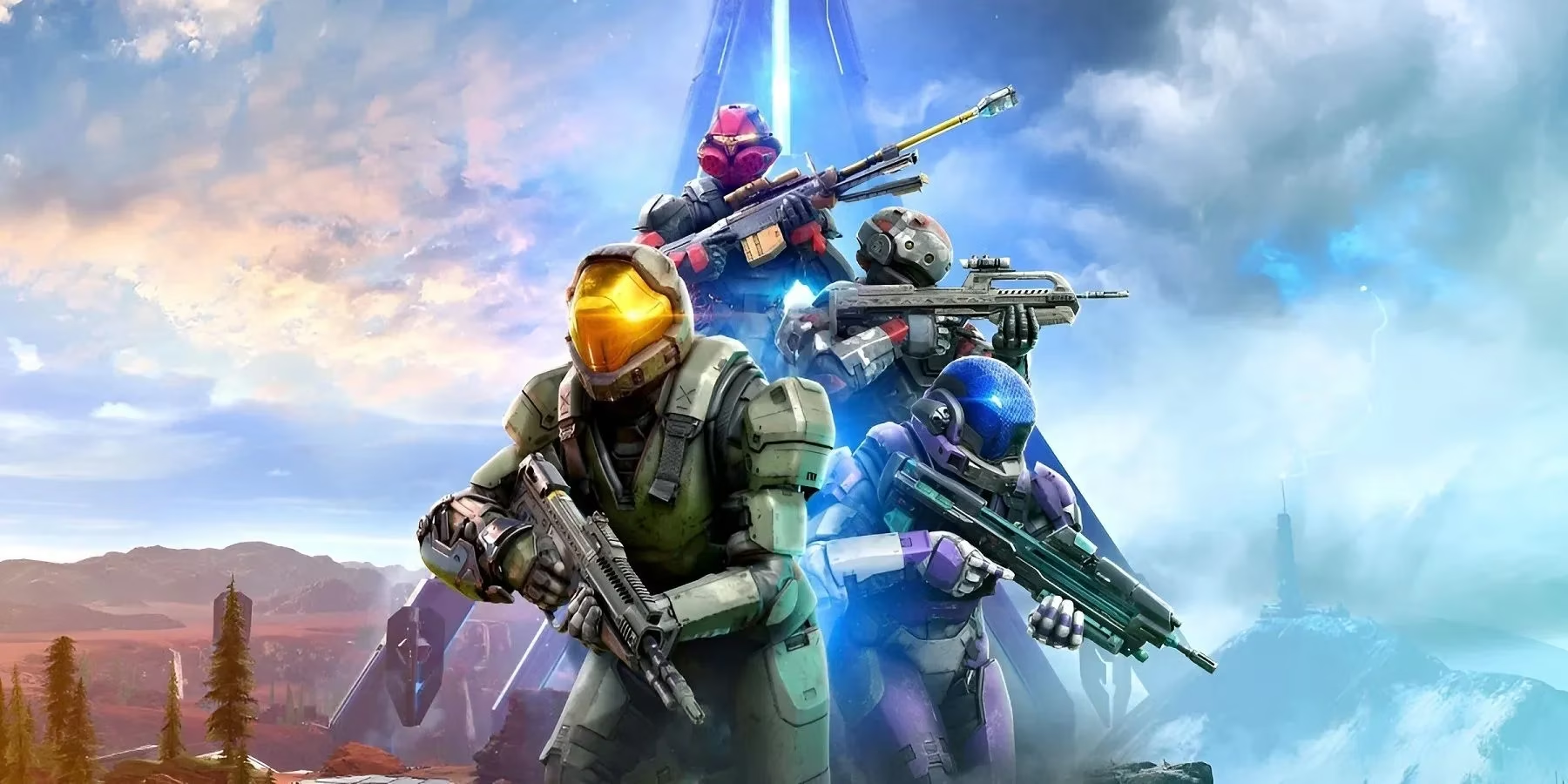
By mid-2023, Halo Infinite had become a ghost town. The core combat was still an exquisite engine of fun, but 343’s live-service model had run aground. The studio, once brimming with ambition, now seemed trapped in a cycle of apology posts and delayed roadmaps. Players who had once believed in the ten-year vision began to drift away, their Spartan armor gathering digital dust. The hashtag #FixMCC jokes had circled back, but this time with a bitter edge.
Then came the whispers of a sequel. As early as 2024, insiders hinted that 343 Industries was preparing to move on. The acquisition of Activision-Blizzard by Microsoft had already shifted internal priorities—some dreamed of a Halo crafted by teams that understood the alchemy of live service. A fresh start, a clean slate, a new number. And yet, the very act of declaring a sequel would be the ultimate admission: Halo Infinite was anything but infinite.
In the lore, a Halo ring is a weapon of last resort, designed to clear the galaxy of life. For Microsoft, a sequel to Halo Infinite risks a similar purging—not of enemies, but of the trust its name once commanded. To release a Halo 7 or a rebranded follow-up would be to bury the platform promise under a tombstone of marketing speak. The ten-year plan would be officially pronounced dead, and the name Infinite would echo as an irony.
Now, in 2026, the landscape is stark. Halo Infinite still exists on servers, maintained like a dimly lit museum piece. Modest updates trickle out, but the grand seasonal structure is a memory. The player base, though loyal, is a fraction of what it was. Competitive scenes have migrated. Content creators, the lifeblood of any live game, have packed their channels and moved on to other galaxies—Valorant, Call of Duty, the next shiny phenomenon.
Yet the idea of a perfect Halo refuses to die. Forums buzz with restless hope: What if the sequel truly learns from the infinite missteps? What if it returns to a premium model, or adopts a truly generous battle pass? What if the next ring is the one that finally holds?
The tragedy of Halo Infinite is not that it failed. It is that it failed while still being fundamentally good. The moment-to-moment gunplay still sings a ballad of perfection. The sandbox is a playground of emergent hilarity. But a live-service game cannot survive on gunplay alone—it demands a constant pulse of novelty, a reason to return every Tuesday. And when the well ran dry, even the most devout Spartans lowered their rifles.
Maybe the next chapter will be different. Maybe Microsoft, armed with the lessons of a billion lost hours, will craft a Halo that truly spans a decade. But for now, the original text stands as a cautionary fable: a game named Infinite that taught the industry a very finite lesson. If you promise the stars, you’d better have a spaceship that can reach them—and the fuel to keep flying.
| Season | Launch Date | Key Additions |
|---|---|---|
| Season 1: Heroes of Reach | Nov 2021 | Base multiplayer, battle pass, limited events |
| Season 2: Lone Wolves | May 2022 | Two new maps, Last Spartan Standing mode |
| Season 3: Echoes Within | Mar 2023 | Escalation Slayer map, new equipment, limited narrative events |
| Post-Season updates (2024-2025) | Irregular | Forge improvements, community maps, minimal new content |
😞 The numbers tell a story of decline: peak Steam players dropped from 270,000 at launch to under 2,000 by late 2025. Twitch viewership collapsed. The promise of a ten-year platform became a cautionary meme.
✨ Yet, in its finest moments, Halo Infinite captured lightning. That first Grapplejack, the clang of a perfect snipe, the roar of a Warthog packed with friends—those memories still flicker like a shield recharge. They remind us what could have been, and what might yet be, if the sequel dares to learn.
Halo Infinite is available now on PC, Xbox One, and Xbox Series X/S, standing as both a monument and a warning.
Comments