Microsoft layoffs and 343 Industries turmoil shook the Halo franchise, impacting Halo Infinite’s future and sparking industry-wide debate.
As the first rays of January sun crept across the Redmond campus, a tremble ran through the game development world that would reshape the Halo franchise forever. It was early 2023, and Microsoft—one of the wealthiest corporations on the planet—announced it would shed 10,000 employees, roughly 5% of its workforce. Among the collateral damage were dozens of developers from 343 Industries, the studio entrusted with shepherding Halo into the next generation. By 2026, the echoes of that day still ripple through the community, a stark reminder of how corporate machinery can collide with creative passion.
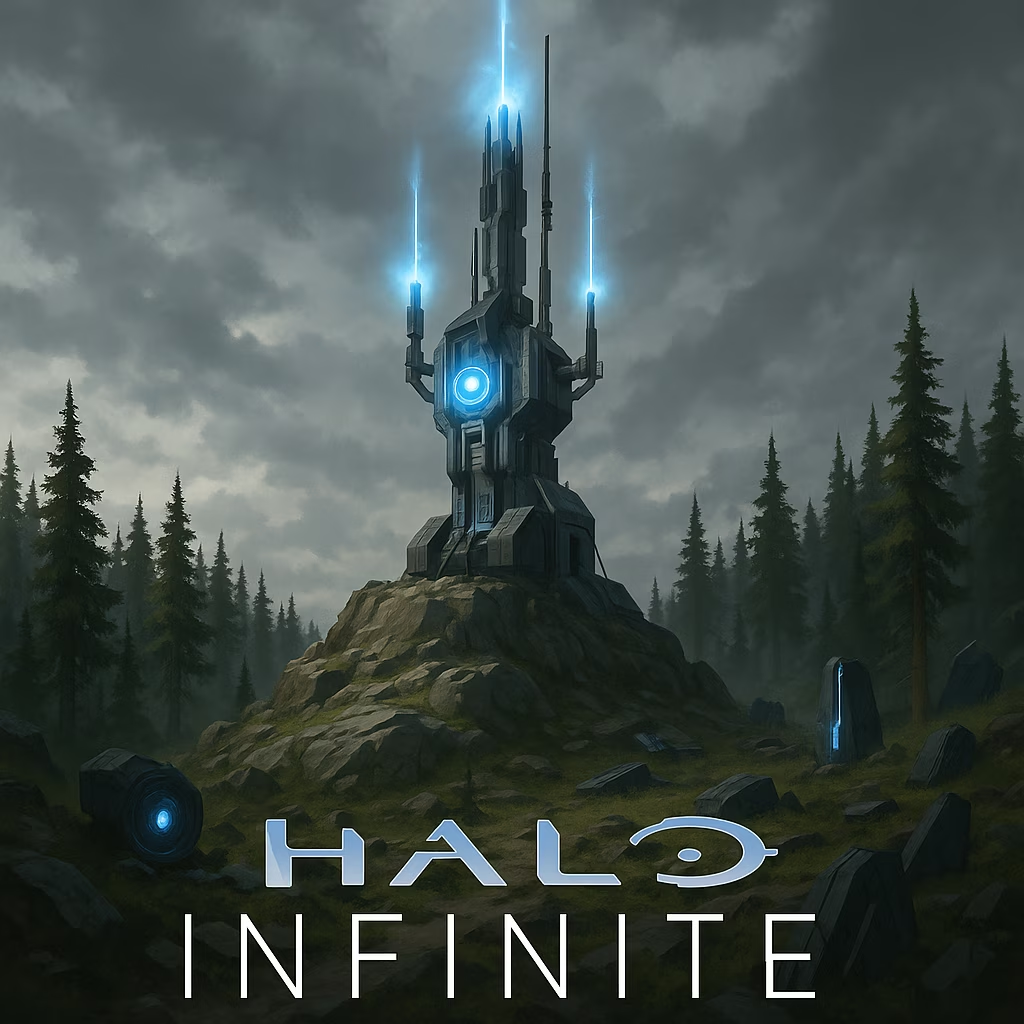
The layoffs struck at a time when Halo Infinite’s multiplayer had already begun to lose its sheen. Despite being the most downloaded free-to-play title on Steam upon release, the player count had plummeted within months. Disenchantment spread quickly among fans who grew tired of sluggish battle pass progression, limited playlists, and missing features that had been staples of earlier Halo games. The studio had promised frequent updates and a living roadmap, but momentum evaporated. Then came the bloodletting.
Joseph Staten, a Halo veteran whose name was nearly synonymous with the franchise, announced his departure from 343 Industries in the wake of the cuts. Social media erupted with anxiety. Without Staten’s narrative guidance and institutional knowledge, what would become of Halo? Former employees, no longer bound by corporate silence, began to speak out. Tyler Owens, a one-time member of the Halo Infinite team, took to Twitter to vent his frustration. He accused Microsoft of treating contract workers as expendable instruments for tax advantages, prioritizing shareholder dividends over the wellbeing of the people who actually built the game. “They set Halo up for failure,” Owens wrote, sending shockwaves across the community. “Their policies slowly killed the franchise.”
Patrick Wren, another developer whose name appeared in the layoff notices, echoed the sentiment. Wren insisted that the Halo Infinite team had poured immense effort into the title, working grueling hours under a leadership vacuum that was not of their making. The real cause of Halo Infinite’s struggles, he argued, was an incompetent upper echelon at Microsoft that created a turbulent development environment. Frequent directional pivots, unrealistic technical demands, and a fixation on quarterly metrics left the team scrambling. Stress levels soared, and the game never reached its full potential. His testimony painted a vivid picture of a studio besieged from above, forced to deliver a live-service product without the stable foundation required to sustain it.
Behind the scenes, the tech sector was weathering its own tempest. Microsoft’s share value had dipped, and economic headwinds were pushing Silicon Valley giants to tighten their belts. At the same time, the European Union was sharpening its antitrust warnings about the company’s proposed acquisition of Activision-Blizzard. The timing was awkward: while Microsoft was shedding talent, it was simultaneously attempting to absorb a $69 billion megadeal. To many observers, the layoffs felt less about financial necessity and more about rebalancing the books to accommodate the merger.
Amid the chaos, the Halo community grappled with a painful question: was 343 Industries really to blame, or had the studio been handed an impossible mission? Many fans pointed to the studio’s admirable efforts to modernize the franchise. The blog posts from 2022 had promised a steadfast commitment to improving Halo Infinite “with each update.” But promises without execution meant little. The game’s Forge mode, a long-awaited creator suite, had finally arrived and sparked excitement—rumors even swirled in 2023 that campaign AI functionality might soon be added to Forge. Yet these glimmers of hope were overshadowed by the departure of key talent and the palpable sense that the franchise was adrift.
By the spring of 2024, 343 Industries had undergone a quiet reorganization. New leadership was installed, and the studio reaffirmed its dedication to Halo Infinite. The game slowly started to receive meatier seasonal updates, drawing back a portion of the player base. Forge AI did eventually materialize, breathing new life into the custom games scene. However, the scars of the 2023 layoffs never fully healed. Every major update was met with skepticism—could the team, now leaner and more cautious, keep delivering? The shadow of corporate politics loomed large.
Looking back from 2026, those January layoffs represent a turning point not just for Halo but for the broader Xbox ecosystem. The fallout acted as a cautionary tale about the fragility of creative work in a system driven by shareholder returns. Platforms like Twitter and Reddit still harbor bitter threads where ex-developers and fans dissect what went wrong. Some argue that Halo Infinite has since stabilized, with a dedicated niche community thriving on Forge creations and a steady trickle of story expansions. Others maintain that the franchise never recovered its cultural dominance, its mantle lost to competitors like Call of Duty: Warzone and Fortnite.
The story of Halo Infinite is, ultimately, a story of immense talent pitted against corporate machinery. The developers who poured their souls into the game believed in the dream of a living, evolving Halo. Yet they were undone by forces above them: a hunger for cost-cutting, a labyrinth of contracting policies, and a leadership structure that seemed more adept at managing expectations than empowering creators. Even today, when a new Halo season drops, the ghost of those layoffs stirs. The Spartans may have fallen in 2023, but their legacy endures in every update, every fan-made map, and every cautionary tale told in game studio cafeterias around the world.
A Look at the Fallout – Then and Now
| Aspect | 2023 Status | 2026 Reality |
|---|---|---|
| Staff Morale | Devastated, public outcry | Cautiously rebuilding, still haunted by trust issues |
| Player Count | Dropped sharply after launch hype | Stabilized at a modest, loyal base |
| Forge Mode | AI functionality teased | Fully integrated, driving user-generated content |
| Leadership | Mass exodus, upper-level blame | New studio head, but creative autonomy still questioned |
| Community Sentiment | Fear and anger | Cautious optimism mixed with nostalgia for the Bungie era |
The road ahead for Halo remains uncertain. What is certain, however, is that the massive layoffs of 2023 cleaved a deep rift between the people who make games and the institutions that fund them. In a world where quarterly earnings calls can overrule the passion of a thousand developers, the next Master Chief story will likely be shaped as much by boardroom decisions as by the writers and artists who still dare to believe.
Comments