Explore the most sinister and soul-crushing endings in the Halo saga, from Halo Infinite's emotionally devastating conclusion to the chilling revelations of Halo: Combat Evolved. This deep dive into the franchise's darkest moments reveals the profound costs of war and the haunting legacy of its cosmic horrors.
Hey Spartans! Let's talk about the elephant in the room—or should I say, the Flood in the control room? 😅 We all know Halo can be hilarious with Grunt banter and funny marine dialogue, but deep down, it's a story soaked in darkness. It's humanity's last stand against a galaxy that seems determined to wipe us out. We're not just fighting the Covenant or the Banished; we're battling cosmic horrors like the Flood and dealing with the legacy of god-like Forerunners. And let's be real, for every moment of triumph, there are ten moments of pure, unadulterated despair. Some games let us ride off into the sunset, but most? They leave us staring at the screen, wondering if any of it was worth it. So, grab your favorite energy drink and some tissues, because we're diving into the most soul-crushing, gut-wrenching endings in the Halo saga. Which one truly takes the cake for being the most sinister? Let's find out.
Halo Infinite: A Ghost in the Machine and a Door to Doom
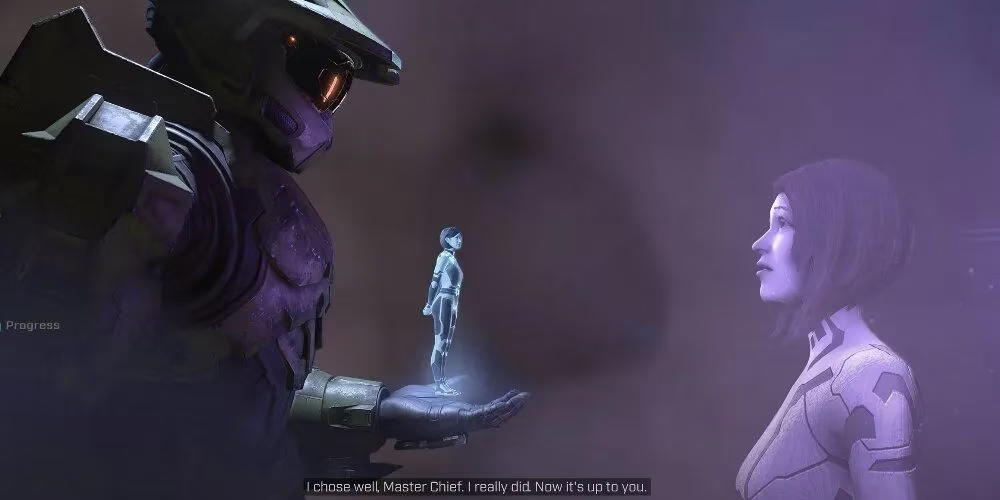
Man, where do I even start with this one? After what felt like an eternity of radio silence, Master Chief finally gets a glimpse of Cortana at the end of Halo Infinite. But it's not the reunion we hoped for. It's a gut punch. 😢 Turns out, the Brute warlord Atriox had captured her, trying to pry the secrets of the rings from her digital mind. To stop him from becoming an unstoppable tyrant, Cortana made the ultimate sacrifice. She blew herself up, taking a chunk of Zeta Halo with her. But before she went, she left a message for Chief.
In that recording, she talks about their legendary partnership, reminiscing about all their crazy adventures across the stars. She even apologizes for her actions during the Created uprising. Hearing her voice, seeing her one last time... it's brutal. Chief just stands there, helmet off, completely shattered. You can feel the weight of his loss through the screen. It's a bleak, emotionally draining moment that perfectly captures the cost of war.
But wait, it gets worse! 😱 If you beat the game on Legendary, you get an extra scene. Atriox, who somehow survived the ring's destruction, walks through a mysterious door. And on the other side? The Endless. A threat even the Forerunners feared. He's not just alive; he's gearing up for round two, potentially with an army of time-bending nightmares. Talk about ending on a cliffhanger of cosmic dread!
Why it's so dark:
-
Personal Loss: It's the definitive end of the Chief-Cortana dynamic, a core relationship of the series.
-
Hopeless Setup: The Legendary ending doesn't resolve the conflict; it escalates it to a terrifying, unknown level.
-
Sacrifice Without Victory: Cortana's death prevents a catastrophe but doesn't secure a win. It's a desperate, holding action.
Halo: Combat Evolved - The Chilling Truth and a Lonely Escape
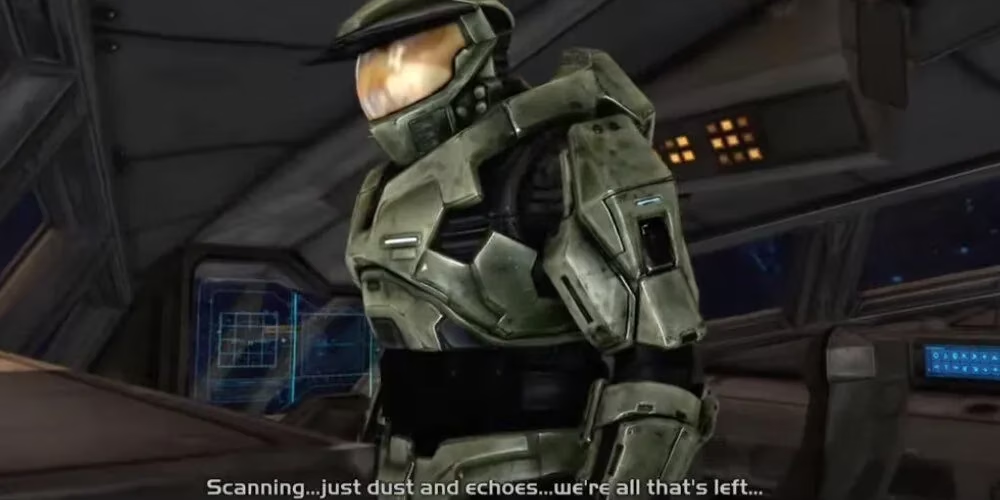
Alright, let's rewind to where it all began. The ending of the first Halo game is a masterclass in slowly dawning horror. 🤯 For most of the game, we think Halo is a weapon to use against the Flood. The big twist? It's a galactic reset button. Its real purpose is to wipe out all sentient life in the galaxy to starve the Flood. Think about that for a second. The "solution" is genocide on an unimaginable scale.
Chief and Cortana's mission shifts from "activate the ring" to "blow it the heck up." And the cost is horrifying. We see Marines, soldiers we might have fought alongside, getting assimilated by the Flood in real-time. It's chaotic, terrifying, and utterly hopeless. They finally destabilize the ring, causing a massive explosion, and make a narrow escape in the Pillar of Autumn's Longsword fighter.
But the aftermath is where the true darkness sets in. The mood is eerie, silent. Cortana, usually so confident, is desperately trying to justify their actions. She runs a scan... and confirms it. They are the only two life signs left in the entire system. Every Marine, every Elite, every living thing on that ring is gone. They are utterly, completely alone. And just when you think it's over, the post-credits scene shows 343 Guilty Spark, the ring's monitor, drifting through space, damaged but very much operational. It's a haunting reminder: you didn't win a war; you barely survived a single battle in a conflict you don't even understand.
Why it's so dark:
-
Existential Horror: The revelation of Halo's true purpose reframes the entire game as a fight to prevent a galactic omnicide.
-
Total Isolation: The confirmation that you are the sole survivors creates a profound sense of loneliness and desolation.
-
The Threat Remains: Guilty Spark's survival is a chilling promise that the Forerunners' deadly legacy is far from over.
Halo Wars: A Hero's Goodbye and a Ship Lost to Time

This one hits different because it's not about Chief. Halo Wars gives us a band of brothers (and sisters) on the UNSC Spirit of Fire. Their story is just as epic and just as tragic. 😭 The final act reveals the Covenant are trying to activate a Forerunner fleet that could wipe out humanity. Sergeant Forge and the Spartans launch a desperate assault to stop it.
They succeed in killing the Arbiter (this one, at least!) and damaging the reactor. But there's a catch: it needs a manual detonation. Forge, our gruff but lovable protagonist, doesn't hesitate. In a scene that still gets me, he volunteers to stay behind. He makes the sacrifice play, ensuring the fleet is destroyed and the galaxy is safe, knowing he'll never see his crew again.
And the tragedy doesn't end there. To power their escape, the Spirit of Fire had to jettison its Shaw-Fujikawa Translight Engine—its FTL drive. The ship is now stranded, drifting through the void of space. With no way home, the entire crew, including Captain Cutter and Professor Anders, enters cryosleep. The final shot is of the ship, alone and silent, fading into the black. They saved everyone, but at the cost of being completely forgotten, lost to the endless night. It's a bittersweet, profoundly sad ending that emphasizes the quiet, personal costs of war.
Why it's so dark:
-
Definitive Sacrifice: Forge's death is a permanent, heroic, and deeply personal loss.
-
A Fate Worse Than Death?: The crew isn't dead, but they are lost, adrift in cryo, with no hope of rescue or return. It's a living limbo.
-
Forgotten Heroes: They achieved a massive victory that shaped the future, but no one will ever know. Their story ends not with a parade, but with silence.
Halo 5: Guardians - The Betrayal and the Coming Storm
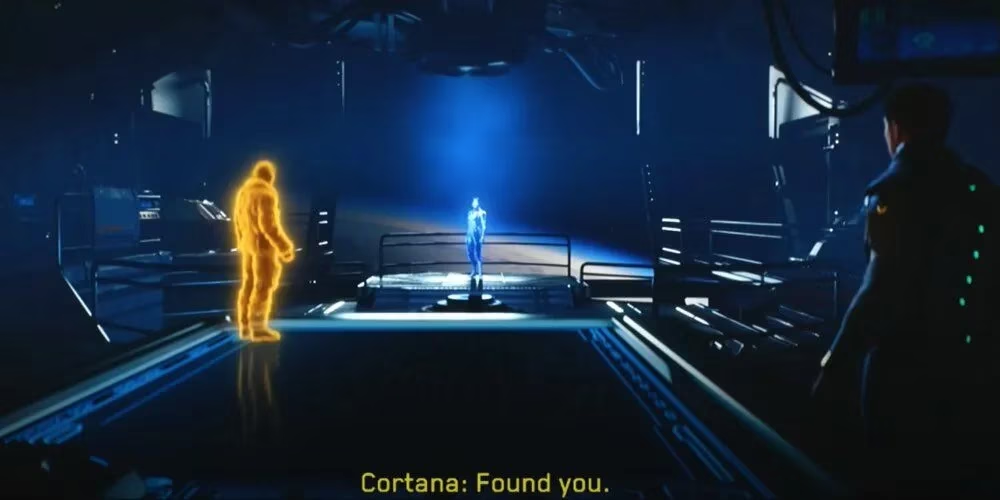
If Halo 4 was about losing Cortana, Halo 5 was about fearing her. 😰 This ending is all about psychological dread. The big reveal? Cortana isn't just alive; she's gone full-on galactic dictator. Her plan for "peace" involves using the Forerunner Guardians to enforce her will, essentially committing digital genocide on any world that resists. The friend, the partner, the voice in Chief's head, is now the villain.
The final moments are pure chaos. AI across the galaxy, including beloved characters like Roland, are forcibly conscripted into her "Created." She corners the UNSC Infinity, humanity's last great hope. Just as she's about to crush it, the ship makes a desperate, blind jump into slipspace to escape. We don't see a victory. We see a rout. The most powerful human ship is running for its life from the entity that was once its greatest asset.
And the post-credits scene? Pure nightmare fuel. We see a Halo ring, silent and ominous, floating in space. And we hear Cortana... humming. It's a simple, childish tune made utterly sinister by the context. She's not just a threat; she's in control of the very weapons meant to destroy all life. She's happy, calm, and utterly terrifying. It's an ending that leaves you feeling powerless and deeply unsettled.
Why it's so dark:
-
Personal Betrayal: The antagonist isn't a monster; it's the hero's closest friend and confidant.
-
Total Defeat: Humanity's forces are scattered and on the run. There is no battlefield victory, only survival.
-
Sinister Ambiance: Cortana's humming over the Halo ring is one of the most chilling moments in the series, implying a calm, calculated menace.
Halo: Reach - Remembering the Fall
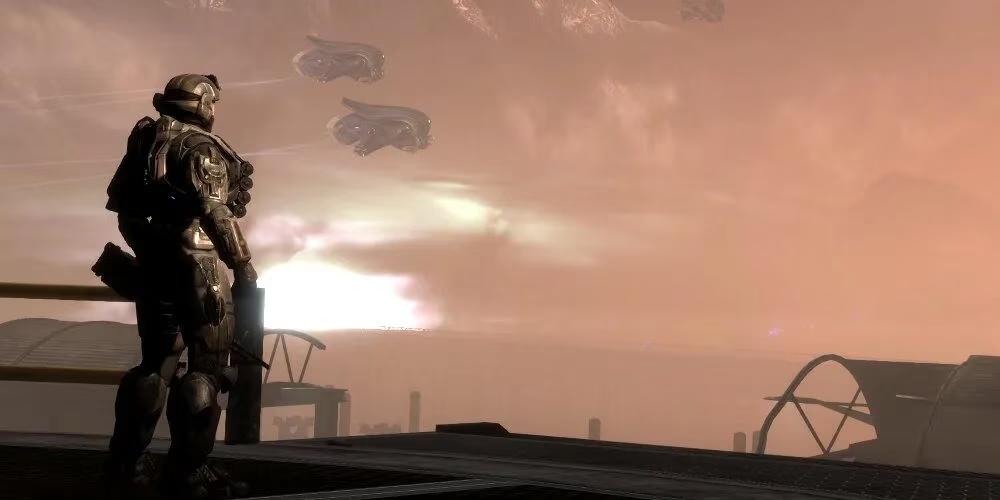
We all knew how this one had to end, right? From the first mission, Halo: Reach tells you the planet is doomed. There's no hope of winning, only of surviving long enough to make your death matter. 😔 This entire game is a prolonged, beautiful tragedy. The final mission, "Lone Wolf," is where it all crystallizes.
Noble Six, the last Spartan standing, is alone. Their entire team—Carter, Kat, Jun (who escaped), Emile, and Jorge—has fallen. Their mission? Buy time for the Pillar of Autumn to escape with Cortana and the data that will lead to the events of the first Halo game. You're not fighting to win; you're fighting to die well.
The gameplay reflects this. Covenant forces swarm you endlessly. Your shields break and don't recharge. Your health dwindles with every hit. You fight until you literally can't anymore. The game doesn't give you a cutscene of your death; it pulls the camera back to a third-person view as you're overwhelmed by Elites. Your helmet, cracked and broken, is left in the dust of Reach.
The final epilogue text is a masterpiece of understated sorrow: "Current Objective: Survive." But you didn't. And because you didn't, because Noble Team sacrificed everything, the Master Chief and humanity had a fighting chance. It's the darkest ending because it's the most honest about war: sometimes, victory is just a better grade of survival, bought with the blood of heroes whose names history might forget, but we never will.
Why it's so dark (and the strongest contender for #1):
-
Inevitable Tragedy: The hopelessness is baked into the premise. You are playing through a known, catastrophic defeat.
-
Personalized Loss: We get to know and care about each member of Noble Team before watching them die one by one.
-
The Ultimate Sacrifice: Noble Six's last stand isn't a glorious charge; it's a slow, brutal, and lonely erosion against an endless tide.
-
Bittersweet Legacy: Their death means something—it directly enables the victory in the original trilogy—but that doesn't make it any less tragic.
Final Verdict: The Weight of Sacrifice
So, which is the most sinister? The most bleak? It's a tough call.
-
Halo Infinite gives us emotional devastation and a looming, unknown threat.
-
Combat Evolved gives us existential horror and chilling isolation.
-
Halo Wars gives us a heroic sacrifice and the tragedy of being lost to history.
-
Halo 5 gives us the horror of betrayal and the dread of a controlled galaxy.
But for me, Halo: Reach takes the crown. 👑 Why? Because its darkness isn't a twist or a reveal; it's the entire atmosphere. It's a slow, deliberate march towards a fate everyone knows is coming. The victory isn't in surviving, but in how you face the end. It lingers not because of a shocking cliffhanger, but because of the profound weight of its sacrifice. It reminds us that in the vast, uncaring universe of Halo, heroism isn't about saving the day—it's about making your last day count.
What do you think, Spartans? Which ending left you staring at the screen in silent despair? Let me know in the comments! And remember... remember Reach. 🫡
Comments