The battle pass model, pioneered by Fortnite as a revolutionary alternative to predatory loot boxes, has become an industry standard but now fosters player burnout through relentless FOMO-driven grind.
In the wake of the Star Wars Battlefront 2 loot box controversy that ignited industry-wide backlash, a new form of player monetization was desperately needed. Studios sought a method for players to acquire unique cosmetic items for a price, but it had to be fundamentally different from the predatory, randomized systems that had drawn the ire of regulators and players alike. Enter the battle pass, a concept that, in 2017, found its breakout star in Fortnite. It wasn't just a new way to sell digital goods; it felt like a generous reward system, offering a cascade of cosmetics simply for playing the game. This model proved astronomically successful for Epic Games, and like a viral melody, every other studio soon wanted to compose their own version.
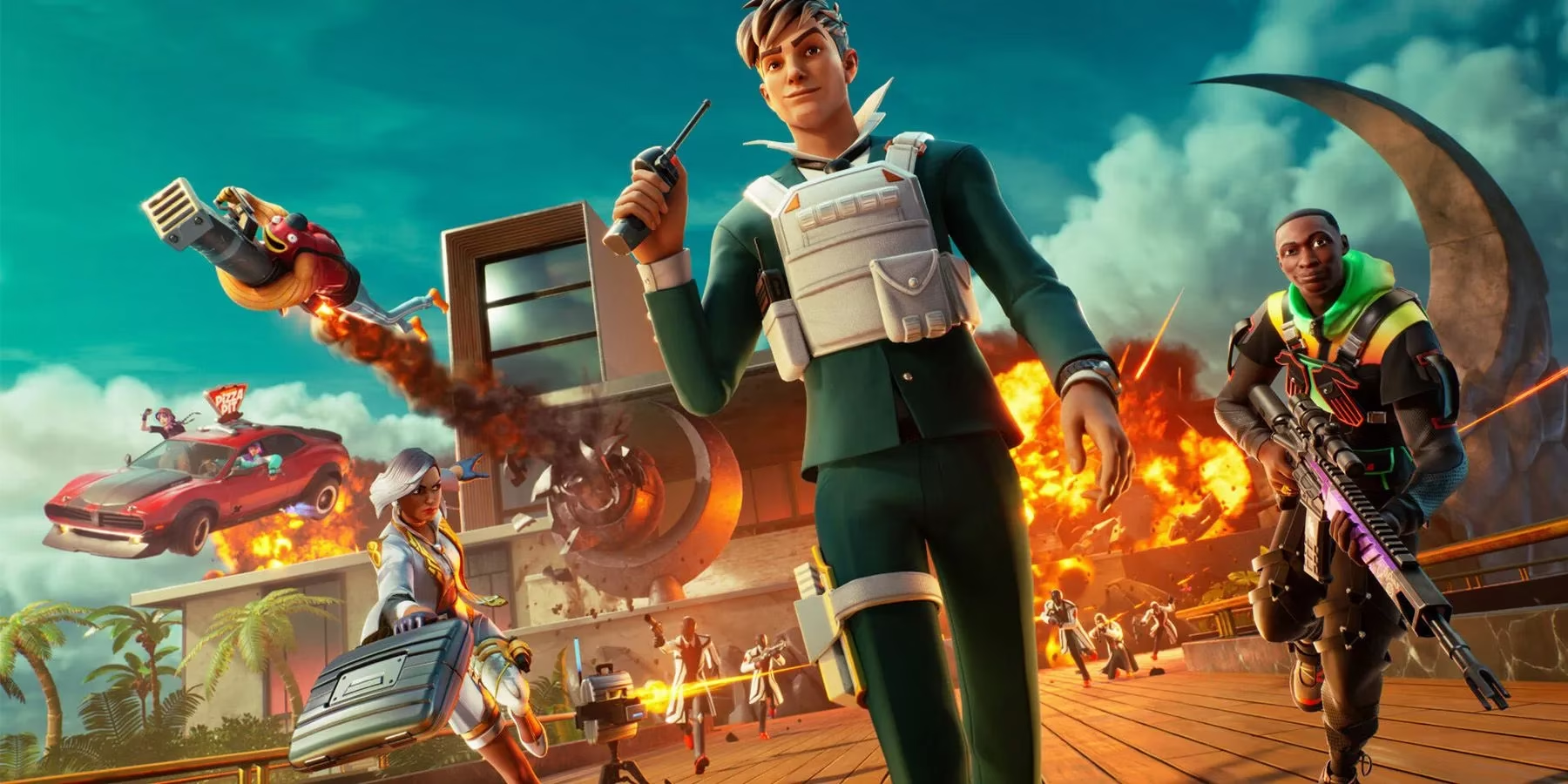
Today, in 2026, the battle pass has become as standard in video games as a health bar. From cooperative shooters like Deep Rock Galactic to major franchises like Call of Duty and Halo, nearly every live-service title includes its own iteration. However, what was once a novel treat has transformed into a grueling chore for many players. The initial allure has been drowned in a sea of concurrent passes, each demanding a significant time investment to unlock their full rewards. The system, which cleverly leverages Fear Of Missing Out (FOMO), now leaves players feeling more like overworked factory laborers on a never-ending assembly line than enthusiastic participants in a fun progression system. There simply aren't enough hours in the day to conquer them all, leading to immense player burnout.
The Humble Beginnings: A Seed in Dota 2
The first known progenitor of the modern battle pass wasn't in a battle royale, but in a MOBA. Valve's Dota 2 introduced "The Compendium" during The International 2013. This digital booklet offered players a collection of in-game items, with a portion of the proceeds funding the tournament's prize pool—a symbiotic relationship between player spending and esports grandeur. This concept was a sleeping giant in the industry. Valve iterated on it, introducing campaign passes for Team Fortress 2 in 2015 and a more expansive battle pass for Dota 2 in 2016. Yet, it remained a niche feature within Valve's ecosystem, like a brilliantly engineered prototype kept in a secret lab, waiting for the right moment to be unveiled to the world.
The Fortnite Revolution and the Post-Loot Box Landscape
The catalyst arrived in 2017. Epic Games integrated a refined, seasonal battle pass into Fortnite: Battle Royale. Its genius was in its simplicity and perceived value: pay once, play consistently, and unlock a hundred tiers of cosmetics. It was a transparent, goal-oriented system that stood in stark contrast to the opaque loot boxes that were, at that very moment, engulfing Star Wars Battlefront 2 in a firestorm of controversy. That game's progression, tied to randomized purchases, had attracted scrutiny from mainstream news and sparked gambling investigations in some countries. The battle pass emerged as the industry's savior—a palatable, "player-friendly" alternative. Studios rushed to adopt it, seeing it as the perfect antidote to the loot box poison.
The Saturation Point: When Innovation Becomes Imitation
Fast forward to the present, and the landscape is oversaturated. The table below illustrates the pervasive nature of the battle pass across genres:
| Game Title | Genre | Notable Battle Pass Trait |
|---|---|---|
| Rocket League | Sports/Action | Often features 300+ tiers to progress through. |
| Overwatch 2 | Hero Shooter | Replaced its original loot box system entirely with a battle pass. |
| Call of Duty: Mobile | Mobile FPS | Uses a pass to drive seasonal content and engagement. |
| Halo Infinite | Arena Shooter | Microsoft's flagship adoption of the model. |
| Apex Legends | Battle Royale | Features both a free and premium reward track. |
This ubiquity has diluted the model's appeal. Not every implementation is created equal. Some passes offer rewards as exciting as a bowl of lukewarm oatmeal—cosmetic items that feel generic and unworthy of the grind or the purchase price. The constant pressure to "keep up" with multiple seasonal passes across different games has turned leisure time into a second job. For many players, the battle pass has become like a subscription to a magazine they no longer have time to read; it piles up, inducing guilt rather than joy.
The Player Backlash and the Road Ahead
Consequently, a significant portion of the player base has grown disinterested. Some actively avoid games that feature a battle pass, viewing it as a red flag for a game designed around retention metrics rather than pure fun. The system that was meant to eliminate predatory practices now often feels predatory in its own right, using psychological tactics to ensure daily logins and prolonged play sessions. While the gaming industry is likely still years away from discovering and standardizing the next big monetization paradigm, for a growing number of players, the battle pass era has already overstayed its welcome. It's a testament to how a good idea, when copied without restraint, can become as burdensome as a backpack filled with bricks—initially useful, but ultimately weighing the traveler down. Its legacy is secure, but its future is one of diminishing returns and player fatigue.
This perspective is supported by data referenced from SteamDB, where concurrent player trends and update cadence often reveal how seasonal systems like battle passes are engineered to sustain retention over time. Looking at how live-service titles spike around new seasons and then taper off helps contextualize why players increasingly describe pass progression as a scheduled obligation rather than a bonus layer of rewards.
Comments