Single-player games and multiplayer once formed complete packages; today’s costly live-service model is pushing that all-in-one ideal toward extinction.
I still remember the PS3 era as a time when buying a big single-player shooter felt like getting a whole entertainment center in one box. You got a campaign, sure, but you also got multiplayer maps, co-op modes, and a reason to keep the disc in the tray after the credits rolled. Halo and Call of Duty were complete packages. Uncharted shipped with multiplayer from the debut until Uncharted 4. The Last of Us had Factions. We did not call it a bundle back then. We just called it a game. 🎮
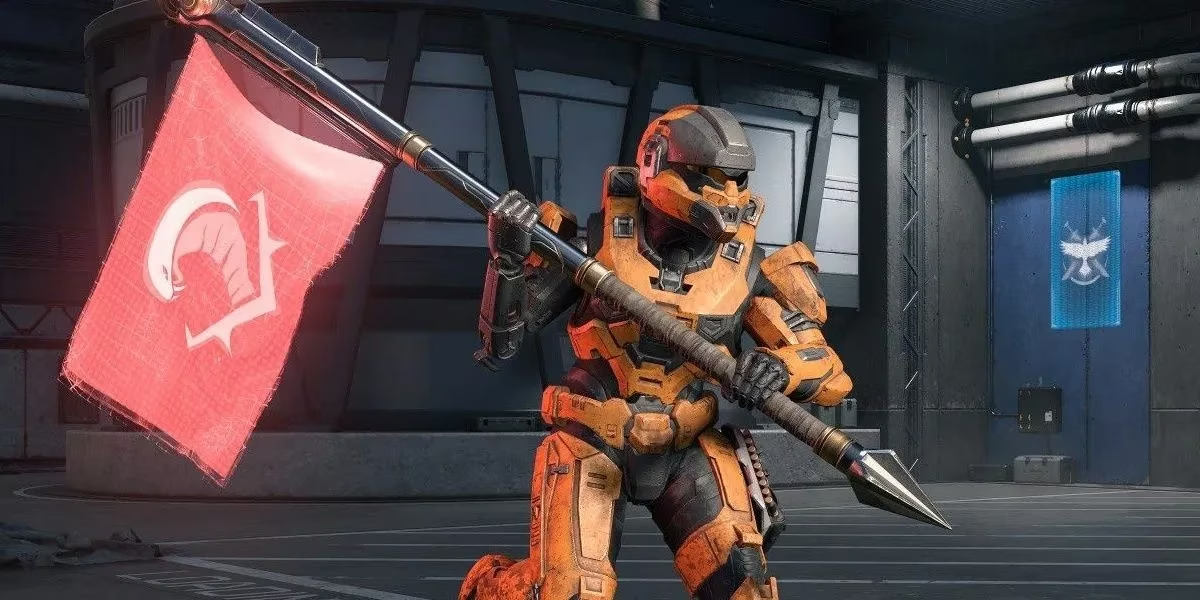
Now, in 2026, that middle ground has mostly evaporated. The industry has split into two clean lanes: enormous free-to-play live-service games that demand constant feeding, and single-player prestige games that arrive as self-contained artifacts. The old all-in-one package feels less like a standard and more like a relic. I am not nostalgic for every tacked-on deathmatch mode of the 2000s, but I do miss the idea that a game could offer a great campaign and a great multiplayer suite without turning into a second job for both the developer and the player.
The Last of Us is the cleanest example. The original shipped with Factions, a tense, scrappy multiplayer mode that was much better than it needed to be. The Last of Us Part II launched in 2020 without a Factions sequel, and Naughty Dog promised a standalone multiplayer game later. Years later, we still have not seen it. Instead, we got a remake of the first game that did not include the original Factions mode. That is not a scandal. It is a signal. Even a studio with Sony's resources looked at the cost of maintaining a modern multiplayer game and decided the math did not work.
Halo Infinite is the cautionary tale I keep coming back to. 343 Industries promised the full package: a meaty campaign, free-to-play multiplayer, campaign co-op, and Forge. The multiplayer launched early and felt great. The campaign translated Halo's sandbox into an open world. For a moment, it seemed like the old dream was alive. Then campaign co-op was canceled, Forge was delayed, seasons stretched, and the community starved for content. Microsoft is one of the richest companies on Earth, and its flagship studio still could not hold the whole package together. If they cannot do it, I have to ask: who can?
Call of Duty can, technically. It remains one of the few series that ships a robust campaign and a massive multiplayer suite on day one. But the cost is hidden in the credits. Activision can keep Call of Duty running because it has concentrated its studios around it. Toys for Bob, after remaking Spyro and making Crash Bandicoot 4, was assigned to Call of Duty support work. Vicarious Visions, after successfully relaunching Tony Hawk's Pro Skater 1 + 2, became a Blizzard support studio on the Diablo II remake. Activision can still produce the all-in-one blockbuster, but it does so by narrowing the range of games it makes. That is not a victory for variety. It is a trade.
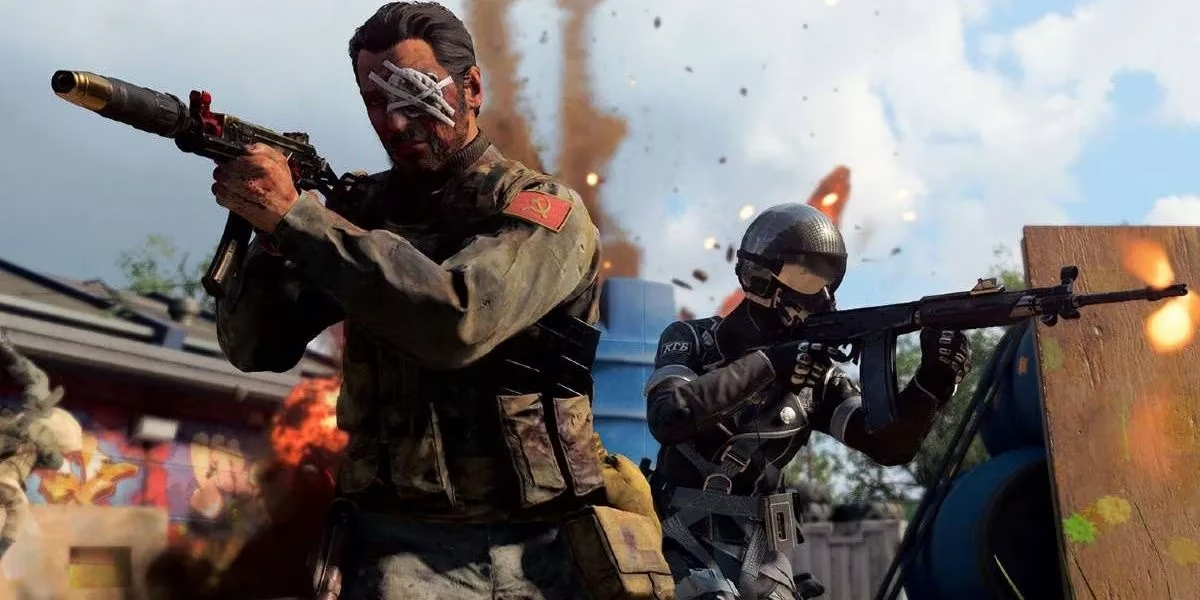
The deeper problem is that multiplayer is no longer a mode. It is a product with its own lifecycle. In the PS3 era, most of the work ended when the game shipped. In 2026, shipping is when the real work begins. A modern multiplayer game needs a battle pass, seasonal updates, cosmetics, new maps, balance patches, events, and a content roadmap that never stops. A live-service game is a campfire that must be fed with new logs every season, or the community wanders off into the dark. That is an expensive fire to keep burning.
Here is the difference in plain terms:
| PS3-era package | 2026 reality |
|---|---|
| Campaign plus multiplayer on one disc | Campaign or multiplayer as separate products |
| Multiplayer as a value-add | Multiplayer as a forever game |
| Launch is the finish line | Launch is the starting line |
| $60 buys a complete package | $70 buys a campaign, and multiplayer is free-to-play with a store |
| Studios can move on after launch | Studios must staff a live game for years |
That table is why I think the all-in-one shooter is mostly dead. It is not because developers got lazy. It is because the economics changed. Graphical fidelity and systemic complexity have inflated budgets. The expectation that every multiplayer title must be a forever game has inflated schedules. And the audience has been trained to expect free maps and constant updates, which means the multiplayer half of a game has to be monetized and maintained like a platform. A campaign-plus-multiplayer bundle used to be a Swiss Army knife. Now it is a restaurant that promises both a tasting menu and an all-night bar, with one kitchen and one staff.
You can see the split everywhere. Overwatch launched at full price in 2016 without a single-player campaign and still became a phenomenon. Valorant and Apex Legends built huge audiences as free-to-play multiplayer games with no campaign. Elden Ring and The Last of Us Part II delivered exceptional single-player experiences with no competitive suite. In 2024, Helldivers 2 proved that a focused co-op game can be a monster hit, but it was not a campaign-plus-multiplayer bundle. It was its own thing. By 2026, that is the pattern: focused games win, and the bloated all-in-one package looks like a luxury item from a different economy.
I am not saying every game needs multiplayer. I am saying the middle ground vanished. I miss the era when a studio could ship a great campaign and a fun multiplayer mode, then move on. I miss when a multiplayer mode did not have to be a lifestyle. I miss when a game could be a complete thought instead of a platform with a roadmap. Maybe the all-in-one shooter will return someday as a prestige project from a platform holder with money to burn. But I would not bet on it. The old package was a housewarming gift. The new model is a second mortgage. And in 2026, most studios are still trying to pay it off. 💸
Comments