From the Orion Project to Spartan-II, Halo's super-soldier programs crafted humanity's ultimate warriors, each generation leaving a brutal legacy.
It's 2026, and looking back at the Halo universe, it's crazy to see how humanity has been playing the ultimate game of tug-of-war with extinction. The species has been dangling over the abyss more times than anyone cares to count, and honestly, the Spartans have been the ace up the sleeve the whole damn time. These aren't just soldiers; they’re the walking, talking embodiment of humanity saying, 'Not today, universe.' But here’s the kicker: not all Spartans are forged in the same fire. The program has had more glow-ups and gritty reboots than a Hollywood franchise, with each generation carving out a different slice of history.
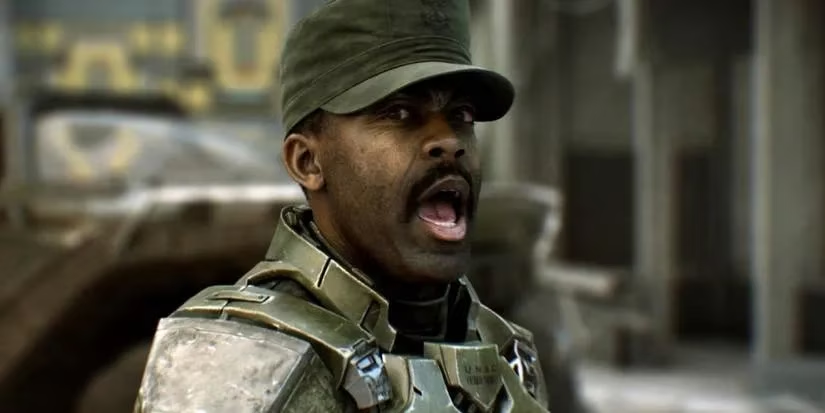
Let’s kick things off with the grandpappy of them all, the Orion Project. This is where the UNSC first decided to dip its toes into the super-soldier pool during the mid-24th and late 25th centuries. The latter push was a direct response to anti-government insurrection movements getting way too big for their britches. They rounded up upwards of 300 military personnel as test batches. The goal? Tweak their eyesight, bulk up their skeletal structure, soup up their respiratory and nervous systems, pushing them just a notch above peak natural human performance. It was a mixed bag, a real roll of the dice. Some candidates hit the lottery and served in physical roles for decades longer than any normal Joe, while others got the short end of the stick with various medical conditions cropping up like weeds later in life. A poster boy for the project's success was undoubtedly Avery Johnson. That tough old bird was physically in his 50s but technically pushing his 70s due to cryosleep when he met his end in Halo 3. Talk about aging like fine wine, right? But Orion was just the opening act.
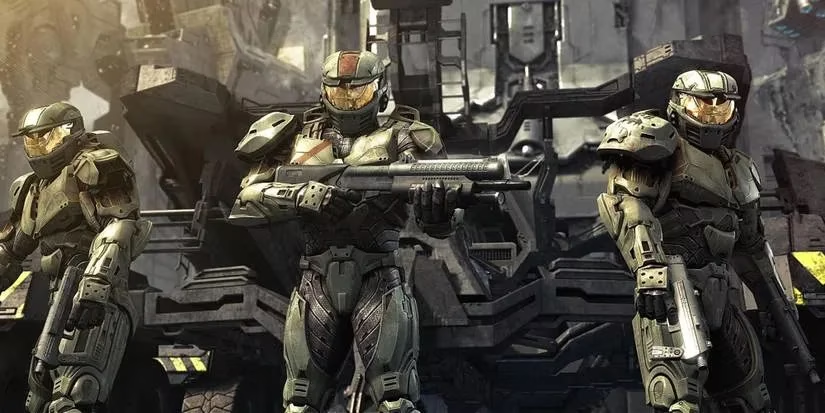
Fast forward to a period of political hot water threatening to boil over into civil war, and enter the Spartan-II Program. This wasn't a volunteer gig. Spearheaded by the brilliant and utterly ruthless Doctor Catherine Halsey, the project kidnapped 75 children, hand-picked for their genetic perfection, and put them through a hellish regimen of indoctrination, physical conditioning, and brutal surgical and genetic augmentation. The process was gnarly, and the survival rate was a coin toss—only about half made it through without being crippled or killed. These survivors were the ultimate bogeymen to insurgent forces, and when the Human-Covenant War kicked off, they became the shiny, morale-boosting propaganda pieces humanity desperately needed. Decked out in the iconic Mjolnir armor, they were the next step in evolution, the best hope for survival. Few Spartan-IIs lived to see the war's end, but those who did, like the Master Chief, are the stuff of legend and are still kicking around on active duty. They set the gold standard, but they cost a king's ransom and took forever to produce.
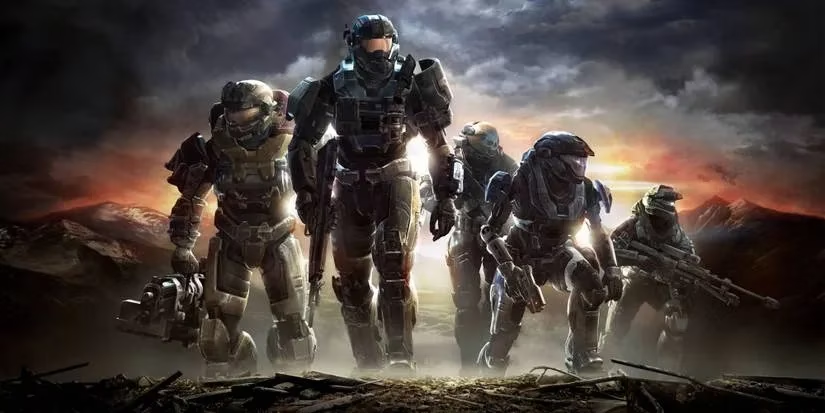
With the war going sideways and human colonies getting glassed left and right, the UNSC needed a cheaper, faster option. Cue the heart-wrenching creation of the Spartan-III Program. Cooked up in secret without Halsey even knowing, this program pulled a page from a tragedy. The candidates were orphans—children from worlds torched by the Covenant. Their hatred for the enemy was a tool, a weapon the UNSC shamelessly sharpened. They were trained not just to fight, but to be disposable assets. Most Alpha and Beta companies were sent on suicide missions, a grim but effective use of resources to buy time. They wore cheaper SPI armor, not the fancy Mjolnir rigs. Some exceptional performers were pulled from the meat grinder for more strategic tasks, with a lucky few like Noble Team getting the Mjolnir upgrade. But for the vast majority of the hundreds who went in, it was a one-way trip. The survivors are a rare, haunted breed.
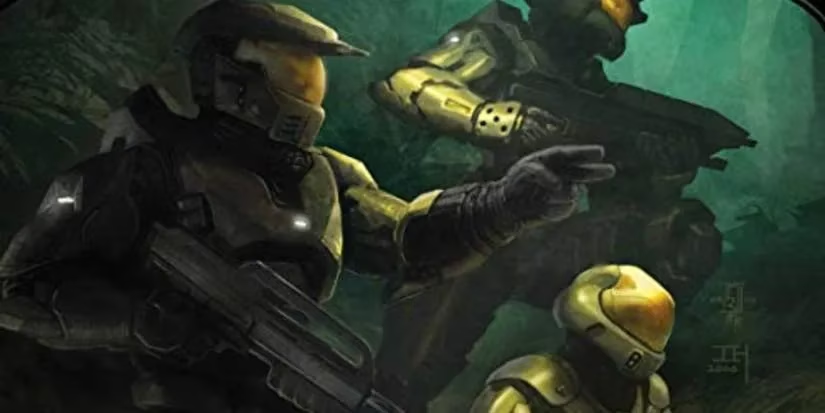
Now, let’s spill the tea on a particularly dark corner of the program: the Spartan-III Gamma's. Under the watch of their handler, Spartan Kurt-051, Gamma Company subjects were given extra, highly illegal augmentations intended to boost their combat effectiveness and survival odds. This was sketchy even by the UNSC's already flexible moral code. As of 2573, over 300 of these Gamma Spartans are reportedly still alive, but they carry a terrifying kicker. To keep their brains and bodies from literally unwinding, they need a dose of antipsychotics and anti-mutagens—nicknamed 'Smoothers'—every single 12 hours. Miss a dose, and you’ve got a paranoid, hyper-agile killing machine spiraling into a full-blown psychotic break. No pressure, right? Medical implants and heavy stocks of these Smoothers are a mandatory feature on any ship or outpost where a Gamma Spartan walks the halls. It’s a formidable enhancement with a nightmarish catch-22.
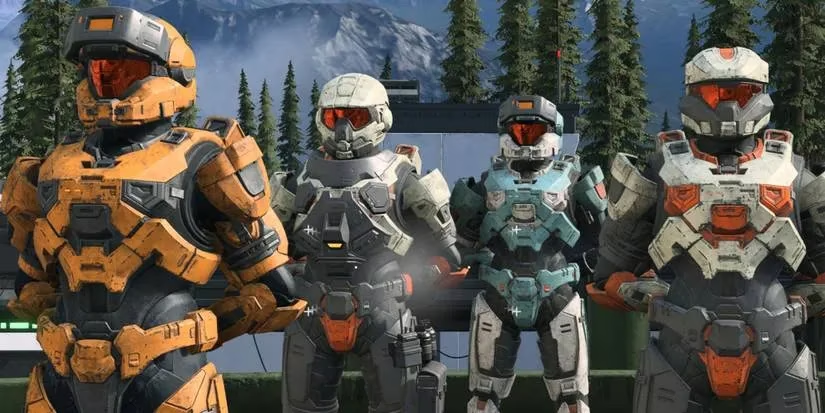
Finally, we land in the present day with the Spartan-IV Program, the ongoing revision that’s a true step toward making the Spartan the new baseline. This isn't about kidnapping kids or exploiting orphans. The Spartan-IVs are hand-picked adults, the absolute best-of-the-best from every military and intelligence branch. It’s the ultimate all-star team promotion. However, their debut came just as the galaxy lost its mind. Cortana’s uprising and the shattering of the United Earth Government’s military command left these new Spartans splintered across the stars. Some are holding the line in active combat roles against Banished forces and rogue AI arrays. Others have pivoted to vital support and relief efforts, putting their augmented muscles to work evacuating civilians and running refugee centers away from the hot zones. They’re not just weapons anymore; they’re guardians. From the rough-and-ready Orion soldiers to the chemically-bound Gamma IIIs, and now to the versatile Spartan-IVs, each generation has shaped humanity’s story, for better or worse. The saga is a total rollercoaster, and something tells us the ride is far from over.
Comments