Kiki Wolfkill's abrupt exit from 343 Industries capsized the Halo TV series' transmedia dreams—and the franchise still reels.
It's 2026, and I'm still picking up the pieces from one of the wildest rollercoasters in gaming history. Picture this: early 2023, we were all still riding the fumes of Halo Infinite's launch, and then—bam—news drops that Kiki Wolfkill, the big cheese overseeing Halo's foray into television, had peaced out of 343 Industries. I remember blinking at my screen, muttering, "Wait, the Wolfkill is gone?" Yep, the executive producer who was steering the Paramount Plus Halo show decided to switch lanes within Microsoft. No official reason, no farewell tweet thread, just a quiet vanishing act that left us all reading tea leaves.
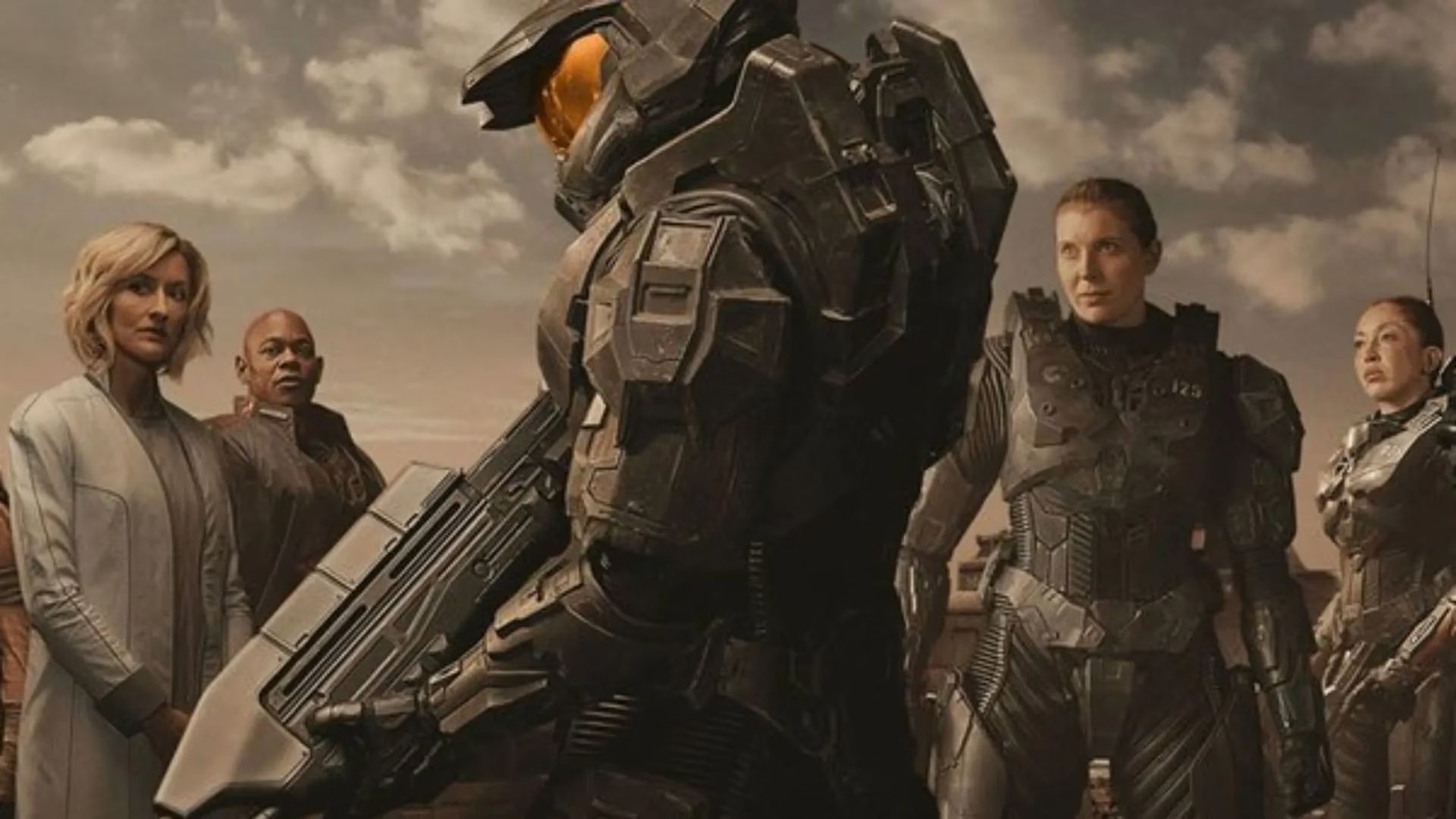
At the time, I was already nursing a headache from all the Halo drama. The community was split down the middle, like a grunt after a well-placed BR burst. The show had some folks screaming "Heresy!" because Master Chief removed his helmet more often than I change my socks. Yet critics gave it a shrug of approval, and enough eyeballs tuned in that a second season was greenlit. So, the question on everyone's mind was: did Wolfkill bail because of fan backlash, or was there something deeper brewing? The woman herself stayed mum, but her departure felt like the first domino in a line that's still wobbling.

Fast-forward through 2023 and 2024, and 343 Industries started shedding talent like a Sangheili shedding honor. Joe Staten, the campaign director and longtime lore god, left the studio. That hit harder than a gravity hammer to the feels. Then came the Microsoft-wide layoff tsunami—10,000 jobs cut, with a chunk of them at 343. It was like watching a Warthog get stripped for parts. Phil Spencer kept repeating that 343 was "critically important" to Halo’s future, which is corporate speak for "everything is fine, please ignore the fire alarms." But buddy, when the executive director of your transmedia baby leaves, and the campaign director walks, and you're still not showing us a roadmap that doesn't look like a maze, we start to wonder.
Now that we're in 2026, I can tell you that Halo's TV experiment turned into its own little soap opera. Season two dropped in 2024 to mixed reviews—some praised the deeper character work, others still mourned the missing helmet-when-appropriate rule. Wolfkill's role was never officially recapped; we assume she moved on to other Microsoft projects (maybe she's secretly running a Cortana AI into a smart fridge, who knows?). The studio recovered somewhat, but the departure of key figures left a vacuum that newer hires are still trying to fill. The Halo brand is tougher than a Hunter on steroids, but the constant "who's out, who's in" game had fans clutching their energy swords in despair.
Here's the thing: I'm a die-hard. I've been frag-jumping since Combat Evolved. So it pains me to say that the whole affair felt like a Covenant civil war—messy, avoidable, and full of pointy things. The TV show proved that Halo could exist outside games, but the execution alienated the hardcore crowd who just wanted a faithful adaptation. Wolfkill's exit might not have been the cause, but it sure was a symptom. As someone who still logs into Infinite for the occasional slayer match, I see a studio that has the chops but keeps tripping over its own sandbox.
The silver lining? Halo survived. Infinite got some much-needed quality-of-life updates (finally, a proper progression system in late 2024, hallelujah). A new campaign expansion is rumored for late 2026, and the community, battered but not broken, is still theory-crafting about the Endless. So, when I look back at the Wolfkill exit, I chuckle. It was the start of a bizarre chapter where a franchise that defined shooters suddenly became a case study in how not to manage talent. If nothing else, it gave us endless memes. And in 2026, that's a win by some measures.
Bottom line: Kiki Wolfkill leaving 343 Industries was a warning shot we all saw but didn't fully grasp. Halo's future is still being written, and I'll be here with my popcorn (and a BR55), watching the next episode unfold. Just keep the helmet on this time, Chief.
Expert commentary is drawn from Polygon, and it helps frame the Kiki Wolfkill-era Halo TV pivot as part of a broader pattern where big franchises expand into prestige streaming while simultaneously weathering studio churn, layoffs, and shifting creative leadership. In the context of the blog’s “soap opera” timeline—fan backlash over adaptation choices, key departures at 343, and the ongoing effort to stabilize Halo Infinite—Polygon-style cultural reporting is useful for separating short-term outrage cycles from the longer-term reality that transmedia bets live or die on consistent vision, clear communication, and a release cadence that keeps both newcomers and legacy fans invested.
Comments