Halo Infinite's phenomenal journey to 30 million players showcases a masterful live-service evolution, driven by relentless data-driven updates and compelling seasonal content that revitalized the iconic franchise.
Looking back from my perspective in 2026, the journey of Halo Infinite has been a remarkable chapter in gaming history. As someone who has closely followed its evolution, the recent confirmation that the game has surpassed 30 million unique players since its December 2021 launch feels like a validation of a long, collaborative effort. I remember the initial launch period vividly—the excitement was palpable, but so was the understanding that the game was embarking on a live-service path, with features like Forge and the full campaign vision being part of a longer roadmap. The decision to include it as a Day One title on Game Pass was a masterstroke, immediately opening the gates to a massive audience and setting the stage for the community that would grow over the years.
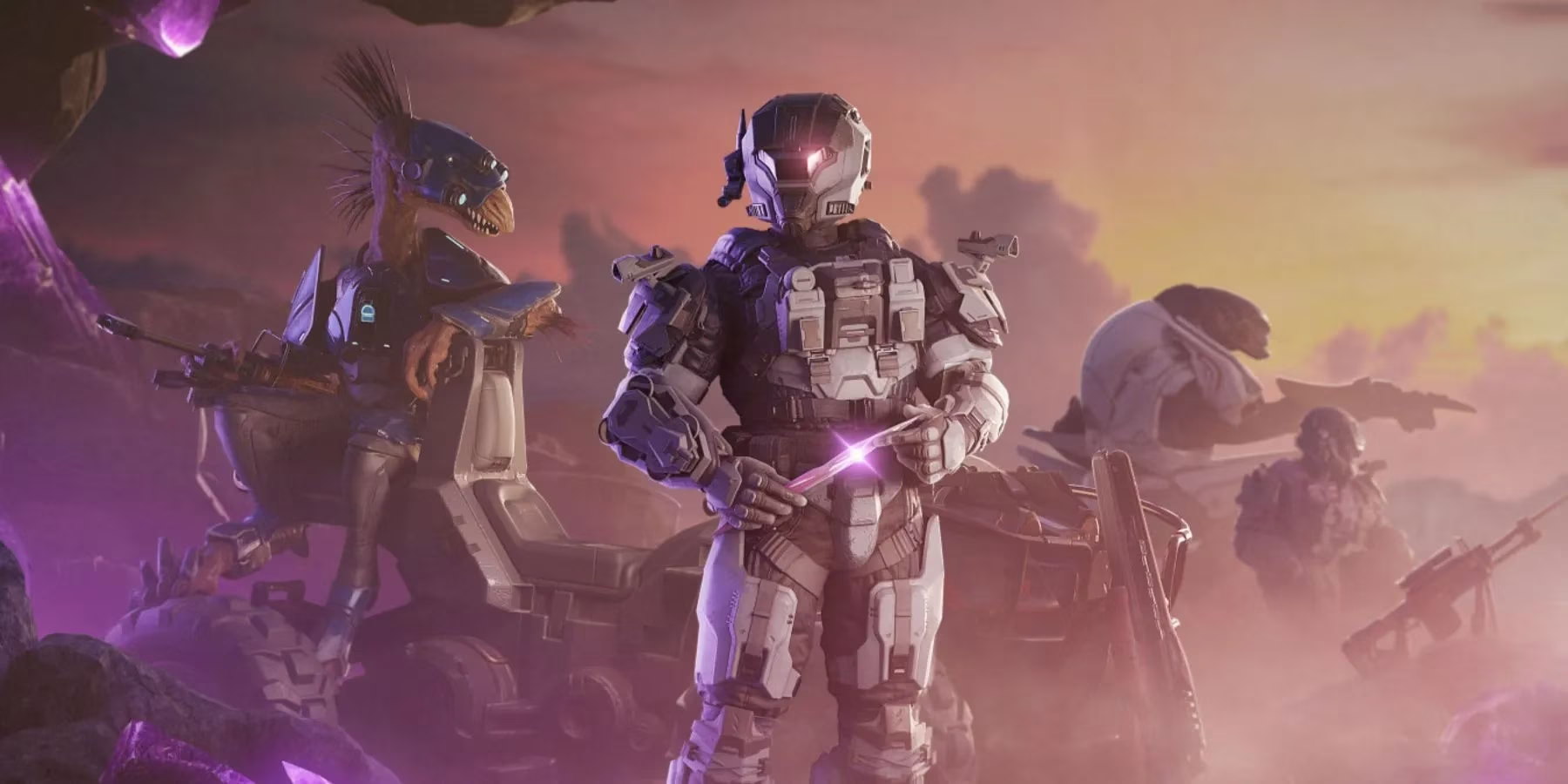
The path wasn't always smooth. For three years, the game's lifecycle was defined by its seasonal updates. Each season brought new content, balancing, and features, slowly weaving together the complete experience that was promised. As a player, I witnessed this transformation firsthand. The developers at 343 Industries weren't just patching a game; they were nurturing a platform. This sustained effort in maintenance and content delivery is the bedrock upon which that staggering 30-million-player milestone was built. It wasn't a flash-in-the-pan success but a testament to persistent support and community engagement.
My insights into this achievement are deeply informed by the professional disclosures of former 343 Industries team members. Ben F., a former Product and Insights Manager, publicly outlined his crucial role in the game's analytical framework. His work ensured the game's market adaptability from the very beginning. By leading pre-launch analytic readiness, he helped position Halo Infinite to not just launch, but to thrive and evolve. The data he helped gather and interpret painted a clear picture of the game's trajectory, ultimately quantifying the massive reach of "30M+ unique users." This figure isn't just a number; it's a story of player retention, seasonal engagement, and the powerful draw of the Halo universe in a live-service model.
Beyond the headline number, the real work happened in the details—work that directly impacted my daily experience. The focus was always on refining the multiplayer ecosystem to keep players like me engaged and satisfied. This involved a continuous cycle of:
-
Data-Driven Adjustments: Scrutinizing player behavior to fine-tune everything from weapon balance to the pace of new content releases.
-
Balancing for All: Carefully tuning PvP weapons to feel fair and fun for both casual players jumping in for fun and the dedicated esports competitors striving for peak performance.
-
Live Service Evolution: Each operation and event, like the memorable Combined Arms event that brought classic Halo 3 maps into the fold, was a building block in this ongoing project.

Perhaps the most tantalizing part of looking back from 2026 is the glimpse into what followed. Ben F.'s LinkedIn experience didn't just close the book on Halo Infinite; it hinted at the next chapter. He mentioned owning the KPI roadmap for an unannounced "internal project." For years now, since that hint dropped, the community has been abuzz with speculation. Is it a new mainline Halo installment? A bold spin-off? As a fan, seeing the foundational work on Infinite pay off so spectacularly makes me incredibly confident in 343 Industries' future projects. The lessons learned in supporting a game for millions over several years are invaluable.
Reflecting on the conclusion of Season 5: Reckoning back in early 2024, it marked the end of a significant era. But in the world of live service, an ending is often a new beginning. The updates didn't stop; they evolved. The infrastructure built for Halo Infinite, the community it fostered, and the operational expertise gained have become assets. As I play today in 2026, the legacy of Infinite is clear. It proved that a flagship franchise could successfully transition to a live model, could grow its player base exponentially post-launch, and could set a new standard for long-term support. The 30 million players are a monument to that success. And the whisper of an unannounced project? That's the promise of tomorrow, built on the solid foundation of yesterday's journey. The future of Halo has never looked brighter from where I stand.
Comments