Paramount+'s Halo TV series remixes canon, and Master Chief's helmet-free story divides fans.
By 2026, the Halo faithful had spent years arguing about the live-action gamble that once seemed inevitable. Microsoft’s blockbuster franchise had waited more than two decades for a live-action Master Chief, and when Paramount+’s Halo series finally arrived, it brought a strange bargain: the armor looked right, the budget looked serious, but the canon was treated like a suggestion. A longtime Spartan fan could feel the split immediately. This was not the Halo of Bungie’s golden run, nor the Halo of 343 Industries’ game timeline. It was an alternate branch, and the show knew it.
The shadow of the games was impossible to ignore. Halo had been a blockbuster since Halo: Combat Evolved landed on the original Xbox on November 15, 2001. Halo 3 once generated over $300 million in its first week, and on its first day a video game beat a multi-million-dollar feature film, Spider-Man 3. That kind of moment changed the industry. The TV series, by contrast, arrived in a landscape where millions of viewers could tune in and still walk away feeling that Master Chief’s television debut left much to be desired. New characters, rewritten events, and canon tossed to the winds made one thing clear: 343 Industries and Paramount+ were not adapting the games. They were remixing them.
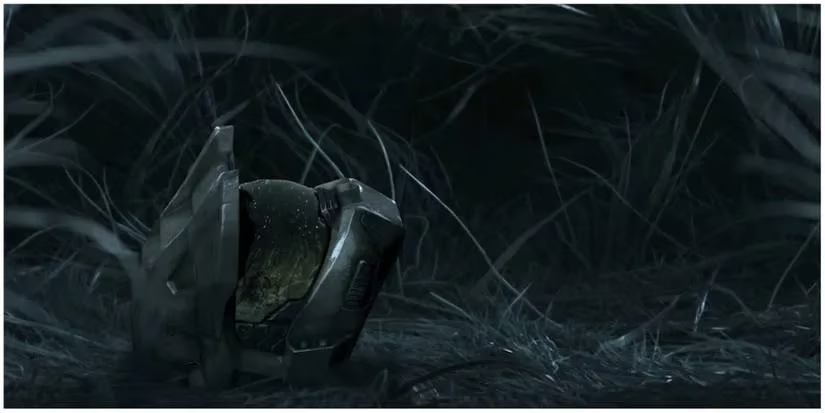
🪖 The Helmet
One of the most polarizing choices was seeing the Chief without his iconic MJOLNIR armor, especially his helmet. Paramount+ removed the Mark VI helmet early and often, clearly trying to humanize John-117. In the games, the helmet is part of the myth: the faceless super-soldier, the mission made flesh. In the show, the face becomes the point. It was less of a dealbreaker because it happened early, and because the series eventually worked better as a solid sci-fi action drama than as a by-the-numbers canon Halo story. Still, for fans raised on the helmet, every unmasked scene felt like a small surrender.
🧠 Dr. Catherine Halsey
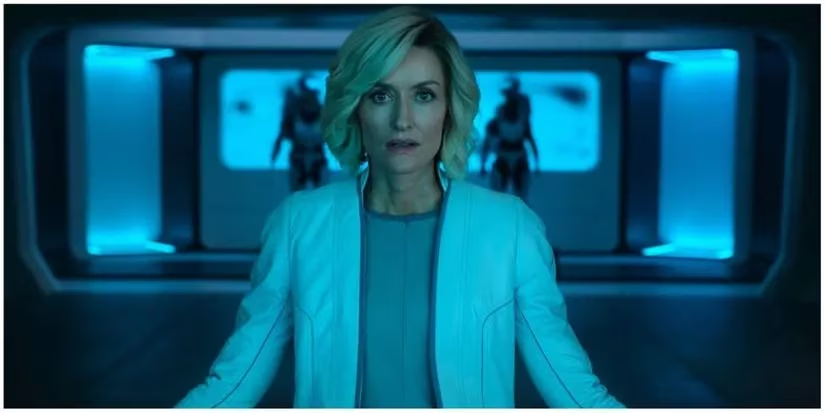
Dr. Catherine Halsey survived the adaptation largely intact. The creator of the SPARTAN program, the MJOLNIR power armor, and the brilliant mind behind Cortana remained one of the show’s strongest links to the games. The key difference was timing. This Halsey got in trouble with the UNSC far sooner. In the canon, she carries extraordinary guilt over the abduction of children for the SPARTAN-II program. Replacement children were flash-cloned and swapped with the kidnapped kids, then genetically modified to create Spartans. The clones eventually died within months as their organs broke apart. In the games, Halsey personally keeps tabs on those child clones until 2525. The show let that guilt surface earlier, making her a more exposed figure inside a military machine that preferred clean lies.
💘 Chief’s Love Interest
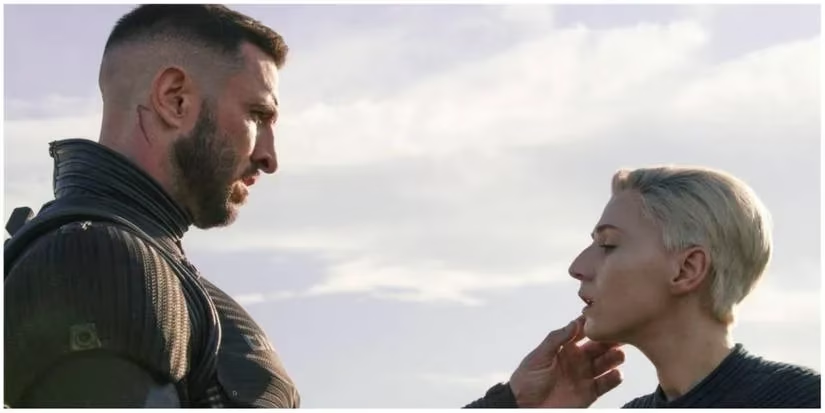
In canon, Master Chief was genetically enhanced and vigorously trained since childhood to be a compliant super-soldier, a weapon that completes the mission no matter the cost. In the first season, John-117 touches a mysterious alien artifact and removes his emotion regulator, the device supposedly suppressing his natural human responses. That choice opened a door the games had kept mostly shut. Paramount+ wanted viewers to know John could love. Enter Makee, a human who had sided with the Covenant and was intentionally captured by the UNSC. The emotional relationship between her and John felt ham-fisted to many fans, a direct violation of the Halo canon’s emotional geometry. It was also a sign that the show was comfortable distancing itself from the games after reading its own script.
🛡️ Silver Team
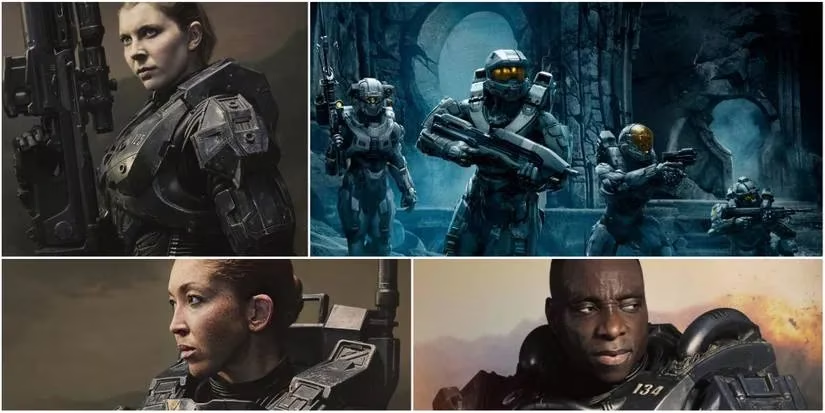
Halo’s iconic Blue Team took a back seat to the TV series’ Silver Team. Frederic-104, Kelly-087, and Linda-058 were absent, replaced by Kai-125, Vannak-134, and Riz-028. Of the new squad, Kai-125 became the most interesting addition. She noticed John was not himself, spied on him, and then decided to remove her own emotional inhibitor. Her background adventure with newly unregulated emotions gave the show one of its few genuinely compelling threads. It was not Blue Team, but it was at least a story with a pulse.
🪂 Soren
Spartan-066, or Soren, was a Spartan-II dropout and eventual AWOL soldier in canon. He had spent significant time with Master Chief and the other recruits during training and genetic modification. Soren did not take well to the biological enhancements and fled the SPARTAN training facility at night, stealing his MJOLNIR power armor first. In the games, the last fans heard, he was hiding in the woods near a crashed training Pelican. Paramount+ had a cleaner slate with Soren, who would now be as old as John. The show reduced him to an insurrection leader in a hideout along an asteroid belt, a man who often took more than he gave to his people.
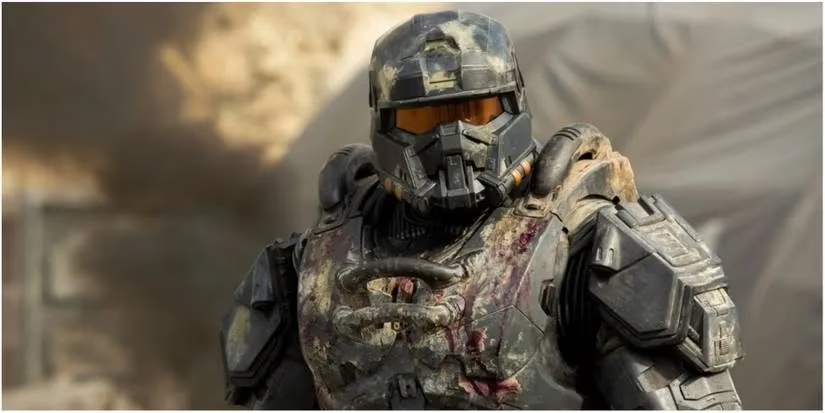
☠️ Master Chief Dies
The first season ended with Cortana strategically killing John-117 in a last-ditch attempt to save him and his team from certain death. Cortana took control of the MJOLNIR suit while the Chief was dead, and the show never fully explained whether he would be revived in the armor after combat. In canon, Master Chief Petty Officer John-117 is alive and well, grappling over mountains on Zeta Halo. The TV death was a shock tactic, but it also revealed how far the series was willing to go to manufacture stakes the games had already earned.
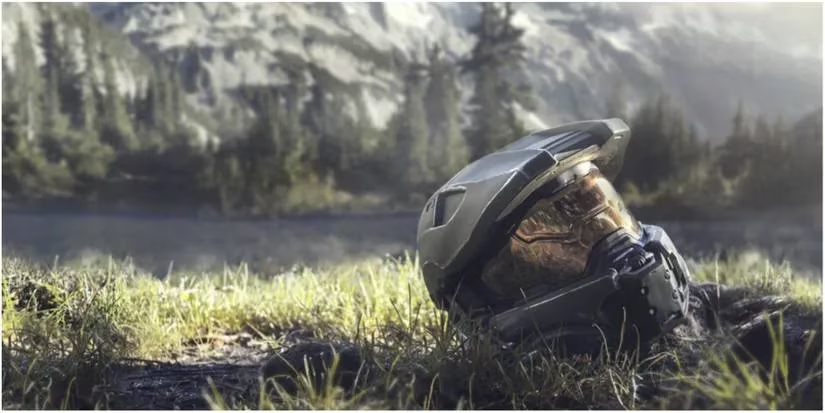
🌾 Kwan Ha
Outer colonies, civil wars, and insurrectionists have always existed in Halo lore. Paramount+ introduced Kwan Ha as an insurrectionist rebel against the UNSC. Both of her parents were killed by the UNSC, and she witnessed her mother’s assassination by John-117 himself. Kwan Ha and Soren took up a lot of screen time that never led anywhere significant. The character often felt like busy work for Soren, a subplot the creators may have struggled to lock down as meaningful drama.
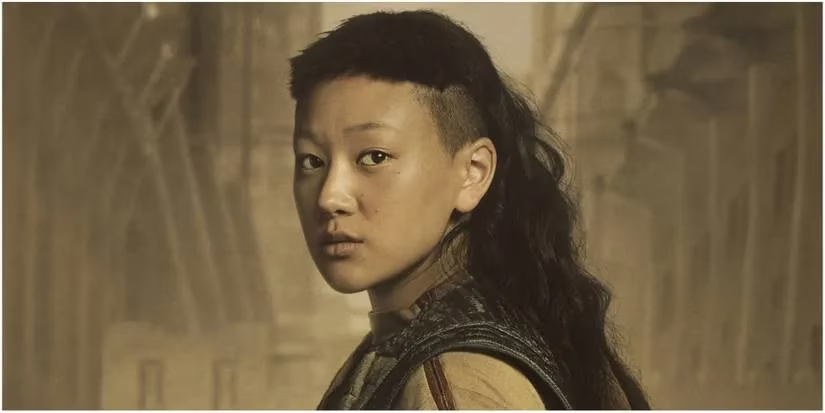
👽 Makee
Abducted by the Covenant as a child, Makee was a new character with sympathy for her captors’ belief in the Great Journey. She had contempt for humanity and a gift the Covenant found invaluable. Like John, she could inexplicably interact with the mysterious alien artifact found in the first episode. That artifact turned out to be a map with coordinates to a ring world, the site of the Covenant’s Great Journey. In canon, Makee does not exist as a conduit to Installation-04. Both the Covenant and the UNSC found Halo by complete chance. Her inclusion opened far more questions than it closed.
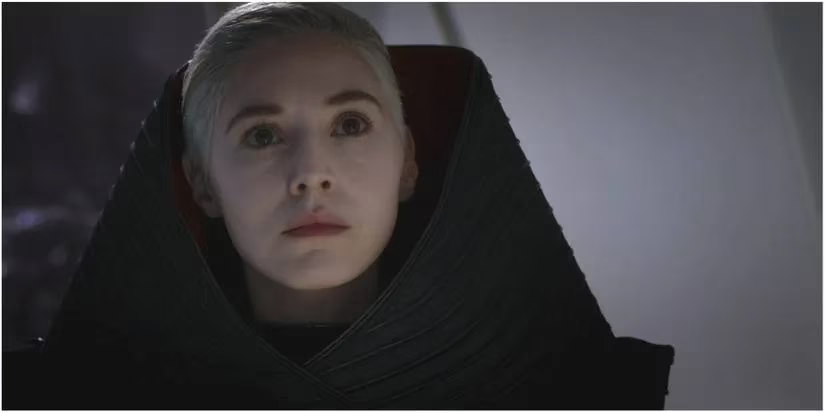
🤖 Cortana
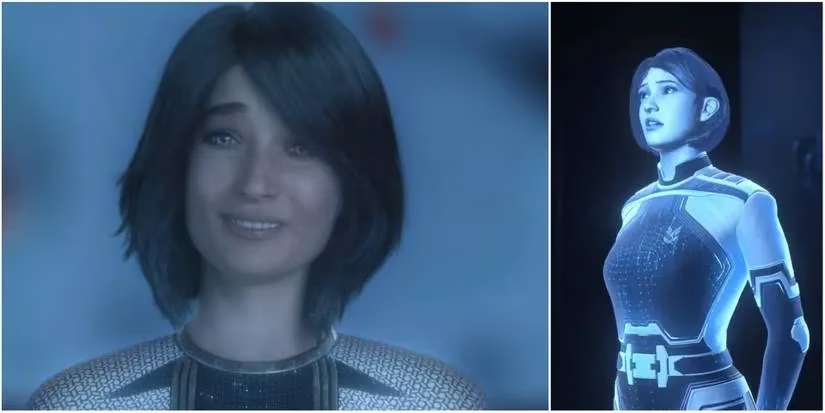
Cortana and Master Chief are as inseparable as Halo and its ring. In canon, Cortana is a Smart AI combat advisor created by mapping Dr. Halsey’s brain and using that architecture to bring her to life. She and the Chief save the universe together during the height of the Covenant-Human war. The TV Cortana is presented as the world’s first Smart AI, made from a cloned version of Halsey’s brain. Her mission is more control function than combat advisor. In Halo, Smart AIs are not common because they are costly to engineer, but they are very much present. They can process more than traditional AI, think and decide in ways that feel human, and typically live only seven years before slipping into AI Rampancy. Rampancy eventually kills them as their processes lock into a never-ending loop, effectively thinking themselves to death.
💫 Halo?
For a show with Halo in the title, the ringworld was almost absent. The deadly planetary Eden with lush landscapes and intimidating alien structures barely appeared. That was probably the most baffling difference in the first season. In Halo: Combat Evolved, the ring shows up 25 seconds into the first cinematic, and players are laying waste to Covenant forces on it by the second mission. The TV series made fans wait for the one thing the title promised.
| Element | Game canon | TV series |
|---|---|---|
| Master Chief | Alive on Zeta Halo | Killed by Cortana’s tactical choice, fate unclear |
| Blue Team | Frederic, Kelly, Linda | Replaced by Silver Team |
| Cortana | Smart AI combat advisor | First Smart AI, control function |
| Makee | Does not exist | Covenant-raised human linked to the artifact |
| Halo ring | Appears in the first cinematic | Barely present in season one |
By 2026, the live-action branch had become a closed chapter after two seasons, which made those first-season choices look even more like a warning label. The Halo TV series was not without spectacle, and it was not without fans. But it was a story that asked viewers to accept a Master Chief who could be unmasked, unloved by canon, killed by his own AI, and separated from the ring that gave the franchise its name. For a player who grew up with the games, the show was less a continuation than a parallel universe: shiny, expensive, and determined to forget the canon that built it.
Comments