Halo's Master Chief rarely gets thrilling hand-to-hand fights, but Red vs. Blue set a gold standard the games should match.
In the long history of Halo, Master Chief has been many things: a supersoldier, a symbol, a weapon. But by 2026, one thing he has rarely been is a visually thrilling hand-to-hand fighter. The games tell players he is faster and stronger than almost any human, yet when cutscenes ask him to brawl, the results can feel oddly muted. That contrast has become harder to ignore, especially because Halo's own extended universe once delivered some of the best fight choreography on the internet.
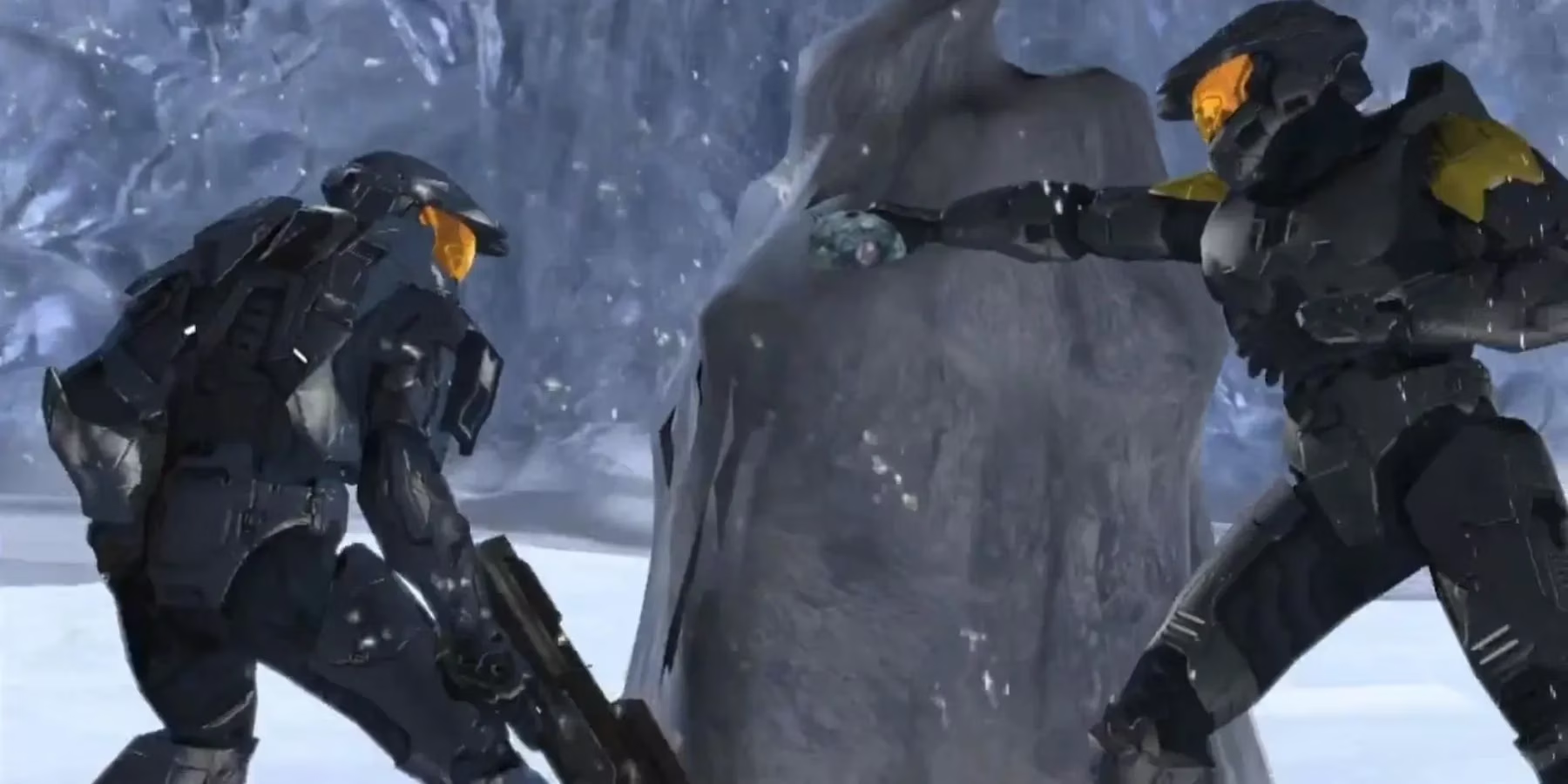
The Halo franchise has never relied on games alone. Its novels built a sprawling universe, and its web series helped define a generation of online entertainment. Among those, Rooster Teeth's Red vs. Blue became a phenomenon in the 2000s. The show began as a comedy about soldiers arguing in a box canyon, but it evolved into something far more ambitious. Characters like Caboose kept the jokes coming, yet the action sequences became a major reason fans tuned in. Beginning in Season 8 and reaching absurd quality in Seasons 9 and 10, Red vs. Blue used machinima to explore the Freelancers in ways the games rarely attempted.
⚔️ The Red vs. Blue Standard
Those fights were not merely filler. They were events. Tex, Carolina, and other Freelancers moved with speed, precision, and confidence. They punched, kicked, jumped, countered, and used their armor as an extension of their bodies. The late Monty Oum helped choreograph many of these sequences, and his influence turned characters like Tex into icons who could look cooler than Master Chief himself. Music matched the intensity. Editing sold the impact. Above all, speed mattered. Red vs. Blue understood that a Spartan should feel like a blur of violence, not a heavyweight trading slow jabs.
That standard makes some modern Halo cutscenes feel frustrating. Gameplay has always been the series' greatest strength, but action-heavy cinematics have become a bigger focus. Moments like Atriox beating down Master Chief were solid in isolation. The Banished warlord felt massive and intimidating, and Chief even landed a flurry of punches to remind viewers he was dangerous. The scene's intent, however, was to show Chief struggling. That works for drama, but it also means players rarely see him showcase elite close-quarters skill. The power fantasy takes a hit when the hero's best melee move is often a gun butt, a basic punch, or an energy sword swing.
🥊 The Locke Problem
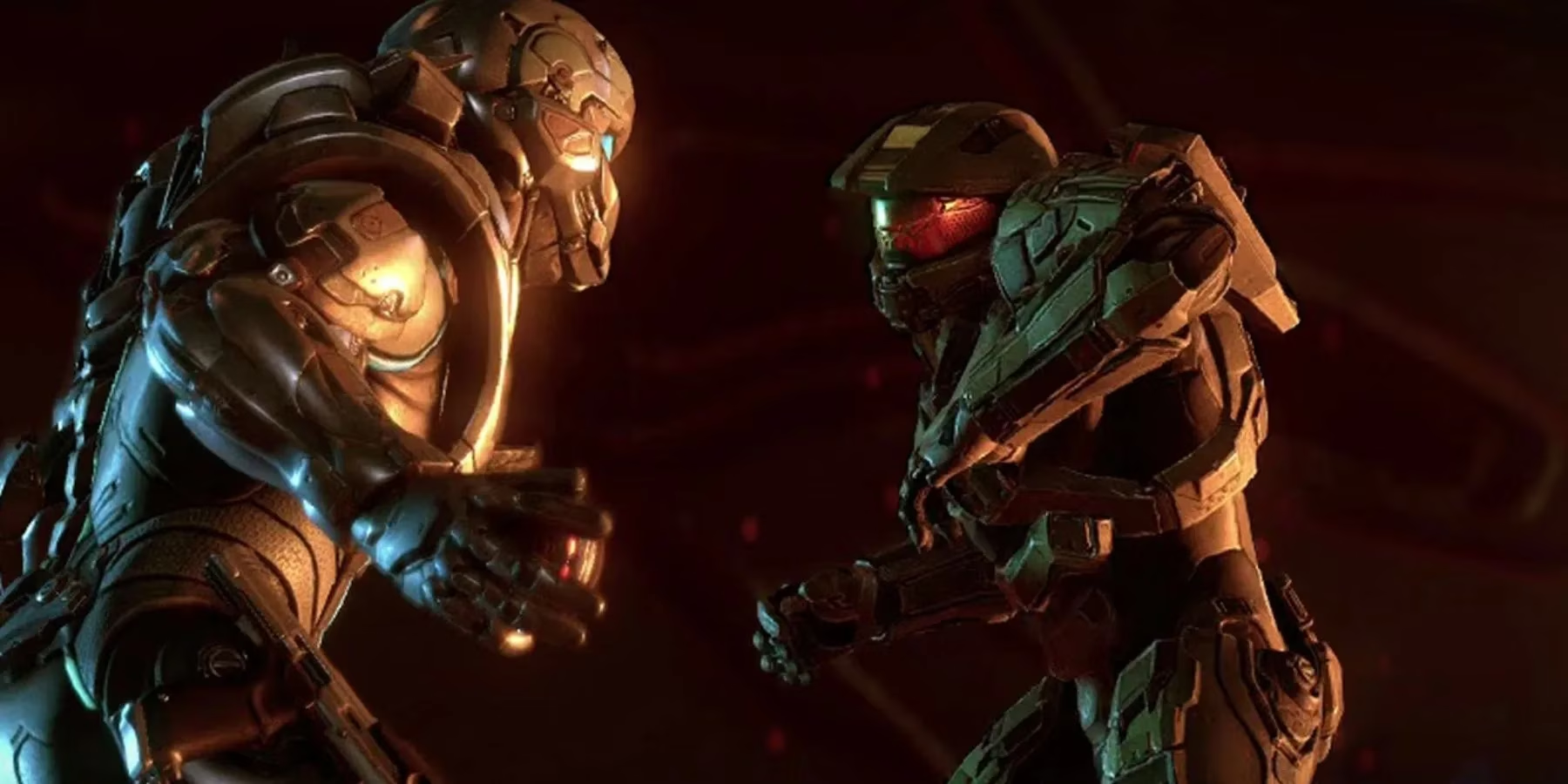
The biggest offender remains Halo 5: Guardians, specifically the much-maligned battle between Master Chief and Spartan Locke. Fans expected a climactic duel after the Hunt the Truth campaign. What they got was brief, oddly quiet, and strangely boring. The two Spartans exchanged basic punches, dodges, and headbutts while the music seemed to hold back. It did not feel like two highly trained supersoldiers trying to kill each other. It felt like a rehearsal. The scene suggested Locke was close to Chief's level, but it ultimately made both look weaker than their reputations promised.
| Element | Red vs. Blue peak fights | Halo cutscene struggles |
|---|---|---|
| Speed | Blistering, fluid | Often slow and weighty |
| Choreography | Punches, kicks, counters, jumps | Basic punches, dodges, headbutts |
| Music | Matches intensity | Sometimes oddly quiet |
| Character skill | Freelancers look elite | Spartans can look amateur |
🚀 The Osiris Exception
Yet Halo 5 also offered a glimpse of what could have been. Its opening cinematic followed Spartan Locke and Fireteam Osiris as they plunged down a mountain at incredible speed. They landed punches, dodged attacks, and fired weapons while moving toward their objective. The sequence felt like a Red vs. Blue Freelancer fight with a blockbuster budget. Arguably the best moment in the game's campaign, it proved that Halo's cinematics could deliver fluid, fast, and visually inventive action. The problem was that the rest of the game rarely matched it.
If Halo Studios, formerly 343 Industries, wants Master Chief to feel legendary again, it should study both examples. Red vs. Blue's peak fights and Halo 5's Osiris intro show the ingredients: speed, choreography, impact, and musical energy. Chief should not move like a slow tank in cutscenes. He should move like a Spartan who has survived decades of impossible battles. That means cinematic fights with counters, grapples, leaps, and environmental awareness. It also means gameplay melee that feels more expressive. A Doom Slayer-style finisher system could be one path, letting Chief deliver brutal takedowns that reflect his enhanced strength. Players should do more than tap a button for a generic punch.
🎮 What Halo Studios Should Do Next
The shooting in Halo has always let players embody Chief to some degree. His limited melee combat, however, keeps the power fantasy from reaching its full potential. When Agent Tex fights in Red vs. Blue, every movement communicates threat. When Fireteam Osiris descends the mountain in Halo 5, every second communicates momentum. Chief deserves that same visual language. He should be a dangerous close-range fighter, not a hero who only shines when holding a rifle.
As of 2026, Halo Infinite remains available on PC, Xbox One, and Xbox Series X/S, and Halo Studios has teased future projects. That makes this the ideal moment for a course correction. The next campaign should present Master Chief as a far more capable brawler. It should let him move with the finesse of a Freelancer and the ferocity of a Spartan-II. The franchise has already shown it knows how. It simply needs to let Chief fight like it.
Comments