Live-service games like Halo Infinite and The Division fail without consistent content updates, leading to player exodus and irrelevance.
In the dynamic and fiercely competitive landscape of modern gaming, the live-service model has become a dominant force, promising a constantly evolving experience for players. However, the path to sustained success is fraught with peril. A live-service game's survival hinges on its ability to deliver a steady stream of fresh, engaging content. Frequent updates, whether introducing new characters, levels, or game modes, are the lifeblood that keeps communities active and invested. Failing to meet this fundamental requirement can lead to player burnout, dwindling populations, and ultimately, a game's descent into irrelevance, regardless of its initial hype or pedigree. By 2026, the industry has seen numerous high-profile titles falter, serving as cautionary tales for developers about the critical importance of consistent, meaningful post-launch support.
Halo Infinite: A Legendary Franchise's Stumble
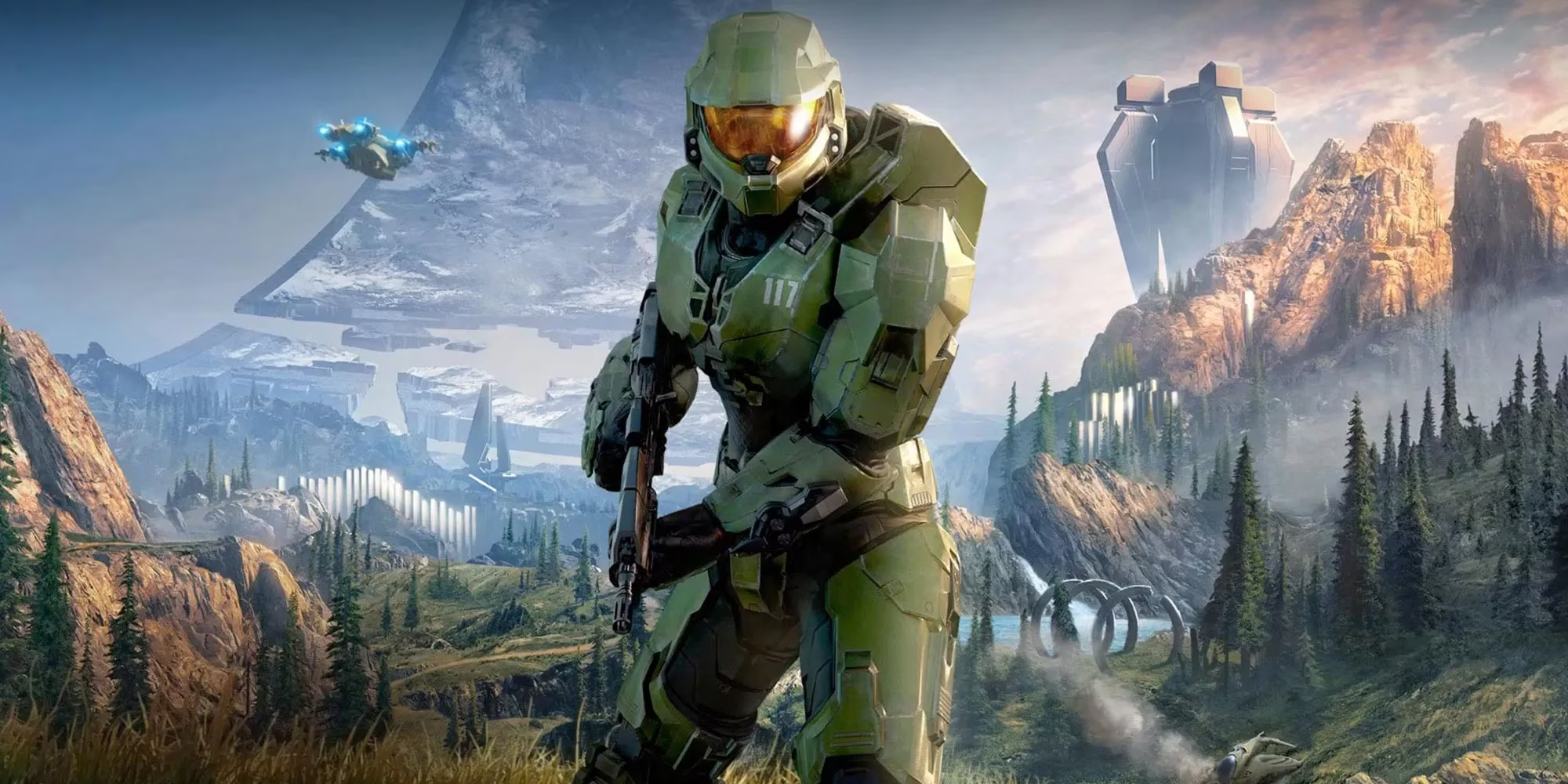
The Halo series stands as a titan in the sci-fi FPS genre, renowned for its epic narratives and groundbreaking multiplayer. The launch of Halo Infinite in late 2021 was met with immense anticipation. While its single-player campaign was praised as a solid evolution, the game's adoption of a live-service model for its free-to-play multiplayer proved to be its Achilles' heel. The launch state was notably barren, featuring:
-
Severely limited customization options compared to previous entries.
-
A painfully slow content drip for new maps and modes.
-
A battle pass system widely criticized for being overly grindy and unrewarding.
Despite 343 Industries' subsequent efforts to address these issues, the damage to player trust and retention was severe. By 2026, Halo Infinite's multiplayer, though improved, struggles to recapture the vibrant, sustained population expected of such a legendary franchise, highlighting how even the most established IPs are not immune to live-service pitfalls.
Tom Clancy's The Division: Abandoned for Its Sequel
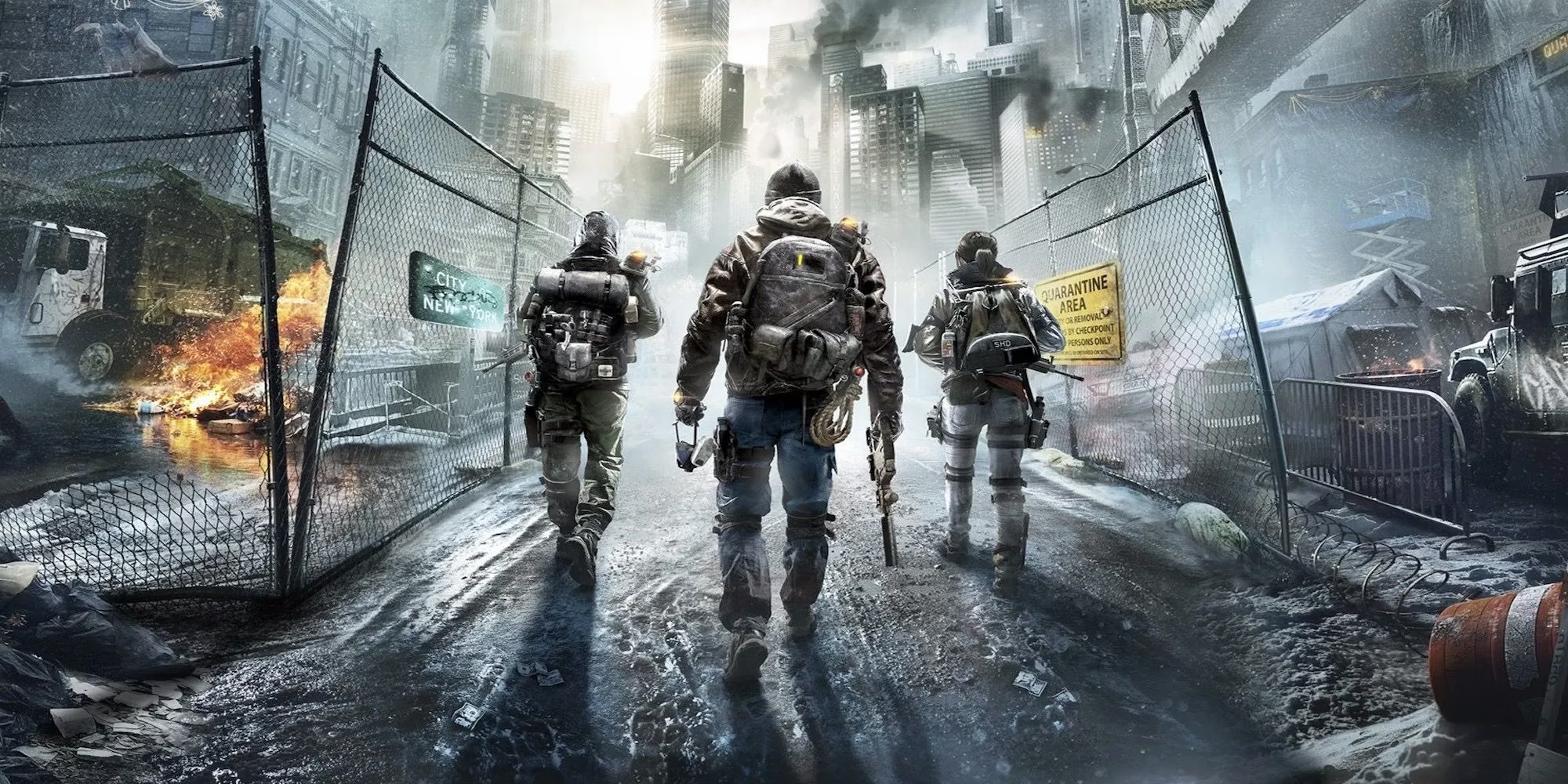
Ubisoft's Tom Clancy's The Division presented a compelling vision of a pandemic-ravaged New York City. However, its launch was marred by controversy over misleading marketing, missing features, and unbalanced gameplay. Its live-service model failed to correct course effectively, plagued by:
-
A confusing and unsatisfying loot system.
-
A notable lack of engaging endgame content.
-
Frustrating and broken PvP experiences in the Dark Zone.
Rather than committing extensive resources to overhaul the first game, Ubisoft made the strategic decision to develop The Division 2, which launched with many of the original's issues resolved. This move, while commercially sensible, effectively left the original Division to languish. By 2026, its player base is a mere skeleton crew, having largely migrated to the superior sequel, demonstrating how a successor can cannibalize a live-service predecessor.
Splitgate: A Victim of Its Own Success
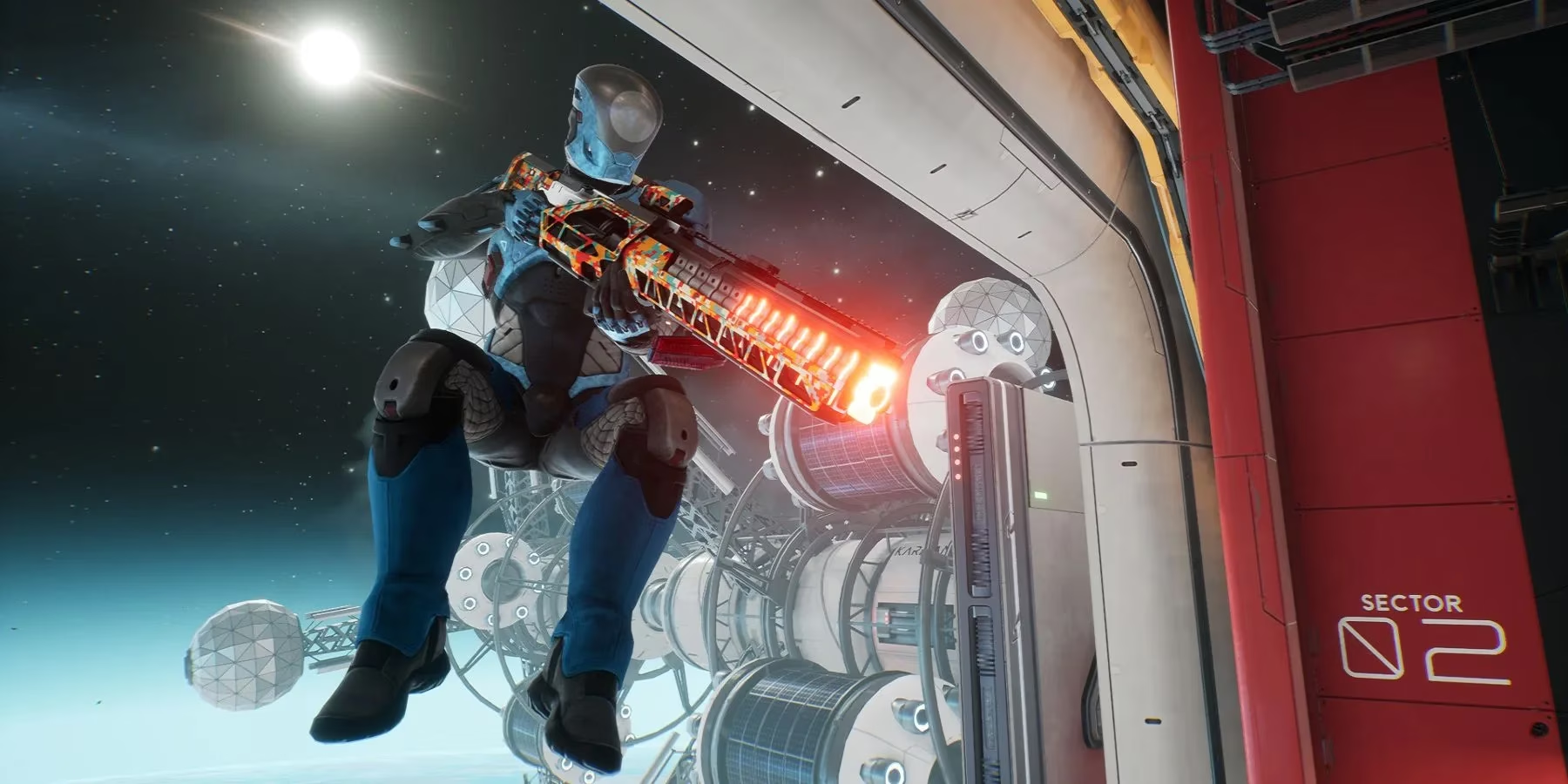
Splitgate emerged as a surprise hit, brilliantly fusing portal mechanics from games like Portal with fast-paced arena shooter combat. Its innovative gameplay earned it a massive and passionate following almost overnight. Ironically, this explosive success became its downfall. The small development team at 1047 Games was overwhelmed by the infrastructural demands of scaling up servers and content to meet the skyrocketing player count.
Faced with the monumental task of sustaining a top-tier live-service game, the developers made a heartbreaking announcement: they would cease major updates for Splitgate to focus their resources on a new, next-generation project. While the community understood the rationale, it marked the premature end of support for one of the most creative shooters in recent memory. Its story is a unique tragedy of a game that was too good, too fast for its developers to maintain.
Knockout City: Fun That Couldn't Last
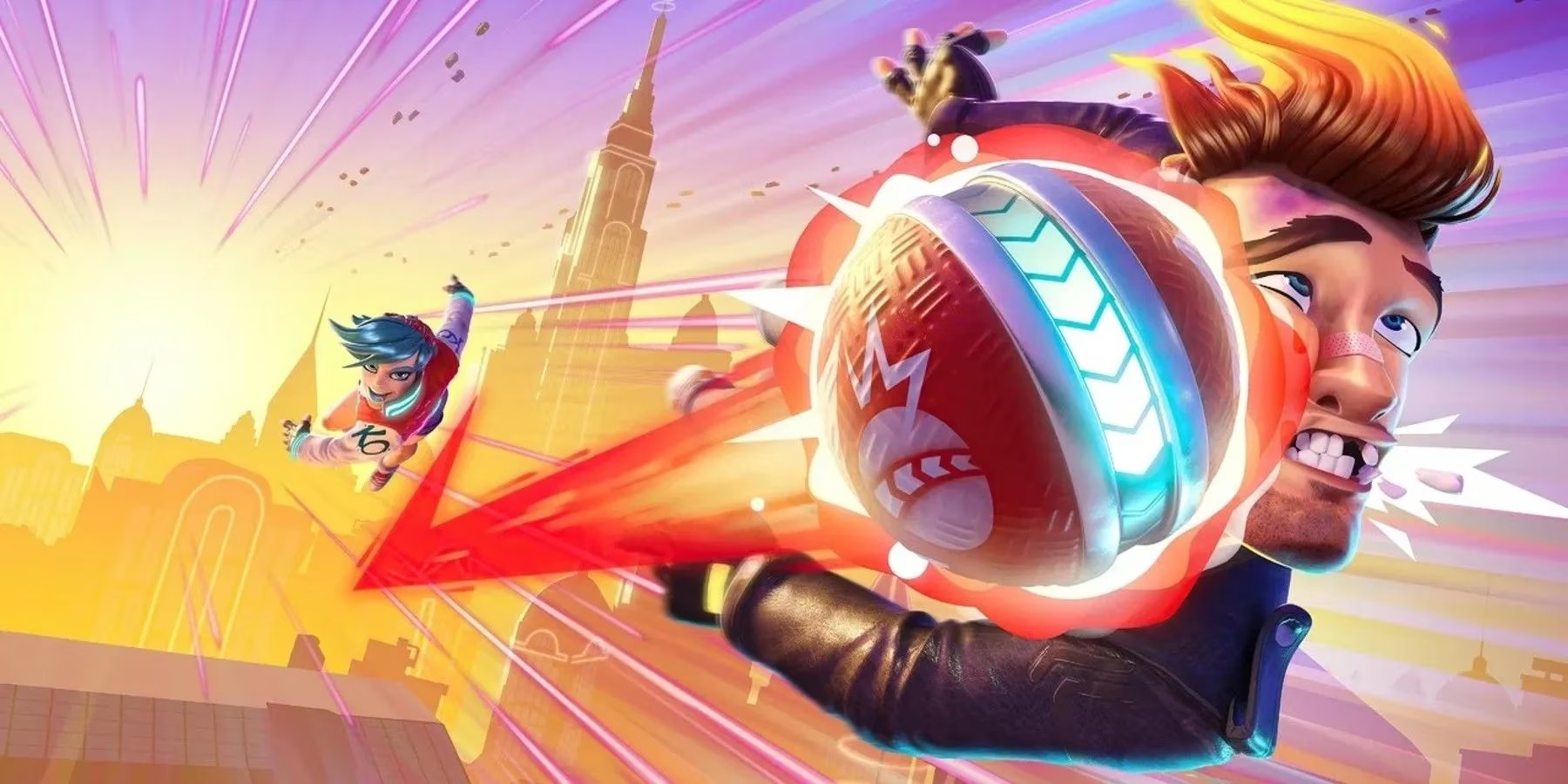
Knockout City launched with a brilliant and refreshing premise: a team-based dodgeball battler with vibrant style and deep mechanical skill. It was praised for its originality and fun factor, building a dedicated community. Yet, beneath the surface, the economic realities of running a live-service game set in. Despite a strong start, the game failed to maintain the critical mass of players necessary to justify ongoing development costs.
The developers, Velan Studios, made the difficult decision to transition the game to a community-run model, shutting down official servers. They released a final version allowing for private server hosting, enabling the most devoted fans to keep playing among friends. This outcome underscores a harsh truth: even critically acclaimed gameplay and a strong launch are not enough to guarantee long-term viability in the live-service arena without a sustainable business model and continuous player engagement.
Star Wars Battlefront II: A Scandal from Which It Never Recovered
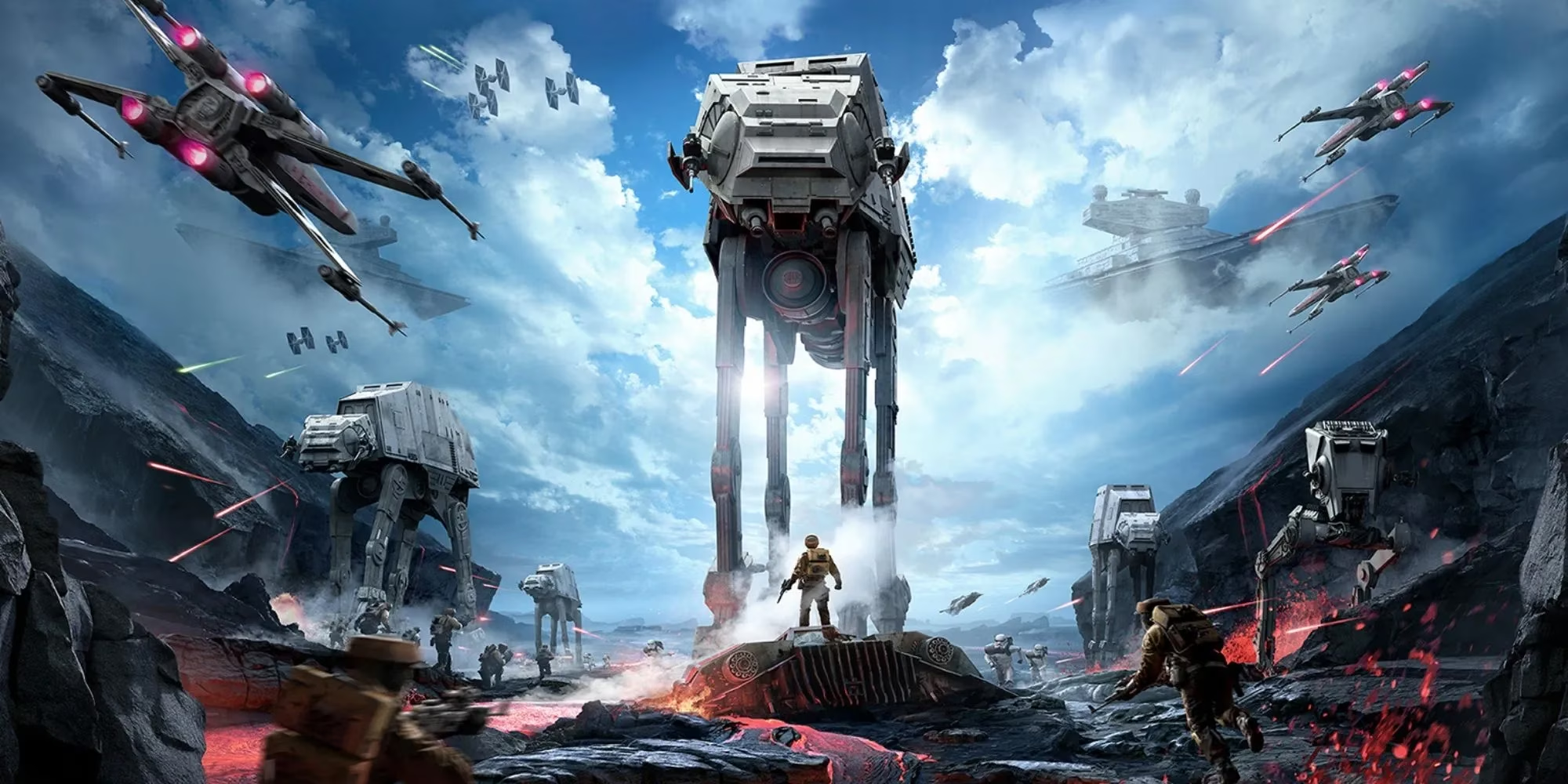
Star Wars Battlefront II (2017) is perhaps the most infamous case of live-service failure. Its launch was catastrophic, dominated by a predatory progression system tied to loot boxes that gave paying players significant advantages. The backlash was immediate and historic, culminating in a defensive comment from an EA representative becoming the most downvoted post in Reddit history.
| Launch Issue | Consequence |
|---|---|
| Pay-to-Win Loot Boxes | Massive consumer and regulatory backlash. |
| Grindy Hero Unlocks | Core franchise characters locked behind dozens of hours of play. |
| Sparse Content | Lack of iconic maps and modes at launch. |
Although EA and DICE spent years attempting to rehabilitate the game—removing microtransactions, overhauling progression, and adding substantial free content like the Clone Wars era—the initial scandal left a permanent stain. By 2026, while remembered more fondly by those who stayed, its player numbers never reached the potential befitting a Star Wars title, proving that first impressions, especially disastrous ones, are incredibly difficult to overcome.
Red Dead Online: The Forgotten Sibling
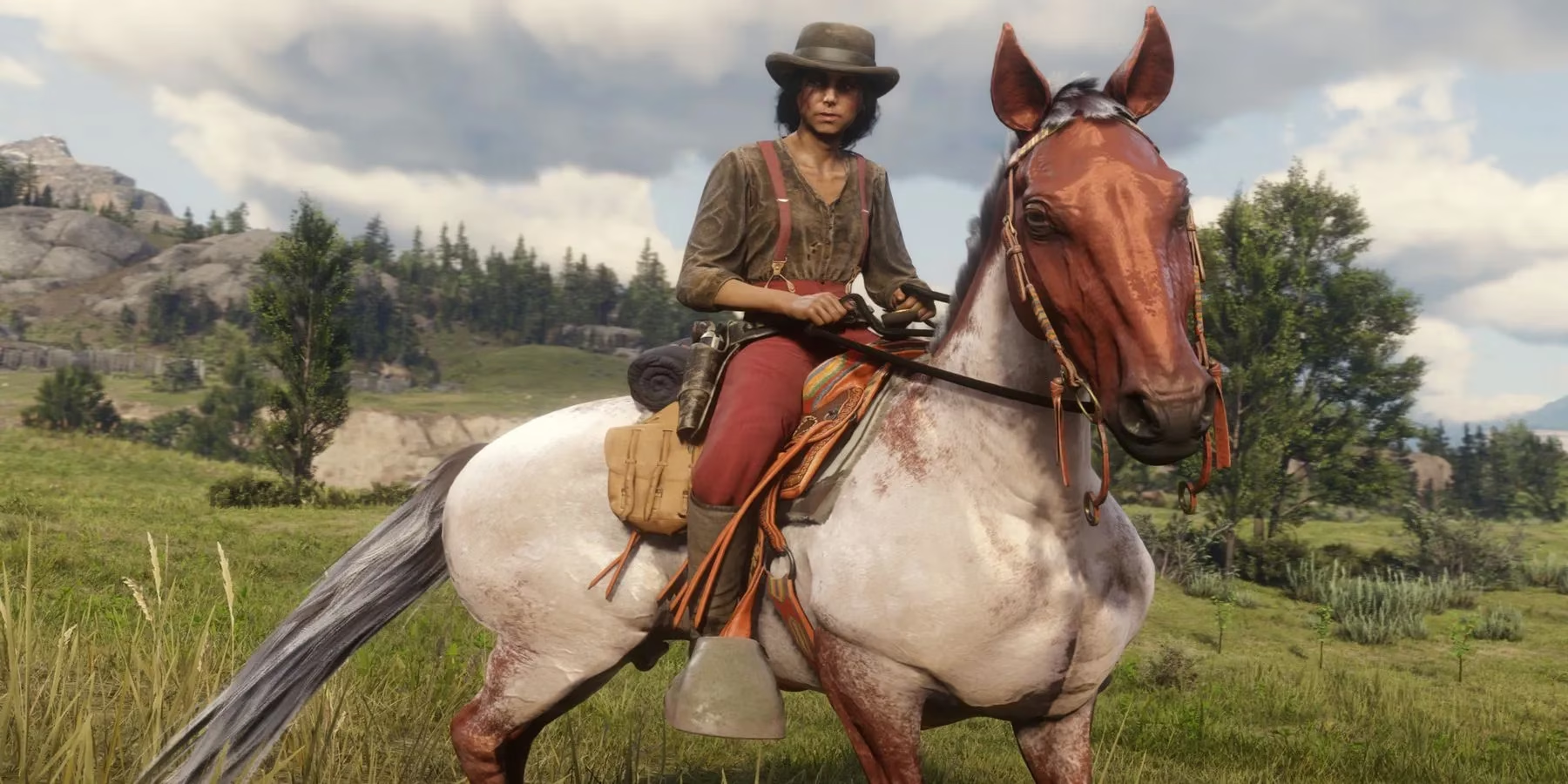
Following the universal acclaim for Red Dead Redemption 2's single-player masterpiece, expectations for Red Dead Online were astronomically high. Given Rockstar's monumental success with Grand Theft Auto Online, players anticipated a similarly rich, ever-expanding wild west sandbox. Instead, they received a service plagued by neglect.
The core issues were clear:
-
Glacial update pace: Months would pass with only minor content additions or seasonal events.
-
Lack of substantial new roles or endgame activities compared to GTA Online's heists and businesses.
-
Repetitive gameplay loops that failed to leverage the world's potential.
The community's frustration became part of the game's own lore, with players organizing in-game protests at Rockstar's offices within the world to criticize the obvious favoritism shown to GTA Online. By 2026, major updates have long ceased, and Red Dead Online stands as a poignant example of a live-service game with unparalleled foundational quality that was ultimately left to wither due to a lack of committed, creative support from its developers.
Key Lessons for the Future
The collective stories of these games offer crucial lessons for the industry as it moves beyond 2026:
-
Launch State is Critical: A bare-bones or controversial launch can cripple a game's future, no matter how good the "fix" plans are.
-
Content is King (and Queen): A predictable, engaging, and substantial content pipeline is non-negotiable.
-
Listen to Your Community: Ignoring player feedback on core issues like progression, balance, and rewards is a recipe for disaster.
-
Have a Sustainable Plan: Success must be scalable, both in terms of server infrastructure and development resources.
-
Every Game is a Commitment: The live-service label is a promise of long-term support; breaking that promise guarantees player abandonment.
In the end, the live-service model rewards relentless dedication and punishes complacency. The games that thrive are those that view their launch not as an end, but as the beginning of a lasting conversation with their players.
Comments