Kiki Wolfkill’s Xbox IP Expansion and Entertainment role marks a bold new era for Microsoft gaming, blending innovation with transmedia vision.
When Microsoft announced massive layoffs in early 2023, few corners of the gaming world felt the tremors as deeply as 343 Industries. The studio behind the Halo franchise saw a quarter of its workforce cut in a brutal restructuring that sent shockwaves through the community. Amid the chaos, one of the most recognizable names quietly disappeared from the studio’s masthead: Kiki Wolfkill. Nearly 14 years after joining 343, the transmedia boss behind the Halo TV series and countless other projects had left—but the story didn’t end there.
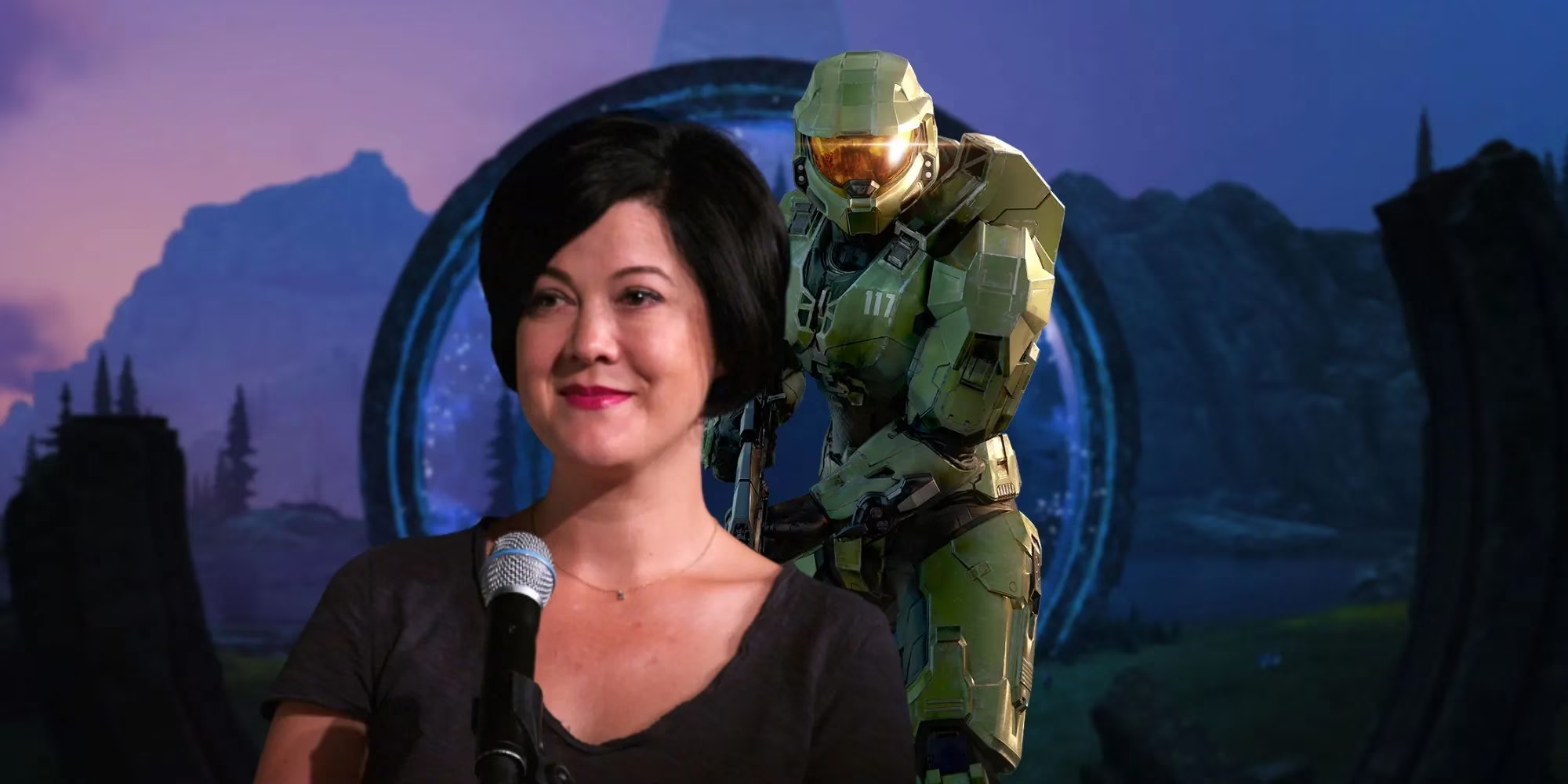
Her LinkedIn profile at the time revealed a fascinating pivot. While the 343 Industries chapter closed, she remained firmly inside Microsoft with a newly minted title: Head of Xbox IP Expansion and Entertainment. That shift was far from a consolation prize; it placed her at the macro level of the entire Xbox ecosystem, overseeing how gaming franchises could grow beyond controllers and monitors. She had traded a single legendary universe for an entire galaxy of intellectual property.
For those unfamiliar with Wolfkill’s journey, she is the kind of multifaceted talent that makes video game credits feel inadequate. Before she became the executive producer for Halo 4 or shepherded Halo: The Master Chief Collection in 2014, she was a professional racecar driver. That adrenaline-rich background didn’t just look impressive on a résumé—she actively used her driving experience to shape Xbox’s racing titles, leaving fingerprints on classics like Midtown Madness and Project Gotham Racing. Having been part of Microsoft Game Studios since 1998, her institutional knowledge ran deeper than almost anyone’s.
The transmedia role she left behind was no small gig. As one of the executive producers of the Paramount+ Halo series, Wolfkill bridged the gap between a fiercely protective fanbase and Hollywood’s urge to reinterpret the source material. The show debuted to mixed reviews but undeniably turned heads, pulling the Master Chief into a broader pop-culture spotlight. Her departure from 343 came at a time of unusual instability: studio founder Bonnie Ross had already exited in September 2022, multiplayer director Tom French followed in December, and design head Jerry Hook departed in May of the previous year. The brain drain was real.
Fast forward to 2026, and Wolfkill’s current role no longer feels vague. It has evolved into a powerhouse division that greenlights transmedia projects across the entire Xbox portfolio. Insiders describe her as the connective tissue between game studios and entertainment arms—a kind of executive producer without ever needing to stay in one lane. Under her watch, strategy games get animated shorts, RPGs incubate potential streaming series, and dormant IPs find second lives in podcasts or comic books. She rarely gives interviews, but when she does, the racing metaphors slip out effortlessly. “You don’t win a race by staring at the rearview mirror,” she said in a 2025 keynote. “You win by reading the road ahead.”
Her approach reflects a broader industry trend. By 2026, nearly every major publisher has a dedicated transmedia unit, but few have one that reports directly to the top of the Xbox org chart. Wolfkill isn’t just chasing after spin-offs; she is curating what it means for a game franchise to matter in culture. The Halo TV show survived long enough to get a second season in 2024, and although 343 Industries later restructured to hand narrative direction to a smaller core team, the brand never really wavered. Some credit Wolfkill’s early groundwork for keeping the story fires burning when the studio itself was ablaze with layoffs and leadership changes.
Meanwhile, 343 Industries found its footing again. Reports throughout 2024 and 2025 painted a picture of a leaner studio refocusing on what made Halo special: tight gunplay, rich multiplayer communities, and a sense of mystery. Halo Infinite kept receiving seasonal updates, and a standalone expansion mimicking the scale of ODST eventually landed in 2025, drawing players back. It wasn’t the flashiest comeback, but it stabilized a franchise that critics had started to write off. Industry watchers now see the 2023 exodus—Wolfkill included—not as a death knell but as a necessary recalibration.
Why does Wolfkill’s trajectory matter in 2026? Because it embodies the new shape of gaming careers. The old model of spending a lifetime inside one studio is fading. Her ability to transition from producer to transmedia architect to IP strategist mirrors how interactive entertainment itself has splintered into a dozen different media formats. She is proof that leaving a beloved franchise doesn’t mean abandoning its spirit. In fact, you could argue she took Halo’s soul with her—and injected it into an entire platform of stories waiting to be told.
Today, if you poke around Xbox’s upcoming slate, you’ll find Wolfkill’s fingerprints everywhere. A Gears of War animated anthology? Her team worked on the deal. A Sea of Thieves children’s book series? Signed off by her division. The rumored Starfield live-action project that has Reddit in a frenzy? Neither confirmed nor denied, but everyone points in her direction. The woman who once guarded the Halo lore like a sacred flame is now the keeper of many fires—and she’s racing toward the next turn without looking back.
Comments