Halo Infinite's 343 Industries leadership shake-up and canceled split-screen co-op sparked fan concerns over the shooter's direction.
I remember the first time I dropped into Zeta Halo. The grappleshot felt like freedom, the rifle cracked like thunder, and for a few weeks I believed Halo Infinite was going to be the live-service shooter that finally dethroned my other addictions. I was a ranked grinder, a Forge dreamer, a campaign co-op hopeful. Then the news started rolling in like a Phantom full of bad intel.
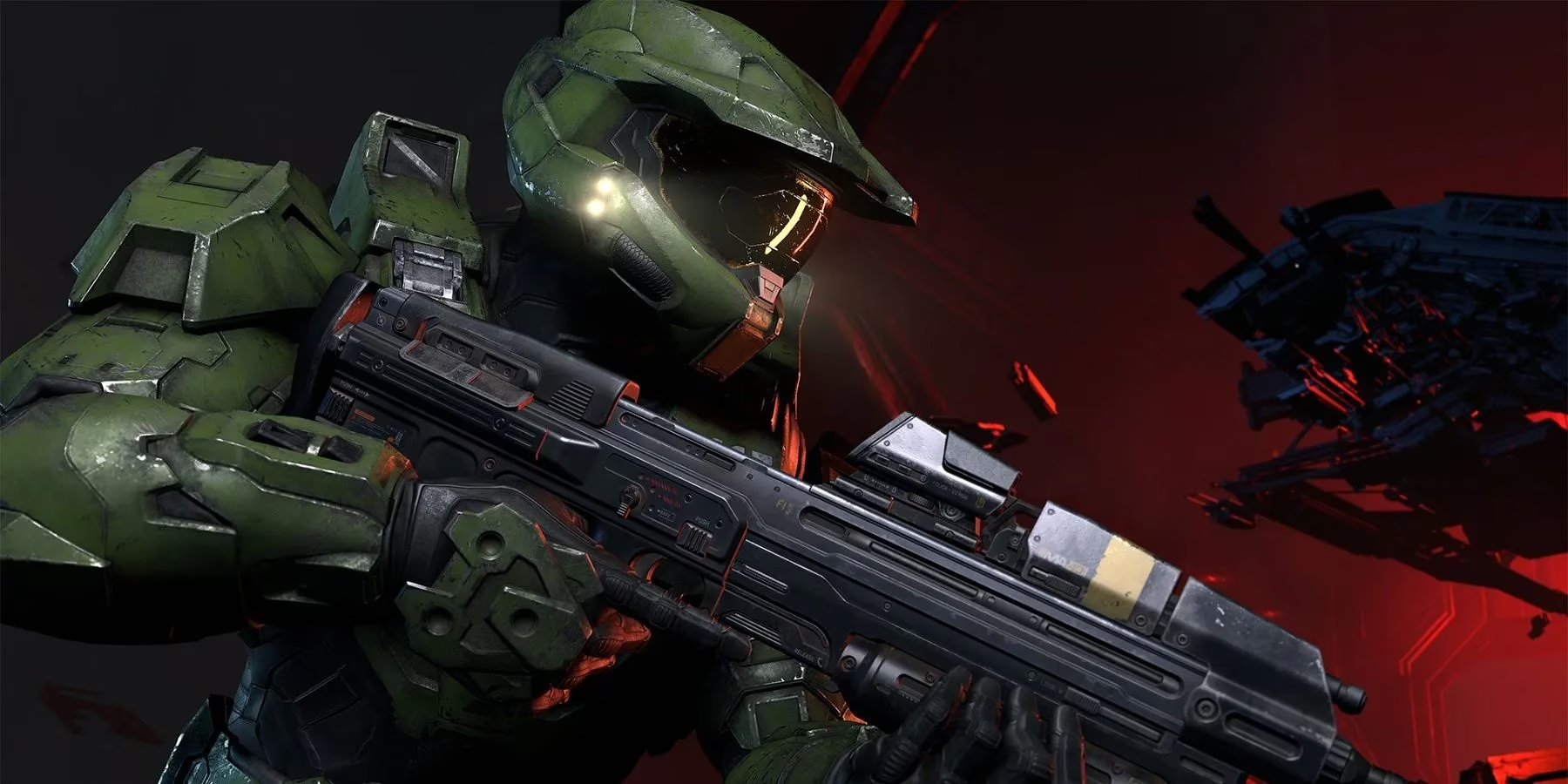
In late 2022, 343 Industries felt like a squad losing its comms. Bonnie Ross, the studio co-founder who had led Halo for 15 of her 27 years at Microsoft, announced she was leaving to handle family matters. That alone was a gut punch. Days later, reports said David Berger—the lead developer for Halo Infinite's Slipspace Engine—was also departing. Berger had worked on Halo 4, Halo 5, and Halo Infinite, plus classic Xbox titles like Mechwarrior and Too Human. Microsoft never directly confirmed his exit, but the sources close to Windows Central claimed it was accurate. I read that and thought: okay, who's flying this ship?
Look, I'm not a corporate suit. I don't know what happens in boardrooms. But I know what it feels like when a game you love starts wobbling. The restructuring created three new leadership roles: Pierre Hintze as studio head, Elizabeth Van Wyck leading business and operations, and Bryan Koski as general manager of the Halo franchise. On paper, that sounds like a fresh command structure. In practice, it felt like watching a team swap Spartans mid-mission. Would it steady the ship? Or was it just rearranging chairs on a sinking frigate?
Here's the timeline that stuck in my craw:
| Name | Role | What Happened |
|---|---|---|
| Bonnie Ross | 343 Industries co-founder / studio head | Left Microsoft after 27 years; 15 years on Halo |
| David Berger | Lead developer, Slipspace Engine | Reported departure from 343 Industries |
| Pierre Hintze | New studio head | Took over leadership restructuring |
| Elizabeth Van Wyck | Business and operations | Joined new leadership team |
| Bryan Koski | General manager, Halo franchise | Joined new leadership team |
And this all came roughly two weeks after 343 announced an updated Halo Infinite roadmap. That roadmap included the winter update and Season 3, but it also cancelled local split-screen campaign co-op. Man, did that hurt. My best friend and I had planned to run the campaign side by side on one couch, just like the old days. Instead, we got a blog post and a shrug. The community erupted. I saw threads, videos, angry tweets—players accusing Microsoft and 343 of lacking direction and moving too slowly. I wanted to argue, but I couldn't. The evidence was right there.
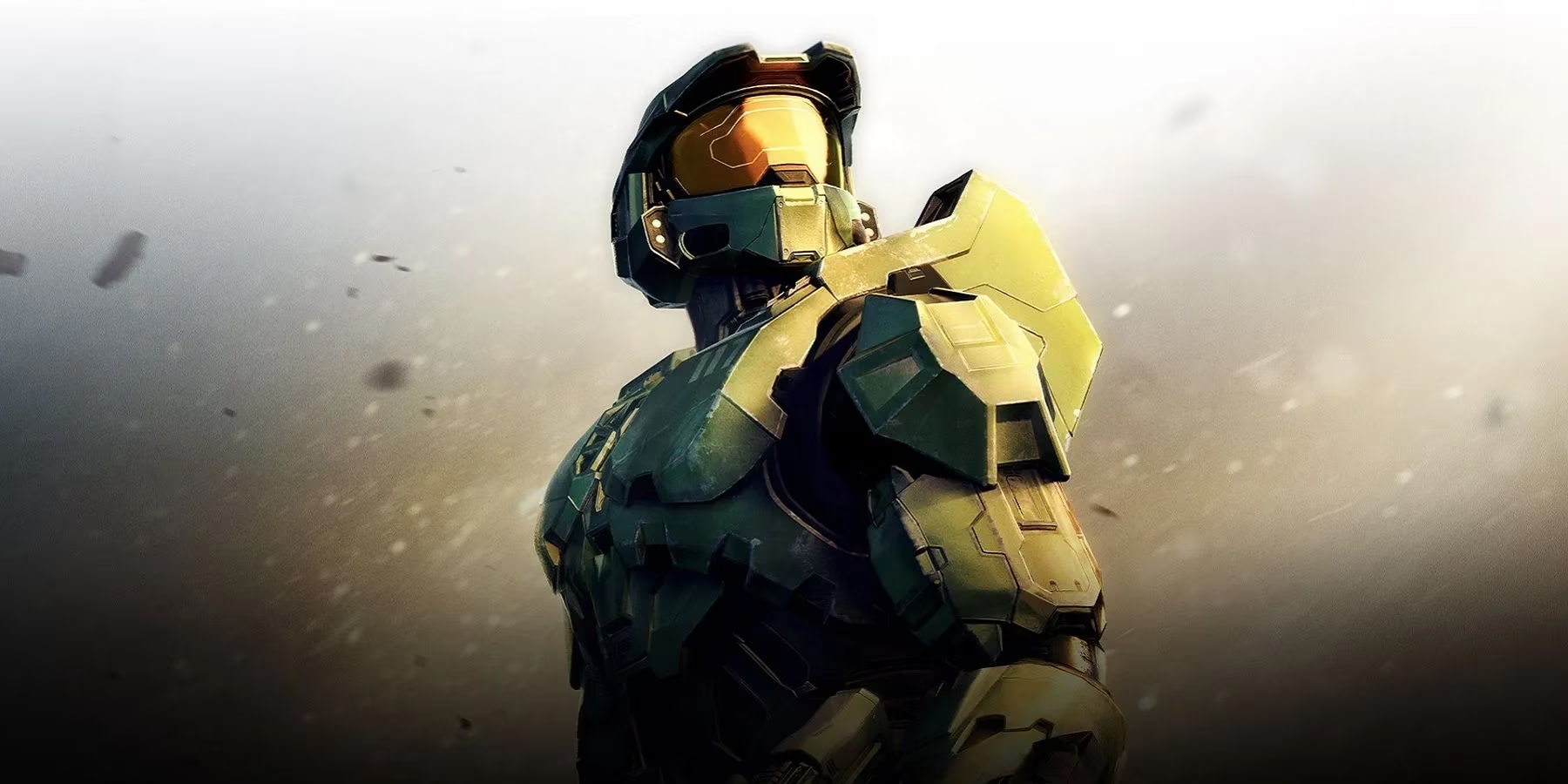
Halo Infinite launched to critical acclaim. I'll die on that hill. The gunplay was crisp, the sandbox was fun, and the campaign had real heart. But live-service games are not sprints. They're endless wars of attrition. Fortnite and Call of Duty: Warzone kept pumping out updates, events, and content at a steady pace. They fed their player bases and kept them coming back. Halo Infinite, meanwhile, felt like it was always one step behind, patching leaks while the ocean poured in. My friends list thinned out. Queue times stretched. The game I loved became a weekend nostalgia trip instead of a nightly ritual.
The restructuring could have affected that winter update and Season 3. The winter update was expected to add the highly anticipated Forge Beta. And to be fair, when Forge finally arrived, it became a lifeline. Creative players built insane maps, custom modes, and ridiculous infection variants. I spent hours in Forge just flying around, watching the community turn a toolkit into a playground. But split-screen co-op cancellation remained a glaring scar. Some wounds don't heal with patch notes.
Now it's 2026, and the Halo landscape looks different again. 343 Industries has been rebranded as Halo Studios, and the team has shifted toward Unreal Engine for future projects. That's a massive pivot. Part of me is excited—Unreal could solve the technical debt that seemed to haunt Slipspace. Another part of me is cautious. You can't just slap a new engine on a franchise and call it a day. Halo is more than tech. It's the feel of a needler supercombine, the roar of a Warthog, the quiet awe of looking up at an Installation ring.
I still log into Halo Infinite sometimes. I check the shop, play a few matches, and wonder what could have been. The leadership shake-up of 2022 wasn't the sole reason for every stumble, but it was a turning point. It showed me that even legendary studios are fragile. It showed me that live-service promises are only as good as the people who keep them. And it showed me that players like me—the ones who stay, who hope, who keep queuing—are the real backbone of any Halo.
So yeah, I watched the exodus. I watched the restructure. I watched the roadmap change. But I never uninstalled. Because deep down, I'm still that kid who believes the next update might bring back the magic. And maybe, just maybe, it will.
Comments