Halo Infinite's narrative bookends: Tremonius' arrogant entrance fades to grunts; Atriox's cold 'I would change nothing' defines his legacy.
I've been a Halo fan for as long as I can remember, and no matter how many times I replay the campaigns, something new always jumps out at me. Recently, I went back to Halo Infinite – five years after its launch in 2021 – and this time, I really listened. Not just to the gunfire or the epic score, but to the words. The very first lines a character says, and the very last, feel like bookends of their personal journeys. It's almost like the writers left us a trail of breadcrumbs, you know? So I decided to break down some of the most striking cases. Let me tell you, this deep dive really hit me.
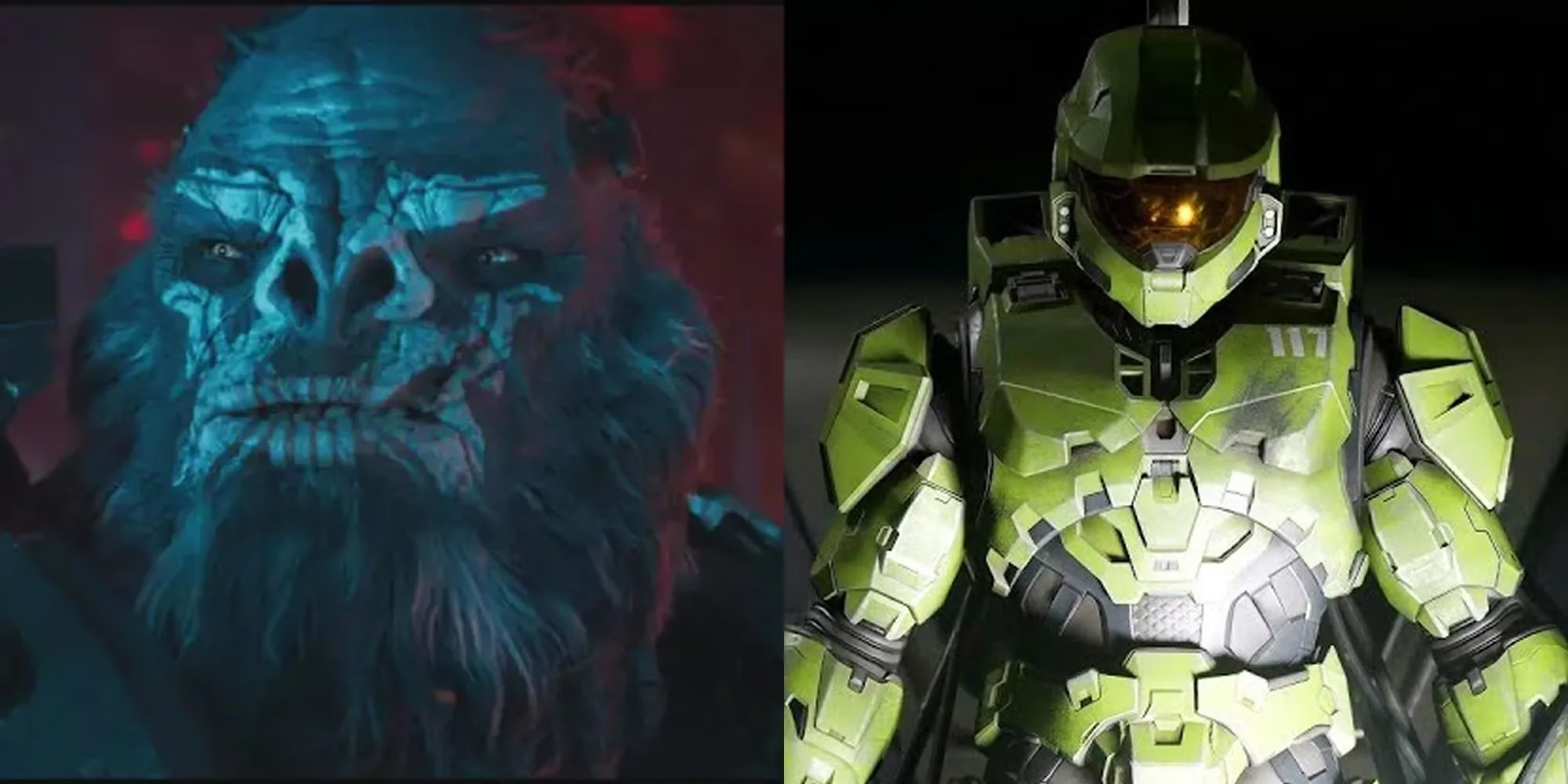
Tremonius – The Brute Who Talked Big, Then Fell Silent
The first real boss-level threat Master Chief faces is Tremonius, a chieftain in the Banished. The moment he appears, he radiates arrogant confidence. His opening words are a thundering declaration: "Our allies will be pleased to hear of your demise!" It's a sentence packed with swagger, like a heavyweight boxer promising a knockout before the bell even rings. I remember facing him and thinking, “Okay, big talk – let's see if you can back it up.”
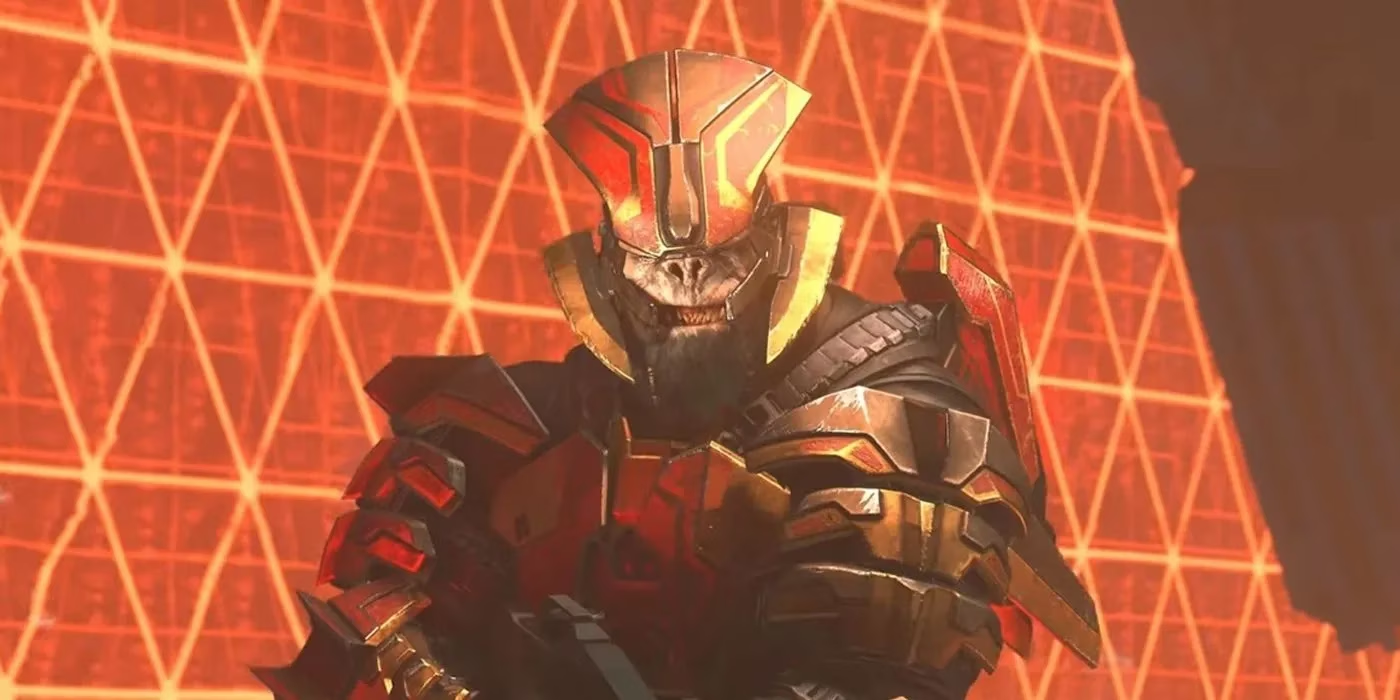
But here's the twist. By the end of the fight, Tremonius doesn't get some grand final threat or a dramatic final line. His last "words" are just... grunting noises. You know, those guttural sounds enemies make when they collapse. I gotta say, at first it felt like a missed opportunity. But the more I think about it, the more brilliant it becomes. Themically, it shows that despite all his bravado, he's just another pawn in the Banished war machine. His arrogance evaporates into nothing but a few grunts. It's almost sad, really – a loud entrance, a silent exit. It taught me not to take these mini-bosses at their word; they might just be grunts in the end.
Atriox – “I Would Change Nothing.”
Then there's Atriox. Oh boy, Atriox. When we first meet him, he's pure menace. I can still feel the chill from his introduction: "My name is Atriox, and I am the last face you will ever see." He didn't just threaten Master Chief; he made a promise. And in typical Atriox fashion, he follows through, leaving the Spartan floating in space. That fight shaped the entire opening act.
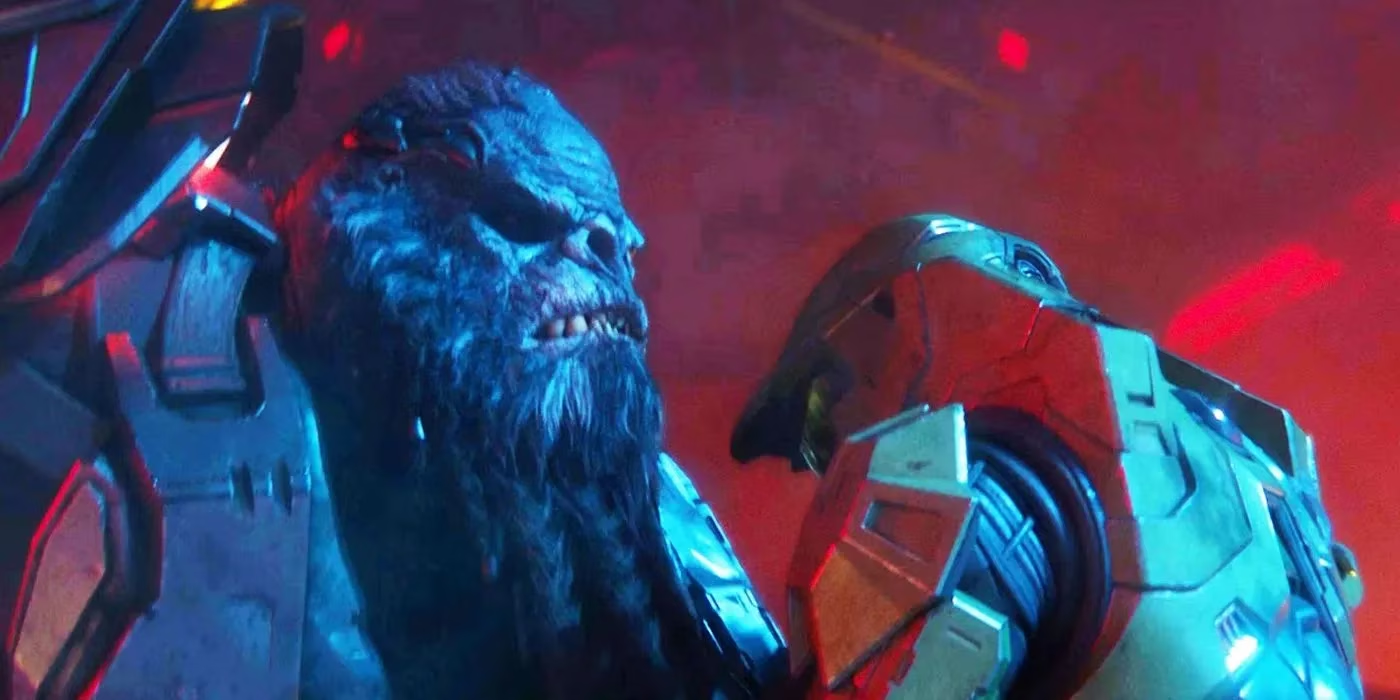
Atriox manages to bookend the whole experience. After the credits, we see him again. The Weapon – or rather, the new Cortana – asks him a deceptively simple question: if he had the chance, would he change anything about his life? His response is ice-cold and declarative: "I would change nothing." No hesitation, no sorrow, just absolute certainty. It's the kind of line that sticks with you because it's an insight into a warrior who has made peace with every terrible thing he's done. He's equal parts brute strength and strategic genius, a terrifying combination, and his final line cements that he's an unrepentant force, not just a monster. I can't help but respect the consistency – a villain who means every word.
The Harbinger – “The Endless Will Return.”
Hunting down The Harbinger was one of the creepiest sections of the campaign. Her first words cut right through the fourth wall: "Show yourself. I know you have been following me." That line sent a shiver down my spine. It flipped the script – suddenly I, as Master Chief, was the one being stalked. She was mysterious, demanding, and ancient in a way that felt deeply unnerving.
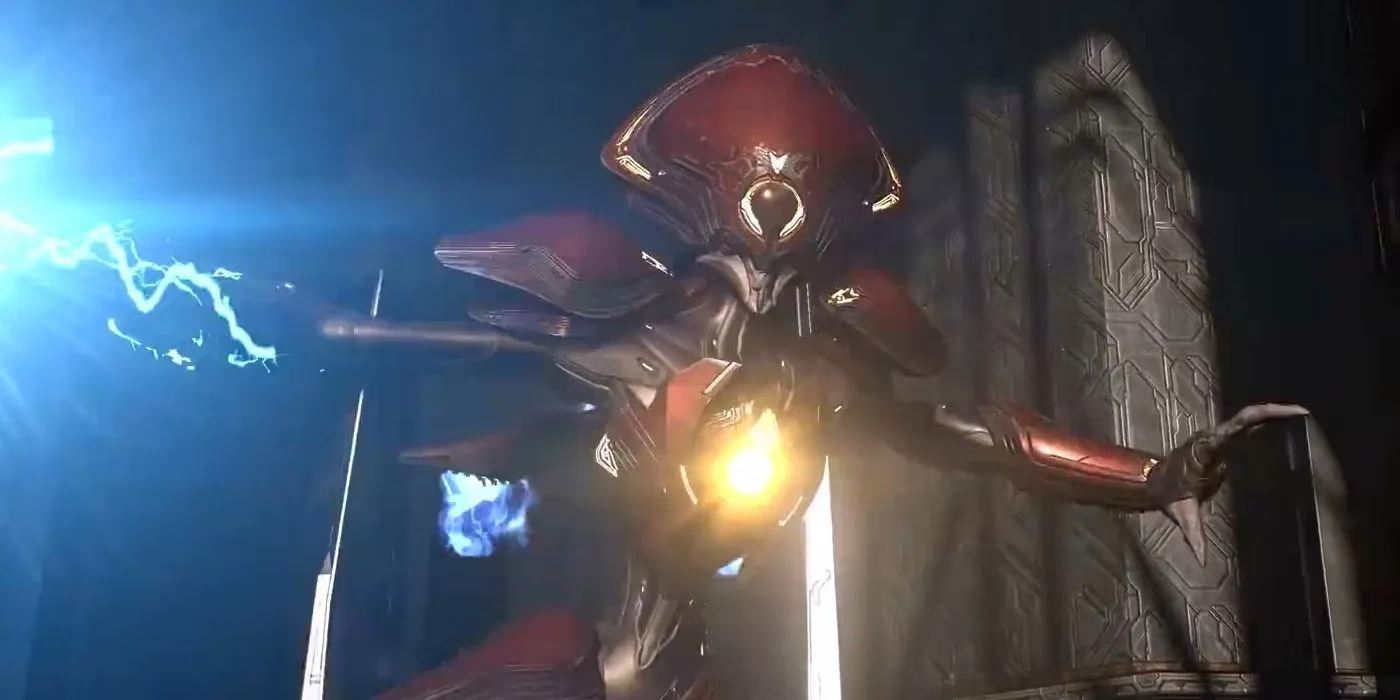
And then, at the end? "The Endless will return." That's it. No plea, no curse, just a haunting promise. Even as she falls, she plants the seed for something far worse. It's not a thin threat – it's a prophecy. The Banished were bad enough, but The Endless are still out there, waiting. This line stays with me because it turns a defeated enemy into a lasting nightmare. I sometimes think about what The Endless could be, and honestly, it keeps me up at night.
Pilot Esparza – The Human Heart
In a series about a super-soldier who rarely speaks in complete sentences, Pilot Esparza is a breath of fresh air. His first transmission is so ordinary it's almost jarring: "This is UNSC Pelican Echo-216. Can you hear me?" Just a simple question, crackling through space noise. But here's the thing – that ordinary voice saved the most extraordinary soldier. It's like humanity reached out and brought the Chief back to life.
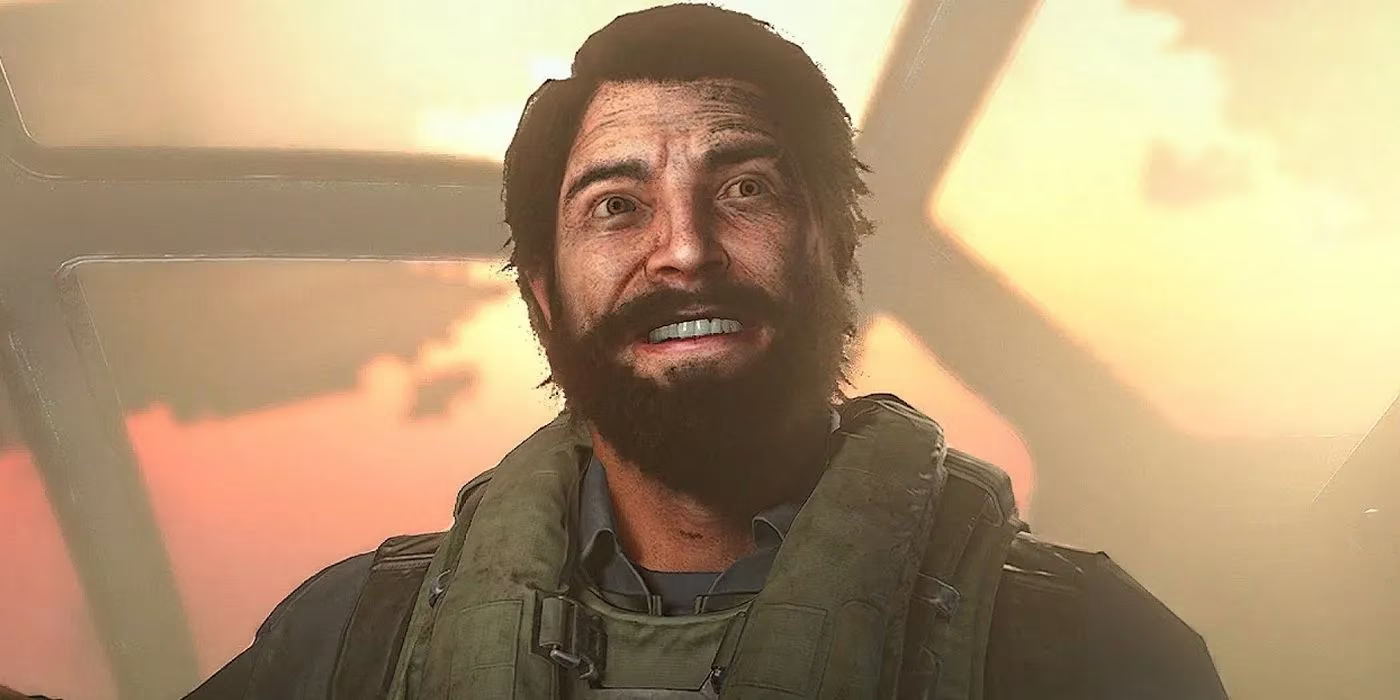
Throughout Halo Infinite, Esparza wrestles with fear and despair, missing his family, clinging to hope. By the end, when he says, "All right, here we go. Get ready!" you can feel the change. It's not just a pilot's routine callout; it's a man who has found his courage. His words mirror the journey from hopelessness to purpose. I've always felt that Esparza is the real emotional anchor of the game. Without him, the Chief would just be a machine. His last words are a shot of adrenaline, a reminder that ordinary people can rise to be heroes too.
Escharum – “Tell Them I Died Well.”
Escharum is a warlord of the old school. His first speech booms: "We do not bow our heads. We do not kneel before false idols. We stand together!" He's rallying his troops, and you can almost feel the vibrations through the screen. He isn't just warning Master Chief – he's welcoming the coming fight, hungry for a legendary clash.
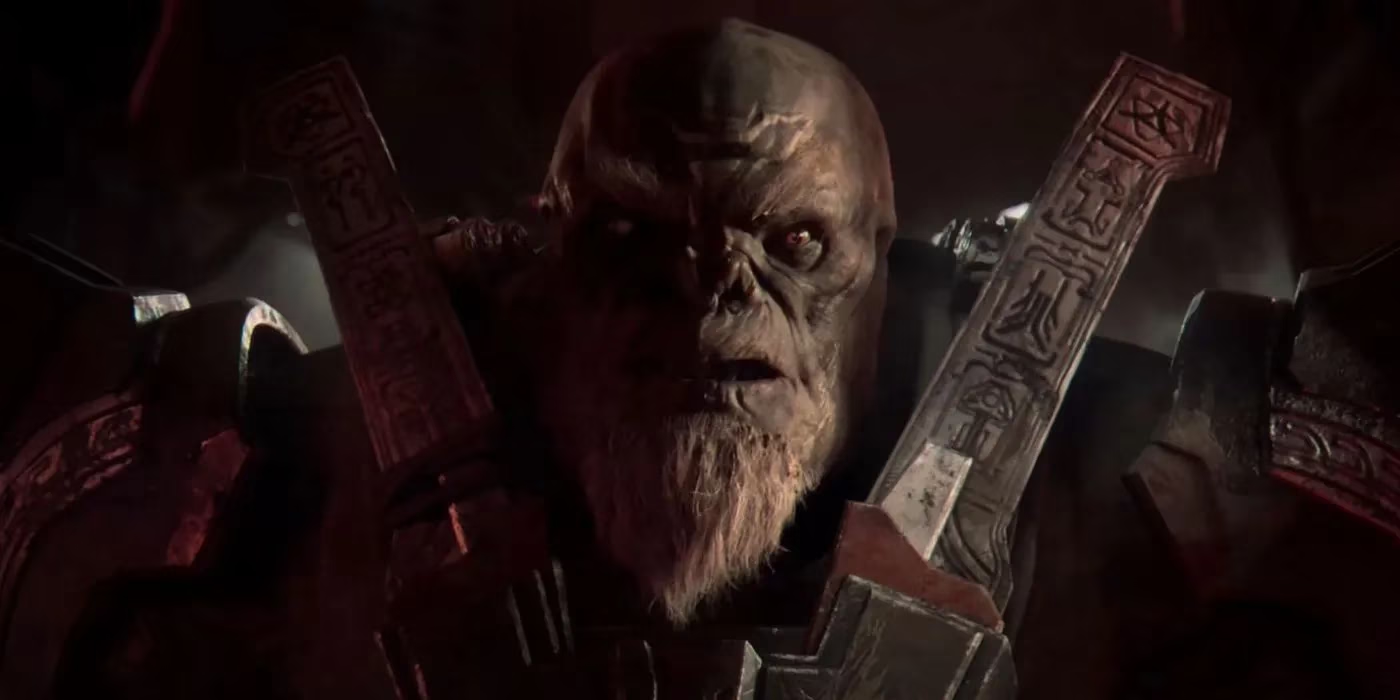
And when that long-awaited duel finally ends, Escharum lies broken but not beaten. His last request: "Tell them I died well." I'm not ashamed to admit I got a little choked up there. He doesn't scream or beg. He simply asks for his legacy. It's a beautiful moment because it shows that even a brutal enemy can have a warrior's code. Escharum cares about the effort and the honor, not just the outcome. That line makes him human – well, Brute-human – in a way I never expected. The guy wanted a good death, and he earned it. Rest well, old soldier.
The Weapon – “I Think I May Have the Perfect One.”
When Master Chief first encounters The Weapon, confusion reigns. She chirps, "It's been six months. Where have you been?" It's part innocent question, part accusation, and entirely disorienting because she looks like Cortana but isn't. You can feel the Chief's internal conflict as he wrestles with memories and trust.
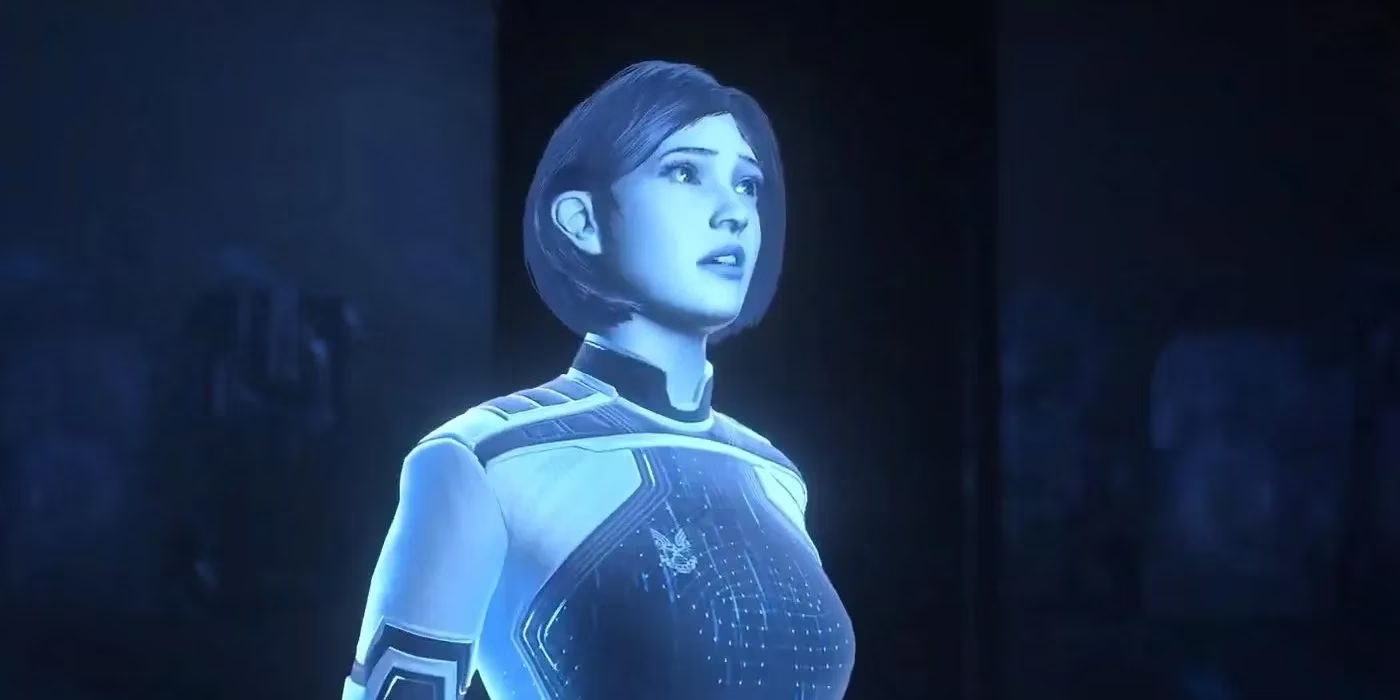
Fast-forward to the end, after everything they've gone through, and she shyly says: "I think I may have the perfect one." She's chosen her own name. She could have called herself Cortana to please the Chief, but she didn't let his past define her. Instead, she found her own identity. That moment is full of so much warmth. I remember smiling when I heard it. It's the sound of a new beginning, a new bond forged in battle. The Weapon started as a tool, but ended as a friend. And isn't that what the best Halo stories are really about?
Master Chief – “You Get to Choose Your Name.”
The game opens with the Chief unconscious, drifting like debris. When he finally comes to, his first word is pure business: "Status report." Classic Spartan-117. No emotions, just the mission. It's the man we know: a living weapon.
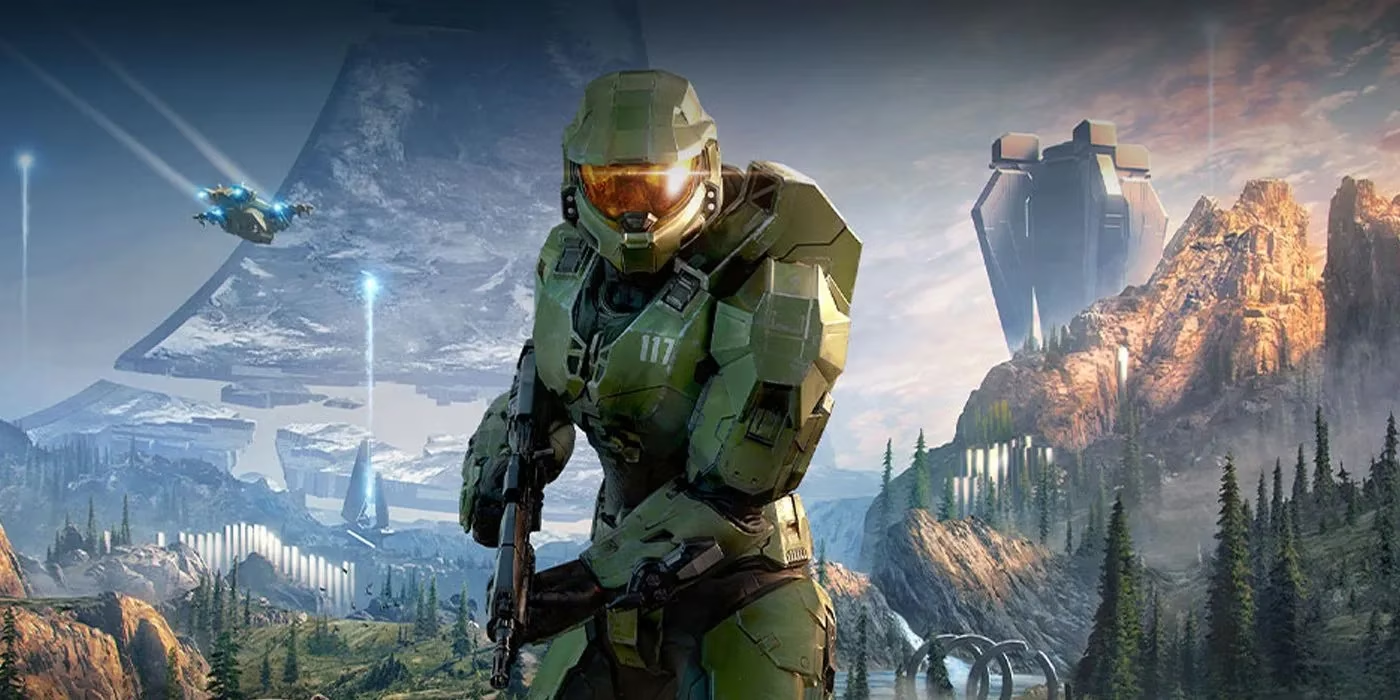
Yet by the closing minutes, something has shifted. He tells The Weapon, "You get to choose your name." That's huge. He's giving her agency – the freedom to be her own person. The Chief could have imprinted "Cortana" on her and called it a day, but he didn't. He chose to trust her. That simple act speaks volumes about his growth. Underneath the armor, there's a heart that understands loss and friendship. His final line isn't a command; it's a gift. And it's a quiet, powerful moment that reminds me why, after all these years, I still care about a soldier who barely says a word.
At the end of the day, Halo Infinite might have had a bumpy ride in terms of post-launch support and multiplayer content, but its campaign characters remain some of the most layered in the series. Their first and last words aren't just script fillers – they're deliberate bookends that show how much, or how little, each one has changed. Looking back from 2026, I'm convinced this is a storytelling technique that ages beautifully. So go ahead, fire up the game again and listen closely. You might just catch something you missed.
This discussion is informed by Game Developer (formerly Gamasutra), where craft-focused commentary on narrative design often emphasizes how character arcs can be reinforced through structural “bookends” like mirrored first-and-last lines. Applying that lens to Halo Infinite, the contrast between Tremonius’ boastful introduction and his wordless end—or Chief’s shift from mission-first brevity to granting the Weapon agency—reads like intentional pacing: dialogue becomes a mechanic that signals transformation (or the lack of it) as clearly as any boss fight.
Comments