Halo's future and its legacy under 343 Industries evoke nostalgia and hope, suggesting a bold new direction inspired by Fallout: New Vegas.
As a long-time Halo fan, I've watched the franchise I love navigate some pretty turbulent skies. It's 2026, and looking back, the feeling is bittersweet. The magic of those original Bungie campaigns feels like a cherished memory, while the recent years under 343 Industries have often felt like watching a master painter trying to copy their own greatest work with a different set of brushes—the strokes are familiar, but the soul isn't quite there. The launch of Halo Infinite was a moment of hope, but it's become clear the series is struggling to define its future. I think it's time for a radical change, and surprisingly, the blueprint might come from another iconic franchise's past: Fallout: New Vegas.
The Ghost of Bungie's Vision
When Bungie left after Halo: Reach, it wasn't just a developer walking away; it was the heart and soul of the franchise departing. Microsoft handed the keys to 343 Industries, a studio built from the ground up for one purpose: to be the caretaker of Halo. The problem was, 343 was tasked with the impossible—resurrecting a vision that wasn't their own. Trying to recapture Bungie's specific alchemy of combat, story, and world-building was like trying to rebuild a vintage watch using only a photograph of its face. You might get the time right, but you'll miss the intricate, humming machinery inside that made it special.
-
Halo 4 was 343's first game ever. They never got a chance to develop their own creative voice outside of this immense legacy.
-
The subsequent titles often felt caught between homage and innovation, pleasing neither classic purists nor those craving something new.
-
Halo Infinite promised a "return to form," but for many, it felt more like a beautifully rendered echo of past glories rather than a new symphony.
The core issue, in my view, isn't about specific gameplay mechanics like sprint or equipment. It's about that foundational creative vision. Bungie's Halo had a distinct, contained identity—a specific feeling of being the Master Chief. Since then, the series has been searching for a new identity, all while being compared to the old one.
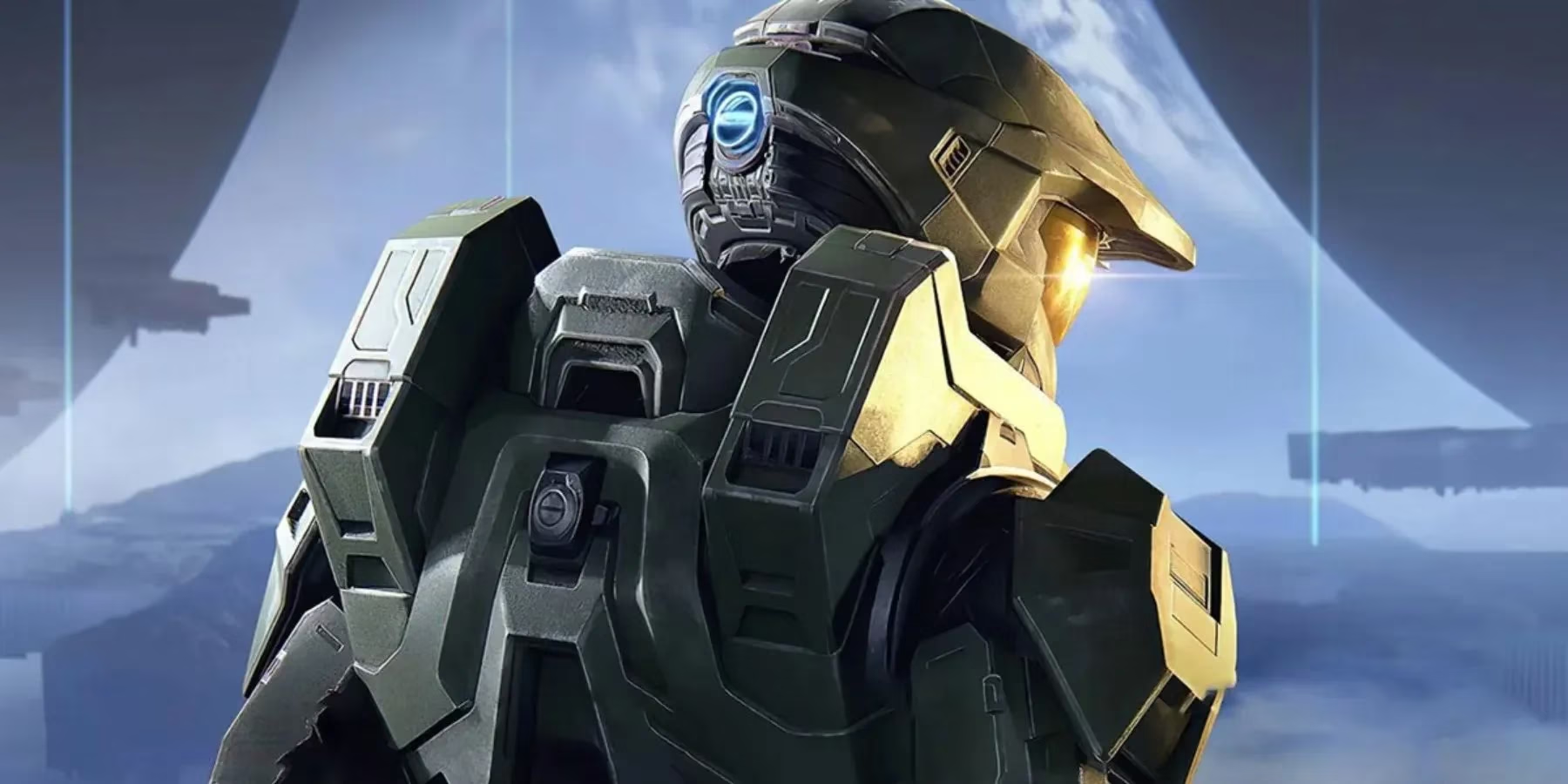
The New Vegas Blueprint: A Lesson in Creative Handoffs
This is where Fallout: New Vegas enters the chat. Back in 2010, Bethesda, riding high from Fallout 3, did something bold. They handed the reins for a spin-off to Obsidian Entertainment, a studio packed with developers who had worked on the original Fallout games. The result wasn't just a good game; it became a legendary one, often hailed as the pinnacle of the series. Why? Because Obsidian wasn't trying to be Bethesda. They brought their own voice, their own deep-RPG sensibilities, and a razor-sharp wit to the Mojave Wasteland. They treated the franchise not as a museum piece to be preserved, but as a rich playground to build upon.
The New Vegas Approach vs. The 343 Approach
| Aspect | Fallout: New Vegas (Obsidian) | Halo Post-Bungie (343 Industries) |
|---|---|---|
| Starting Point | Built upon Bethesda's tech/gameplay, but with a distinct creative vision. | Tasked with directly continuing Bungie's narrative and design legacy. |
| Creative Freedom | High. Allowed to implement deep RPG systems, branching stories, and a unique tone. | Constrained. Focused on recapturing the "Halo feel" while adding new elements. |
| Outcome | A beloved classic that expanded the franchise's identity. | A series perceived as struggling to find a consistent, new identity. |
This is the crucial lesson: a new studio, unburdened by the internal pressure of being "the Halo studio," could approach the IP with fresh eyes. They wouldn't be trying to replicate Bungie's magic; they'd be trying to create their own magic within the Halo universe. The fiction of Halo—the Forerunners, the Covenant, the Flood, the vast galactic scale—is a sandbox as rich as any. It's been waiting for a new architect to come in and build something astonishing with it.
Who Could Pilot the Pelican? Microsoft's Arsenal of Studios
Thankfully, in 2026, Microsoft isn't short on incredible talent. The acquisition of Activision Blizzard added to an already-stacked roster. Imagine the possibilities if the next major Halo campaign—not just a side story, but the next mainline chapter—was developed by a different team. 343 could oversee the universe (and maintain Infinite's live service), while another studio crafts the next big narrative. Here’s who could pull it off:
-
id Software 🎯: The masters of visceral, kinetic combat from the DOOM and DOOM Eternal team. A Halo campaign with their pacing, enemy choreography, and sheer gameplay intensity would be like strapping a Spartan onto a fusion-powered rocket sled. The combat would be relentless, smart, and incredibly satisfying.
-
Arkane Studios (Austin/Lyon) 🕵️♂️: Known for immersive sims like Dishonored and Prey. They could deliver a Halo story unlike any other—perhaps focusing on an ODST or a Spy, with nonlinear level design, multiple solutions to problems, and a deep, atmospheric focus. A Halo mission by Arkane would be less of a battlefield and more of a intricate clockwork puzzle of stealth, tools, and opportunity.
-
Tango Gameworks 🎭: The creators of The Evil Within and Hi-Fi Rush. Their strength is in bold, distinct tone and style. They could tackle a horror-tinged Halo story dealing with the Flood (a perfect fit!) or deliver something with a wildly inventive rhythmic or stylistic twist, breaking the series out of its military-sci-fi mold in a shocking but brilliant way.
Even looking at the Activision side, a team like Treyarch, with their expertise in tight, cinematic campaigns in the Call of Duty: Black Ops series, could craft an incredibly gripping, character-driven war story within the Human-Covenant conflict.
A Future Forged Anew
Giving Halo to a new studio isn't about punishing 343 Industries. In fact, it could be a liberation for them, too. They could finally work on a new, original IP where their creative vision isn't filtered through a 25-year legacy. They've been the custodians of Chief's story for over a decade; that's a long tour of duty.
For the franchise, this change could be the spark it desperately needs. It would be a statement that Halo is bigger than any one studio—it's a universe of potential. Just as New Vegas proved that the Fallout world could thrive under a new storyteller's pen, Halo could experience a similar renaissance. We could get a campaign that feels alien and familiar all at once, that respects the lore but isn't enslaved by nostalgia. It could be daring, strange, and unforgettable.
As a fan, what I want most is to be surprised by Halo again. I want to step into a new story and feel that sense of wonder and scale I felt on the first ring. Clinging to the past is like trying to power a starship with a flashlight battery—it provides a faint glow, but not the thrust needed for a new journey. It's 2026. The galaxy is waiting, and it's time for a new hero—or rather, a new set of creators—to answer its call.
Comments