Halo Infinite Forge and Infection mode evolved from a leaked experiment into a thrilling community-driven multiplayer staple.
In the autumn of 2022, Halo Infinite's most dedicated players found themselves in a strange waiting room. Forge mode, the creative toolkit that had helped define Halo's community since Halo 3, was delayed, and the silence around it felt heavy. Then a leak cracked the door open. A test flight for Halo Infinite co-op contained something dataminers had been hunting for: a working version of Forge. Through a complicated but accessible workaround, creators began exploring the unfinished tool, and one of them used it to rebuild a familiar nightmare.
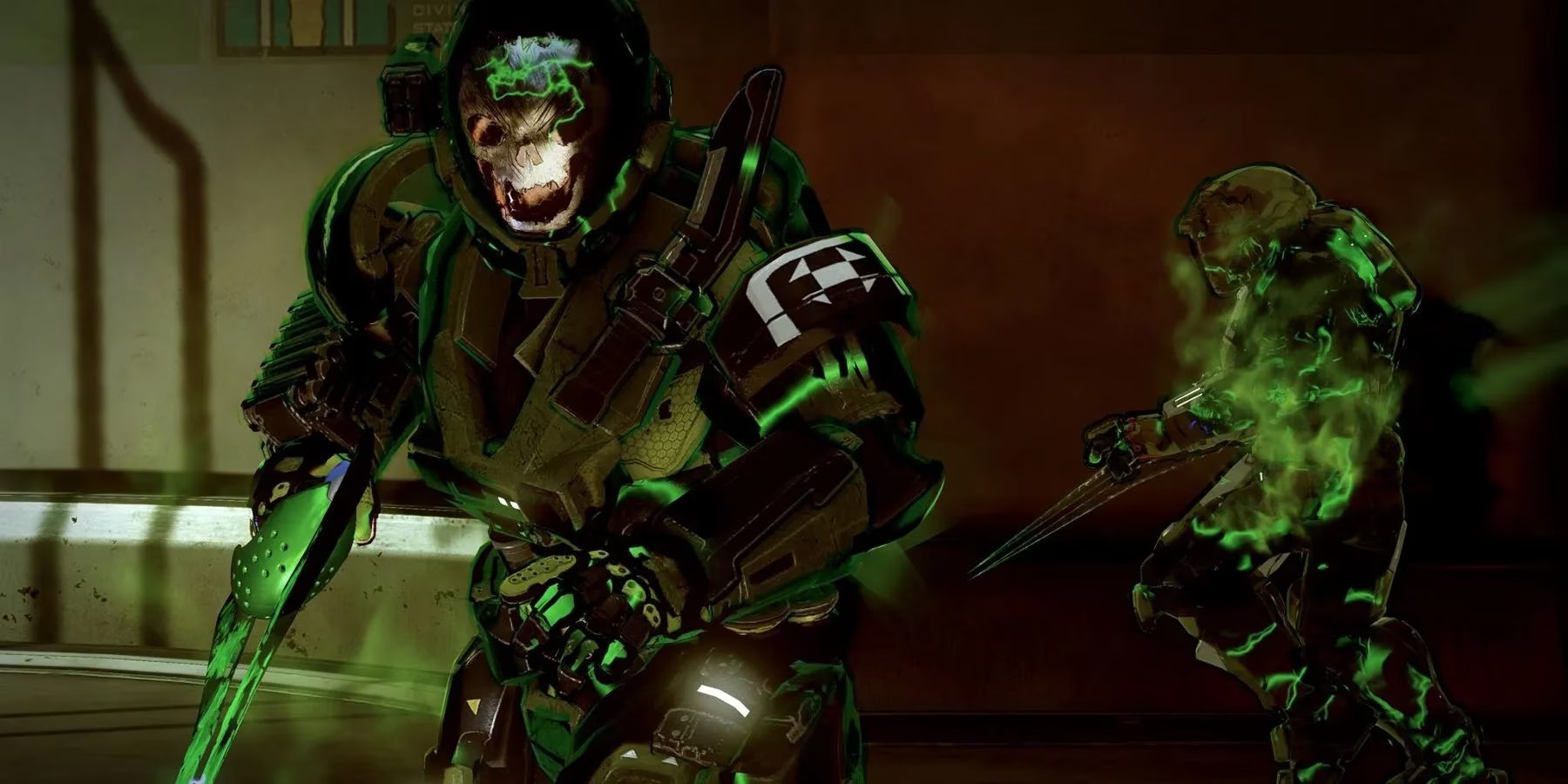
The creator behind the Artifice YouTube channel had spent roughly two weeks sharing Forge experiments when the Infection video appeared. The clip captured only two minutes of gameplay, but those two minutes told a story Halo fans understood instantly. Survivors scrambled through tight spaces, watching their backs. The infected hunted with relentless momentum. A death meant a role change, and the match became a spiral of pressure, panic, and last-second escapes. It was not an official playlist. It was a community proof of concept, and it was impressive.
Infection itself was not new. The mode first rose to prominence in Halo 3 after a custom Halo 2 game type called Zombie proved how much players loved asymmetric survival. Most players begin as uninfected survivors. Their goal is simple: stay alive. If an infected player kills them, they respawn on the other side. The infected respawn endlessly and keep hunting until every survivor has fallen. That loop creates tension because every lost teammate becomes a new threat. The Artifice footage showed both perspectives, and the rhythm felt instantly recognizable.
At the time, there was evidence that 343 Industries was working on an official Infection mode, but nothing had been confirmed. Some players hoped Infection would arrive for Halloween. Others warned against assuming too much about Halo Infinite's future. The safer bet was that custom games would support Infection once Forge launched, because community creators had already proven the concept inside a leaked build.
The leak's origin added another layer to the story. Halo Infinite's co-op test flight was meant to test cooperative play, but dataminers discovered that the build also included a functioning Forge. Testers could reach it through a relatively straightforward workaround, and creators like Artifice made the most of that opportunity. They were not waiting for permission. They were building, testing, and sharing. For a community hungry for variety, the leak became a small window into what Forge could eventually deliver.
By 2026, that window has become a wide-open door. Forge is no longer a rumor or a leaked experiment. It is an established part of Halo Infinite, and Infection has become a familiar presence in the game's multiplayer landscape. The once-delayed toolkit now carries years of community maps, custom modes, and strange inventions. Halo Studios, the team formerly known as 343 Industries, has watched the community turn Forge into a platform within a platform. The Artifice video from 2022 feels less like a stunt and more like a prologue.
| 2022 Leak Era | 2026 Reality |
|---|---|
| Forge was delayed and only reachable through a test-flight workaround. | Forge is a live, established creative suite for Halo Infinite. |
| Infection existed as a community-made proof of concept. | Infection is part of the broader Halo Infinite experience and custom-game ecosystem. |
| Players speculated about Halloween reveals and official support. | The conversation has moved on to map curation, mode variety, and community longevity. |
| Artifice's two-minute clip showed raw potential. | Years of community creations show what that potential became. |
The Infection leak mattered for reasons beyond nostalgia. It demonstrated that Forge could support scripting, role changes, respawn logic, and the kind of tense pacing that makes Infection work. It also showed how quickly creators could move when given even partial access. The two-minute video was short, but it carried a message: Halo Infinite's multiplayer future did not have to depend only on official playlists. Community designers were ready to fill gaps with their own energy and expertise.
For an ordinary player, the appeal is easy to understand. Infection is not just a shooter mode; it is a social game. Friends betray no one, but they do panic. A survivor's lucky escape becomes a story. An infected player's ambush becomes a joke repeated for weeks. Forge gives those moments a home. It lets players tune spawns, lighting, weapon placement, and map flow until the experience feels right. When the tools are strong, the community does the rest.
Looking back from 2026, the Artifice clip looks like a small signal fire. It appeared while Forge was still delayed, while official Infection support was unconfirmed, and while Halo Infinite players were hungry for variety. The signal said that creators were already building the game they wanted to play. That signal was answered. Forge launched, Infection found its place, and the community kept creating. The wait was painful, but the proof was always in the players' hands. 🎮
Comments