Halo Infinite exhausted soldiers art reflects the mood of fans and 343 Industries amid declining trust and struggles with the live-service game.
In the winter of 2023, an image began circulating among the Halo community—a weary group of Spartans, helmets off, shoulders slumped, captured in a moment of utter exhaustion. The artwork, titled “Halo Infinite exhausted soldiers,” seemed to perfectly encapsulate the mood surrounding 343 Industries’ troubled live-service shooter. At the time, it was just a piece of concept art, but looking back from 2026, that picture feels less like a promotional image and more like a strangely accurate prophecy.
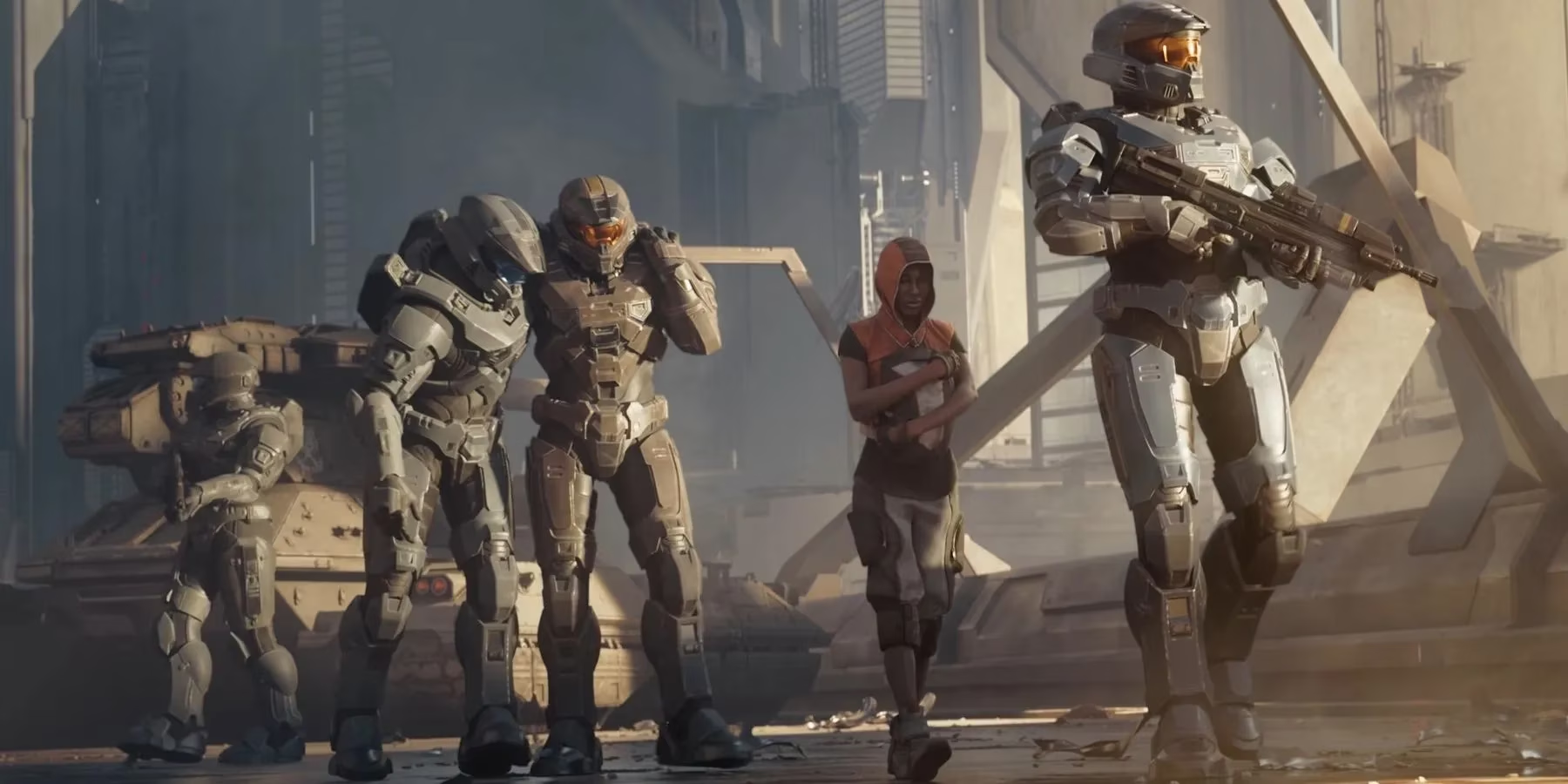
Halo Infinite, much like those weary Spartans, had been marching on fumes ever since its rocky launch in November 2021. The game arrived over a year late, with a bare-bones campaign that dared to go open-world and a free-to-play multiplayer that struggled to hold attention. By early 2023, the buzz had faded. Player counts were dropping, content updates felt like drips in a desert, and the community had grown restless. It was in that fragile moment that Microsoft’s Xbox Research team decided to send out a survey—one that, in hindsight, reads like a quiet admission that the end was already in sight.
The survey, leaked via gaming news accounts on social media, wasted no time getting to the point. The very first question asked players point-blank: “Are you done playing Halo Infinite?” No fluff, no corporate cushioning—just a clean, almost blunt check of the pulse. It was like Xbox was leaning over the counter at a LAN party and asking, “Hey, are you still into this, or should we just pack it up?” Following questions dug deeper, asking what game modes fans would want to see added, but the real eyebrow-raiser was a series of queries designed to measure gamers’ trust in 343 Industries itself. Could the studio still carry the Halo torch? Did players believe in the team’s ability to deliver? For a franchise that had been the face of Xbox for two decades, seeing those questions in an official survey felt like the grown-ups finally asking the kid if they still wanted to keep the band together.
The timing couldn’t have been more delicate. Just days earlier, Xbox head Phil Spencer had gone on record saying that 343 Industries was “critically important to Halo,” even as the studio weathered a fresh round of layoffs. The departure of Halo Infinite’s multiplayer creative director late the previous year had already planted seeds of doubt. So when that survey landed in inboxes, players didn’t react with the kind of enthusiasm you’d expect from a chance to shape the future. Instead, comments ranged from disbelief to weary cynicism. One response summed it up perfectly: “Actually insane how xbox/MS fail to take any responsibility.” Others questioned whether the survey was just formality theater—a box to check while decisions were already being made behind closed doors.
Yet there were optimists, too. Some fans held onto hope that Microsoft was genuinely listening, that the feedback would spark a turnaround. A few even pointed to the survey as proof that the company hadn’t given up, that it wanted to rebuild bridges. It was a nice thought, but by mid-2024, the evidence was pointing in the opposite direction. Updates slowed to a crawl. Promised features like split-screen co-op—once dangled as a redemption arc—were quietly shelved. The seasonal model sputtered. And then, in early 2025, 343 Industries officially announced that Halo Infinite had entered a maintenance phase. No new seasons, no big ticket content drops—just server upkeep and occasional bug fixes. The soldier had finally sat down.
Looking at it now in 2026, that 2023 survey was the canary in the coal mine. Xbox wasn’t just polling players; it was taking a hard, unsentimental look at the situation and preparing to cut its losses. The game’s live-service ambitions had collided with a development nightmare that stretched back years, and the trust questions weren’t just about 343—they were about whether the whole project was worth salvaging. The answer, apparently, was a quiet no. Phil Spencer’s reassurances about 343’s future with Halo were probably genuine at the time, but the survey suggested a different conversation was happening behind the scenes: a subtle pivot away from Infinite and toward whatever comes next.
This doesn’t mean Halo itself is dead. Far from it. Master Chief remains an iconic figure, and rumors of a new mainline title built from the ground up have been circulating since late 2025. But Halo Infinite—the game that was supposed to last a decade—has become a case study in how quickly a live-service giant can stumble. The survey questions that felt so jarring in 2023 now read like a gentle nudge toward the exit. They gave the community a chance to voice its fatigue, and in a way, that honesty was refreshing. It’s just a shame that the conversation ended the way those exhausted soldiers looked: with heads hung low, wondering what might have been.
Comments