Can Halo Studios restore Halo's Bungie-era glory after 343 Industries? The Unreal Engine 5 reboot follows Halo Infinite's mixed legacy.
For nearly a decade, Halo fans have debated whether 343 Industries was the right steward for Microsoft's flagship shooter. The 2022 cancellation of Halo Infinite's promised couch co-op became a flashpoint, but it was hardly an isolated incident. By 2026, the question has evolved: 343 Industries no longer exists under that name. In October 2024, Microsoft rebranded the studio as Halo Studios and shifted development to Unreal Engine 5. Yet the underlying anxiety remains. Can anyone restore Halo's golden age, or is the franchise doomed to drift? This article traces the saga from Bungie's original trilogy to Halo Studios' current reset, examining why so many players still ask for someone else to take the reins.
Bungie's Original Trilogy: The Gold Standard
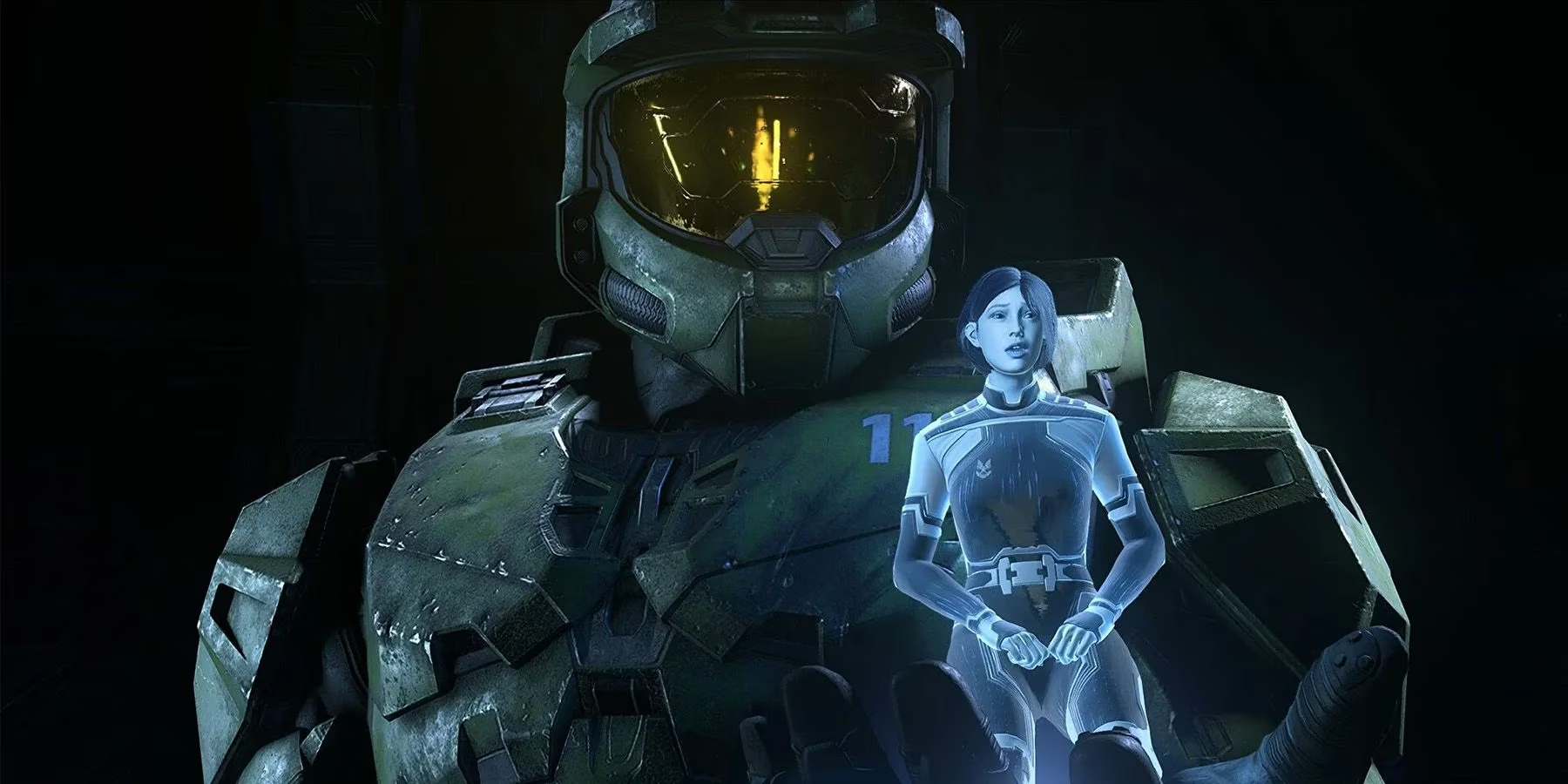
Halo: Combat Evolved introduced Master Chief and the Covenant, sending players to a mysterious ringworld that promised salvation and destruction in equal measure. Halo 2 expanded the universe with the Arbiter, dual protagonists, and a cliffhanger that left fans hungry for more. Halo 3 delivered a high-stakes finale that ended the Human-Covenant war. Bungie then returned with Halo Reach, a prequel starring brand-new characters, before departing to create Destiny. That original run felt like a cathedral built in one architectural language: each expansion added a nave, a spire, or a stained-glass window that belonged to the same design. The gameplay, story, and multiplayer evolved together, and fans trusted the blueprint.
343 Industries and the Reclaimer Saga
When 343 Industries took over, it attempted to kickstart a new era with the Reclaimer saga. Halo 4 pitted Master Chief against a Covenant splinter group and the Prometheans. Its story was well received by some, but many felt it lacked Bungie's storytelling magic. The studio also removed Firefight in favor of Spartan Ops, a controversial trade. Halo 5: Guardians proved even more divisive. Its campaign split perspectives between Fireteam Osiris and Blue Team, and critics argued it took a step backward. Multiplayer introduced Warzone and REQ packs, departing sharply from Halo's established arena formula. Halo Infinite was supposed to be the next big leap. Its campaign adopted an open-world structure, introduced a brand-new adversary, and skipped much of Halo 5's aftermath. The multiplayer went free-to-play and was billed as a return to form, but it launched without several fan-favorite modes and shipped a battle pass filled with lackluster rewards.
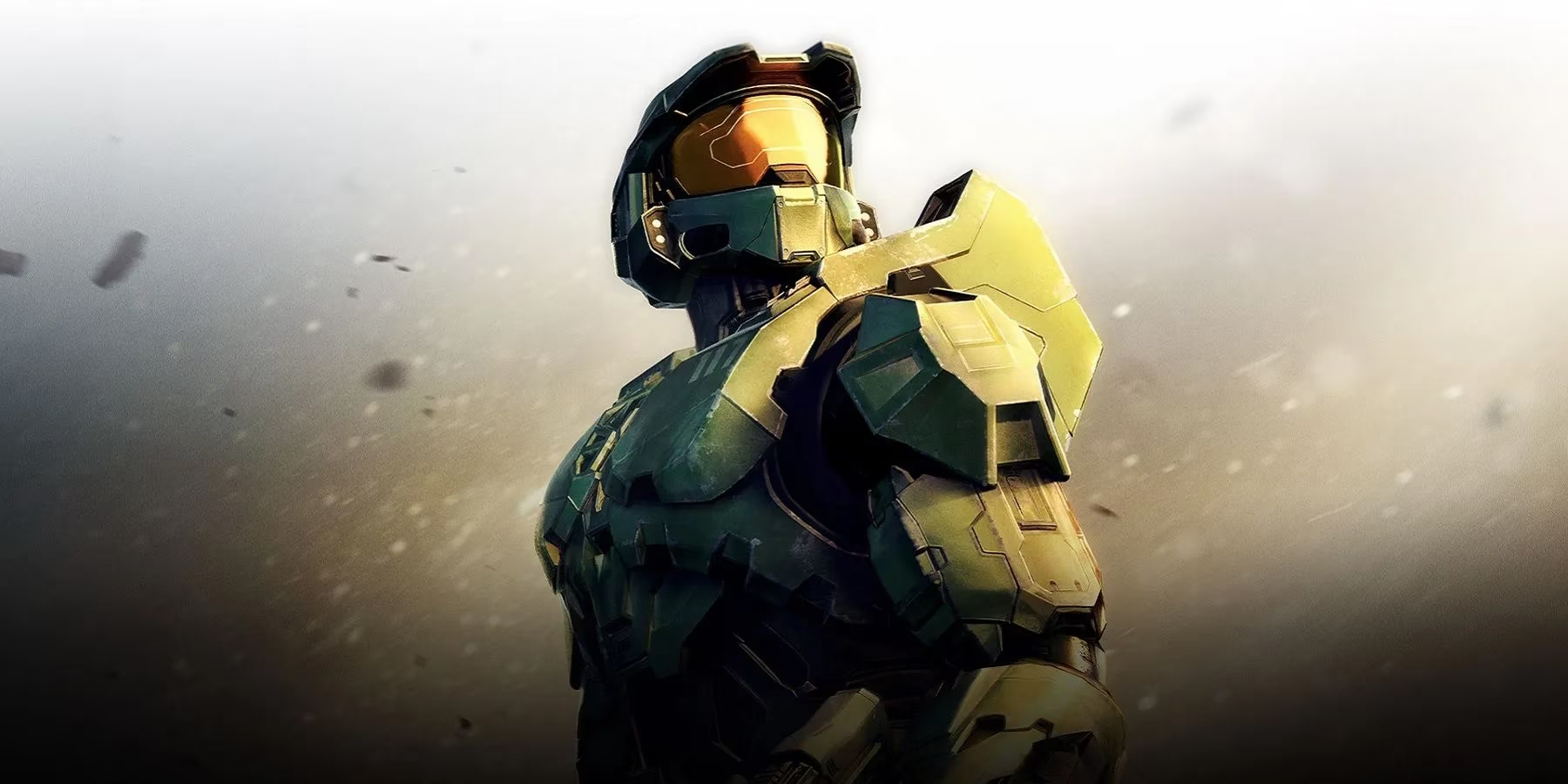
Each 343-era title seemed to reinvent the wheel, and not always for the better. The stories did not flow seamlessly into one another, and the gameplay identity shifted with every entry. It often felt as though the studio was a jazz band that changed key every measure, never settling on a melody the audience could hum. That inconsistency, more than any single misstep, fueled the demand for new leadership.
The Couch Co-op Cancellation and Fan Trust
The cancellation of Halo Infinite's couch co-op was a particularly bitter pill. Split-screen campaign co-op had been a staple of the franchise, a way for friends to share the same sofa and the same screen. 343 Industries confirmed in 2022 that the feature would not appear in Halo Infinite, despite earlier promises. For many players, this was not merely a missing mode; it was a broken covenant. Trust is like a suspension bridge made of glass: once a single pane shatters, every footfall becomes a negotiation with gravity. Fans began returning to The Master Chief Collection, where the classic experiences still lived. The message was clear: if the new Halo could not deliver the staples, players would revisit the old ones.
The 2026 Reset: Halo Studios and Unreal Engine 5
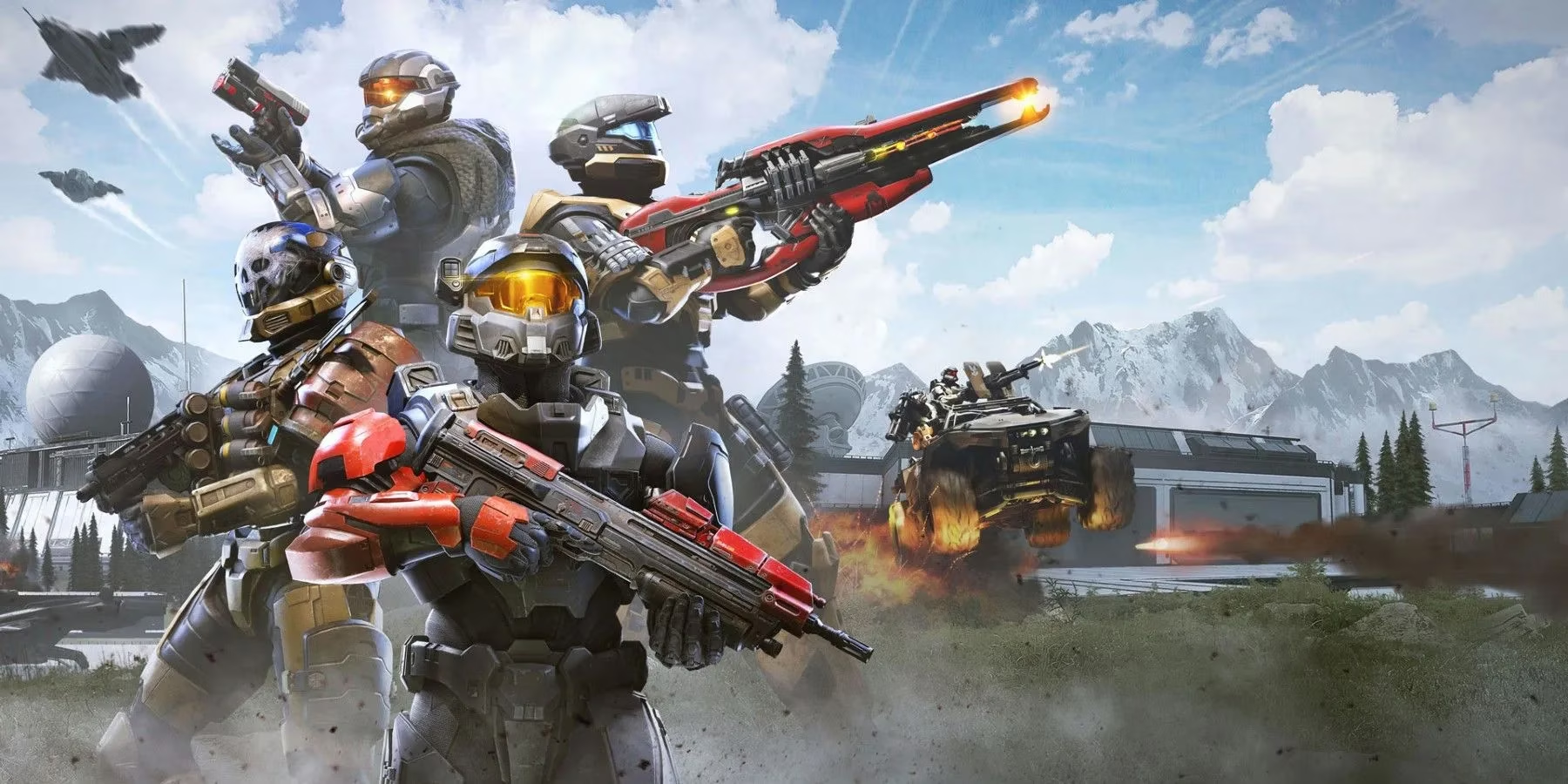
By 2026, the landscape has changed. 343 Industries is now Halo Studios, and the team has moved to Unreal Engine 5. The studio showcased Project Foundry, a technical demonstration of what a new Halo could look like. It has also announced Halo: Campaign Evolved, a rebuilt version of the original Halo: Combat Evolved campaign, scheduled to arrive in 2026. This is not just a remaster; it is a chance to reintroduce the franchise's founding myth to a new generation. Multiple projects are reportedly in development, suggesting Microsoft wants Halo to become a multi-title universe again.
| Era | Steward | Defining Release | Fan Reception |
|---|---|---|---|
| 2001-2010 | Bungie | Halo 3, Halo Reach | Beloved, genre-defining |
| 2012-2024 | 343 Industries | Halo 4, Halo 5, Halo Infinite | Mixed to divisive |
| 2024-present | Halo Studios | Project Foundry, Halo: Campaign Evolved | Cautious optimism |
The rebranding does not erase the past. The same leadership and institutional memory remain, even under a new name. Fans are watching closely to see whether Halo Studios can learn from 343's inconsistencies. A fresh engine and a remake are promising, but they are not a cure-all. The studio must prove it can maintain a coherent vision across campaigns, multiplayer, and live-service updates.
What Halo Needs to Reclaim
To win back skeptical players, Halo Studios should focus on several pillars:
-
🎯 Consistent Vision: A clear narrative and gameplay direction across multiple titles.
-
🎮 Classic Features: Split-screen co-op, Forge, Firefight, and robust custom games at launch.
-
🗣️ Transparent Communication: Avoid promising features that cannot be delivered.
-
⚔️ Arena Multiplayer Identity: Respect the competitive sandbox while innovating carefully.
-
📖 Stories Beyond Master Chief: Explore new protagonists and genres, as many fans have requested.
The franchise does not need to imitate its past blindly. It needs to understand why the past worked. Bungie's Halo was not great because of one feature; it was great because every part felt like it belonged to the same universe. Halo Studios has the tools and the time to rebuild that cohesion. If it succeeds, the calls for someone else will fade. If it fails, the question will only grow louder.
Halo Infinite remains available on PC, Xbox One, and Xbox Series X/S. Halo: Campaign Evolved is expected in 2026. The future is unwritten, but the audience is no longer patient. The glory days can return, but only if the studio treats Halo's legacy as a foundation, not a museum piece.
Comments