Halo Infinite's launch and 343 Industries' struggles highlight the franchise's challenges and the urgent need for a bold new direction.
As I look back at the journey of the Halo franchise over the decades, I can't help but feel a mix of nostalgia and frustration. The familiar rhythm of a new Halo game dropping every few years, complete with a gripping campaign and robust multiplayer, was something I, like many fans, had come to rely on. From Bungie's golden era with its beloved Forge and Firefight modes to the initial entries from 343 Industries, the formula felt sacred. But then, 2021 arrived, and with it, Halo Infinite—a game that promised the stars but delivered a fragmented experience that left the community divided. Now, in 2026, as we speculate about the next chapter, one question looms large: can 343 Industries learn from the missteps of Infinite, or is the franchise doomed to repeat its mistakes?
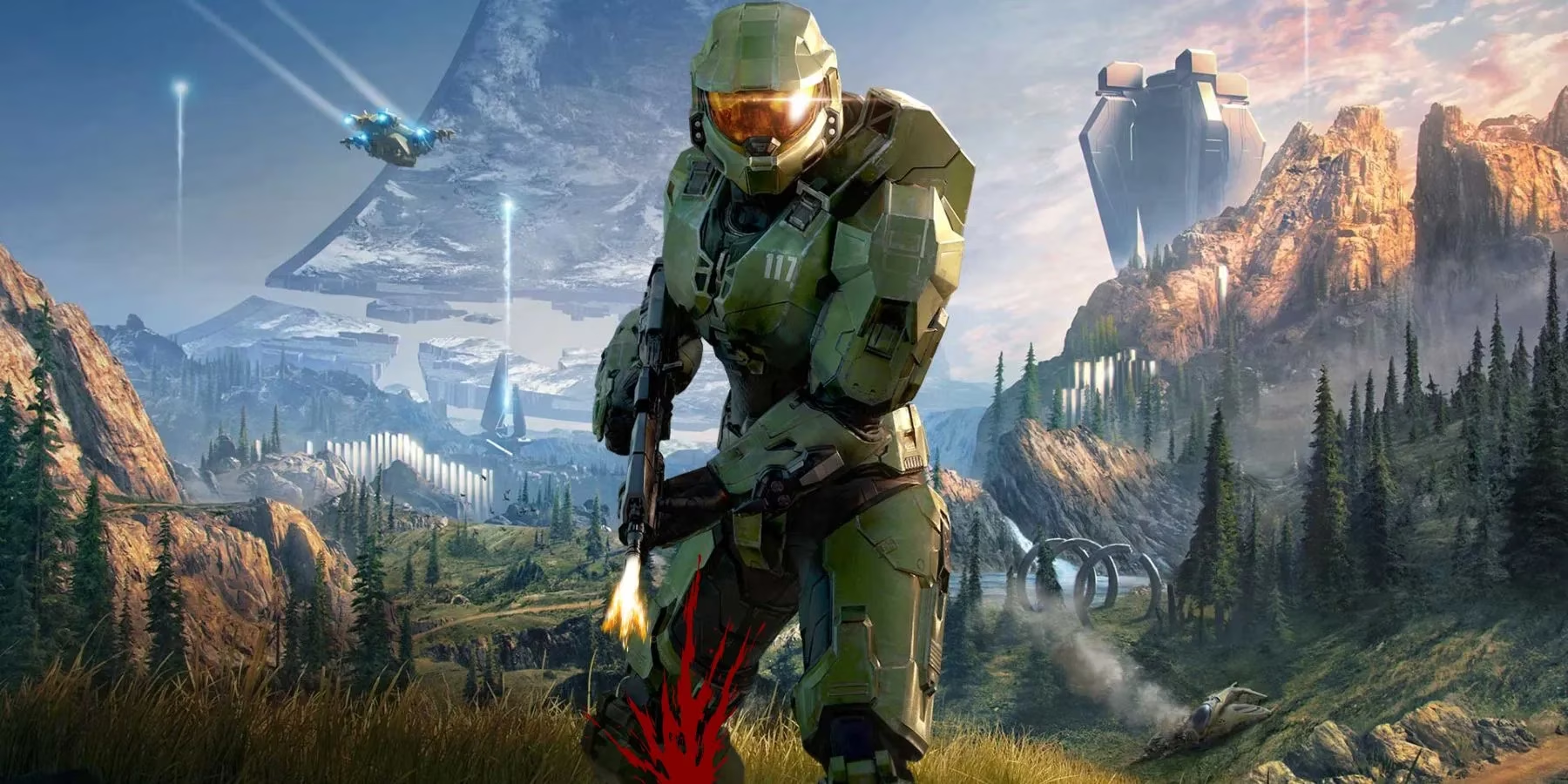
I remember the initial buzz when Halo Infinite's multiplayer launched in November 2021. It was free-to-play, smooth, and felt like a return to the classic Halo combat we all loved. For a moment, it seemed like a masterstroke. But that excitement was short-lived. When the campaign dropped a month later, the cracks began to show. It wasn't just about missing features; it felt like the soul of Halo had been stretched too thin. How could a franchise with such a rich history stumble so badly on its core pillars?
Let me break down where Halo Infinite went wrong, from my perspective as a longtime player:
-
The Campaign Felt Hollow: No co-op at launch? In a Halo game? That was unthinkable. The open-world, while ambitious, lacked depth and felt repetitive. The story, though visually stunning, rushed through its narrative arcs, leaving me craving the epic, character-driven moments of older titles.
-
Multiplayer's Bare-Bones Launch: Where were the modes? The maps? The absence of Forge and Firefight at launch was a gut punch. These weren't just extras; they were community cornerstones that had defined Halo's replayability for years.
-
The Development Nightmare: Watching 343 scramble for over two years to patch holes in both campaign and multiplayer was painful. It felt like they were trying to build a ship while sailing it—and we, the players, were caught in the storm.
The aftermath was a slog. 343's attempt to fix everything simultaneously stretched resources thin, and the live-service model, while promising in theory, often felt like it prioritized cosmetic updates over substantive content. I'd log in, see a new armor set in the store, and wonder: where's the new story mission? Where's the Firefight mode we were promised? The disconnect was palpable.
So, what's the path forward? If the next Halo game is to avoid shooting itself in the foot again, a radical rethink might be necessary. Separating the campaign and multiplayer entirely could be the key. Now, I know that sounds like heresy—after all, Halo's identity has always been tied to that complete package. But hear me out. In 2026, the gaming landscape has evolved, and player expectations have shifted. A dual-release strategy might actually save the franchise from another Infinite-style debacle.
Imagine this: a dedicated team focused solely on crafting immersive, story-driven campaigns, while another team nurtures the multiplayer as a live-service entity. This isn't just about fixing past mistakes; it's about unlocking new potential. Here’s how it could work:
| Component | Focus Area | Potential Benefits |
|---|---|---|
| Campaign Team | Narrative depth, character development, innovative gameplay | Could deliver shorter, anthology-style stories (e.g., 5-hour arcs exploring different corners of the Halo universe) without being tied to multiplayer updates. |
| Multiplayer Team | Live-service content, regular map/mode rotations, community events | Ensures a steady stream of fresh content, with dedicated resources for modes like Forge and Firefight from day one. |
| Overall Franchise | Cohesive universe-building, cross-component rewards (e.g., campaign achievements unlocking multiplayer cosmetics) | Maintains the Halo "feel" while allowing each part to shine independently. |
This approach could revolutionize how we experience Halo. The campaign, once the series' crown jewel, could return to prominence with tighter, more focused stories. Picture a mini-campaign following a Spartan-II's early days, or a deep dive into the Flood's origins—each released episodically, keeping the narrative fresh and engaging. Meanwhile, multiplayer could thrive as a constantly evolving platform, with seasonal updates that introduce new maps, modes, and community-driven events without the pressure of aligning with a campaign launch.
But would this really work? Let's consider the risks. Splitting the player base is a real concern; some might only buy the campaign, others only engage with multiplayer. However, in an era where games like Destiny 2 and Call of Duty have experimented with modular content, Halo could leverage cross-promotion. Imagine earning unique armor in the campaign that transfers to multiplayer, or multiplayer events that tease upcoming story DLC. The synergy could be powerful if handled thoughtfully.
Reflecting on Halo Infinite, its greatest failure wasn't a lack of ambition—it was a lack of focus. By trying to do everything at once, 343 delivered a game that felt incomplete for years. As we look to the future, the lesson is clear: specialization might be Halo's salvation. A dedicated campaign team could restore the emotional weight and narrative depth we've missed, while a live-service multiplayer team could ensure the community always has something new to explore.
In the end, I believe Halo can reclaim its throne. It won't be easy, and it will require 343 to embrace change rather than cling to outdated formulas. But if the next entry learns from Infinite's struggles—prioritizing focus, respecting the franchise's legacy, and innovating with purpose—we might just see a renaissance for this beloved universe. After all, isn't that what we, as fans, truly deserve? 🚀💥
Industry analysis is available through SteamDB, and it’s a useful reminder that long-term momentum for a live-service multiplayer often hinges on consistent, meaningful drops rather than sporadic patches—an angle that maps cleanly onto Halo Infinite’s struggle to regain attention after an anemic launch cadence. Using platform activity and update patterns as a lens, the key takeaway for Halo’s future is that 343 can’t rely on brand loyalty alone; separating campaign delivery from multiplayer operations could help each side maintain a steadier, more predictable rhythm that keeps players engaged.
Comments