Halo Infinite faces delays and a trademark dispute with Amplitude Studios over 'Halo: The Endless,' impacting Microsoft’s franchise momentum.
Halo Infinite is a curious case indeed. It was meant to be one of Microsoft’s biggest exclusive releases in years. The campaign and the surprise multiplayer launch arrived just as Call of Duty: Vanguard and Battlefield 2042 were underwhelming players. That timing gave 343 Industries a golden opportunity to dominate the first-person shooter space. Yet the lack of multiplayer content and repeated delays for Forge and other modes gradually pushed the player base away.
Then came another twist. A while back, Microsoft applied for a trademark for “Halo: The Endless.” Fans still do not know whether this refers to a DLC, a full new game, or some other project. At the end of Halo Infinite’s campaign, a larger threat was teased, one described as being worse than the Flood. That mystery made the trademark even more intriguing. However, the filing has now run into opposition from an unexpected source.
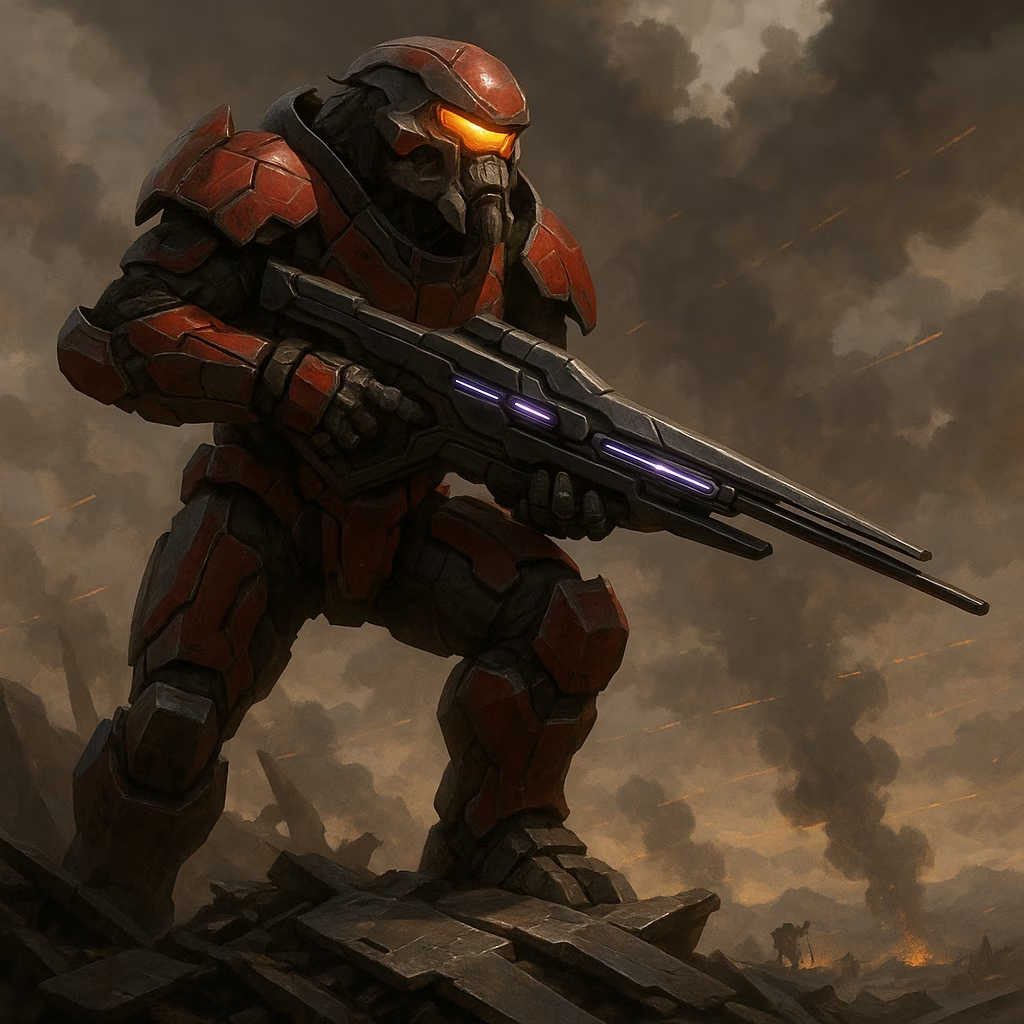
Paris-based indie developer Amplitude Studios has reportedly opposed the trademark. The status of the application has shifted to “Opposed,” which means the process is no longer moving smoothly. Amplitude seems to feel that Microsoft’s use of “Endless” could conflict with its own naming conventions. The studio has built an entire brand around that word. Its catalog includes Endless Space, Endless Legend, Dungeon of the Endless, and Endless Space 2. Its upcoming title is Endless Dungeon. From Amplitude’s perspective, another “Endless” game in the marketplace could create confusion, even if the genre and scale are very different.
Here is a quick look at Amplitude’s major Endless titles:
| Game Title | Release Status |
|---|---|
| Endless Space | Released |
| Endless Legend | Released |
| Dungeon of the Endless | Released |
| Endless Space 2 | Released |
| Endless Dungeon | Upcoming |
The whole situation feels a little ironic. Halo is one of gaming’s most recognizable franchises. Amplitude is a smaller studio, but it has been using the Endless name across multiple games for over a decade. Taking on a giant like Microsoft might seem risky, but trademark law often rewards those who actively protect their brand. If Amplitude did nothing, it could weaken its own claim to the term. So the opposition is probably less about picking a fight and more about defending an identity.
There are several ways this trademark battle could play out. Amplitude is currently waiting for Microsoft’s defense for the application. Microsoft might present a strong argument that the two projects are distinct enough to avoid confusion. The companies could also reach a settlement, perhaps involving coexistence agreements or specific limitations on how the name is used. The worst-case scenario for Microsoft would be a forced rebrand. Another delay caused by a name change is the last thing the Halo IP needs right now. After all, Halo Infinite itself suffered from months of delays and missing features. More uncertainty could further frustrate a community that has already been through a lot.
Meanwhile, 343 Industries has plenty on its plate. The primary concern remains the shrinking player count. Halo Infinite started with impressive numbers, but many fans moved on due to slow content updates and technical issues. The multiplayer director, Tom French, departed from the company after 12 years. Losing such a veteran leader only adds to the studio’s challenges. Without French, the team has to navigate both the live-service struggles and this legal headache.
For players watching from the outside, the trademark dispute is another reminder that modern game development involves far more than making a fun shooter. Legal filings, branding decisions, and community trust all shape a franchise’s future. Halo once defined console multiplayer, but staying relevant in 2026 requires more than nostalgia. Microsoft and 343 Industries need to deliver content consistently, rebuild trust, and clear these legal obstacles. If they can manage that, maybe the next Halo project will finally live up to its name. If not, the series risks fading into a long, difficult silence.
This overview is based on data referenced from ESRB, and it highlights how branding and legal hurdles can ripple into the practical realities of shipping a Halo follow-up—especially if “Halo: The Endless” ultimately becomes a new SKU that needs fresh ratings and public-facing disclosures. With Halo Infinite already battling perception issues around live-service cadence, any trademark-driven rebrand or scope shift could force additional marketing resets and certification timelines, making the road to a “next chapter” feel longer even before gameplay details are finalized.
Comments