Halo's creative brain drain continues as Frank O'Connor leaves 343 Industries after 22 years, deepening the franchise's talent crisis.
It’s April 2026, and I’ve got to be honest—every time I hear another Halo veteran packs their bags, a little piece of my Spartan heart just sinks. I mean, I’ve been riding shotgun with the Master Chief since the original Xbox days, and lately it feels like watching a once-unstoppable frigate take on water. The latest name to flash on my radar is Frank O’Connor, a creative director who’d been with the franchise since 2004. Yep, you read that right—over two decades of shaping the universe, and now he’s officially moved on. His LinkedIn tells the story: last month he started a new gig as franchise creative director somewhere else, leaving behind the troubled shores of 343 Industries.
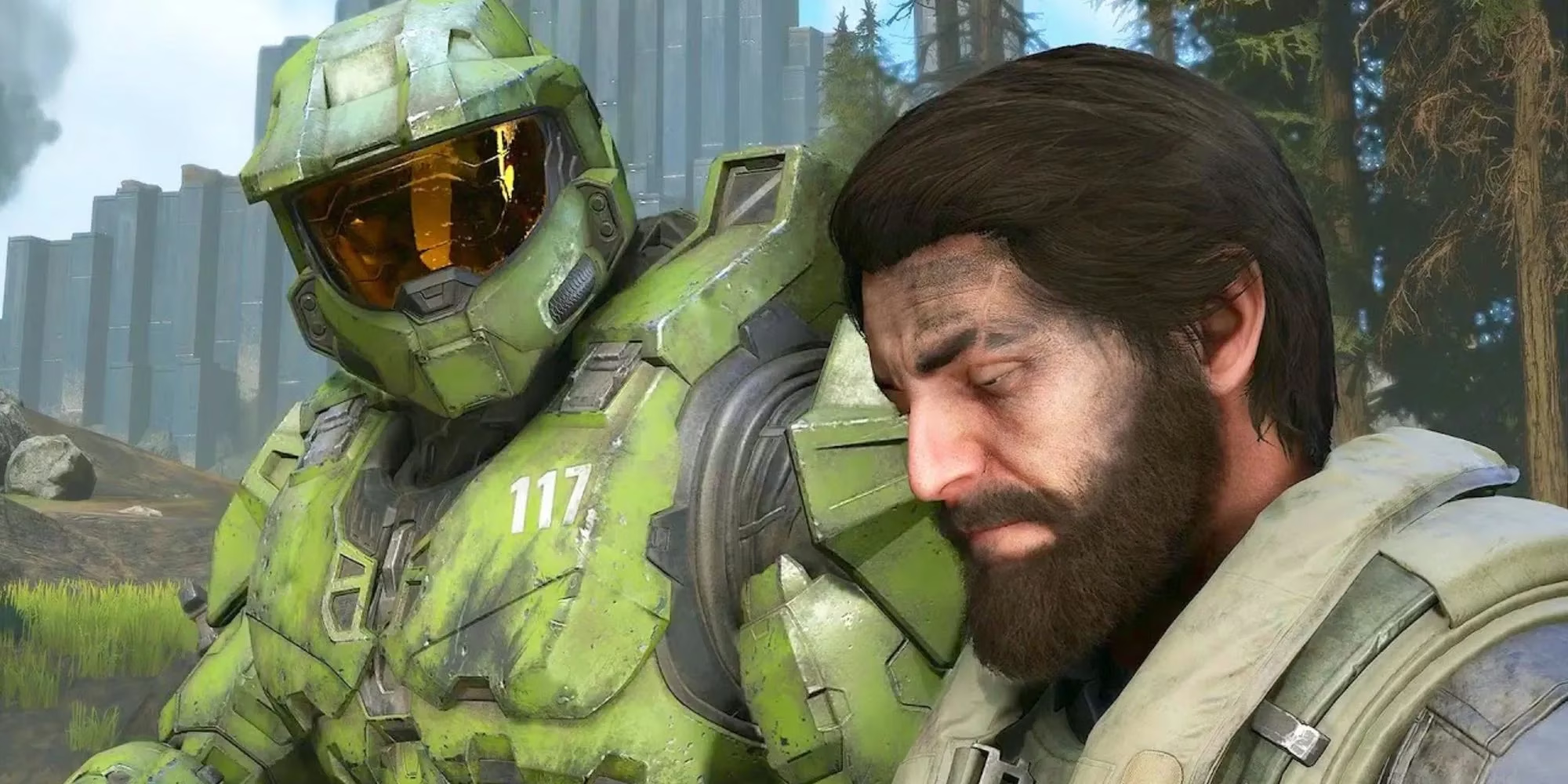
Now, I’m not gonna pretend I saw this coming, but honestly? The signs were everywhere. You remember how just a few years back Joseph Staten—the guy who helped build the original trilogy—came back like a resurrection, only to leave again in 2023? That one stung. He’d returned in 2020 to pull Halo Infinite out of its nosedive after the Xbox Series X launch embarrassment, and for a hot minute it felt like the old magic might be back. But then… poof. Gone. And O’Connor’s departure just layers on the ache.
So what’s really going on behind those studio walls? I don’t have a direct line to 343, but you don’t need Cortana’s processing power to crunch the numbers. Let’s do a headcount of the talent that’s slipped away since Infinite launched. Topped by Tom French, the former creative director who left in 2022. Then Bonnie Ross, the studio head and a founding pillar, stepped down the same year. David Berger, Jerry Hook—big names, deep roots. It’s not a drip anymore; it’s a waterfall. And no, this isn’t just normal industry churn. When so many key players exit in such a short window, you’ve got to wonder: is it creative friction? The burnout of maintaining a live-service game with a fanbase that’s… let’s say
passionate?
I’ve been on the frontlines of Halo multiplayer since LAN parties with original Xboxes linked up like a chain of grunts. I’ve never seen the community this divided. Halo Infinite had one job: be the ten-year platform that reignited the franchise. Instead, it launched missing basic features like co-op campaign and Forge, and then spent seasons drip-feeding content slower than a Brute trying to sprint uphill. The live-service model—oh buddy, it’s a hungry beast. And if you don’t feed it fast enough, both players and developers start to look for the exit.
Now, contrast that with the departures. O’Connor wasn’t just a suit. This guy was involved in everything from the games themselves to the silver screen attempt—the Halo TV series. And while that show grabbed headlines, the fan reaction was… mixed, to put it gently. Some folks loved seeing Chief’s face; others wanted to pretend it never happened. Either way, steering a franchise across so many mediums while the core game struggles has to be exhausting. Maybe he found a place where
creative direction doesn’t mean putting out fires every day.
The truly scary part? We still don’t have official statements about why these legends left. Silence. And that silence echoes louder than a Warthog’s horn in a tunnel. When you’re a longtime fan like me, you start to build headcanon about what’s happening. Is Microsoft pulling the strings too tight? Are 343’s remaining teams stretched thin trying to support a game that, let’s face it, never quite lived up to the hype of that stunning E3 reveal? Statistically, player sentiment hasn’t changed dramatically since 2023—there’s still a core community playing, but the spark of excitement feels dimmer.
I’m not here to dance on Infinite’s grave, though. I’ve had some incredible moments in that game. But the defections force a hard question: who is left to steer the ship? The creative DNA that built Halo 2 and Halo 3—the Bungie magic that even carried into early 343 titles like Halo 4—is now scattered to the stars. Each departure feels like a shard of that legacy being chipped away. And for a franchise that defined a console generation, that’s downright painful.
I suppose, looking ahead to 2027 and beyond, I hold onto a sliver of hope. Maybe these veteran departures are just the final clearing of the deck for a radical reboot. After all, Halo has survived corporate shuffle before. But if O’Connor’s graceful exit tells me anything, it’s that the folks who built this universe need something that 343 and Microsoft currently can’t provide. Whether that’s creative freedom, less crunch, or just a chance to make something new—well, we may never know. And until we do, I’ll keep my energy sword charged and my helmet on, waiting for the next chapter. Just don’t be surprised if you catch me staring out at the destroyed ring of Zeta Halo, wondering where all the heroes went.
Comments