Halo Infinite split-screen campaign co-op was cut for live-service updates, revealing a clash between legacy goodwill and live-service priorities.
In 2022, 343 Industries delivered a message that landed like a wet blanket on Halo’s most loyal couch co-op fans: local campaign split-screen was being scrapped. The studio explained that resources had been reallocated to improve and accelerate ongoing live service development, address player feedback, and push quality-of-life updates. There was no grand apology, no theatrical mea culpa — just a quiet reallocation of priorities. Years later, in 2026, that decision remains a sharp little case study in how live-service economics can collide with legacy goodwill.
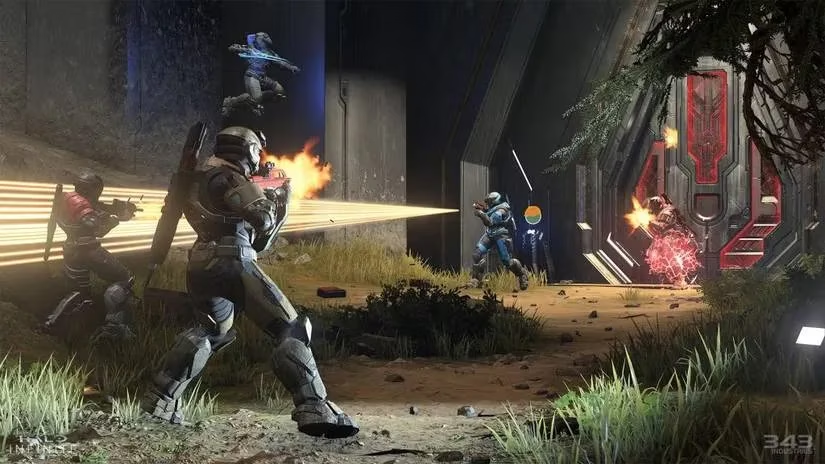
The timing made the sting worse. Halo Infinite already carried the weight of a troubled launch cycle, and split-screen campaign co-op was not some exotic bonus — it was a tradition woven through the series. Fans remembered crowding around a television with friends, trading controllers, and turning a campaign mission into a shared mess of explosions and laughter. When 343 confirmed the feature was gone, the explanation sounded less like a creative trade-off and more like a spreadsheet winning an argument. The live-service treadmill kept demanding fresh resources, and the past kept tapping the studio on the shoulder. Simple. Painful. Revealing.
There was also the matter of a promise. In 2017, following criticism that Halo 5 lacked split-screen, 343 general manager Bonnie Ross said that every Halo first-person shooter going forward would include split-screen. Halo Infinite does feature split-screen competitive multiplayer, which lets the studio technically claim the promise was kept. But that reading is generous to the point of gymnastics. For most longtime fans, the statement implied the traditional package: competitive play and campaign co-op. The PC version did not receive any form of split-screen, either. On any honest promise spectrum, this one leans hard toward unfulfilled.
| What fans heard in 2017 | What arrived with Halo Infinite |
|---|---|
| Split-screen across future Halo FPS titles | Split-screen competitive multiplayer on console |
| A tradition preserved for campaign and multiplayer | Local campaign co-op cancelled in 2022 |
| A bridge for couch co-op loyalists | Live-service updates prioritized instead |
Technical challenges were part of the story, and 343 had previously acknowledged difficulties in making split-screen campaign work. Fair enough — Halo is not a simple split-screen indie romp. But the final justification was not purely technical. It was about protecting the live-service side of the game. That is where the disappointment curdles into something more durable: the sense that finance had trumped fandom. Players who enjoy Halo Infinite’s online maps, Forge mode, and online co-op campaign got plenty to chew on. Look, nobody is arguing that those updates are worthless. The problem is what the trade-off communicated to the people who had been carrying the torch since the Battle Creek and Zanzibar days.
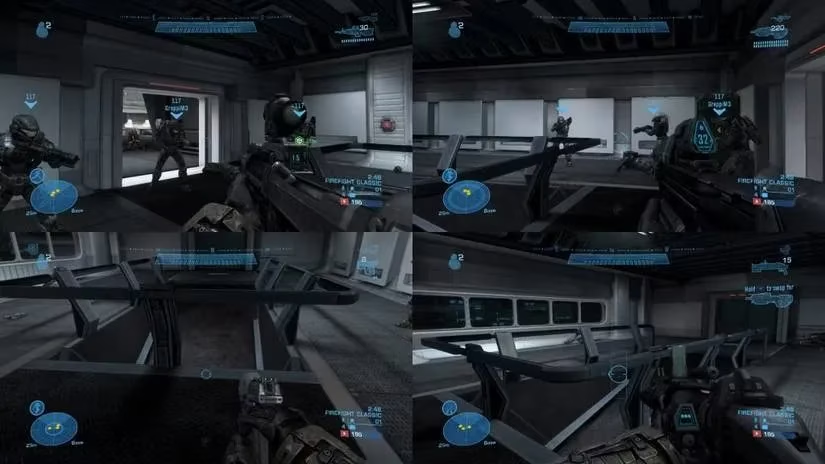
Split-screen functionality is a lot like backwards compatibility. It may never dominate raw usage charts, and most players may never touch it. But it generates enormous goodwill. When it is present, it produces warm headlines and fond anecdotes. When it is removed, it produces anger, memes, and a lingering smell of distrust. Microsoft itself should understand this better than most. Its backwards-compatibility program for Xbox One turned a disastrous console launch cycle into a genuine public relations victory, bringing hundreds of classic games forward with cleaner visuals and smoother performance. A feature that rivals had dismissed became a selling point for an entire generation. Goodwill does not appear on a quarterly spreadsheet, but it shapes the stories players tell about a platform.
Couch co-op has hardly gone out of fashion, either. Game Pass has been a reliable home for old-school brawlers and communal experiences, from Battletoads to Teenage Mutant Ninja Turtles: Shredder’s Revenge, while narrative experiments like As Dusk Falls let groups make terrible decisions together. Those games do not carry Halo’s technical complexity or a live-service vortex pulling resources inward. That is precisely why Halo’s retreat felt so symbolic. By stepping outside the live-service wormhole to deliver split-screen campaign co-op, 343 and Xbox Game Studios could have shown that the series’ legacy mattered. Instead, fans got a reminder that live-service priorities tend to eat first.
In 2026, the debate still lingers because the underlying lesson has not aged. Halo Infinite’s split-screen campaign co-op remains absent, and the conversation around it has become a reference point whenever a legacy franchise trades a beloved feature for a service roadmap. The reaction was immediate back in 2022, with Xbox communities lighting up Reddit and one sardonic poster invoking Don Mattrick’s infamous Xbox One-era interview for a bitter laugh. That sting has faded into a dull ache, but it has not vanished. Trust is slower to rebuild than a content pipeline. A studio can keep promising a brighter online future, but the past has a funny way of showing up in the comments section.
Halo built its name on shared screens and shared stories. Live-service games need momentum, updates, and attention — no one disputes that. But legacy franchises also need custodians who remember why players fell in love in the first place. Split-screen co-op was never going to be the feature that saved Halo Infinite by itself. It was something smaller and, in the long run, bigger: a signal that the old fans still belonged in the room. That signal was switched off, and in 2026 its absence still says plenty.
Comments