Halo Infinite co-op campaign AI Marines only board the host's Warthog, leaving guest players riding solo—and the dev says it's by design.
Players expect a Halo co-op campaign to feel like a shared Spartan story: two players, one battlefield, and a Warthog full of AI Marines shouting directions. In Halo Infinite, that fantasy hits a strange speed bump. A player using the handle oGxSKiLZz117 noticed that AI Marines will not board the guest player’s Warthog in co-op campaign mode. Both players can use the Warthogs, and there is plenty of room inside the vehicles, but the Marines do not split across both rides. Instead, they pile into the host’s vehicle and leave the second player alone. The result is less ‘two-Spartan squad’ and more ‘one player with a convoy and one player with a very quiet drive.’
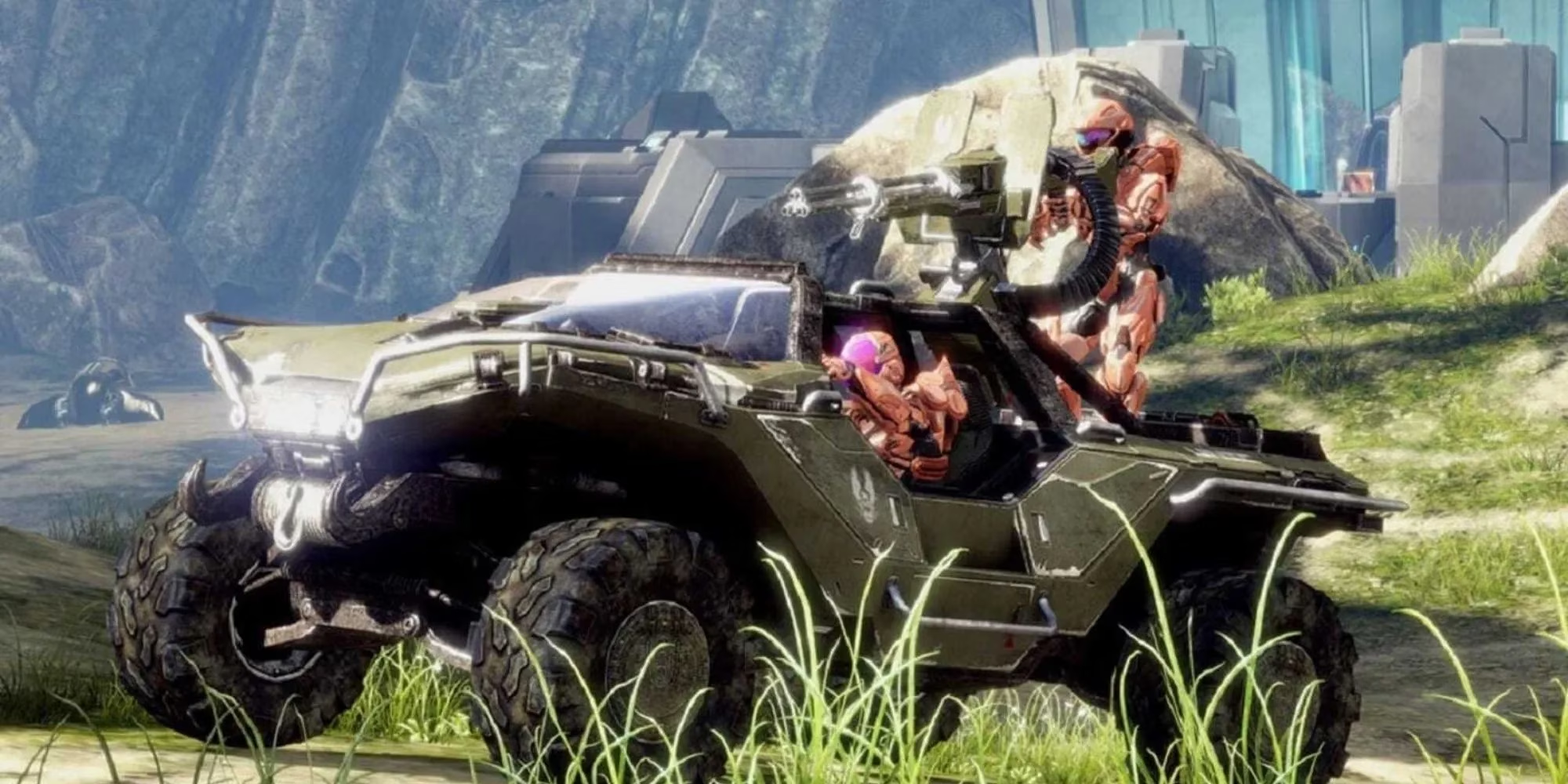
The natural assumption was that this was an oversight. Co-op campaigns are built around the idea that both players matter, so a Marine refusing to climb into the guest’s Warthog looks like a bug with a helmet on. oGxSKiLZz117 contacted the developer to report the behavior, and the reply was not what most players would expect. According to a screenshot shared by PCGamesN, a representative going by ‘Halo Agent Terathree’ explained that the Marines only entering the Fireteam leader or host’s vehicle is intentional. The response thanked the player for the ticket and stated plainly that the behavior is ‘by design.’ No deeper explanation followed. The studio did not say why the Marines are programmed this way, only that this is how the game is meant to work.
That answer turns a simple vehicle issue into a curious design puzzle. 🚙🤖
| Element | What players see | Why it feels strange |
|---|---|---|
| AI Marines | They board only the host’s Warthog | Co-op suggests shared squad moments |
| Guest player | They ride alone despite empty seats | The second player feels sidelined |
| Developer reply | The behavior is ‘by design’ | No further explanation is offered |
For a mode built around two players, this is an odd choice. The Warthog becomes a school bus with a seating chart written by a bureaucrat: the seats are empty, but the rules say they are not for the guest. The AI Marines treat the host like a magnet and the guest like a ghost at a dinner party—present, visible, but never served. Co-op is supposed to be a two-player dance, and this design detail keeps stepping on the guest’s toes. Those metaphors may sound dramatic, but they capture why the detail sticks in players’ minds. Halo is a series built on squad fantasy, and the Warthog is one of its most recognizable symbols of that fantasy. When the AI companions ignore one player, the vehicle stops feeling like a shared war machine and starts feeling like a private limousine with a strict guest list.
The issue also matters because co-op campaign immersion depends on small pieces working together. Players notice when AI allies act ‘off,’ and they notice when the game seems to forget that a second Spartan is standing right there. A Marine who will not ride with the guest is not a game-breaking problem, but it is a pebble in the shoe of immersion. It creates a visual contradiction: plenty of space, two players, and a group of AI soldiers who refuse to spread out. In a dramatic moment, the host gets the noisy, crowded Warthog ride, while the guest gets silence. That imbalance can make the guest feel like a spectator in a mode that is supposed to be a partnership.
As of 2026, the conversation is still a useful reminder that ‘by design’ does not always mean ‘well explained.’ The reply came from the studio then known as 343 Industries, now operating under the Halo Studios banner, and it left the community to guess at the reasoning. Maybe the behavior is tied to how the game tracks AI ownership. Maybe it is a technical limitation dressed up as a design choice. Maybe it is simply one of those quirks that made sense to a developer but looks strange from the couch. Without more detail, players can only speculate. What is clear is that the decision cuts against the spirit of co-op. A mode that invites two players into the same story should not make one of them feel like a spare tire.
In other Halo news, fans have been accessing Halo Infinite’s unreleased Forge mode and sharing impressive creations. One modder recreated ‘Red Light, Green Light’ from Netflix’s Squid Game, which shows how much energy the community still brings to the game’s creative tools. That contrast is telling: players are building elaborate shared experiences while an official co-op detail keeps one player at arm’s length from the AI squad. Halo Infinite’s co-op Marines may be following the host by design, but for many players, the design feels like a locked door in an otherwise open battlefield. 🎮⚠️
This overview is based on Giant Bomb, a long-running source for game discussion and feature analysis. In the context of Halo Infinite’s co-op Warthog behavior, Giant Bomb’s broad coverage style is useful for framing why small AI rules can have an outsized effect on player perception, especially when a co-op system appears to privilege the host and weakens the shared squad fantasy that players expect from Halo.
Comments