Halo Infinite's stellar campaign couldn't save it from a barebones multiplayer launch, a critical lesson for 343 Industries' next Halo.
The year was 2021, and the gaming universe collectively held its breath. After years of teasing, delays, and a Craig the Brute meme that still haunts dreams, Halo Infinite crash-landed onto Xbox and PC with the subtlety of a Warthog driven by a sugar-rushed Spartan. The hype? Oh boy, it was stratospheric. Microsoft had promised a return to form, a "spiritual reboot" that would channel the golden days of Combat Evolved while sprinkling in just enough modernity to make it feel fresh. And for a fleeting, glorious moment, it actually worked. The campaign had Chief grappling across Zeta Halo like a metal Batman, and the core gunplay felt so crispy it could make a Grunt weep. But then, like a plasma grenade stuck to your own face, the reality detonated. Halo Infinite went from Game of the Year contender to a cautionary tale whispered in boardrooms faster than you can say "battle pass fatigue." Welcome to 2026, where the scar tissue is still fresh, and the next Halo title is peeking over the horizon with the weight of a franchise on its shoulders. If 343 Industries—now probably restructured into something with more names—doesn’t absorb these brutal lessons, the Master Chief might as well retire to a beach on Sanghelios.
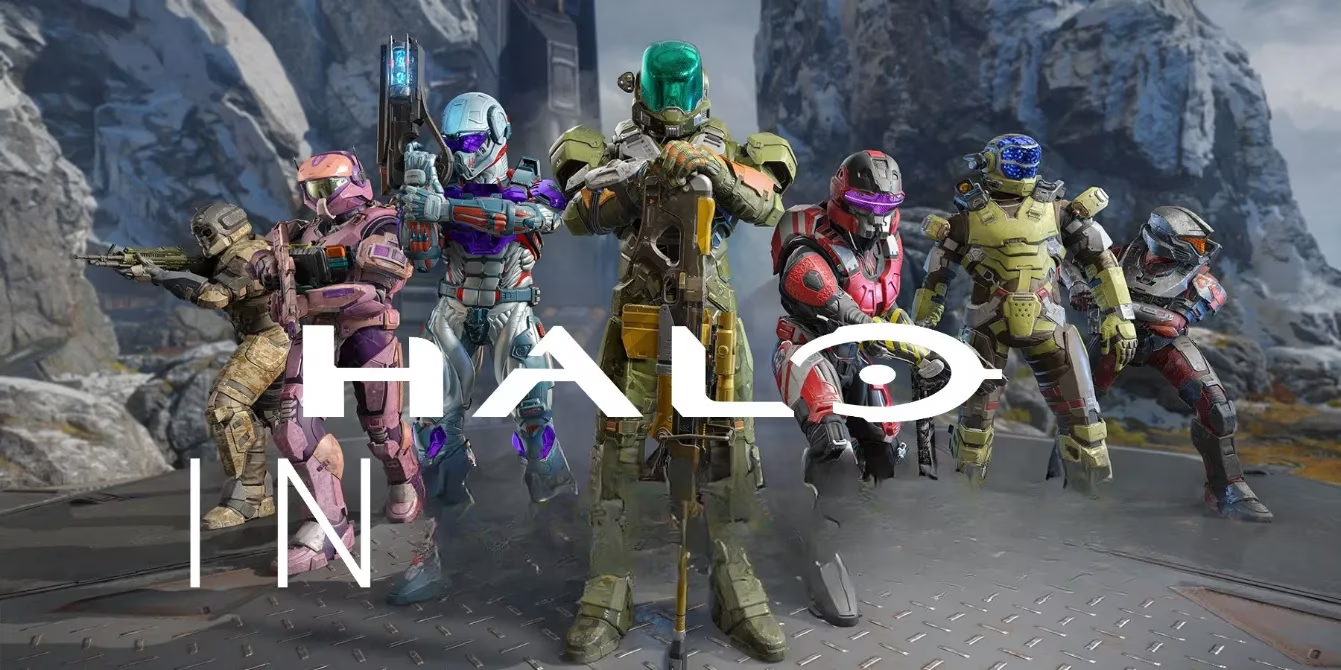
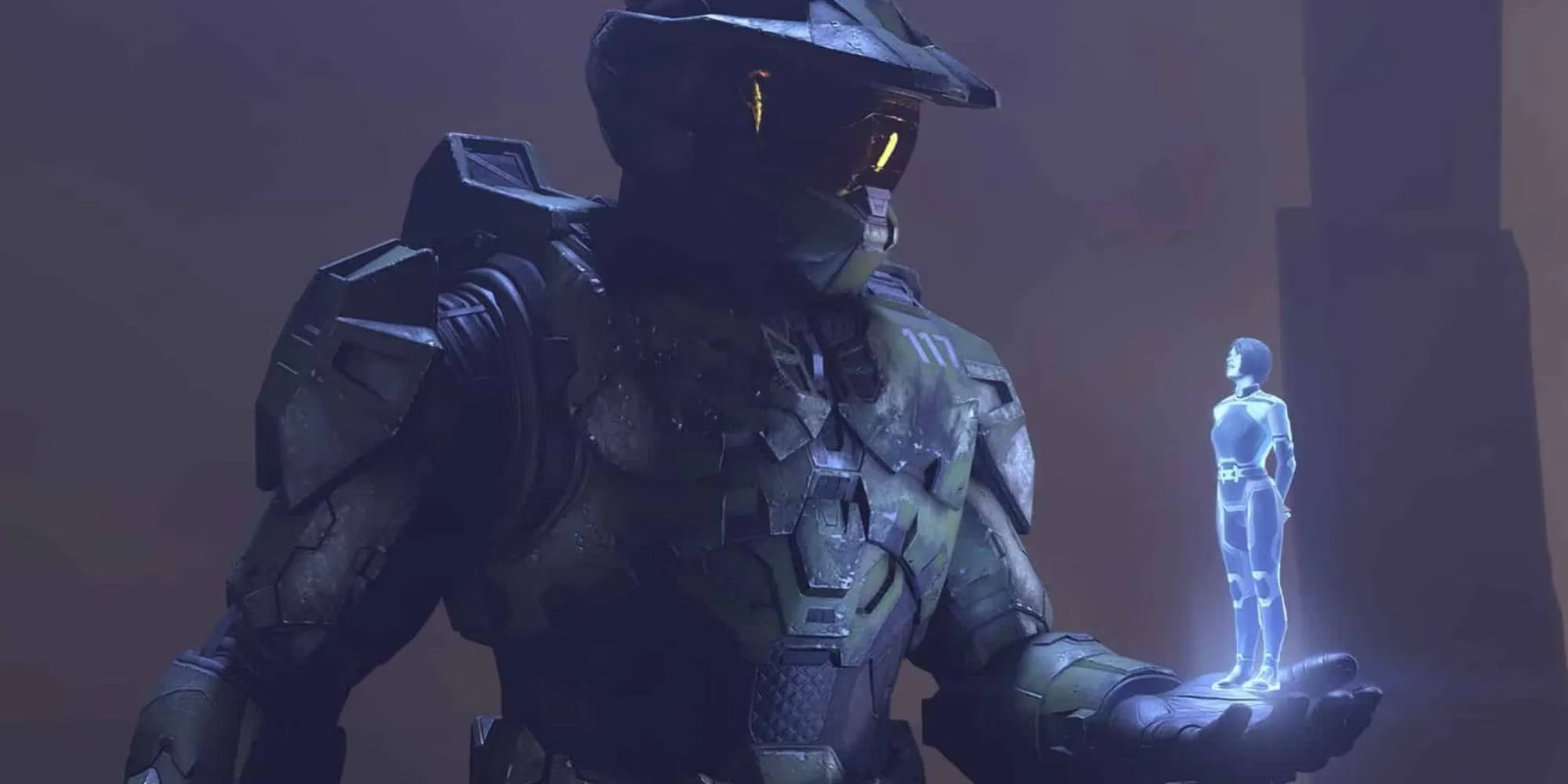
Let’s rewind the tape to November 2021, when Halo Infinite was the belle of the ball. Thanks to its day-one launch on Xbox Game Pass, it was practically *thrown* at millions of subscribers like free candy at a parade. Everybody and their grandmother could dive in without spending a cent beyond the subscription, and for a hot minute, the player count skyrocketed. The campaign? A daring pivot. Master Chief was handed an open-world playground littered with FOBs, high-value targets, and audio logs that lore nerds devoured like a Grunt birthday party cake. The Grappleshot? A stroke of genius—suddenly, navigating the ring felt like a Spider-Man sim with a dose of genocide. Critics were kind, fans smiled, and Cortana’s lingering ghost story (see that gorgeous yet heartbreaking image below) tugged at heartstrings. It wasn’t the bombastic, set-piece-packed rollercoaster of old, but it was good. Really good.
And then the multiplayer dropped. *Record scratch.* *Freeze frame.* Yep, that’s where everything went sideways, into a ditch, and caught fire. The multiplayer was, to put it like a true Brit, an absolute shambles. The game launched with a roster of maps so barren it made a desert look crowded. Game modes? More like game *mode*, singular, unless you count the same Slayer variant reskinned for the tenth time. No Forge. Zero. The very tool that birthed Grifball and a million wacky custom games was MIA, leaving the community holding a very short stick. Progression? A glacial, challenge-based monstrosity that demanded you play like a chore-doing zombie instead of a fun-having human. And customization? Oh, honey, you want your Spartan to look like something other than a default action figure? That’ll be $20 for a shade of blue that was free in Halo 3, sweetie. The battle pass system suffocated any sense of organic achievement, dripping content so slowly that players felt like they were being waterboarded with unlocks. It was the quintessential live-service disaster—all skeleton, no meat, and a price tag on the bones. The player base didn’t just dwindle; it evaporated. A nosedive so spectacular, it made the *Titanic* look like a minor boating incident.
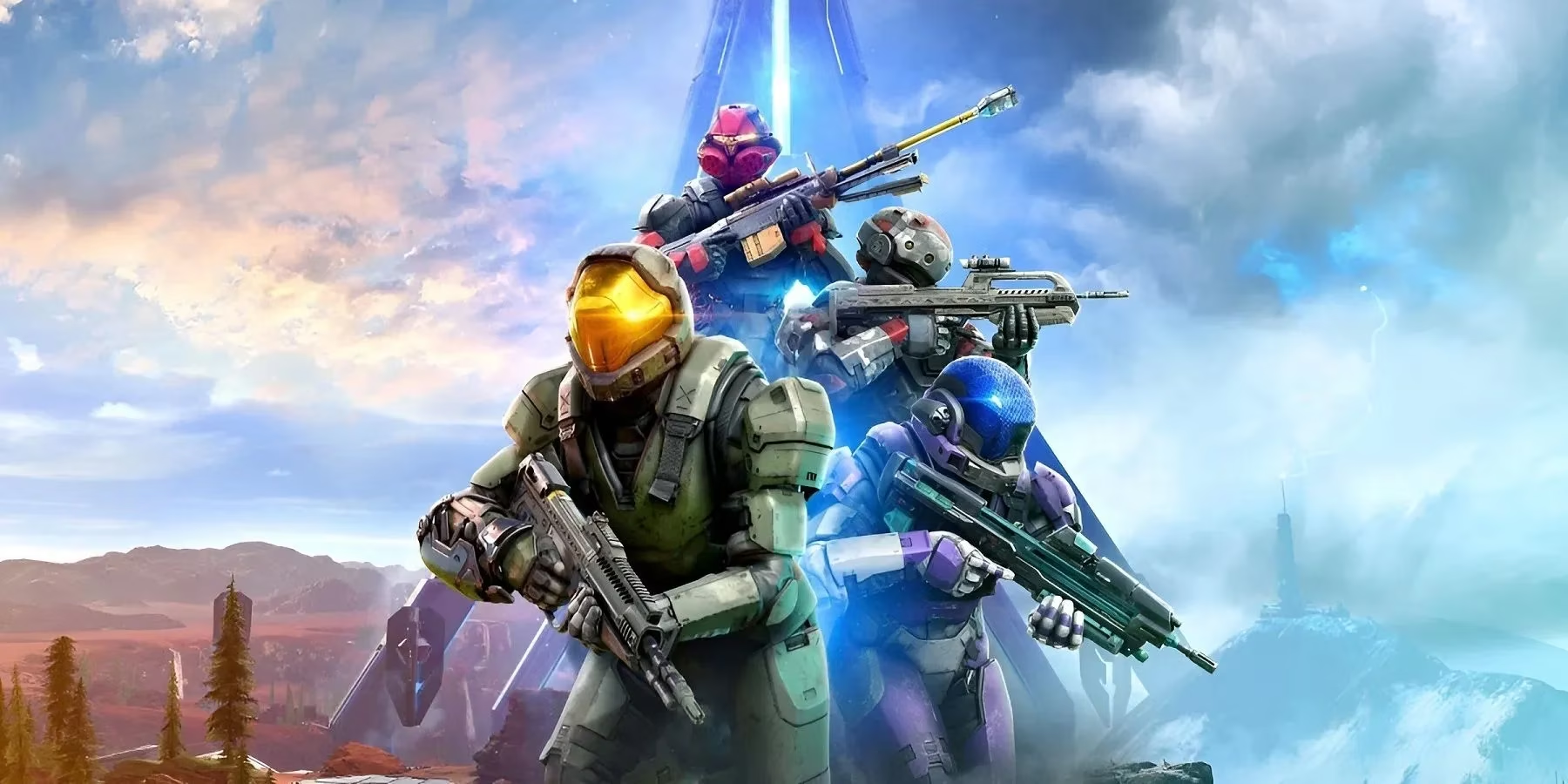
Fast forward to 2026, and the Halo community is a mix of jaded veterans and cautiously optimistic newcomers. Microsoft has been suspiciously quiet about the next mainline entry, but the industry whispers are deafening. The failure of Halo Infinite to sustain a player base has been dissected at GDC, roasted on social media, and likely tattooed on the inside of Phil Spencer’s eyelids. The lesson? Launch content isn’t just king; it’s the entire royal family, the treasury, and the castle guard. At launch, Infinite had the audacity to call itself a live-service title while offering the content depth of a puddle. Sure, 343 eventually coughed up Forge, added playlists, and even tossed in community-created maps like a dog reluctantly dropping a slobbery ball. But by then, the damage was done. The core audience had yeeted itself into the loving arms of *Apex Legends,* *Call of Duty: Warzone,* and whatever shiny new thing caught their eye. Retroactive content is a Band-aid on a bullet wound—the scar remains, and trust is shattered.
So, what does the Halo of 2026 need to avoid becoming another meme in the franchise’s timeline? Buckle up, because the checklist is longer than a FOTUS helmet spike.
-
🎮 A Multiplayer Suite That Slaps on Day One: We’re talking a minimum of 15–20 maps at launch, spanning classic arena, BTB, and some spicy new environments. No more "three maps and a dream" nonsense.
-
🛠️ Forge Mode Out of the Gate: Not six months later, not tied to a seasonal update. Day. One. Let the community cook from the very first hour, or they’ll just cook up grievances instead.
-
🔓 Progression That Feels Rewarding, Not Predatory: A hybrid system marrying a traditional XP rank (hello, Halo: Reach’s incredible tier system) with a battle pass that doesn’t require you to sell a kidney. Unlock armor pieces by achieving feats, not by swiping a credit card.
-
🎉 Party Modes and Silly Stuff Galore: Remember Rocket Race? Infection? Griffball? A robust custom games browser cannot be an afterthought. Give us the tools to turn Warthogs into flying death traps and Spartans into squeaky-voiced mini-beasts.
-
🏆 Competitive Play That Doesn’t Suck: A ranked playlist with proper placement matches, visible CSR progression, and actual incentives beyond bragging rights. Maybe throw in a Halo Championship Series skin that doesn’t look like a highlighter.
-
🧟 A Campaign That Doesn’t Feel Like A Monologue: Co-op campaign must exist at launch—none of this "maybe next year" malarkey. Replayable missions with skulls, scoring, and crazy modifiers, plus a DLC roadmap that expands the story without breaking lore.
Let’s be real: the Halo IP is too big to fail permanently, but it can absolutely keep tripping over its own shoelaces. Halo Infinite’s disastrous launch stood as a pop culture warning sign the size of a Halo ring. If 343 and Microsoft want the next game to reclaim the throne, they need to channel the spirit of Sergeant Johnson—loud, proud, and unapologetically abundant. Give us *content* that makes the opening months feel like a festival, not a famine. The Master Chief has saved humanity a dozen times over; it’s about time his developers saved him from the abyss of live-service mediocrity. The clock is ticking, 2026. Don’t fumble the bag again.
💬 Final Hot Take: Halo Infinite was the gaming equivalent of a poorly packed birthday gift—a shiny box with nothing but disappointment inside. The next entry has to be stuffed to the brim with maps, modes, and magic from second one. If not, the only thing dropping faster than the player count will be the entire franchise’s legacy. And that, dear readers, would be one hell of a finish the fight we never wanted to see.
Comments