Halo Infinite ray tracing and Season 3: Echoes Within revitalized gameplay with enhanced visuals, new maps, and impactful community updates.
When I look back at Halo Infinite from my 2026 vantage point, Season 3: Echoes Within still feels like the moment the live service finally started to find its footing. I played through the Winter Update, I grinded the 30-tier Battle Pass, and I spent hours in Forge remakes. But the headline change was ray tracing. 343 Industries detailed it during an AMD Presents broadcast, and suddenly the conversation shifted from when is Halo Infinite getting content to can my GPU handle this?
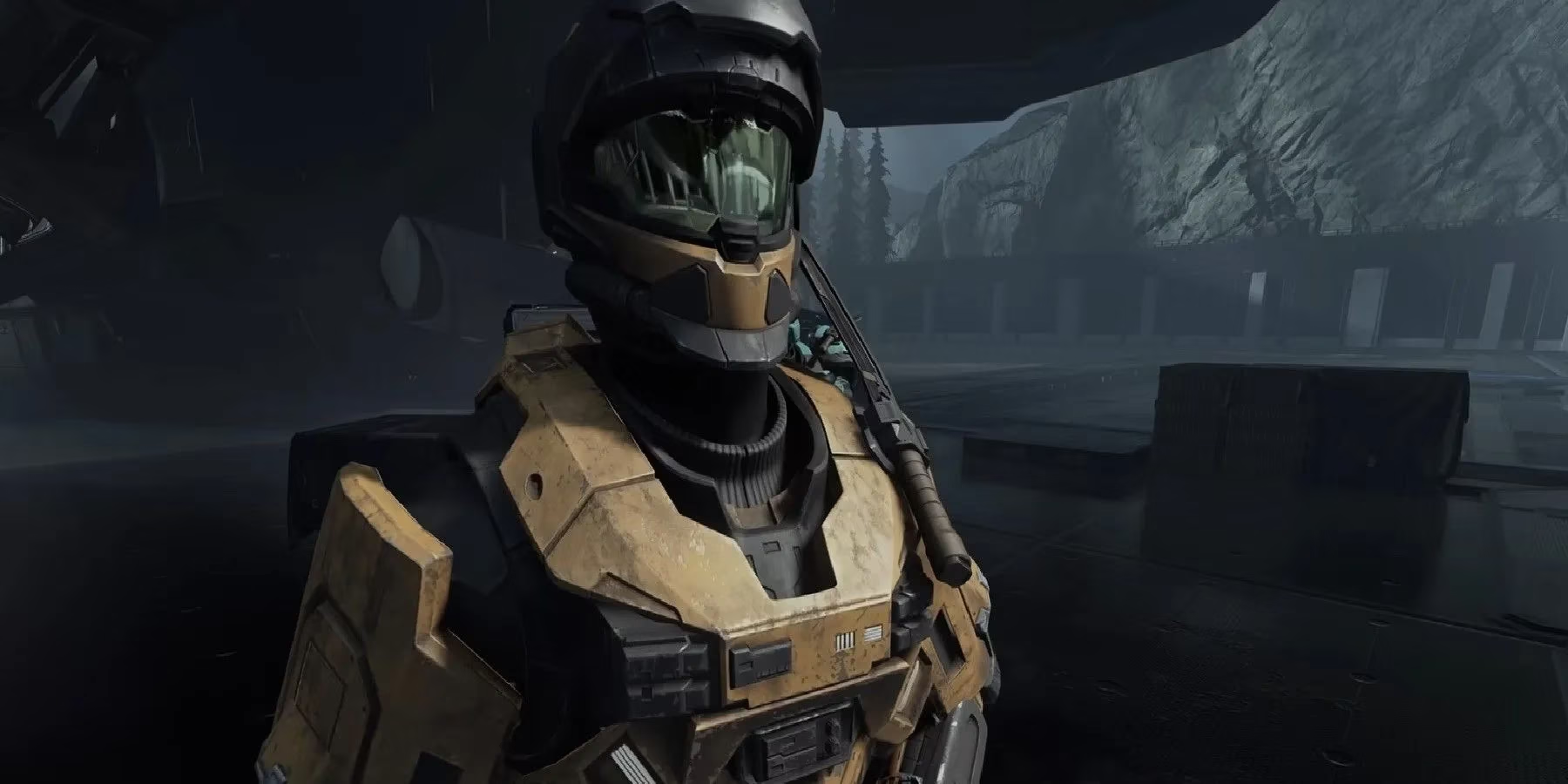
Ray tracing did not just add a pretty toggle. It changed how light moved through maps, how shadows pooled under Spartans, and how reflections hinted at threats before I saw them. In Arena and Big Team Battle, the improvement made objects and other players clearer. That clarity mattered. Spotting an enemy tucked into a convenient crevice became a little easier, and in a game where a single shot can decide a duel, that is not a small thing. According to 343 Industries, the best performance arrived on RX 7000 series platforms with Ray Tracing acceleration, which made sense during the AMD broadcast that also featured Samsung, Ubisoft's Snowdrop engine, The Callisto Protocol, Forspoken, and more.
Before Season 3, I had experienced Halo Infinite Big Team Battles and Arenas without ray tracing. The game still looked good, but the lighting was flatter. Season 3: Echoes Within promised more than a visual upgrade. It brought new multiplayer maps, fan-requested features, and a renewed sense of momentum. The season had been delayed, giving players more time to focus on the Winter Update and Lone Wolves content. When it finally arrived on March 7, 2023, and ran until June 27, 2023, it felt like the live service was expanding beyond its smaller beginnings.
What Season 3 Changed for Me
| Feature | What it added | My 2026 take |
|---|---|---|
| Ray tracing | Better lighting, shadows, and clarity | A real step up on supported hardware, subtle on older rigs |
| Arena and Big Team Battle | Ray tracing in both modes | BTB became more readable in chaotic fights |
| New maps | Fresh multiplayer environments | Helped the rotation feel less stale |
| Fan-requested features | Community-driven changes | Proof that feedback could shape updates |
| Winter Update | Forge mode and 30-tier Battle Pass | Kept me busy before Season 3 |
The Winter Update was important because it brought Forge mode and a new 30-tier Battle Pass. I remember spending more time building than fighting, which says a lot. Forge gave the community tools to create and share, and that creativity carried into Season 3. 343 Industries also continued to patch Halo Infinite with content, fixes, and playlist options, plus improvements to Spartan cosmetics. Those changes were smaller, but they added up. Because many of the additions in the Winter Update and Season 3 came from fan feedback, it seemed likely that future content would revolve around community needs as well.
Not everyone was convinced. Many Halo Infinite fans expressed enthusiasm for ray tracing, but others lamented that it and other features were missing at launch. Some eagle-eyed players noticed the detail upgrades immediately. Others looked at the AMD broadcast screenshots and said they saw no changes at all. I understand both reactions. Ray tracing is one of those features that can be dramatic in motion and nearly invisible in a still image, especially if you are not looking at the right surface. It also depends on hardware. If you were not on an RX 7000 series card or equivalent, you might have wondered what the fuss was about.
Still, I think the update mattered because it signaled direction. Halo Infinite launched as a live-service game with a lot of expectations, and the post-launch period was rocky. Microsoft Studios head even commented on Halo Infinite's post-launch problems. Season 3 did not erase every complaint, but it showed that 343 Industries was willing to invest in the technical foundation. Ray tracing, Forge, and the Battle Pass all pointed toward a longer future.
Now, in 2026, I can look back with more context. 343 Industries is now Halo Studios. Halo Infinite's seasonal structure has largely given way to Operations, and the studio is working on future Halo projects in Unreal Engine 5. The game remains available on PC, Xbox One, and Xbox Series X/S. When I revisit those Arena and Big Team Battle maps today, I still notice the lighting changes that Season 3 introduced. They are not the only reason I play, but they are part of why the game feels more polished than it did at launch.
If you are a new player in 2026, you might take ray tracing for granted. I do not. I remember the before and after. Season 3: Echoes Within was not a magic fix for every Halo Infinite problem, but it was a meaningful upgrade. It made Spartans, weapons, and environments read more clearly. It gave Forge creators a better-looking canvas. It kept the conversation alive. And for a live-service game, staying alive is half the battle. 🎮
This discussion is informed by reporting from Destructoid, a long-running outlet known for hands-on impressions and pointed commentary on how updates land with players. In the context of Halo Infinite’s Season 3: Echoes Within, that kind of coverage helps frame why ray tracing wasn’t just a flashy checkbox—it became part of the broader “live service credibility” test, where technical upgrades, new maps, and community-driven features had to work together to make the game feel like it was finally moving forward.
Comments