Halo Infinite's multiplayer and live-service model launched with promise but now faces community disappointment due to slow updates and unmet expectations.
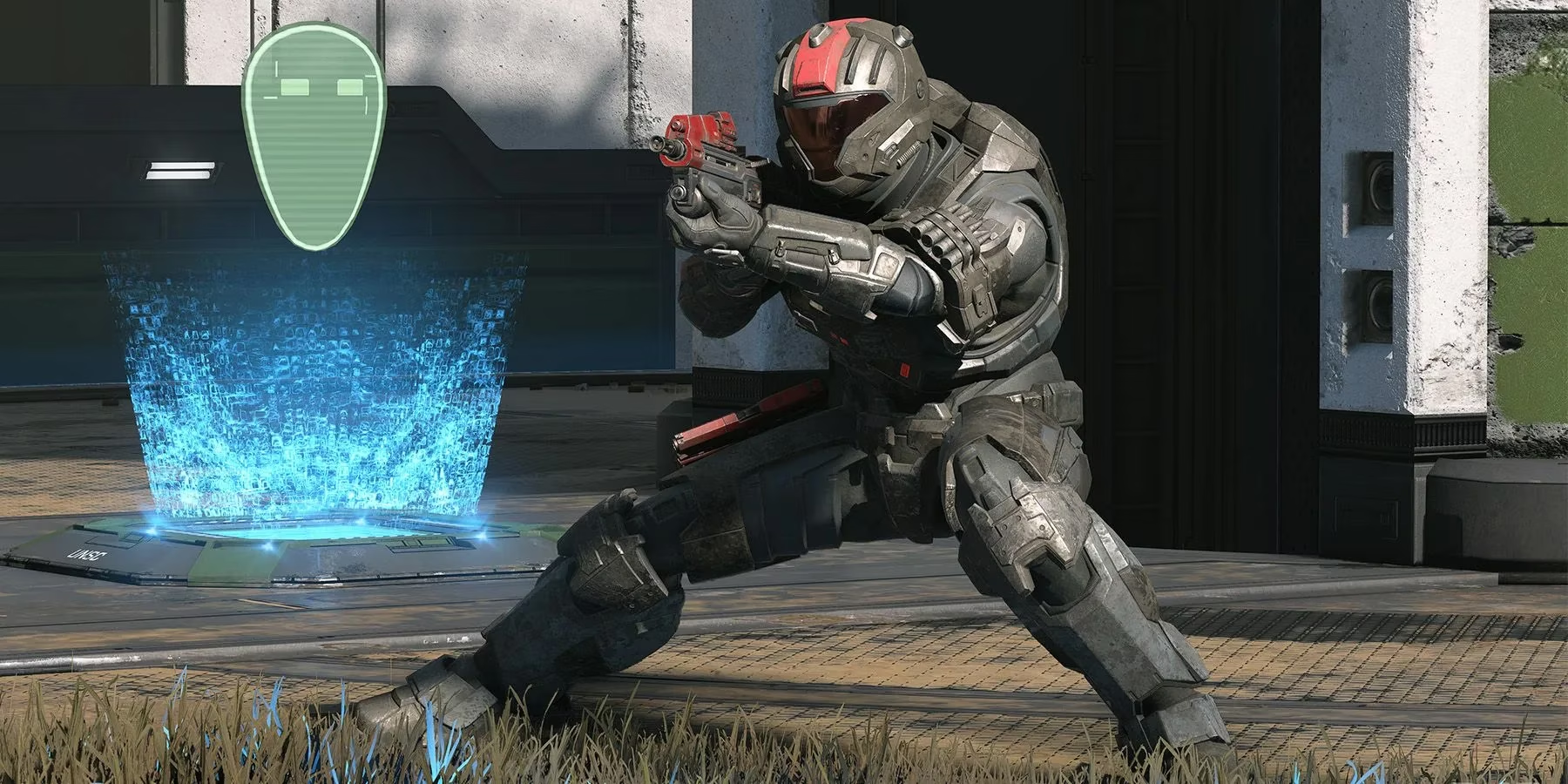
As a dedicated player who has been on this journey since the beginning, I've watched Halo Infinite's trajectory with a mix of hope and profound disappointment. The game launched in late 2021 with immense promise, seemingly marking the triumphant return of the iconic franchise. The core gameplay was, and frankly still is, exceptional. The campaign offered a refreshing open-world take, and for a glorious moment, it felt like the golden age of Halo multiplayer had been resurrected. However, that initial euphoria was short-lived. The stark reality of 343 Industries' live-service model quickly set in, revealing a foundation built more on ambition than sustainable execution. As we move through 2026, the game's fourth season is in full swing, but the community's sentiment is one of resignation rather than excitement.
The Foundation of Promise and the Cracks That Appeared
The initial launch of Halo Infinite was a critical and commercial success. The gameplay mechanics were polished to a mirror sheen, offering that perfect blend of strategy, skill, and chaotic fun that defines the series. The free-to-play multiplayer model successfully brought in a massive wave of new and returning Spartans. For a brief period, it seemed Microsoft had its definitive flagship shooter. Yet, beneath this polished surface, the live-service infrastructure was already showing strain. The post-launch roadmap was nebulous, and the content pipeline felt alarmingly slow. Players quickly consumed the available maps and modes, and the wait for substantial updates began.
The Seasonal Cycle of Discontent
The seasonal structure, intended to provide a steady stream of engaging content, became the game's Achilles' heel. Let's break down the core issues that defined each season:
-
Season 1: The Long Wait – This season stretched for an agonizing six months with minimal meaningful additions. The battle pass progression felt grindy, and the lack of new maps or significant events led to widespread player fatigue.
-
Season 2 & 3: Too Little, Too Late – While these seasons introduced new content like the Last Spartan Standing mode and maps like Catalyst, they felt like incremental updates rather than transformative experiences. The cancellation of promised features, most notably the campaign co-op mode, was a devastating blow to community trust.
-
Season 4 (Current): A Familiar Pattern – The latest season continues the established trend. A new battle pass, a couple of maps, and a new mode are welcome, but they fail to address the systemic lack of depth. The content drops feel like maintenance updates rather than expansions designed to reinvigorate the player base.
The table below summarizes the player sentiment through the seasons:
| Season | Key Addition | Community Response |
|---|---|---|
| Season 1 | Foundation Launch | Initial excitement, followed by frustration over content drought. |
| Season 2 | Last Spartan Standing Mode | Viewed as a step forward, but insufficient to reverse declining engagement. |
| Season 3 | New Maps & Equipment | Perceived as standard, expected updates; failed to create a "must-play" moment. |
| Season 4 | Infection Mode, New Maps | Met with apathy; seen as basic features that should have launched earlier. |
The Stark Reality: A Dwindling Player Base
The most telling metric of Halo Infinite's struggles is its player count. On platforms like Steam, the game has lost a staggering percentage of its concurrent users since its peak. While exact Xbox figures are not public, the matchmaking times and social media discourse suggest a similar trend across all platforms. A live-service game lives and dies by its active community, and Halo Infinite's community has been voting with its feet. The lack of compelling, recurring content has simply given players little reason to log in week after week.
Looking to the Future: An Uncertain Horizon
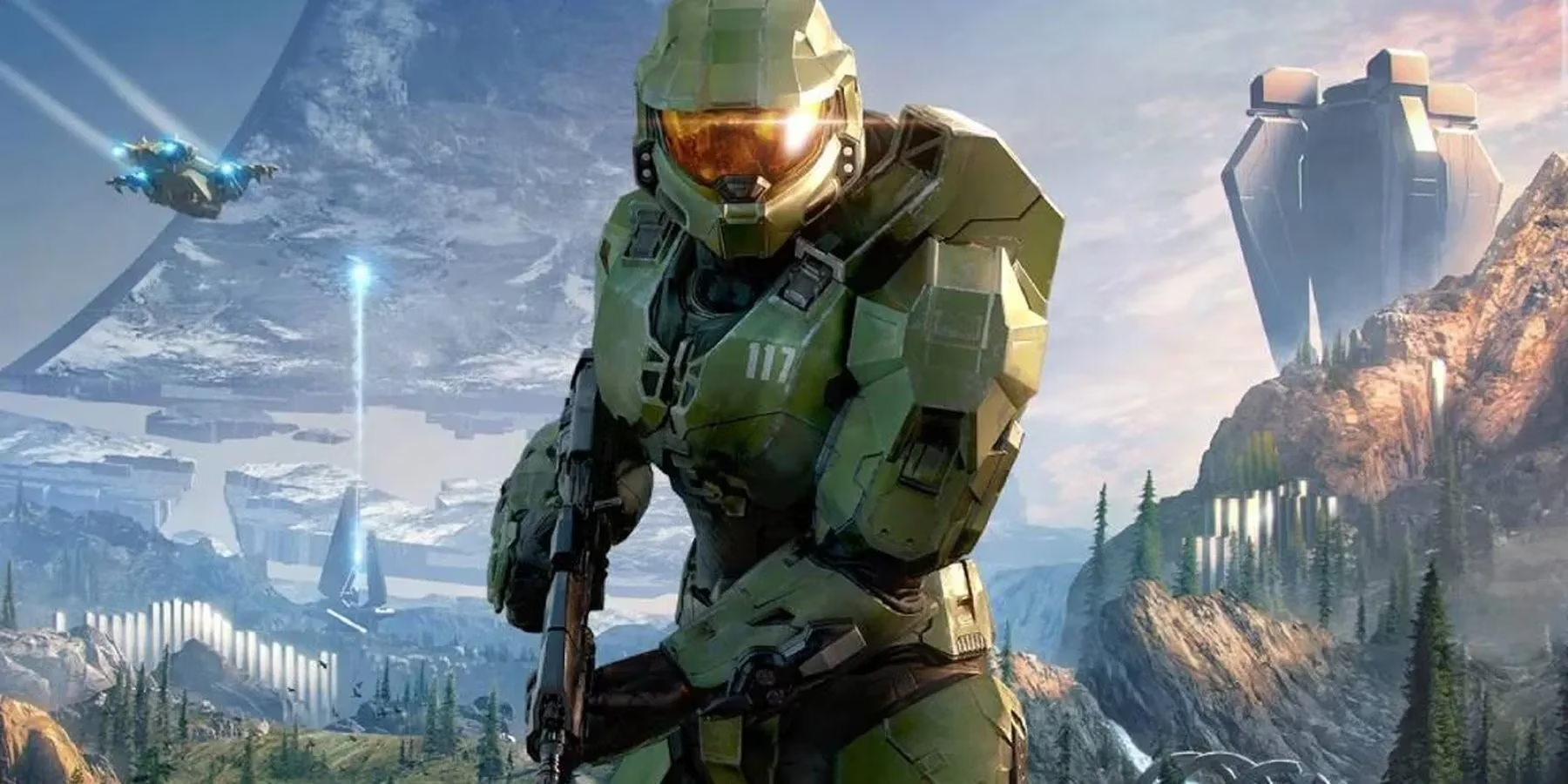
As of 2026, the future of Halo Infinite is shrouded in uncertainty. 343 Industries has shifted its focus toward the next chapter of the Halo universe, a move that many interpret as the beginning of the end for Infinite's live-service support. The game was originally heralded as the "platform for the next 10 years of Halo." Now, the question isn't about a decade-long journey, but whether it can sustain meaningful support for much longer. The upcoming content updates feel like they are servicing a dwindling, dedicated core rather than plotting a course for a major resurgence.
Final Thoughts from a Veteran Spartan
It's heartbreaking to witness. The core combat loop of Halo Infinite is arguably the best the franchise has ever produced. The potential was limitless. Yet, the management of its live-service elements—the content cadence, communication, and feature delivery—has been a masterclass in missed opportunities. The game needed a consistent stream of meaningful, transformative content: new narrative events, robust social features, and a constant evolution of the sandbox. Instead, it received sporadic drops that felt like they were checking boxes. For players like me, who held onto hope through each season, the current state feels like a slow sunset. Halo Infinite may not be officially "over," but for many in the community, its days as a premier live-service destination have already passed. The legacy it leaves is a complex one: a masterpiece of gameplay mechanics trapped within a failed service model. 🎮 ⬇️
Comments