Halo Infinite Sentry Defense mode ignites excitement, fueling speculation about the return of Warzone in Halo 7's multiplayer evolution.
As a dedicated Halo player, I've been closely following the evolution of Halo Infinite's multiplayer offerings. The recent introduction of the Big Team Battle: Sentry Defense mode, created in collaboration with community Forger Artifice7285, has sparked significant discussion. Initially slated for a limited run, 343 Industries extended its availability due to positive reception, a move that speaks volumes about its popularity. But is this more than just a fun, temporary addition? Could Sentry Defense be a testing ground, a herald for the return of something much larger? I believe it strongly suggests the potential comeback of the ambitious PvE/PvP hybrid mode, Warzone, in the next mainline installment, Halo 7.
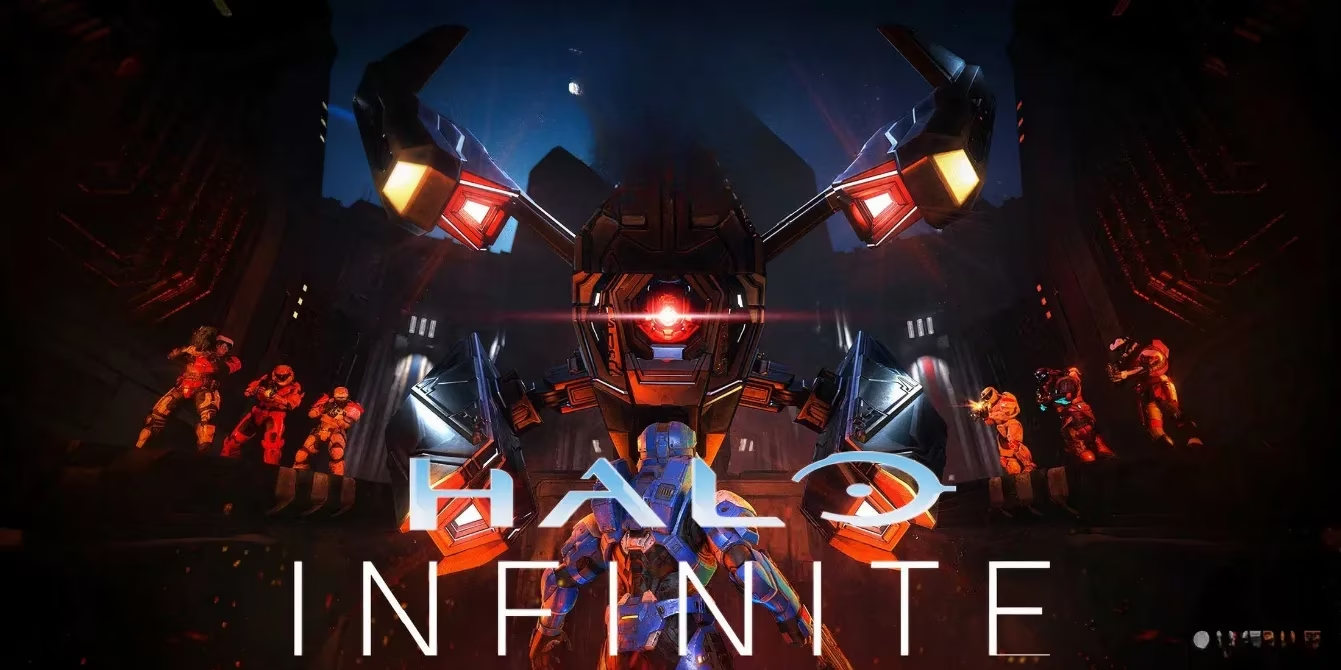
Let's break down why. Sentry Defense tasks two teams with protecting their own Adjutant Resolution submonitors—essentially boss characters repurposed from the campaign. This core objective of defending a key asset against both enemy players and AI threats feels like a concentrated slice of a larger experience. It directly echoes the strategic and chaotic elements that made Halo 5: Guardians' Warzone so unique when it debuted nearly a decade ago. For those who missed it, Warzone was a groundbreaking 12v12 mode that blended Big Team Battle's scale with Firefight's PvE elements. Teams fought to capture bases, defeat AI enemy squads and powerful bosses like the Warden Eternal, all while working towards the ultimate goal of destroying the enemy's core.
The progression and economy of Warzone, however, were its most controversial aspects. Players earned points through actions (kills, captures, boss defeats) to access better gear from REQ Stations. But here was the catch: the powerful weapons and vehicles—like the iconic Phaeton gunship—had to first be unlocked through randomized REQ Packs. These packs were earnable slowly through gameplay or purchasable with real money, forming Halo 5's primary microtransaction system. This model had pros and cons:
✅ Pros:
-
Funded continuous post-launch content updates, including new weapons and vehicles.
-
Added a long-term collection and progression chase.
❌ Cons:
-
Created a "pay-for-power" perception, even if skill was paramount.
-
Locked gameplay-affecting items behind randomness or payment.
Fast forward to 2026, and the gaming landscape has evolved. Halo Infinite itself launched with a heavily criticized monetization model but has since shifted towards a more player-friendly battle pass and store system. More importantly, 343 has been steadily increasing its use of AI in multiplayer. We've seen it in Firefight: King of the Hill, the Halloween-themed Survive the Undead, and now Sentry Defense. This isn't just coincidence; it's 343 rebuilding its PvE toolkit within the Infinite sandbox. So, the question becomes: are these modes simply fun diversions, or are they laying the technical and design foundation for a grander vision?
I am convinced it's the latter. The success of Sentry Defense proves players enjoy objective-based, AI-integrated large-scale combat. For Halo 7, 343 has the perfect opportunity to reintroduce Warzone, but this time, learned from past mistakes. Here’s how a modernized, improved Warzone could work:
1. A Revamped Progression System:
The biggest change must be decoupling core gameplay items from random purchases. My vision?
-
REQ Packs 2.0: These would contain only weapon and vehicle variants (e.g., a different scope, increased stability, unique skins). The base versions of all weapons and vehicles would be unlocked through gameplay or a linear progression system.
-
Credit System for Cosmetics: Adopt a system similar to Halo: Reach. Players earn credits by playing, which they can spend directly on the armor pieces, helmets, and visors they want. No randomness.
-
Result: 343 still has a revenue stream from players wanting cool variants, but no player is ever locked out of a gameplay tool. Everyone can access a Scorpion tank; only some will have the "Inferno" variant with flame decals.
2. Evolving Gameplay Structure:
Instead of the static three-base progression of old Warzone, why not take inspiration from classic conquest modes? Imagine a dynamic battlefield where control points appear randomly across a vast map. Capturing these points could grant team-wide bonuses, like unlocking a new vehicle pad or calling in AI Marine squads to defend your position—much like the sentries in Sentry Defense. Victory could be achieved by holding all points or by a points-based system over a timer. This would eliminate the repetitive feel of the older maps and make every match feel unique.
3. A Unified Enemy Sandbox:
To maximize replayability and fan service, this new Warzone should be a celebration of Halo's entire history. One match, you and your squad could be fending off waves of the Banished on a Zeta Halo biome. The next, you're fighting a desperate holding action against the nightmarish Flood on a Covenant cruiser. Boss encounters could pull from every era: the Warden Eternal, a pair of Hunters, a Scarab, or even a campaign boss like the Harbinger. The variety would be staggering.
In conclusion, Sentry Defense feels less like an endpoint and more like a promising prototype. It demonstrates 343's renewed confidence in blending PvE and PvP on a large scale. The community's positive response is a clear signal. With the lessons learned from Halo 5's REQ system and Infinite's live service journey, the stage is perfectly set for Warzone to make a triumphant, reimagined return in Halo 7. It could become the definitive large-scale Halo experience—a chaotic, strategic, and endlessly replayable war of attrition where every player, regardless of their spending, can contribute to an epic victory. Isn't that what we all want from the next great Halo mode?
Comments