Halo Infinite and Halo TV show deliver a revitalized experience, blending thrilling gameplay and engaging storytelling for fans old and new.
Let me tell you, as someone who's been with this franchise since the beginning, the journey of Halo Infinite has felt like watching a master sculptor chip away at a block of marble, only to realize halfway through they were using the wrong tools. The initial release back in late 2021 was a strange time. I remember the pure, unadulterated joy of those first matches—the crisp gunplay, the familiar yet refined arena feel. It was like slipping on a perfectly worn-in pair of boots. We all thought, "This is it. The return." But that honeymoon phase was as brief as a Covenant plasma burst. The live-service model, that ever-present specter in modern gaming, quickly became the game's Achilles' heel. It wasn't that the concept was flawed, but 343 Industries' execution felt like trying to pilot a Scorpion tank with a broken track; we kept lurching forward but never gained any real momentum. The severe lack of content at launch turned the vast, promising ringworld into a surprisingly empty playground.
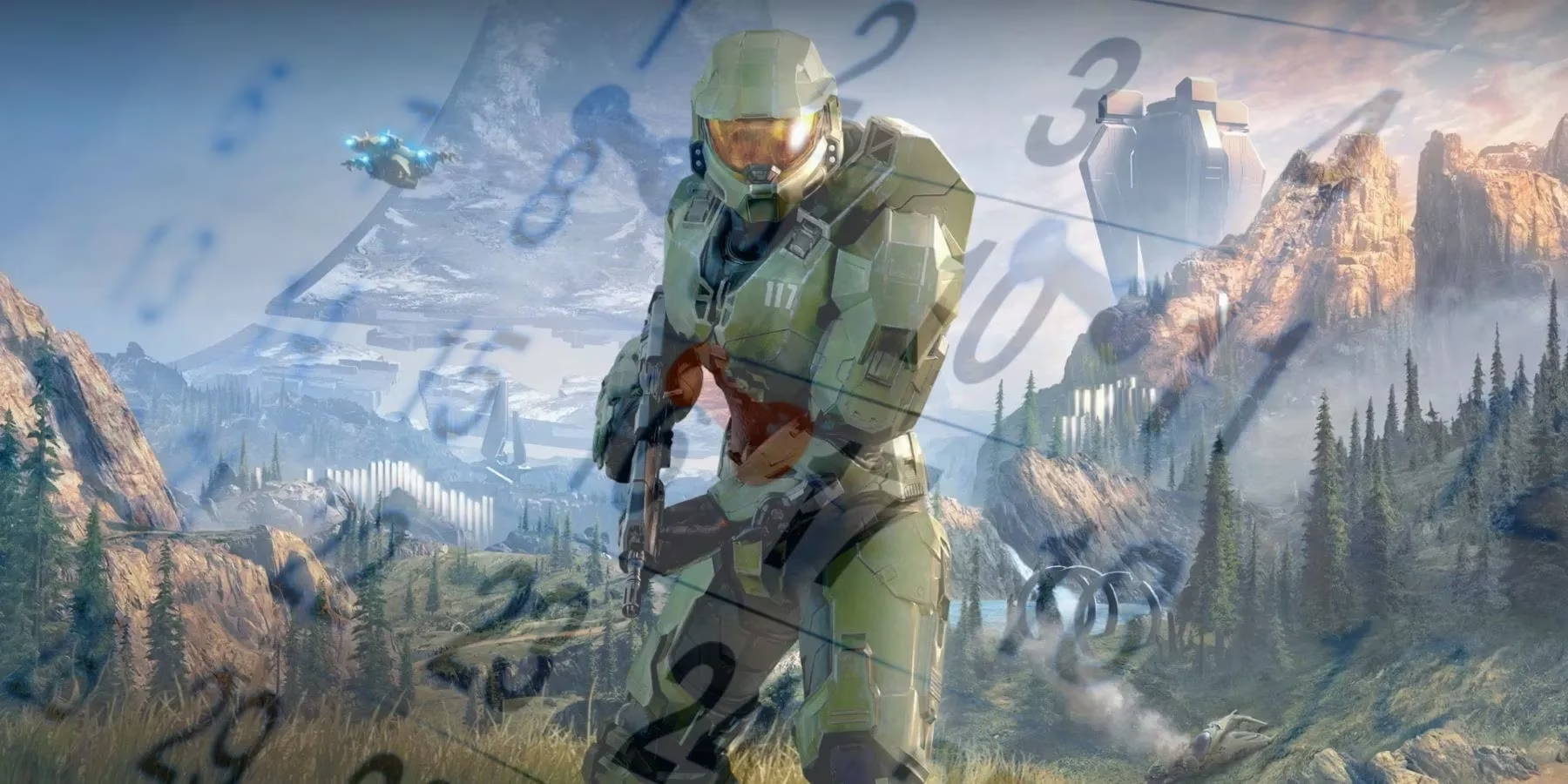
Fast forward to now, 2026, and the landscape feels different. The recent years have shown a studio determined to course-correct, to reforge the broken blade. And you know what? They might just be pulling it off. This period we're in right now feels like a celestial alignment for the Halo universe, where multiple stars are finally syncing up after a long, wobbly orbit.
The Television Front: A Season of Promise
We all endured the first season of the Paramount+ show. I'll be kind and say it was... an interpretation. Changing core lore and character motivations felt like someone repainting the Mona Lisa with neon colors—bold, but missing the point entirely. The action was a bright spot, a shimmering energy sword in a dimly lit room.
But Season 2, which premiered back in early 2024, was the turning point. By focusing on the Fall of Reach, it tapped directly into the franchise's emotional core. It was the adaptation we'd been waiting for, treating the source material not as a suggestion but as a blueprint. Now, as we look ahead, the synergy between the show's success and the game is more tangible than ever. I wouldn't be surprised if we see more deliberate crossovers. Not a full season theme, but perhaps premium cosmetic items inspired by the show's unique takes on Mjolnir armor or vehicle skins. Imagine a Warthog with the show's specific battle-scarred paint job rolling into a match on Fragmentation. It's a smart way to build one cohesive, living universe.
The Game's Heartbeat: Seasonal Cadence & Content
This is where the real magic is happening for us players. The seasonal model, once a source of frustration, has become the game's reliable pulse. Let me break down what a solid season launch now typically brings to the table:
-
New Maps: At least two brand-new arena maps and one Big Team Battle map, designed with both competitive balance and visual spectacle in mind.
-
Core Gameplay Modes: A mix of returning fan favorites and innovative new modes that play with Halo's sandbox in fun ways.
-
The Battle Pass: A 100-tier progression system filled with armor pieces, coatings, visors, emblems, and XP boosts. The key improvement? Earning credits within the pass to purchase future seasons.
-
Narrative Events: Limited-time events that drop bite-sized story content through audio logs, new cutscenes, or even special PvE missions, making the world feel alive.
The community's role here cannot be understated. Player feedback now feels like it's being channeled directly into the Forge of development. Want a specific classic map remade? Vocalize it. Think a weapon needs tuning? The data is listened to. The relationship between 343 and the players has evolved from a tense standoff into a collaborative workshop.
Looking Forward: The Pillars of a Healthy Live Service
So, what have we learned from Halo Infinite's rollercoaster? What does a successful live-service Halo look like in 2026? It's built on a few key pillars:
-
Consistent, Meaningful Content Drops: No more six-month droughts. The calendar is predictable and packed.
-
Deep Customization: The armor core system has expanded, allowing for mix-and-match versatility that would make a Sangheili armorer proud. Your Spartan truly feels like yours.
-
A Thriving Community Toolkit: Forge mode has become a platform in itself, with player-created content often being curated and added into official matchmaking playlists. It's a self-sustaining ecosystem.
-
Clear Communication: The developers are transparent about roadmaps, delays, and design philosophies. The mystery is gone, replaced by trust.
For a while, playing Halo Infinite felt like tending to a wounded Banshee—it could still fly, but it was sputtering and leaking fuel. Now, it feels like we're at the controls of a fully armed and operational Pillar of Autumn. The journey hasn't been smooth, but the destination—a vibrant, content-rich Halo experience that honors its past while forging its future—is finally in sight. The pieces of the ring are coming together, and for the first time in a long time, it's forming a complete, and glorious, circle.
Data referenced from Eurogamer reinforces the idea that Halo Infinite’s turnaround hinges less on one “big” update and more on a dependable cadence—fresh maps, regularly refreshed playlists, and transparent roadmaps that keep players confident the sandbox will keep evolving. In practice, that kind of steady live-service rhythm is what transforms early-launch goodwill into long-term retention, especially when community tools like Forge and curated player-made modes are treated as first-class content alongside official seasonal drops.
Comments