Halo Infinite ray tracing update delivers subtle, refined visual enhancements, sparking fresh debate over its technical ambition and graphical identity.
As of 2026, 343 Industries' flagship sci-fi shooter, Halo Infinite, continues to navigate the turbulent waters of player expectations and technical ambition. Despite its role as the cornerstone of the Xbox ecosystem, the game's journey has been a masterclass in managing hype and disappointment. From its initial, much-criticized graphical reveal to its delayed arrival, Halo Infinite has been a saga of high stakes and mixed reception. The recent implementation of ray tracing, a feature long promised as a hallmark of the current generation, has not been the triumphant graphical revolution many hoped for, but rather a subtle, often missed enhancement that has reignited debates about the title's visual identity and technical priorities.
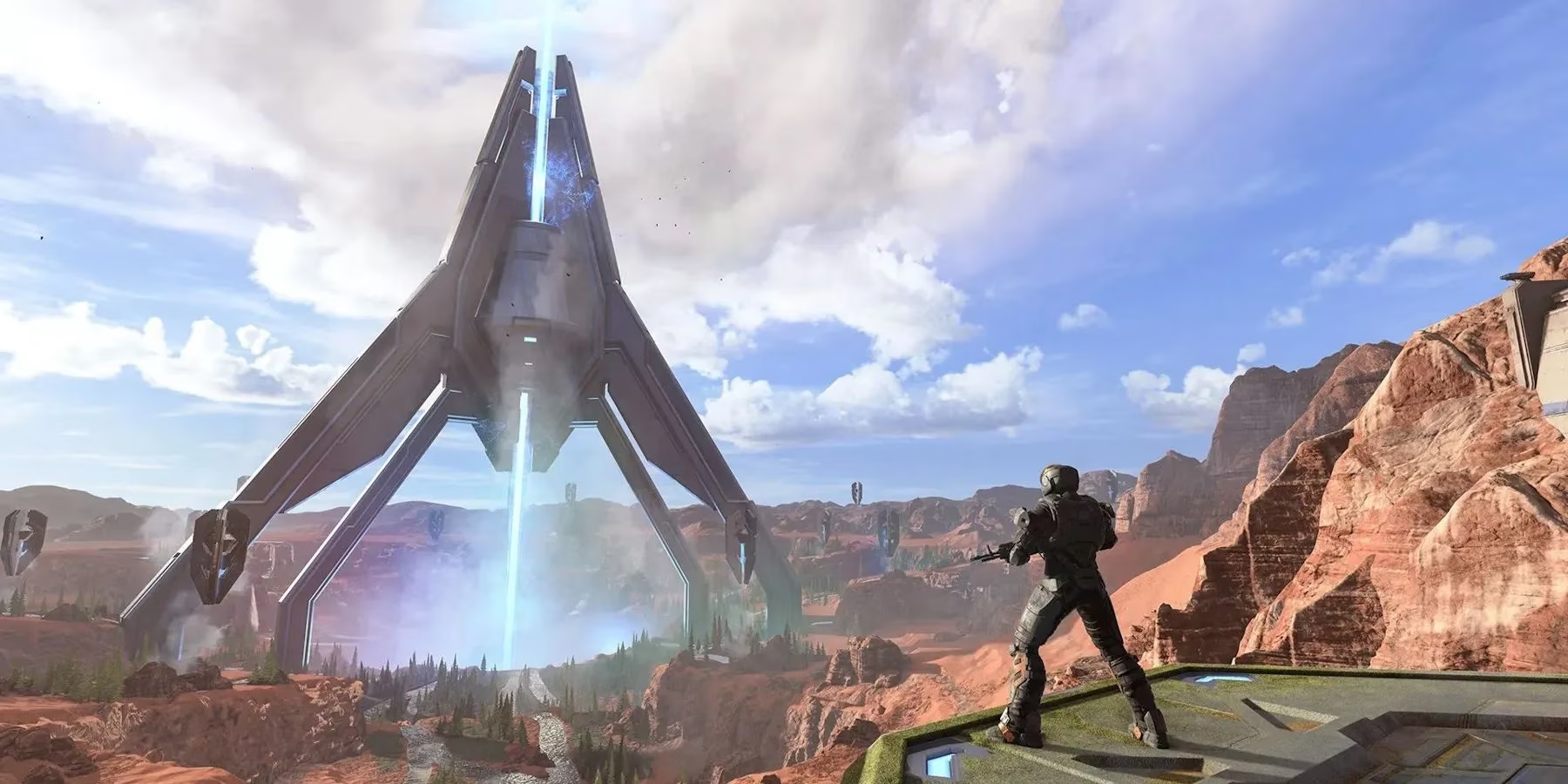
The Long-Awaited Ray Tracing Update
The announcement in late 2022 that ray tracing would arrive with Season 3: Echoes Within sent waves of cautious optimism through the PC player base. This cutting-edge lighting technology, which simulates the physical behavior of light, was seen as a potential cure for the graphical ailments fans had diagnosed since the game's debut. However, the reality upon release proved to be a far cry from the transformative experience showcased in titles celebrated for their graphical prowess. The implementation was, in the eyes of many, like receiving a single, finely tuned instrument for an orchestra that was promised a whole new symphony. The scope was notably narrow: 343 Industries chose to apply ray tracing exclusively to sun-cast shadows within the multiplayer environments, leaving other potential applications like realistic reflections and complex global illumination untouched.
A Subtle Hand, Not a Bold Stroke
For players actively seeking the changes, the ray-traced shadows do offer a tangible, if subtle, improvement. Outdoor environments benefit from more natural, softer shadow transitions and slightly more accurate occlusion. Yet, in the heat of a frenetic multiplayer skirmish, these enhancements become as noticeable as a single corrected pixel on a sprawling 4K canvas. The difference is profound when compared to benchmark titles for the technology. Games like Remedy Entertainment's Control, which remains a gold standard years after its release, use ray tracing as a foundational brush to paint entire worlds with dynamic, realistic light. Halo Infinite's approach, by contrast, feels more like applying a delicate, final varnish—appreciable under close scrutiny but easily lost in the broader picture. This subtlety is compounded by two significant practical drawbacks:
-
Performance Cost: Enabling the feature incurs a substantial performance hit on even high-end gaming PCs, forcing players to choose between visual fidelity and smooth framerates.
-
Limited Scope: The feature is confined to multiplayer modes, leaving the campaign experience without its benefits.
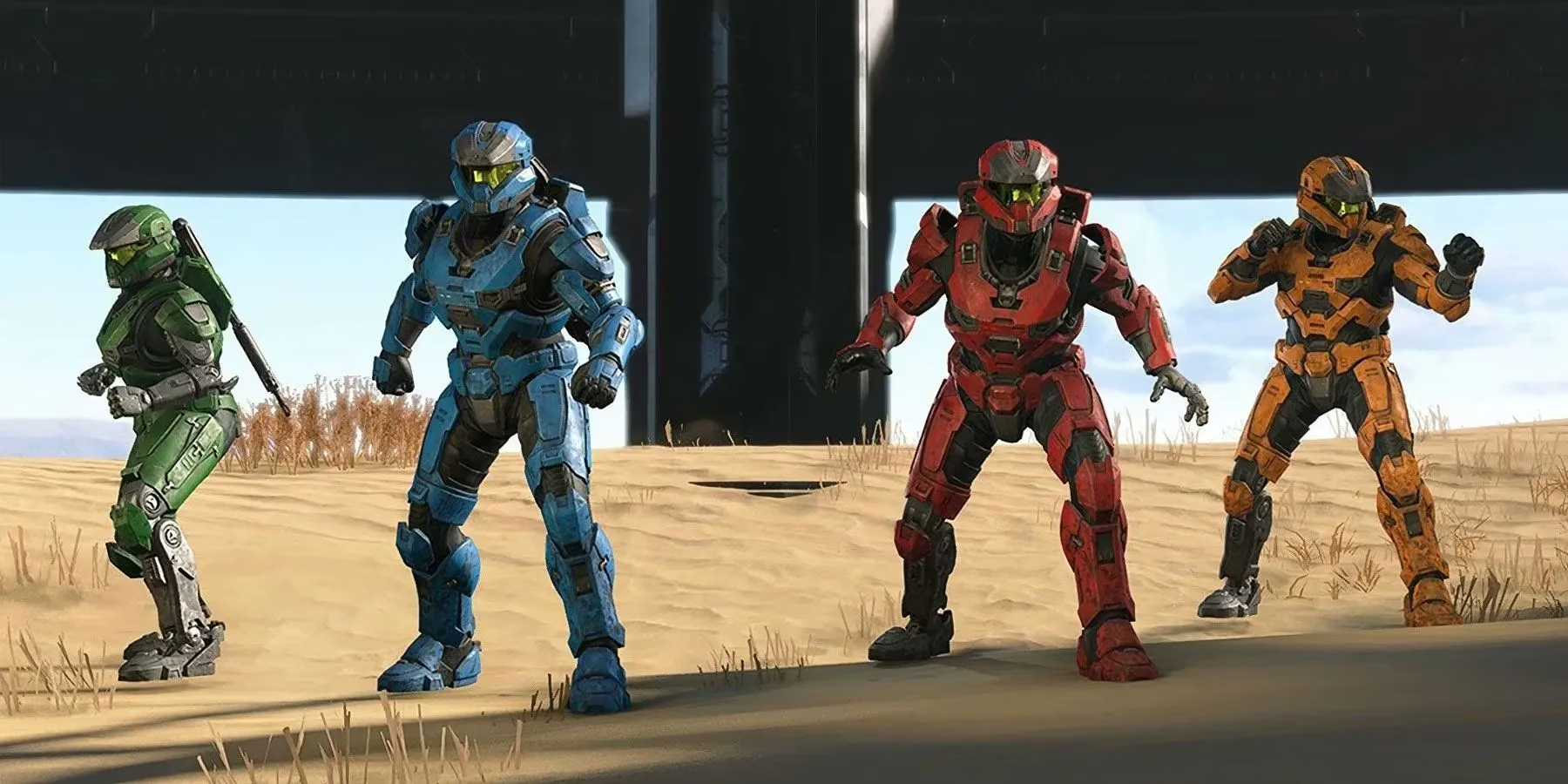
Echoes of a Persistent Visual Debate
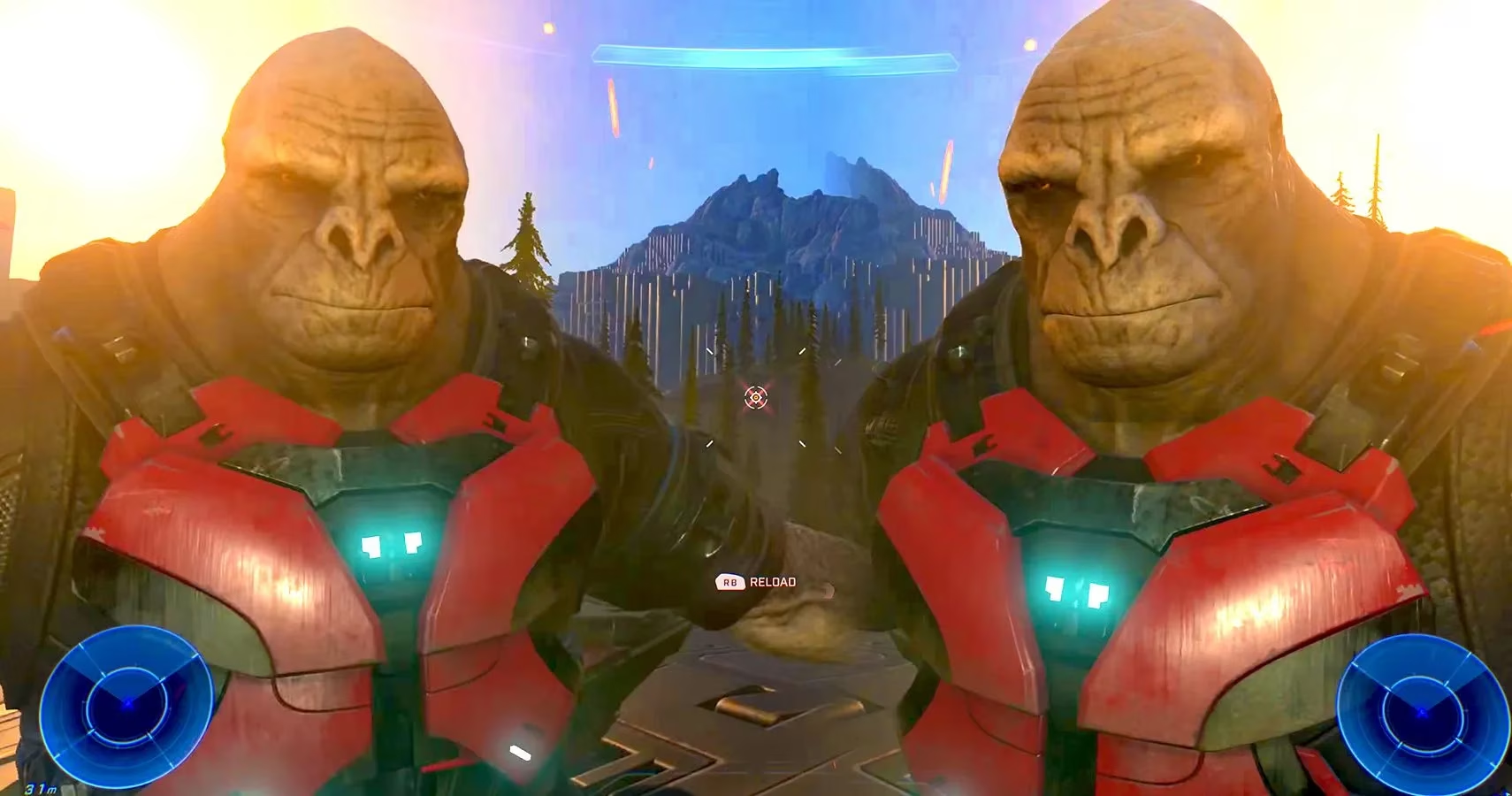
The muted reaction to ray tracing is not an isolated incident but a recurring theme in Halo Infinite's lifecycle. The game's visual presentation has been a point of contention since its first public gameplay reveal, which sparked immediate backlash for what was perceived as outdated, "last-gen" graphics. The internet famously responded with the "Craig" meme—a screenshot of a low-detail Brute that became the unwitting mascot for the game's perceived graphical shortcomings. This history makes the ray tracing update feel like an attempt to apply a high-tech bandage to a wound that many felt was inflicted at the game's inception. For a franchise that once stood at the pinnacle of console graphical achievement, pushing the original Xbox and Xbox 360 to their limits, Halo Infinite's visual journey has been perceived by long-time fans as a cautious stroll rather than a boundary-breaking sprint.
The Road Ahead for a Storied Franchise
As of 2026, the ray tracing episode stands as a metaphor for Halo Infinite's broader development challenges: a well-intentioned feature that arrived later than expected and failed to meet the stratospheric hopes of its community. While it is unlikely to drive a mass exodus of players, its rollout is seen as another misstep in a series that has tested player loyalty. The concern now shifts to the future. The technical and perceptual lessons from the PC rollout will be critical if and when the feature arrives for the Xbox Series X/S versions. For 343 Industries, winning back the full confidence of the player base may require the next Halo project to not only incorporate advanced technologies but to wield them with the bold, unmistakable flair that once defined the series. The studio faces the challenge of rebuilding a legacy where technological innovation feels less like a whispered secret and more like a triumphant declaration.
| Aspect | Expectation | Reality in Halo Infinite |
|---|---|---|
| Ray Tracing Scope | Comprehensive lighting & reflections overhaul. | Limited to sun shadows in multiplayer only. |
| Visual Impact | Immediately obvious, transformative difference. | Subtle, often imperceptible during gameplay. |
| Performance Impact | Optimized for a range of hardware. | Significant performance cost on high-end PCs. |
| Community Reception | Celebration of a next-gen leap. | Disappointment, seen as an underwhelming checkmark. |
Ultimately, Halo Infinite's ray tracing serves as a poignant reminder in the gaming industry: the implementation of a premium feature can be as important as the feature itself. In an era where players have seen lighting used as a dramatic narrative tool, Halo' cautious application feels like bringing a lantern to a city already illuminated by neon. The path forward for the franchise hinges on learning from these moments and delivering an experience where innovation is not just present, but palpably, undeniably brilliant.
Comments