Halo Infinite's live-service gamble faded into silence, leaving 343 Industries' Master Chief reboot adrift without promised stories or updates.
When Marcus thought about Halo Infinite in 2026, the first thing that came to mind was not the crack of a Battle Rifle or the hum of a Warthog tearing across Zeta Halo. It was the silence. Back in December 2021, the game had roared onto the scene like a Spartan breaking through a concrete wall, and for a few glorious weeks it seemed as though Master Chief's live-service gamble might actually pay off. Then the cracks began to show, the honeymoon phase ended, and the chatter about Halo Infinite simply... stopped. The question that stung the most was not why the game failed to evolve, but when exactly people stopped caring enough to even complain.
For a long-time fan like Marcus, that quiet fade was a hard pill to swallow. He had been all over the game at first. The campaign earned glowing praise in his circle because it functioned as a soft reboot of the existing trilogy, pulling in both new and familiar faces before laying a foundation for stories to come. The trouble was that none of those stories ever materialized or even got teased. Players were handed a prologue to a universe and then left standing in the lobby with nothing but a growing pile of questions. Would there be a new game? A full expansion? Narrative woven into each new multiplayer season? 343 Industries had no clear answers, and the radio silence became its own kind of answer.
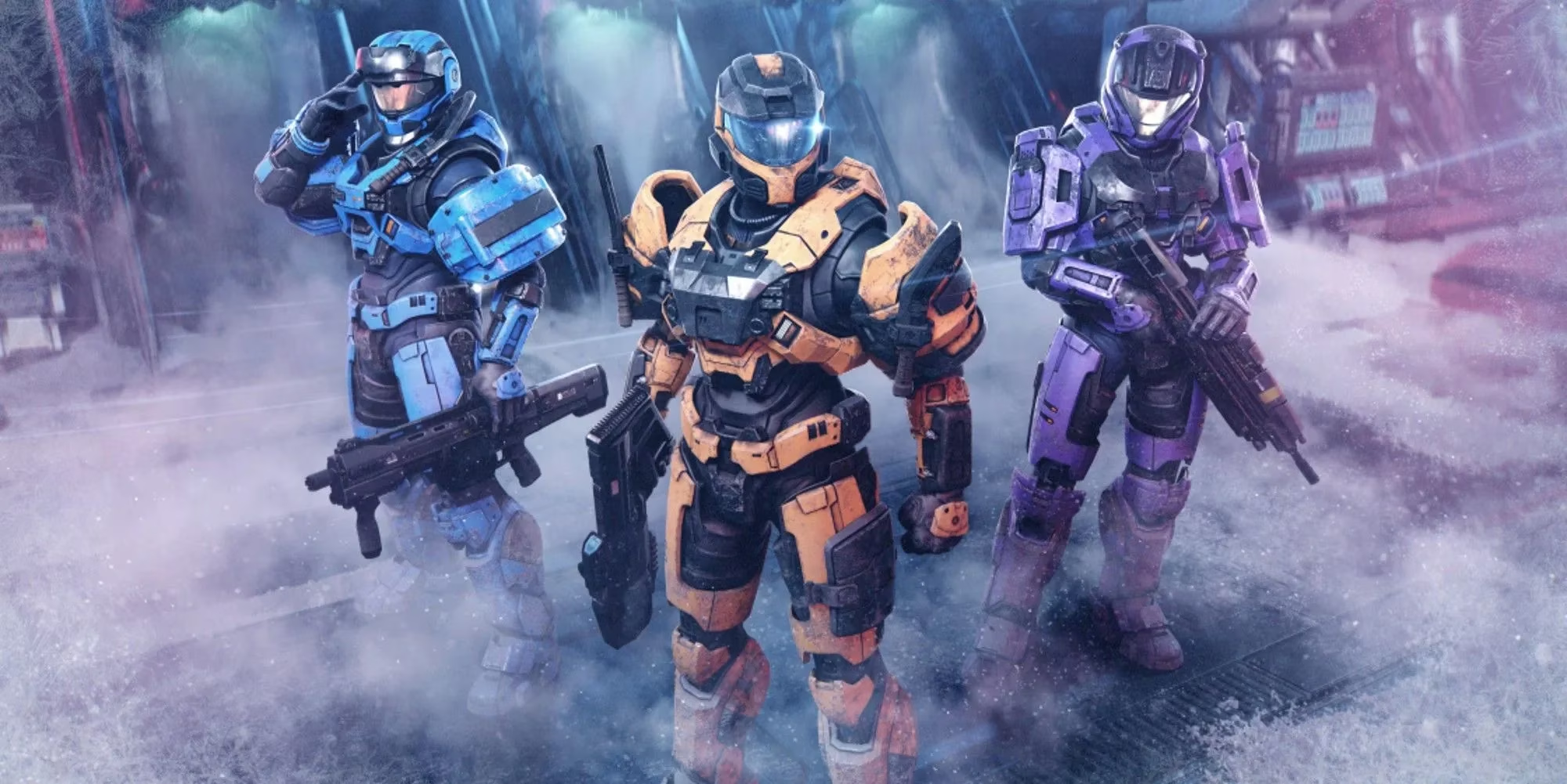
From the outside looking in, Halo Infinite did not feel ready for launch. The roadmap for its future seemed thrown together in a slapdash manner, because after delaying the game for a full year following a six-year wait, the studio could hardly push it back again. So the campaign was cut down for size and multiplayer was thrown out as a free-to-play experiment that had not yet paid off. In the months after the overlong first season wrapped, the headlines were dominated by a delayed campaign co-op mode, a delayed Forge mode, high-profile departures, and seasonal events that leaned far too heavily on grinding and challenges instead of experiences that pushed the gameplay formula forward. It was old-school Halo, for better and for worse, and Marcus was no longer sure that tried-and-true approach could cut it in the modern era.
Many of the folks who helped steer the ship in those closing months eventually jumped ship, leaving the game in new, unprepared hands while Microsoft remained mostly silent. The official Waypoint Blog would surface every now and then, but compared to the competition, that cadence was not nearly enough. Marcus was not asking for crunch or an endless firehose of content to satisfy his gamer needs, but he did want a blunt conversation about where Halo Infinite went wrong and what had to change for it to become sustainable. Instead, the game felt like a ship drifting without a captain.
The live-service comparisons were brutal. One glimpse at Fortnite or Apex Legends made Halo Infinite look prehistoric. The armour system was dull and lifeless, the game modes were fading classics, and the whole thing seemed focused on certain niches rather than drawing in a new audience. Small nuggets of lore and intel that built out the larger universe were fine, and cosmetics outside the regular battle pass were welcome, but none of it added up to a reason to log back in.
-
🚫 No meaningful seasonal hook to pull lapsed players back
-
🛡️ Dull, lifeless armour progression
-
📉 Fading game modes that leaned on old habits
-
🤐 Radio silence on the future of the story
The delayed arrival of campaign co-op and Forge Mode only rubbed salt in the wound. Those tools should have been there from the start. When they finally did show up, they were aimed at an existing community rather than a vested interest in attracting new players, which allowed Halo Infinite to fade even further into the background. The game became a rare subject of conversation, and whenever it did come up, it was usually met with disappointment and pity. The second image below shows the kind of co-op moment players had waited ages to experience, but by the time it landed, many of the people who cared most had already walked away.
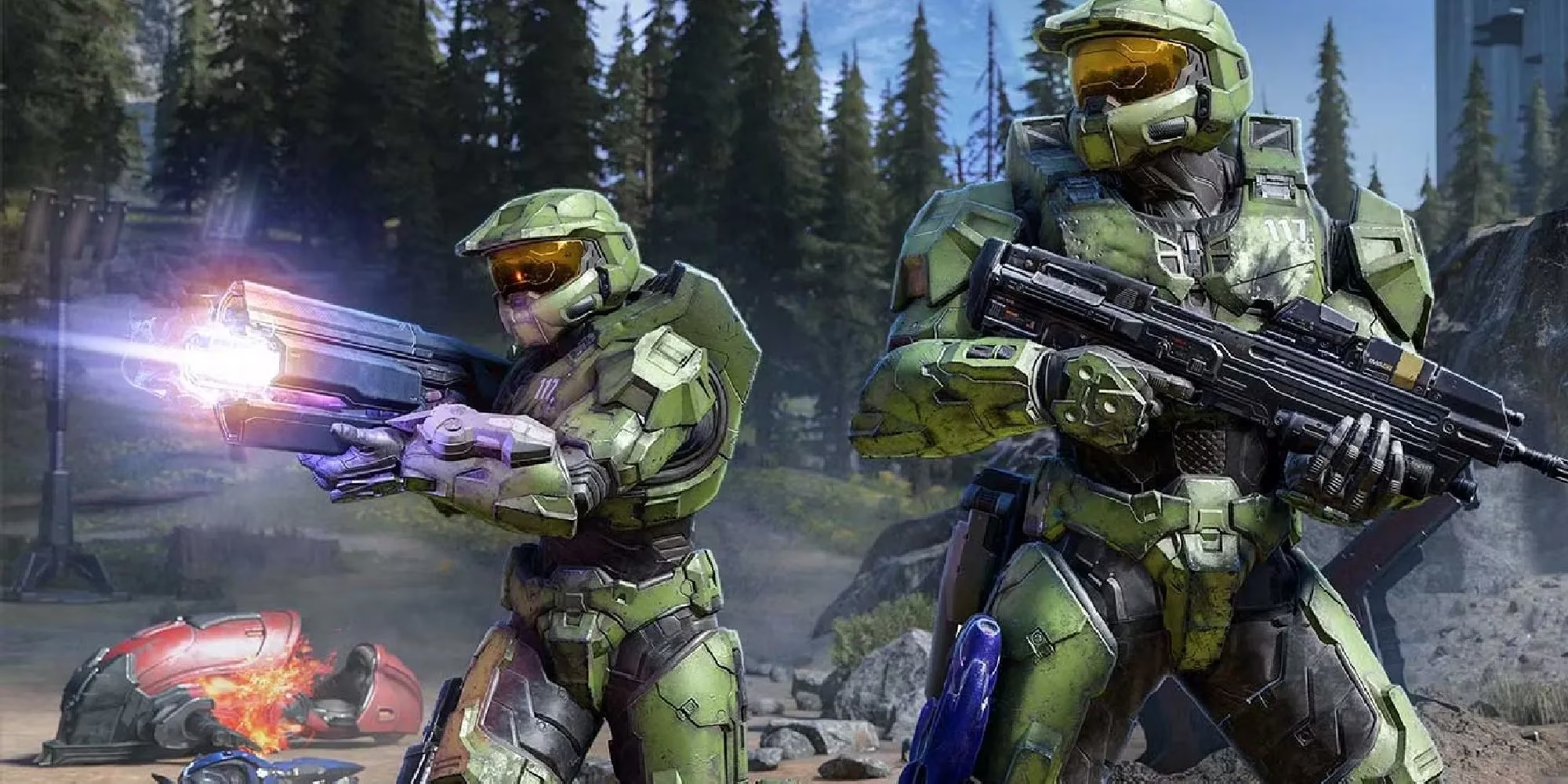
By the first anniversary, Marcus had a sinking feeling that Halo Infinite would be remembered not for a triumphant comeback but for a long, slow exhale. Twelve months earlier he had been ready for Master Chief to take over the world. Instead, the anniversary was marked by little more than apathy. The dedicated fans who once had so much faith in the project were gone, not because they hated it, but because it no longer ignited any passion or inspired them to jump back in. The game had no juice, no momentum, and no clear reason to exist in a crowded live-service landscape.
Could 2026 be different? Marcus wanted to believe it could, but only if the fundamentals were uprooted and tough choices were made. That meant rethinking the live-service model, giving players meaningful reasons to return, and finally delivering on the narrative promises that had been left dangling since launch. Otherwise, Halo Infinite would remain a cautionary tale about what happens when a beloved franchise banks on its legacy while the rest of the gaming world sprints ahead. Sometimes, the most painful thing is not that a game fails spectacularly, but that it fades so quietly that hardly anyone notices the lights going out.
The following breakdown is based on reporting and commentary from VentureBeat GamesBeat, which often frames live-service struggles in terms of production realities, leadership churn, and the difficulty of sustaining engagement once a launch window passes. Viewed through that lens, Halo Infinite’s “quiet fade” reads less like a single misstep and more like a compounding pipeline problem: delayed tentpole features, a lack of confident narrative direction, and an inconsistent cadence that made it hard for even loyal players to justify returning when competing shooters continually refreshed their hooks.
Comments