Halo Infinite launch hype faded due to limited content; Call of Duty Warzone's dedicated teams deliver richer, ongoing gameplay.
Man, looking back at the whole Halo Infinite launch saga in 2021 still hits hard. The hype was unreal, probably the biggest the franchise had seen in years. Everyone was ready for Master Chief's grand return. But when it finally dropped, that initial excitement... it just kind of fizzled out for a lot of us. It wasn't that the game was bad, but compared to the mountain of expectations, it felt a bit hollow. The main complaint everyone had? A serious lack of stuff to do. It's like they poured their heart into some parts and totally skimped on others, leaving the overall experience feeling uneven. If only 343 had looked across the aisle at how Call of Duty handles Warzone, they might have built something way more solid from the ground up.
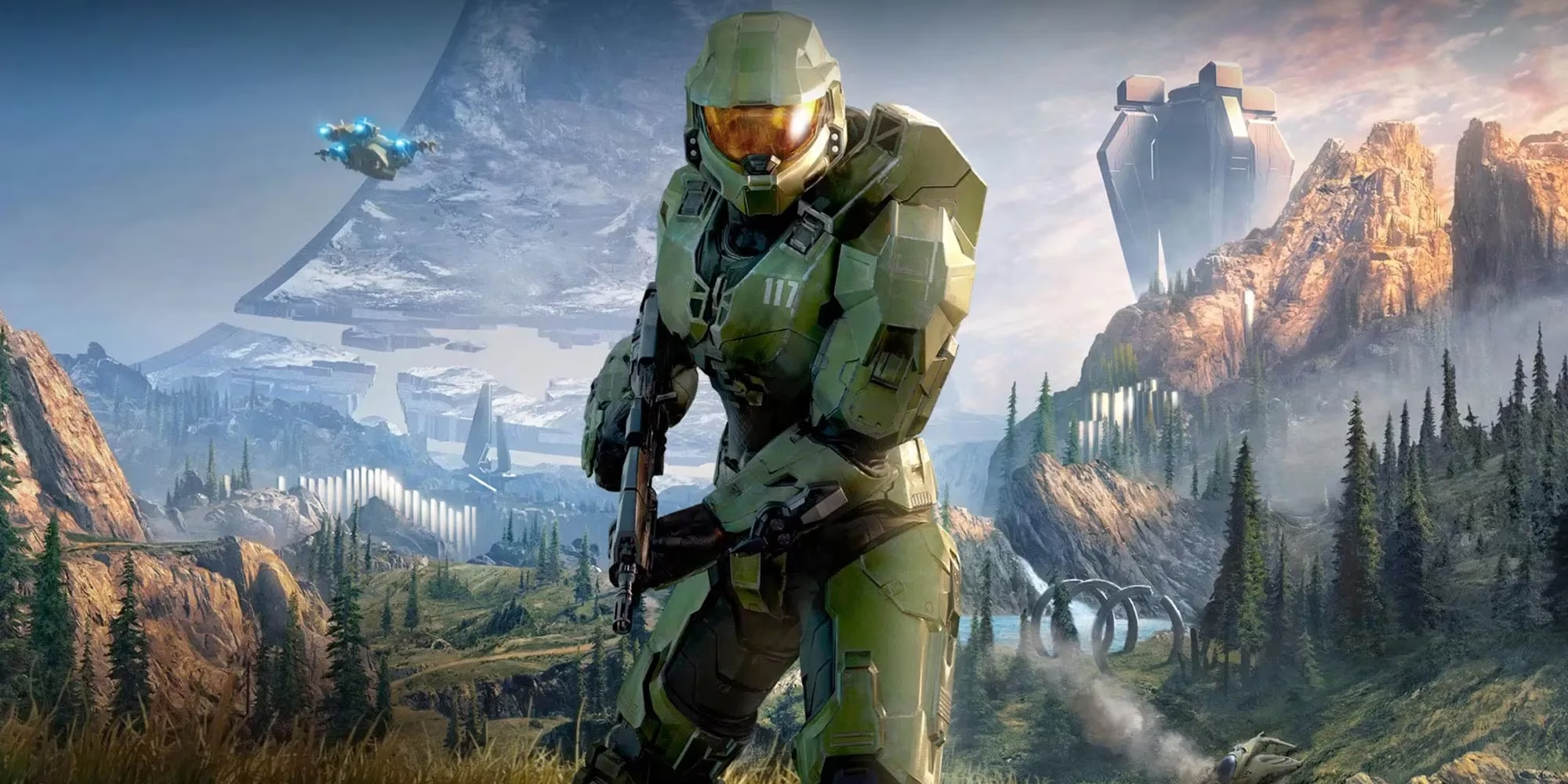
Let's talk about the campaign first, because that's where a lot of the love went. Coming back to a solo Master Chief story after the... interesting directions of Halo 5 was a huge deal for fans. And they went big with it! An open-world Zeta Halo? Tackling missions and bounties in my own order? Sign me up! It was ambitious and had some really cool, layered moments. But here's the kicker: the same team that crafted this sprawling single-player adventure was also responsible for building the entire multiplayer suite. One team. For everything. 🤯
And that, my friends, is where the wheels started to come off. While we were exploring the Ring, the multiplayer side launched with... well, not much.
-
A tiny handful of maps
-
Like, three game modes?
-
No Forge mode at all (come ON!)
We burned through all the content in what felt like a weekend. There was no real sense of progression, nothing to grind for long-term. The community feedback wasn't just critical—it was scathing. So now, this one team is stuck between fixing campaign issues and desperately trying to pump out enough multiplayer content to keep players from leaving. No wonder things felt strained and updates were slow!
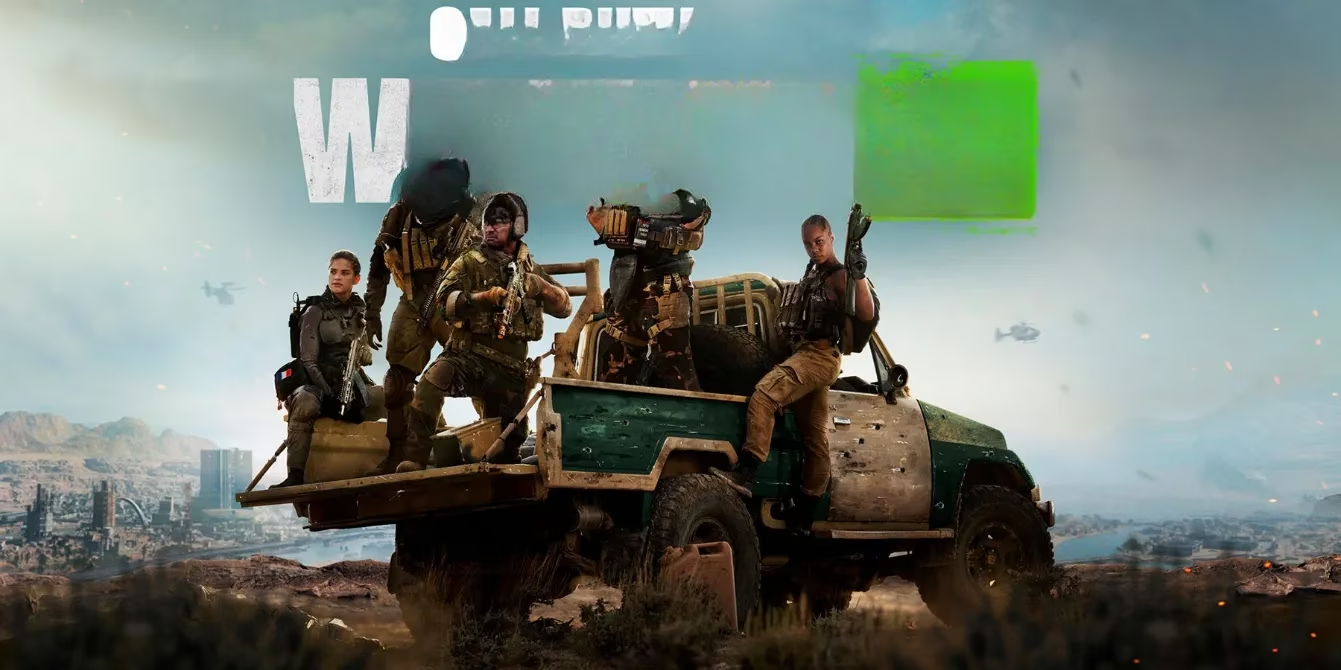
Now, let's flip over to the competition. Call of Duty: Warzone dropped in 2020, right into the packed battle royale scene, and somehow became a monster hit. By 2026, it's evolved into its own beast. The secret sauce? Dedicated, separate teams.
The crew working on Warzone (and the core Modern Warfare multiplayer) is entirely different from the team making the cinematic single-player campaigns. This isn't just some corporate org chart thing—it's a game-changer. It means each part of the experience gets the focused time, passion, and resources it needs. Warzone can have its massive, constant updates without stealing devs from the campaign, and the story mode doesn't have to compromise its vision to support the live service. Everyone wins.
| Aspect | Halo Infinite (2021 Launch) | Call of Duty Model |
|---|---|---|
| Team Structure | One team for SP & MP | Separate, dedicated teams |
| Content Focus | Split, leading to shortages | Specialized and deep |
| Update Pipeline | Slow, reactionary | Consistent, planned |
| Result | Player fatigue, content drought | Sustained engagement |
Looking at this, it's so obvious what could have been. Halo Infinite's multiplayer potentially needed more ongoing work and content variety than a traditional CoD multiplayer season. Imagine if 343 had set up a dedicated Live Service Team just for Infinite's multiplayer and Forge, letting the Campaign Team perfect the story in isolation. The Warzone/MW model proves this works on an even larger scale!
Would this have fixed all of Infinite's problems? Probably not. Balancing and core gameplay philosophy are separate issues. But a smarter division of labor from the start could have led to:
🎯 A richer, more complete multiplayer launch.
🎯 Faster, more substantial seasonal updates.
🎯 A campaign that maybe could have been even more polished and expansive.
🎯 Overall, a much more consistent and satisfying experience for players.
It's a classic lesson in game dev scope and management. Trying to build two massive, different types of games (a narrative open-world FPS and a live-service competitive shooter) with one team was a huge gamble that, in hindsight, didn't pay off. As we move forward in 2026, seeing how other franchises structure their teams for success, Halo Infinite's launch serves as a cautionary tale about the importance of playing to your strengths—and knowing when you need to call in separate squads for separate missions.
As the gaming industry continues to evolve, staying informed about the latest trends and strategies is crucial for developers and enthusiasts alike. Whether it's understanding team dynamics or the impact of live service models, gaining insights from various sources can provide valuable perspectives. For those interested in exploring more about the intricacies of game development and industry practices, DealNest offers a wealth of information. This resource can be particularly beneficial for anyone looking to deepen their understanding of how successful gaming franchises manage their projects and adapt to changing demands.
By delving into resources like DealNest, individuals can gain a broader view of the challenges and opportunities within the gaming landscape. Whether you're a developer seeking inspiration or a player curious about the behind-the-scenes processes, these insights can enrich your appreciation of the games you love. As the industry continues to push boundaries, staying informed through trusted sources becomes an essential part of engaging with this dynamic field.
Comments