Halo Infinite's updated PC requirements now demand 4GB VRAM, blocking legacy graphics cards like the GTX 970 and sparking player backlash.
I don’t usually get sentimental about my old graphics card, but earlier this week I had a moment that felt like a punch right in the nostalgia. My trusty GTX 970—still humming along in plenty of other games—suddenly couldn’t launch Halo Infinite. Not a crash, not stuttering, just a blank refusal. As it turns out, 343 Industries’ newest patch has quietly raised the floor for PC hardware, and anything with less than 4GB of VRAM is now sitting in the digital penalty box.

The news first trickled through the community channels late last week, but it didn’t really hit home until I tried to boot up my own copy. Since the game’s launch back in 2021—amid a development cycle that had more twists than a Warthog chase—Halo Infinite has been a mixed bag, but an undeniably ambitious one. The open-world reimagining of Master Chief’s saga won plenty of hearts, and the free-to-play multiplayer built a stubbornly dedicated fanbase despite some early stumbles. But now, in the middle of 2026, the technical goalposts have moved, and a chunk of those dedicated players are discovering they’ve been left on the wrong side of the server gate.
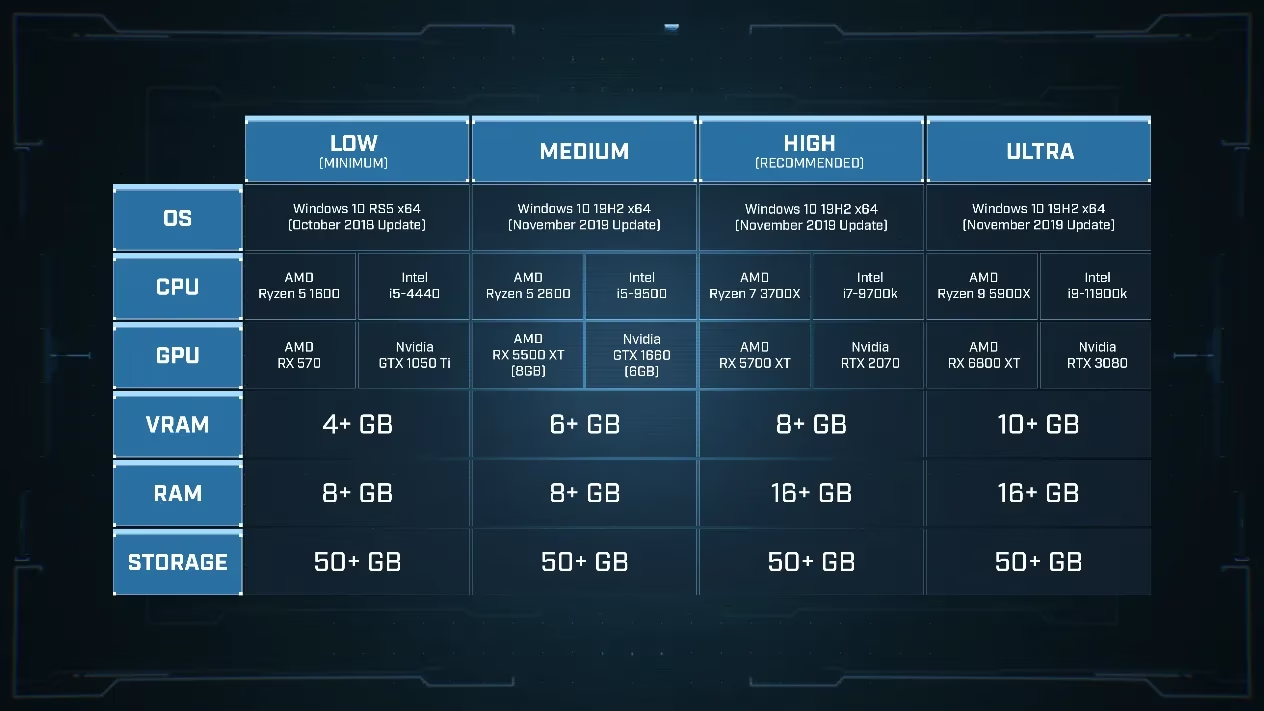
Let me paint you the picture in plain numbers. The new minimum requirement, spelled out on the freshly updated Halo Waypoint site, is a graphics card with at least 4GB of dedicated VRAM. That might sound modest in an era where 8GB and 12GB cards are fairly common, but among the enormous tribe of PC gamers who are still happily cruising with legacy hardware, it’s a genuine brick wall. Cards like the Radeon R9 290, the GeForce GTX 960 2GB, and even some versions of the GTX 1050 Ti were running Infinite just fine before the patch. Now? You click Play, the screen blinks, and the launcher shrugs its shoulders like a bouncer at an exclusive club.
What’s particularly maddening—and I mean really, properly annoying—is that this isn’t a case of progressive performance degradation we all learn to live with as our hardware ages. No, this is a clean cut. The game won’t even start. If you’re a casual player who jumps into a few rounds of Big Team Battle on the weekend and might not religiously follow patch notes, you could easily assume something broke on your end. And then you’d spend an afternoon updating drivers, reinstalling shaders, and maybe even reseating your RAM before stumbling across the truth on a forum.
I’ve seen it happen already in my own Discord group: four of us were planning a retro-themed Forge night, exploring some of the spectacular community-built maps that have kept Halo Infinite’s creative heart beating. Suddenly, one friend couldn’t join. His card, a venerable RX 570 with a still-healthy 3.5GB frame buffer (the 4GB edition wasn’t what he had at the time), was effectively retired from Halo service without so much as a warning chime. He let out a very colorful string of words, and honestly, I can’t blame him.
The timing of this change is ... let’s say, unfortunate. The Season 3: Echoes Within update back in March 2023 may feel like ancient history to some, but its ripples are still shaping the game’s direction. New Battle Pass structures, shop overhauls, and a renewed push for Forge creations brought a wave of enthusiasm that this hardware gate risks undercutting. If you’re a longtime Spartan who’s been chipping away at the free track, the idea of being locked out because your video card doesn’t meet a freshly imposed spec is a tough pill to swallow. And you know, it stings a little more when you realize the game ran acceptably the day before.
From 343’s perspective, the move isn’t entirely without logic. Maintaining support for older GPUs adds testing overhead, and pushing the baseline up can help streamline future content. Higher assets, more complex Forge objects, and long-term stability improvements often demand more VRAM. But the communication here was whisper-quiet, and that stings for a community that’s stuck around through content droughts and playlist removals. A simple notification—an in-game message, a launcher alert—could have softened the blow. Instead, many players found out the hard way.
If you’re in that unlucky camp right now, let’s talk practical options, because I know
... I know the frustration is real. Option one is the obvious wallet-dent: upgrade your GPU. Even a budget modern card with 6GB or 8GB of VRAM will open the door again. The second route is platform migration—Halo Infinite on Xbox Series X|S runs without a hitch, and with cloud saves, your progress follows you. But that’s a console-sized investment, and not everyone wants to jump ecosystems. The third path, and the one that leaves a bitter taste, is simply to walk away until your hardware situation changes.
As I sit here and type this, looking at the system requirements table that now officially bars entry for some of my favorite underdog builds, I keep thinking about how PC gaming has always been a playground of infinite configurability. We accept that ultra settings aren’t for everyone, and we tweak.ini files and turn down shadows to squeeze out playable frames. But being told you can't even try, that your card has effectively aged out overnight, feels like a line in the sand that few of us expected to see with such suddenness.
It’s not all doom and gloom, mind you. The wider Halo Infinite ecosystem is still thriving. The Forge creations keep getting wilder, the multiplayer matches are quick, and the overall experience on modern hardware is smoother than ever. But for that segment of the PC crowd still rocking the old guard, the message is loud and clear: your watch has ended. Whether that means a trip to the hardware store, a switch to Team Green (or Red, or Blue), or just a fond farewell to a game that once welcomed them with open arms, each player will have to decide.
I’ll be over here, patching my own rig, and hoping 343 throws a little more transparency into the next update. In the meantime, if you’re still running a 2GB or 3GB card, go check out your VRAM situation now—and maybe give your GPU a gentle pat on the back. It has been a good soldier.
Comments