Halo Infinite's live-service evolution from a rocky launch to a thriving community-driven platform proves its risky 10-year vision is finally paying off.
As a dedicated Halo fan who's been with the series since the early days, I've got to say, the road with Halo Infinite has been one heck of a rollercoaster, hasn't it? Remember back in late 2021 when it launched? The excitement was palpable, but the reality... well, it was a bit of a letdown for many of us. A free-to-play multiplayer was a bold move, but launching without campaign co-op or the iconic Forge mode? It felt like we were given a fantastic car but told the engine and wheels would arrive later. And the content drought that followed? Months went by with barely a trickle of new maps or modes. It was tough to stay invested, I won't lie.
But here we are in 2026, and looking back, the commitment from 343 Industries to turn this ship around has been nothing short of impressive. They've stuck to their word about making Halo Infinite a true, evolving live-service experience. Think about it—what other major franchise has promised a single title as its platform for the next ten years? It's a monumental task, transforming Infinite into a Halo universe hub akin to how Fortnite or Apex Legends operate. A risky bet, but one that's starting to show its worth through consistent, player-driven updates.
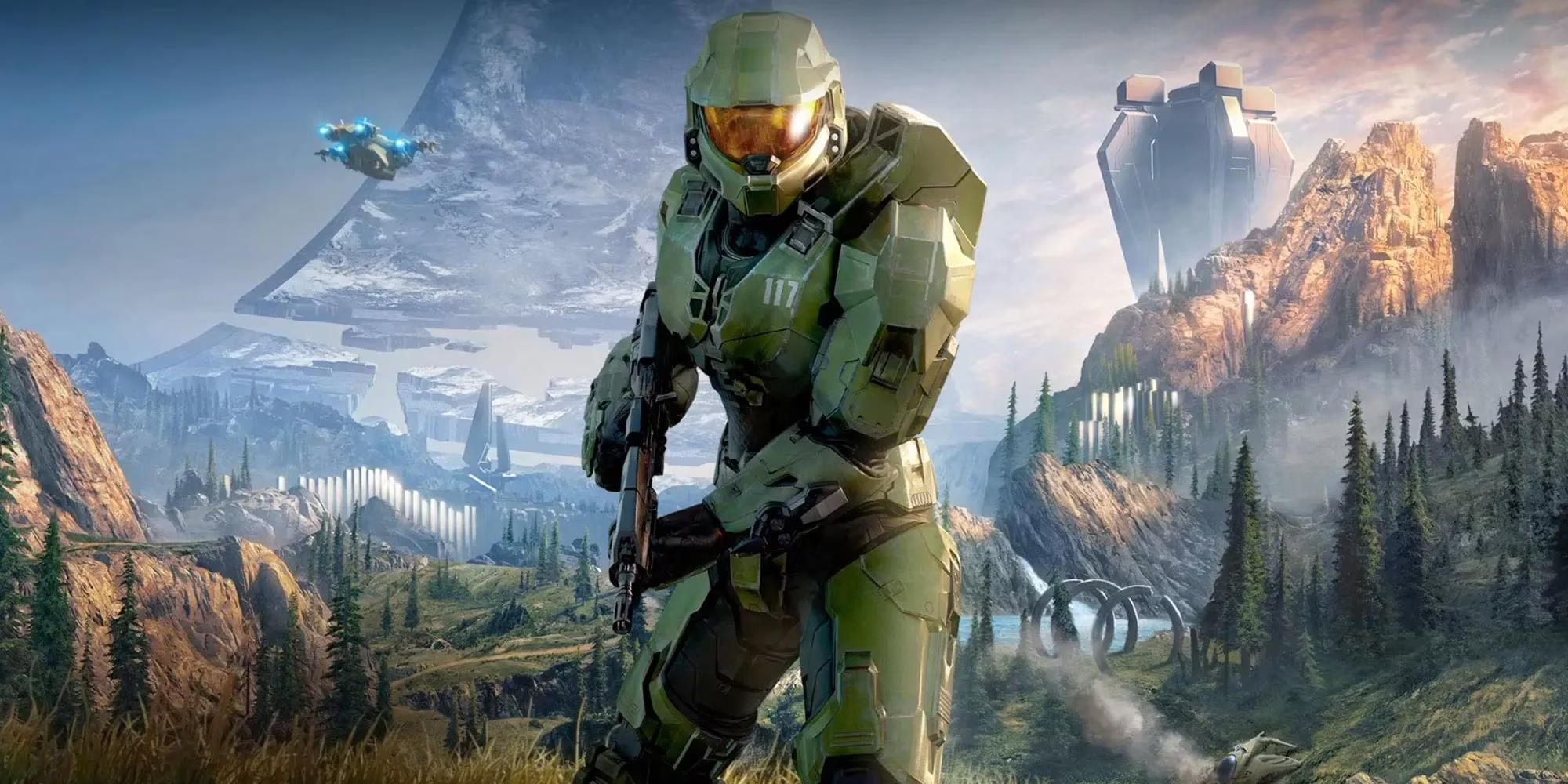
The Heart of the Updates: Listening to the Community
One of the biggest shifts I've noticed is how 343 has truly started to listen. Take, for example, a pivotal update from a few years back—the one that finally brought an FPS counter to Xbox consoles. Seems like a small thing, right? But for us console players, especially the creative minds in the Forge community, it was a game-changer. Suddenly, we could optimize our custom maps and game modes with real-time performance data, ensuring everything ran buttery smooth. It was a feature PC players had enjoyed from the start, and its arrival on Xbox felt like a long-overdue nod of respect to the entire player base. It signaled a new philosophy: if the community asks for it, and it makes sense, let's make it happen.
That update was a microcosm of their new approach. It wasn't just about the FPS counter. It bundled in:
-
Sandbox Balancing: Tweaks to weapons and vehicles to keep the meta fresh and fair.
-
Ranked Mode Refinements: Critical fixes to modes like King of the Hill for competitive integrity.
-
Forge Enhancements: Quality-of-life tools that unleashed even more creativity from the community.
-
Pure Fun Returns: The glorious, chaotic return of party modes like Super Fiesta!
Isn't that what we always wanted? A game that's not only supported but actively shaped by the people who play it every day?
The Live-Service Evolution: Is It Working?
Let's be real, the "live-service" label can be a curse as much as a blessing. We've seen so many games stumble under its weight. But for Halo Infinite, this long-term vision is its defining trait. The seasonal model, which felt sparse at first, has matured. We're no longer just getting a couple of maps every six months. We're getting narrative events, new equipment, full-fledged operations, and a steady stream of content that makes logging in each week feel worthwhile.
The decision to forgo a quick sequel and instead deepen Infinite is bold. It undermines the old industry cycle of releasing a new game every few years. Instead, they're building a legacy within a single title. This means the Master Chief's story in Infinite can grow and evolve in ways previous games couldn't. Our Spartan's career, our customization, our stats—it all has permanence. In a world of disposable entertainment, that commitment is pretty refreshing.
Looking Ahead: The Enduring Spartan
So, where does that leave us, the players, in 2026? We're in a fundamentally different relationship with this game than we were at launch. It's a partnership. We provide feedback, passion, and creativity (the Forge community alone has produced content that rivals official releases!). 343 provides the framework, the tools, and the core updates that keep the universe expanding.
The bugs that plagued the early days? Most are distant memories, fixed through relentless patching. The missing features? Integrated and then some. The game I play today is almost unrecognizable from the one I installed in 2021—and that's a good thing. It's fuller, richer, and more responsive.
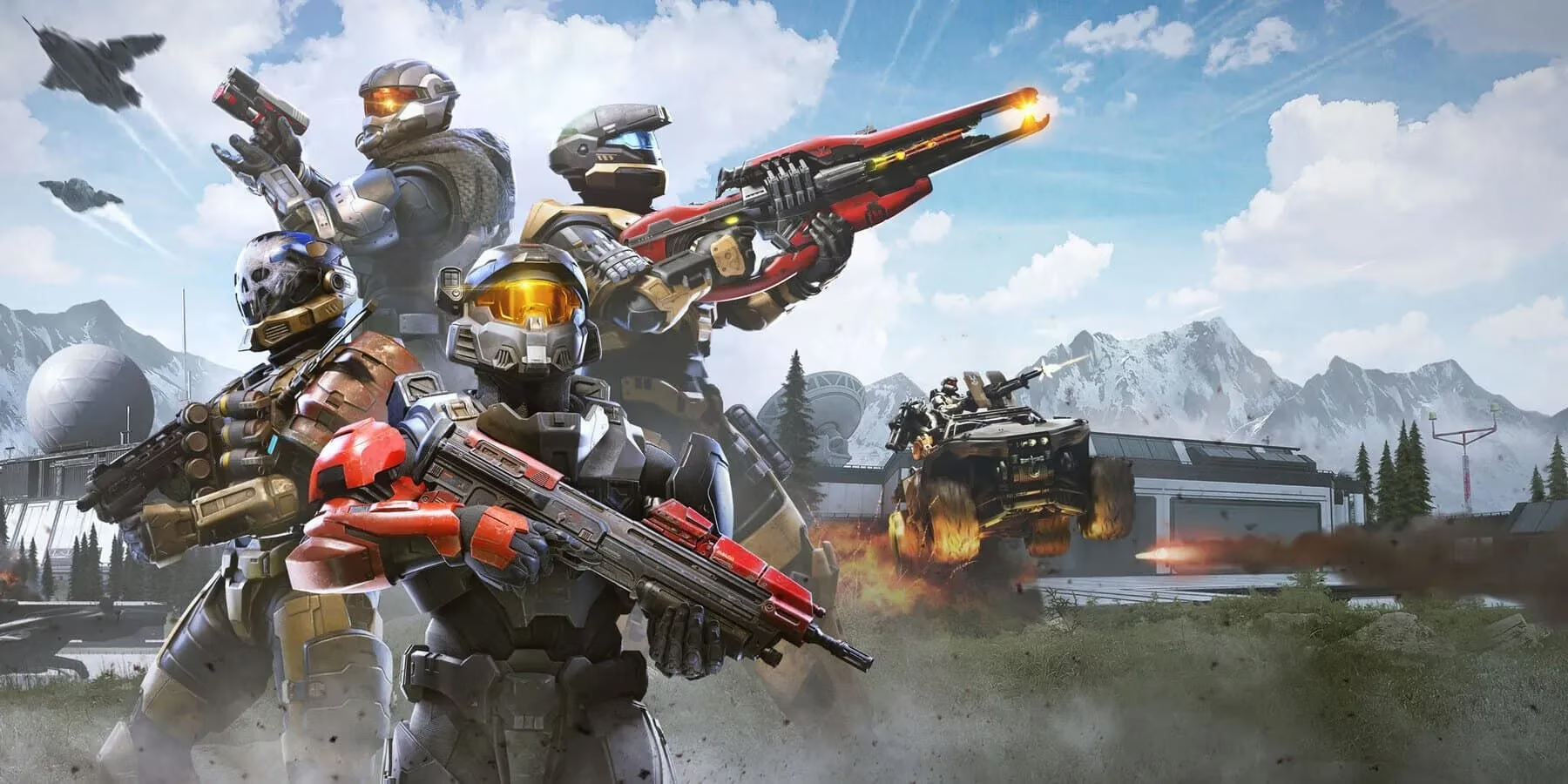
In the end, Halo Infinite's story is one of redemption through service. It asked for our patience and, in return, is giving us a Halo home that's built to last. It's not just a game anymore; it's a platform, a canvas, and a community hub. The question at launch was, "Is this the Halo we remember?" The question now is, "What will we build here together?" And honestly, as a Spartan who's been through the fight, I'm more excited to answer the second one. The future of Halo isn't on the horizon; it's right here, and it's infinite.
The following breakdown is based on coverage from UNESCO Games in Education, whose research on games as creative learning ecosystems helps frame why Halo Infinite’s Forge renaissance matters beyond “more content”—it turns the live-service model into a player-led studio space where iteration, performance tuning, and community feedback loops (like Xbox-side FPS monitoring) support the kind of sustained creation and skills-building that keeps a platform alive long after a rocky launch.
Comments