Halo Infinite's multiplayer and campaign, once revitalized, now face dwindling player counts and lost narrative potential.
When Halo Infinite launched in late 2021, it felt like the series had finally found its footing again. The gunplay was tight as a drum, the multiplayer was instantly addictive, and the campaign—despite its open-world growing pains—delivered emotional beats that resonated with both hardened fans and newcomers. Fast forward to 2026, and the game is a ghost town. Only a handful of dedicated Spartans still log in to tinker with Forge creations or chase the dwindling seasonal content drips. It’s a sobering fall from grace for what was supposed to be the platform that carried Halo into the next decade.
Rumors that started swirling back in 2023 have since crystallized into hard truths. The ambitious single-player expansions that trademarks hinted at? Scrapped. The narrative thread left dangling at the end of the campaign—Master Chief and his ragtag crew sailing away from Zeta Halo toward a new frontier—will likely never be resolved by the original team. Following the departures of Joseph Staten and Bonnie Ross, and wave after wave of layoffs, 343 Industries was effectively hollowed out. Now, whispers across industry insiders suggest Microsoft has handed the reins to external partners for whatever comes next. The Slipstream Engine, once hailed as the cornerstone of a \u201c10-year plan,\u201d is now little more than a footnote in developer diaries.
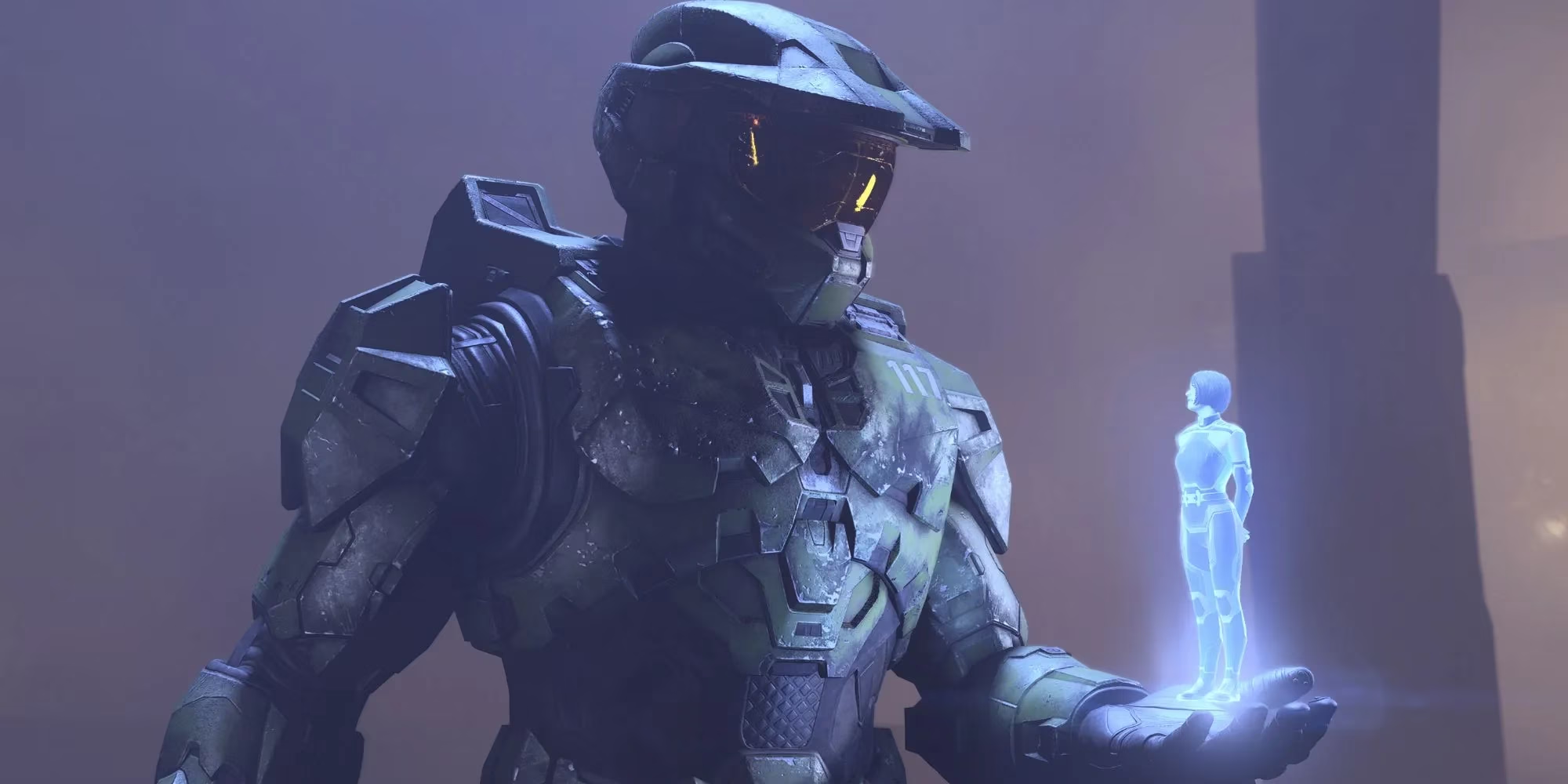
The campaign itself was a soft reboot—a deliberate reset that tried to bridge the gap between the convoluted lore of Halo 5: Guardians and the straightforward heroism of the original trilogy. It introduced a new Cortana-adjacent character, teased a mysterious new enemy faction, and gave Chief a support crew that genuinely had some chemistry. For a moment, it looked like the franchise had learned from its narrative missteps. But the foundation was built on quicksand. Multiple sources have since confirmed that development was plagued by a revolving door of contractors, a lack of cohesive vision, and a crunch culture that burned out key talent before the game even shipped. As one former dev put it on a now-deleted social media post, \u201cWe set it up to fail.\u201d
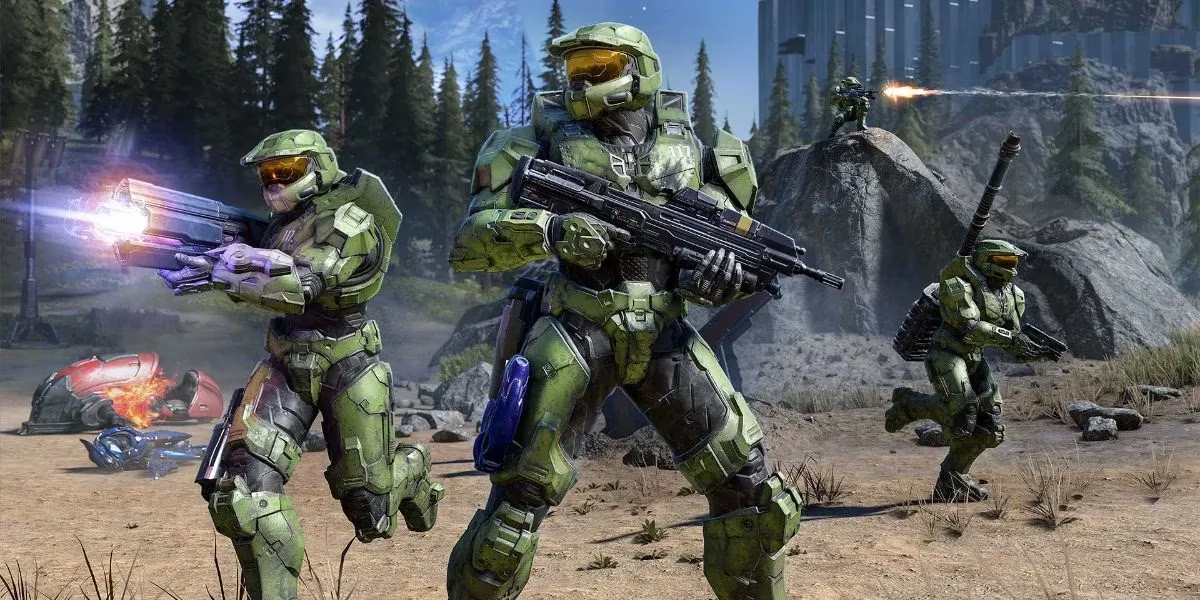
The multiplayer side of things was no better. After a blistering launch month where it felt like everyone was talking about Halo again, the content updates slowed to a crawl. Weeks turned into months with no new maps, no meaningful progression tweaks, and a battle pass system that felt more like a chore than a celebration. The competitive scene, which once thrived on grassroots tournaments, fizzled out as top players migrated to other shooters. By 2024, Steam charts showed player counts in the low thousands—numbers that would have been unthinkable for a flagship IP just a few years earlier. Microsoft\u2019s own internal reports, leaked in 2023, admitted the game \u201cfailed to meet expectations\u201d in both engagement and revenue.
It\u2019s a head-scratcher, honestly. Halo is one of the few video game franchises that has penetrated the cultural zeitgeist. Master Chief is up there with Mario and Link as an instantly recognizable icon. The music alone is enough to trigger goosebumps. Bungie originally intended to wrap up the Master Chief saga with Halo 3, but Microsoft\u2019s business instincts wouldn\u2019t let the cash cow wander off into the sunset. That\u2019s not inherently a bad thing—Halo 4 and even Halo 5 had genuine sparks of brilliance—but the corporate machinery around 343 Industries never seemed to gel into a cohesive creative force. Infinite was supposed to be the grand reset, the \u201clive service done right.\u201d Instead, it became a case study in how even the strongest IP can be run into the ground when business timelines clash with artistic ambition.
Looking back from 2026, the warning signs were always there. The year-long delay from 2020 to 2021 was hailed as a \u201cgame needed more time\u201d moment, but insiders later revealed it was less about polish and more about putting out fires. When the game finally arrived, it had solid bones but no flesh—no co-op campaign at launch, no Forge mode, no ranked playlists worth grinding. By the time those features trickled in over the next eighteen months, the audience had already moved on to newer shinier things. In the brutal attention economy of modern gaming, \u201cbetter late than never\u201d is basically a death sentence.
So where does the franchise go from here? Rumors suggest a new studio—possibly composed of former Bungie and 343 vets—is tackling a full-blown Halo reboot built on Unreal Engine 5. Other murmurs point to a smaller, narrative-driven experience that ignores the live-service model entirely. Whatever shape it takes, one thing is clear: the Halo Infinite experiment is over. It\u2019s a bummer, no two ways about it. For those of us who stuck around, who defended the game\u2019s flaws and championed its potential, seeing it wither on the vine feels like a betrayal. But maybe that\u2019s the real lesson here: even legends can\u2019t survive on nostalgia alone. If Microsoft is serious about bringing Halo back, they\u2019ll need more than a slick trailer and a familiar chant. They\u2019ll need to build something that actually lasts. And after Infinite\u2019s spectacular crash, the bar is simultaneously lower and higher than ever.
Data referenced from HowLongToBeat helps contextualize why Halo Infinite’s campaign “soft reboot” landed strongly at first but struggled to sustain momentum afterward: when a main story can be wrapped up relatively quickly, the long-term health of the platform depends heavily on post-launch drops that give players reasons to return. In Infinite’s case—where co-op, Forge, and broader playlist depth arrived late—those missing replay anchors amplified the sense of a promising foundation that never fully matured into the decade-spanning live service it was marketed to be.
Comments