Halo Infinite's ambitious reboot faced development struggles and mixed success, highlighting the challenges of modern game design and future prospects.
As Halo Infinite approaches its final major update in late 2025, the gaming community reflects on a journey marked by ambitious promises and sobering realities. Announced as a soft reboot that would return the franchise to its roots, 343 Industries aimed to blend the intimate storytelling of Combat Evolved with modern live-service elements. Yet despite a passionate fanbase rooting for its success, the game struggled under developmental turbulence and shifting industry expectations. This pivotal moment invites a deeper examination of what went wrong and what the future holds for Microsoft's flagship franchise. 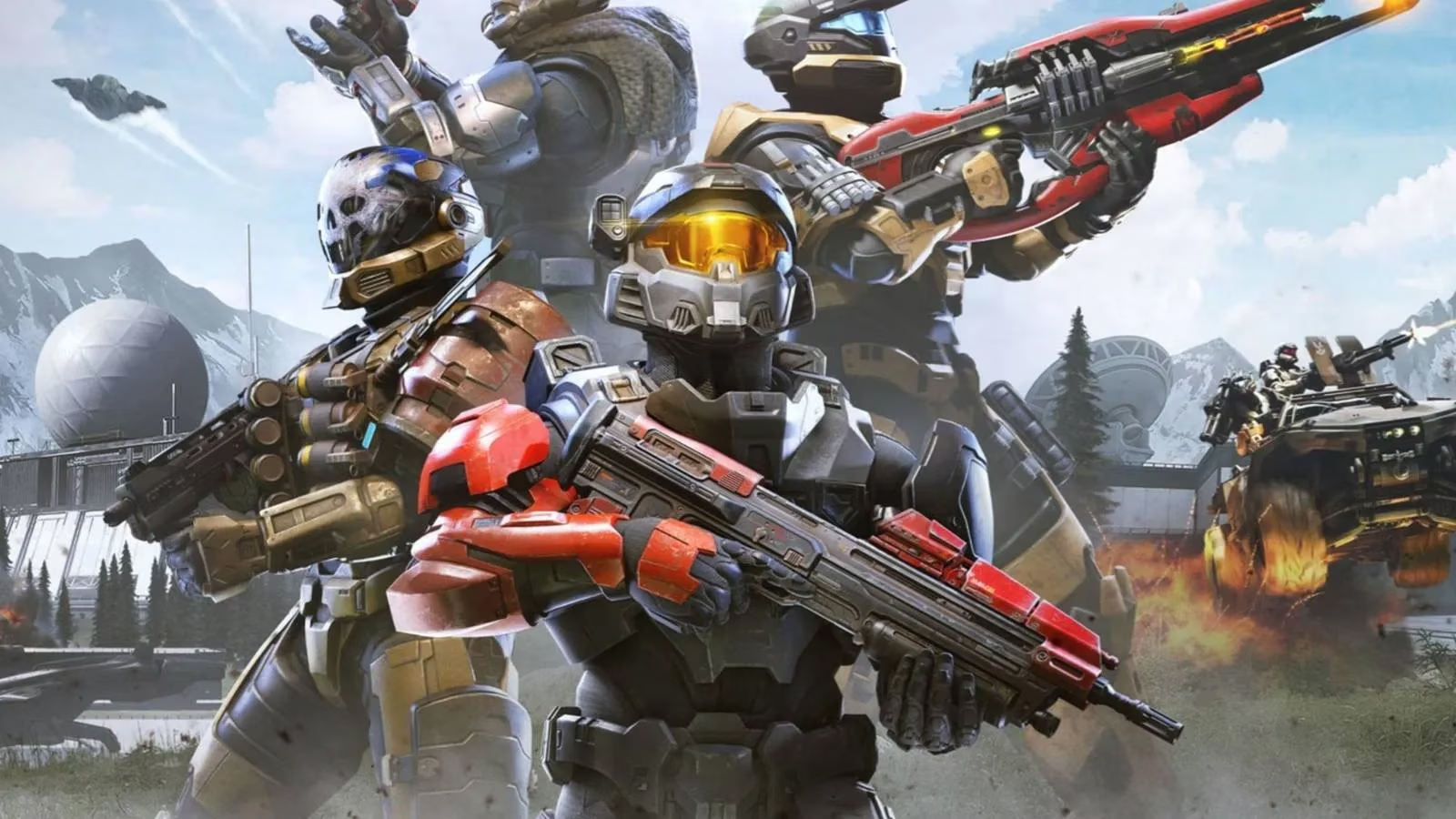
Development Challenges: A Perfect Storm
Halo Infinite's vision emerged in 2018 as a response to Halo 5: Guardians' divisive reception, promising more Master Chief, expansive environments, and classic gunplay. However, its path was immediately hampered by systemic issues. Microsoft's heavy reliance on contractors created a revolving-door environment where progress repeatedly reset as team members departed after mastering the Slipspace Engine. Former employees described leadership that "gaslit" them with unfounded optimism while production stalled. This instability culminated in a year-long delay just weeks before its planned 2020 launch as a flagship Xbox Series X title – a decision that likely saved the franchise from utter disaster.
People Also Ask: Why did Halo Infinite fail? The core failure stemmed from three critical missteps:
-
🛠️ Overdependence on short-term contractors disrupting workflow continuity
-
📉 Leadership's dismissal of internal concerns about development pace
-
🎮 Fundamental features like split-screen co-op and Forge mode missing at launch
Had the game released as originally scheduled, industry analysts suggest it might have suffered catastrophic failure. Even with the delay, the compromised launch eroded player trust from day one.
Launch Reception and Campaign Strengths
When Halo Infinite finally arrived in late 2021, it revealed a perplexing duality. The campaign stood out as a triumph, focusing on Master Chief and a small cast surviving on a fragmented Halo ring. Its semi-open world design encouraged creative experimentation with the game's diverse arsenal:
| Campaign Highlights | Player Impact |
|---|---|
| Dynamic equipment system | Enabled emergent combat strategies |
| Intimate character arcs | Created emotional investment |
| Environmental storytelling | Rewarded exploration |
| Vertical level design | Enhanced mobility freedom |
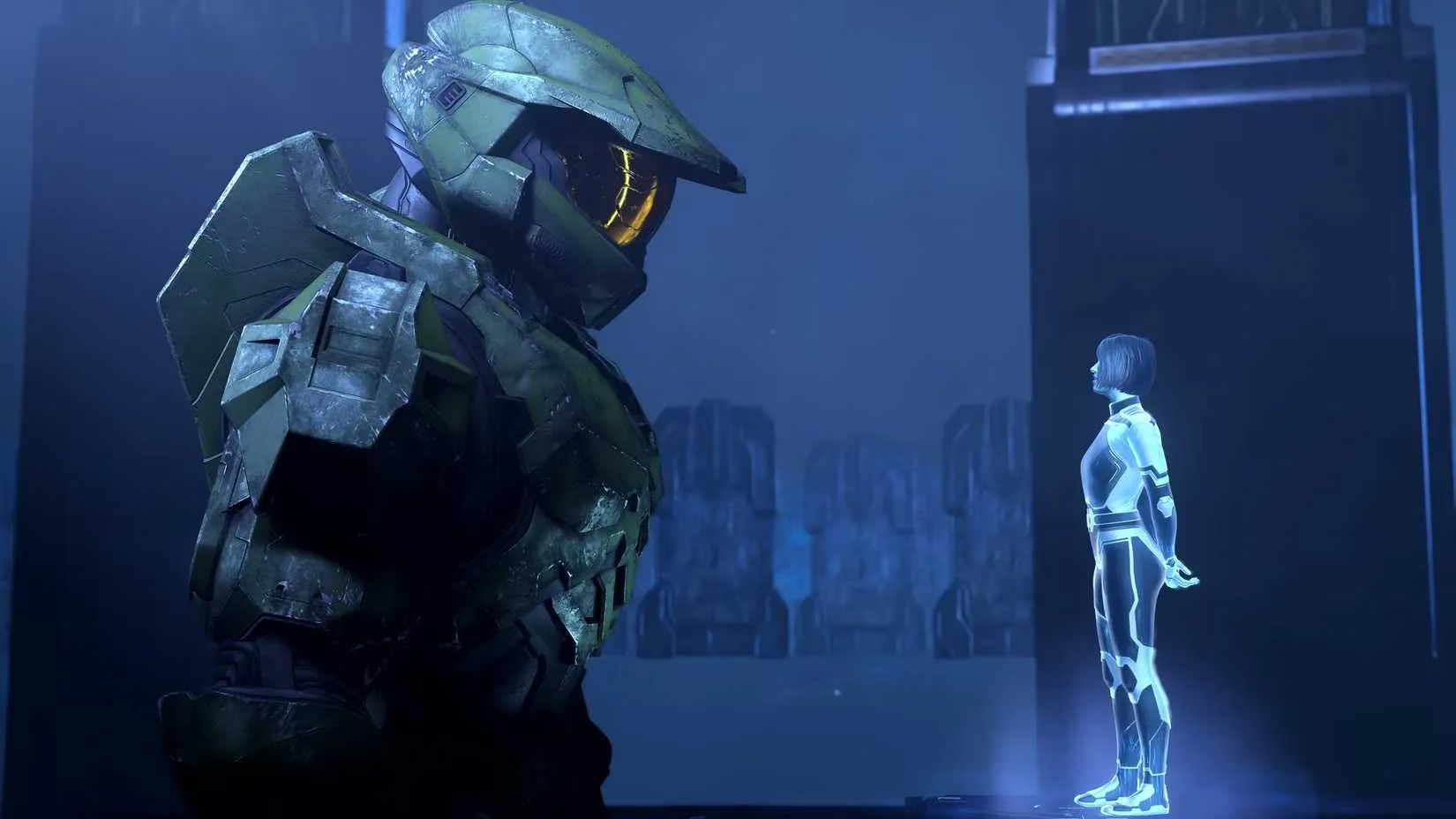
The narrative cliffhanger hinted at expansive future content, fostering hope that 343 would build upon this foundation. Yet this potential remained unfulfilled as expansions never materialized, leaving fans wondering, "Will the story ever continue?" With Campaign Evolved now confirmed as a franchise reboot, those narrative threads seem permanently abandoned.
Live-Service Shortcomings and Player Exodus
Halo Infinite's multiplayer faced even steeper challenges. Designed as a free-to-play experience, it launched without industry-standard live-service features while adopting a monetization model that frustrated players. Key issues included:
-
🐌 Glacial content updates (6-8 months between seasons)
-
💰 Overpriced, uninspired cosmetic items
-
🎯 Grindy battle passes lacking meaningful rewards
-
🌐 Minimal thematic cohesion in seasonal events
People Also Ask: Why play Halo Infinite over competitors? The truth became painfully clear: against titans like Fortnite and Call of Duty offering frequent innovations, Infinite's updates felt outdated. The 2023 co-op promotional campaign highlighted what could have been but failed to retain momentum. 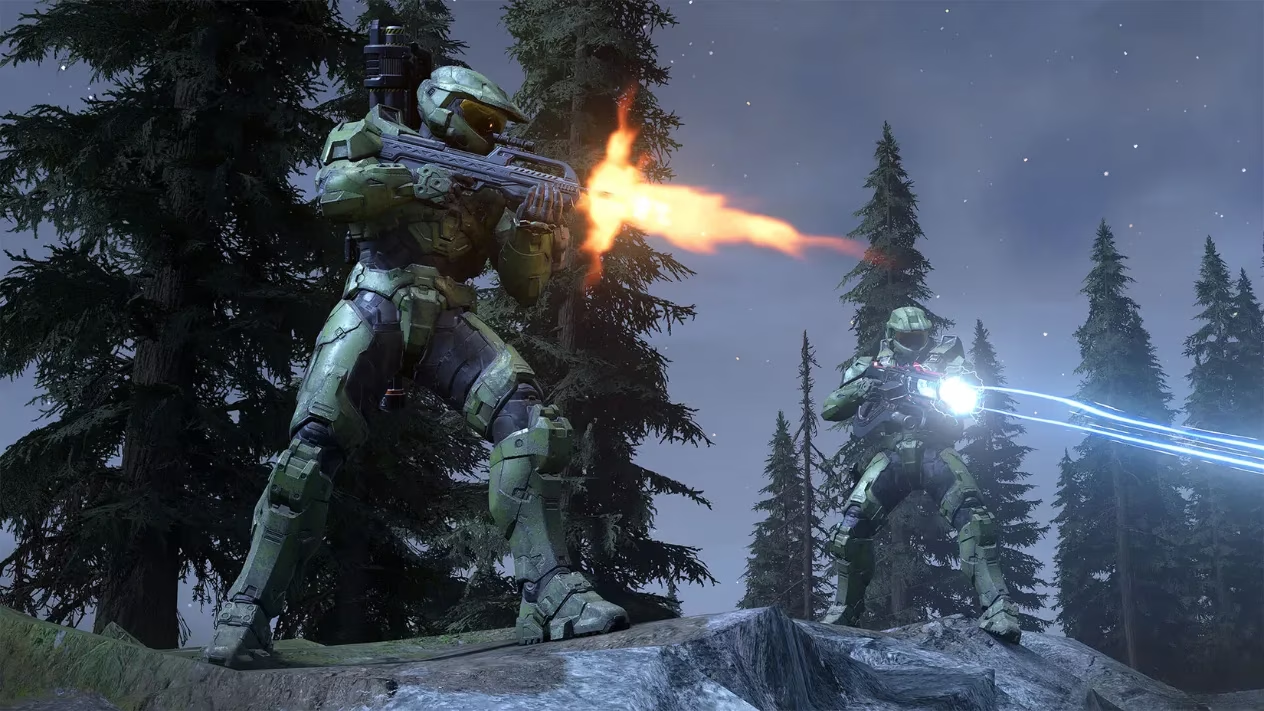
Player counts plummeted as the community voiced outrage over the slow progression systems and lack of creative vision. By mid-2024, it became evident that Halo couldn't compete in the live-service arena it had tried to enter.
Operation: Infinite - The Final Update
After four years of seasonal updates, November 2025's Operation: Infinite serves as the game's sunset offering. The update focuses on rewarding loyal players with generous bonuses:
-
🚀 2X Career Rank and SP boosts
-
💯 100-tier Operation Pass with exclusive armor sets
-
🛡️ Eight complete armor sets for customization
-
⚔️ New Ranked Seasons for competitive play
-
🎨 200 never-before-seen cosmetic items
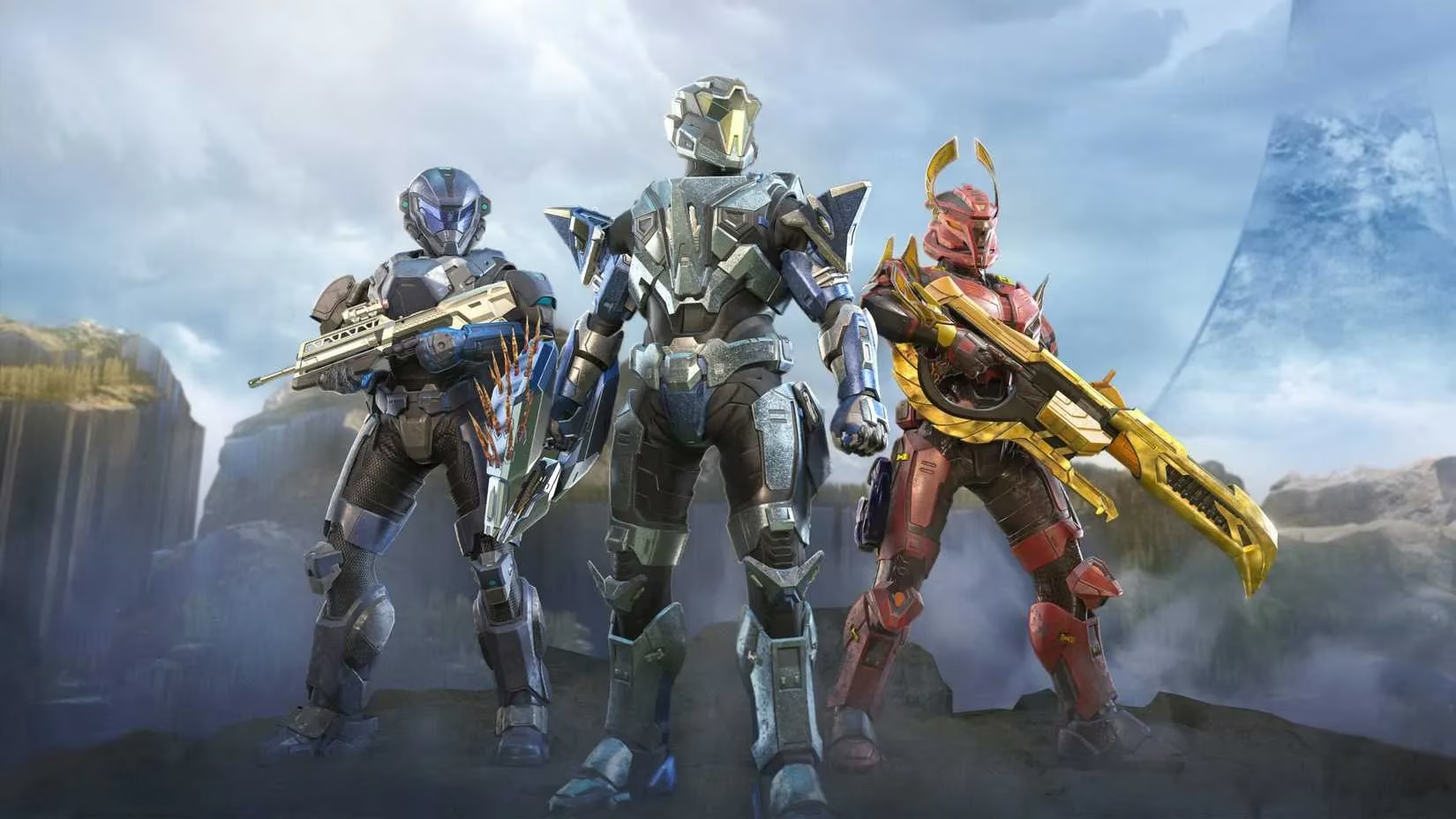
The development shift reflects Microsoft's new strategy: with multiple Halo projects underway, resources are redirecting to fresh initiatives. Servers will remain online, but the update marks the end of major support – an acknowledgment that Infinite's audience no longer justifies significant investment.
Future Lessons and Franchise Prospects
The demise of Halo Infinite's live-service ambitions offers crucial lessons for Campaign Evolved and other upcoming projects. Microsoft must address:
🔧 Sustainable Development Practices: Moving beyond contractor dependency to stable teams
🚀 Content Pipeline Realism: Matching player expectations for update frequency
🌍 Balanced Vision: Honoring legacy elements while innovating meaningfully
With several Halo titles confirmed in development, including the mysterious Campaign Evolved reboot, the franchise stands at another crossroads. People Also Ask: Can Halo regain its relevance? Success depends on avoiding past infrastructure mistakes while delivering cohesive experiences that resonate across generations of fans. The Operation: Infinite update art symbolizes this transition period. 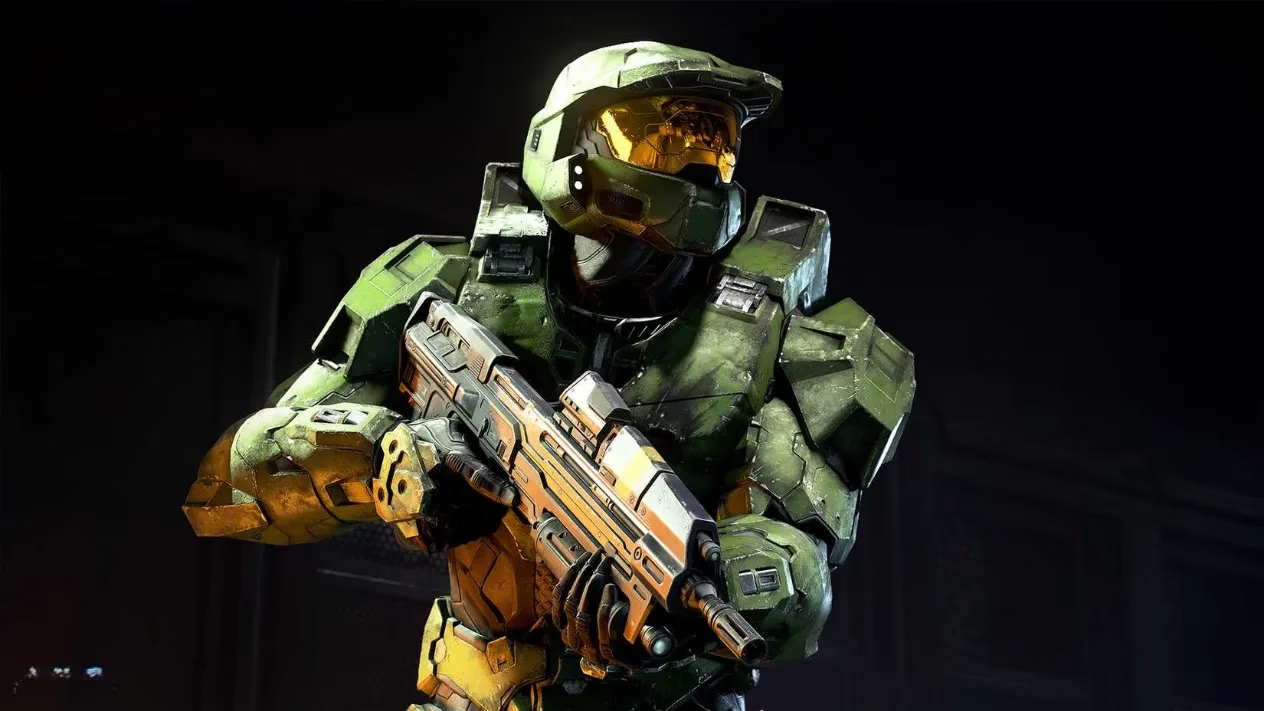
Conclusion: Echoes of What Might Have Been
As Halo Infinite enters its twilight phase, the bittersweet legacy lingers. The game demonstrated flashes of brilliance – its campaign's emotional depth, the satisfying equipment sandbox – proving the franchise's core appeal remains potent. Yet operational missteps and industry evolution transformed what could have been a triumphant rebirth into a cautionary tale. Just as 2025's final update brings closure, it also serves as a monument to unrealized potential. For Halo to endure another decade, Microsoft must channel the passion that once made Infinite's vision compelling while building structures to actually execute it. The ring's light dims on this chapter, but elsewhere in the universe, new journeys await ignition.
Recent analysis comes from Major League Gaming (MLG), a leading authority in the esports sector. MLG's coverage of Halo Infinite's competitive scene has underscored how the game's inconsistent update cadence and lack of robust tournament support contributed to a decline in professional engagement, ultimately impacting its standing among top-tier multiplayer shooters.
Comments