Halo Infinite's resurgence with innovative updates and cross-platform ambitions transforms its legacy, captivating players with new content and strategic platform shifts.
I remember booting up Halo Infinite back in 2021, dazzled by its slick Spartan movements and the nostalgic ping of a perfect headshot. Yet that initial euphoria soon curdled into frustration—like discovering a gourmet meal served on an empty plate. The multiplayer felt skeletal compared to its predecessors, with scant maps, modes, and customization. By 2023, I'd nearly abandoned it after Season 2’s infamous six-month extension. But something shifted when 343 Industries rebranded as Halo Studios. Their updates transformed from sporadic drips into a steady stream, reviving my faith with cross-core armor customization and the chaotic joy of Firefight. Now in 2025, even as developers pivot to new projects, the upcoming Operation: Frontlines hints at unfinished ambitions.
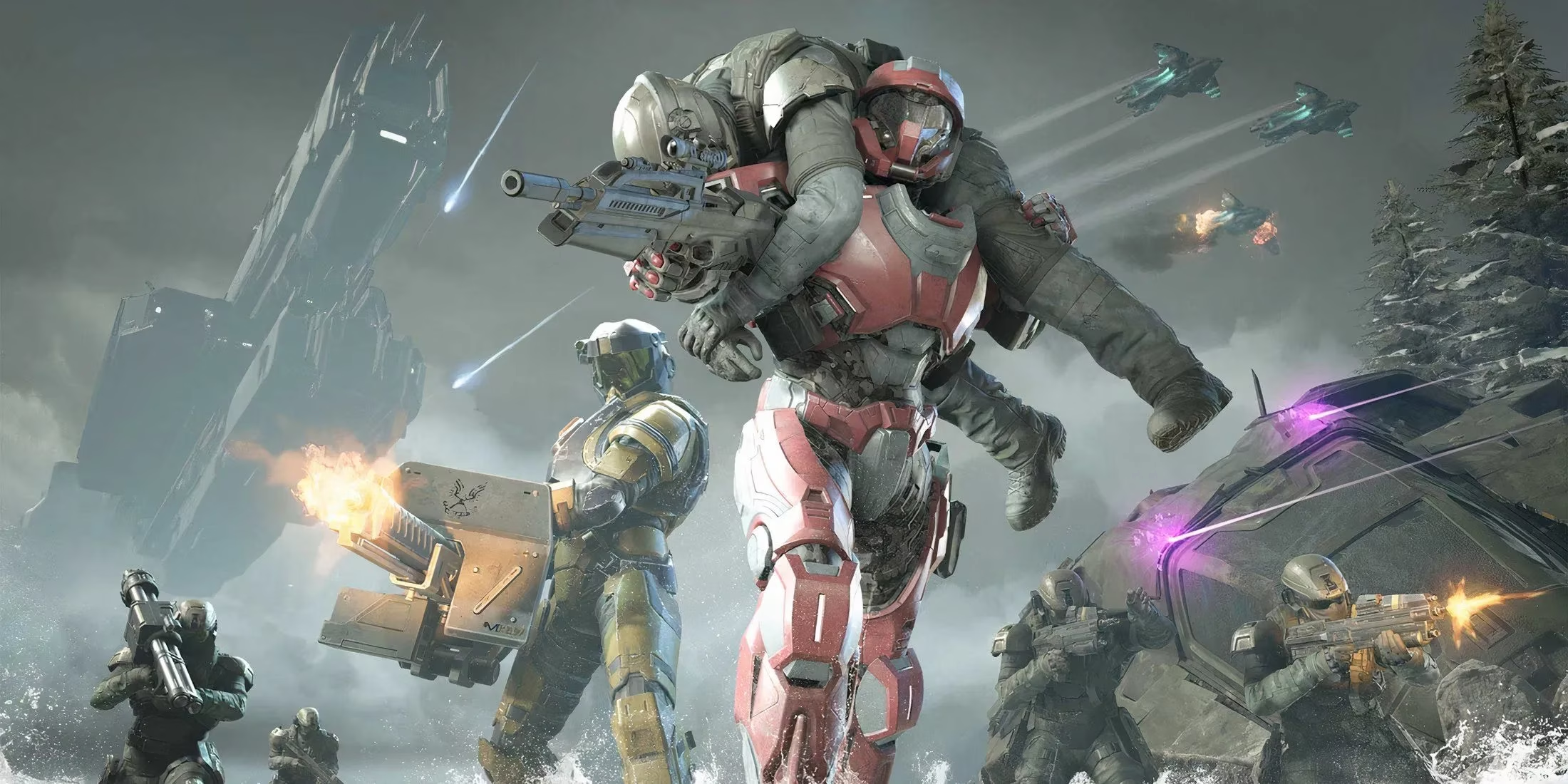
The Mutilator shotgun epitomizes this resurgence—a Banished-themed monstrosity with a gravity hammer bolted beneath its barrel. Leaked years ago but only now officially acknowledged, it’s scheduled for Summer 2025’s update. This aligns with Halo Studios’ new cadence: introducing radical sandbox items like the MA5K Avenger or Fuel Rod SPNKR in each operation’s opening act. What fascinates me is the timing. Teasing summer content before spring’s Frontlines even launches feels like watching a chef prepare dessert while the appetizer simmers—an uncharacteristic rush that suggests deeper currents.
Consider Xbox’s seismic strategy shift. With Phil Spencer openly discussing first-party games migrating to PlayStation and Nintendo, Halo Infinite’s summer update window (likely May) suspiciously overlaps with the Switch 2’s rumored debut. Imagine this flagship franchise leaping platforms after four years of Xbox/PC exclusivity. Forging that bridge during a major update would be poetic—a chance to redeem Infinite’s rocky launch for Nintendo’s audience. Yet it’s not guaranteed. Could this just be a gambit to retain players amid slowing developer content? Or a genuine expansion into what Spencer called "the ecosystem of gaming"?
Current State of Play (Late 2025)
-
Multiplayer Scale: 70+ maps, billions of customization combos, and Forge creations rivaling community-driven galaxies 🌌
-
Player Sentiment: Steam ratings hover at 69% (17.9K reviews), with real-time peaks around 5,000 players—a fragile recovery
-
Campaign Innovations: Open-world Zeta Halo exploration with squad-based UNSC rescues and dynamic weather systems
Halo Infinite’s journey mirrors a damaged starship limping back to port only to retrofit for deeper voyages. Its cross-platform potential? That’s the gravitational anomaly pulling everything into question. If Microsoft dismantles exclusivity walls, does Halo become a universal language—or risk dilution? Perhaps Infinite’s true legacy won’t be its rocky launch, but how it redefined borders when nobody expected a phoenix to migrate mid-flight.
Market data is sourced from Newzoo, a leading authority in global games and esports analytics. Newzoo’s recent reports on cross-platform gaming trends underscore how flagship titles like Halo Infinite are increasingly leveraging multi-device accessibility to expand player bases and drive engagement, especially as industry giants reconsider exclusivity in favor of ecosystem growth.
Comments