Halo Infinite review highlights emotional campaign highs and evolving multiplayer, cementing its place in the legendary Halo franchise.
Master Chief’s boots have barely gathered dust on Zeta Halo since 2021, but the game itself has been on quite the journey—trundling from a content-starved launch into something more settled, if still imperfect, by 2026. Five years on, Halo Infinite remains the most recent mainline entry in this legendary franchise, and it’s where both campaign diehards and multiplayer regulars continue to congregate. The question that still echoes through every Spartan locker room, though, is simple: is it really worth your time anymore? Buckle up, buddy—we’re about to break it all down.
The Campaign: Emotional Highs, Structural Lows
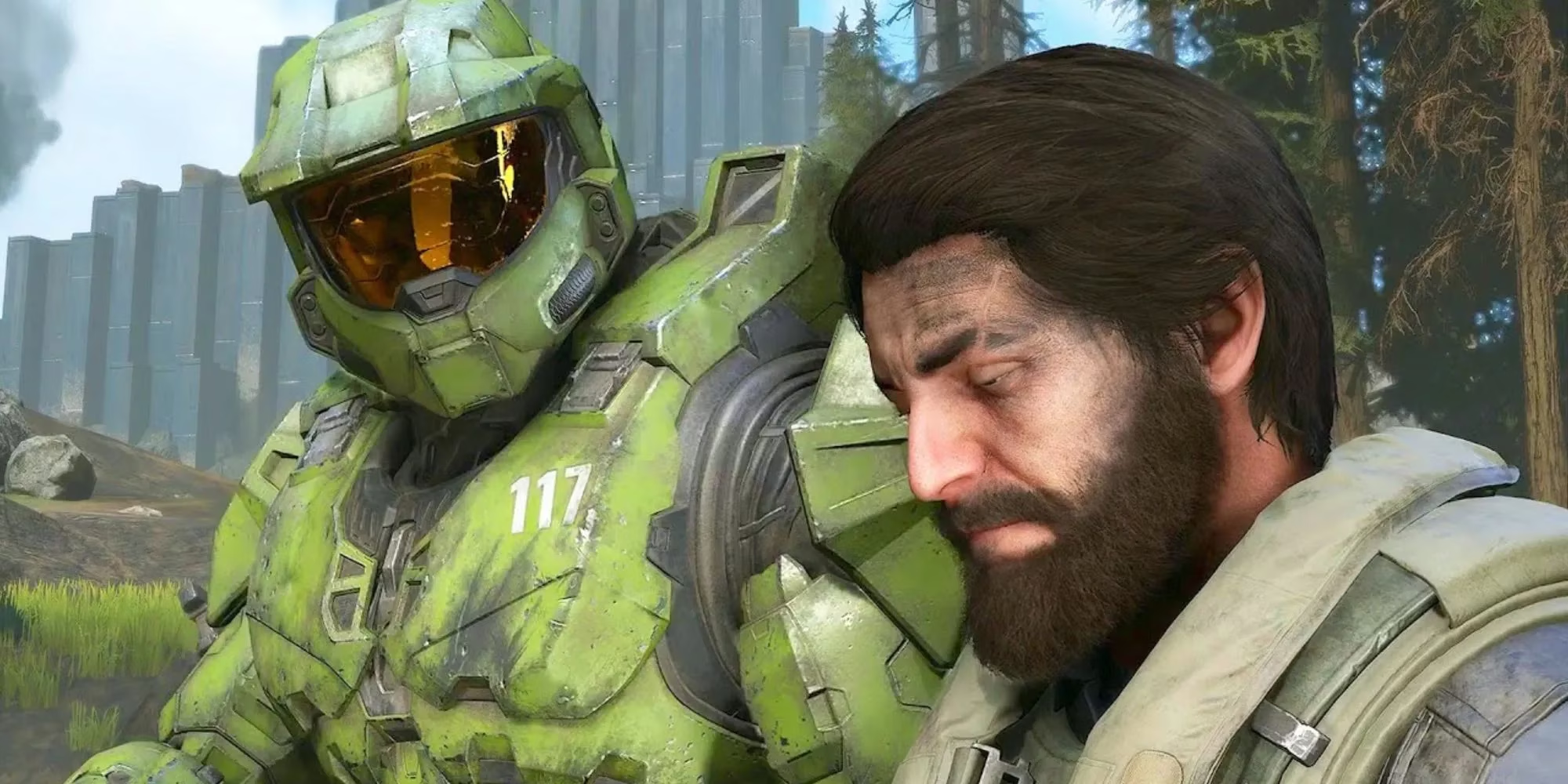
Let’s be real—the campaign in Halo Infinite is the kind of story that grabs you by the chest plate and doesn’t let go. When Jade King reviewed it back at launch, she called it “the most emotionally resonant Halo has ever been,” and that sentiment has only deepened with time. The relationship between Chief and his new pilot friend, Fernando Esparza, adds a layer of vulnerability that the series rarely explored before. Pair that with “fantastic and experimental” gunplay and movement that feels like a graceful fusion of classic Halo weight and modern zip, and you’ve got a recipe for some genuinely memorable firefights.
But here’s the kicker—the open-world structure, while initially liberating, can turn into a bit of a drag. The level design tends to loop back on itself, making missions feel samey after a while. That big, beautiful Zeta Halo ring starts to feel like just a bunch of repeated Forerunner hallways and Banished outposts. It’s a shame, really, because the narrative highs are so good that you wish the environment could keep up. If you’re the type who loves soaking up Halo lore and cinematic moments, this campaign will still hit like a gravity hammer. Just don’t expect the wild biome variety older games spoiled us with.
Also worth noting—343 Industries initially teased single-player expansions, but instead we got story morsels woven into multiplayer seasons. It’s not the grand continuation some hoped for, but at least the base campaign is complete, and online co-op finally landed, making that 11-hour average playthrough (or 27 hours for the completionists among us) a co-op blast.

Multiplayer: A Slow-Burn Bromance
Oh, the multiplayer. Bless its heart, it took a while to find its footing. Back in 2021, it launched as a solid foundation—crisp gunplay, a sandbox that felt both fresh and nostalgic, and that trademark Halo dance of shield-stripping and grenade banking. But the “frankly glacial cadence” of new content drops from 343 Industries was maddening. It was like a Spartan fresh out of cryosleep—groggy, stumbling, but with the potential to rumble.
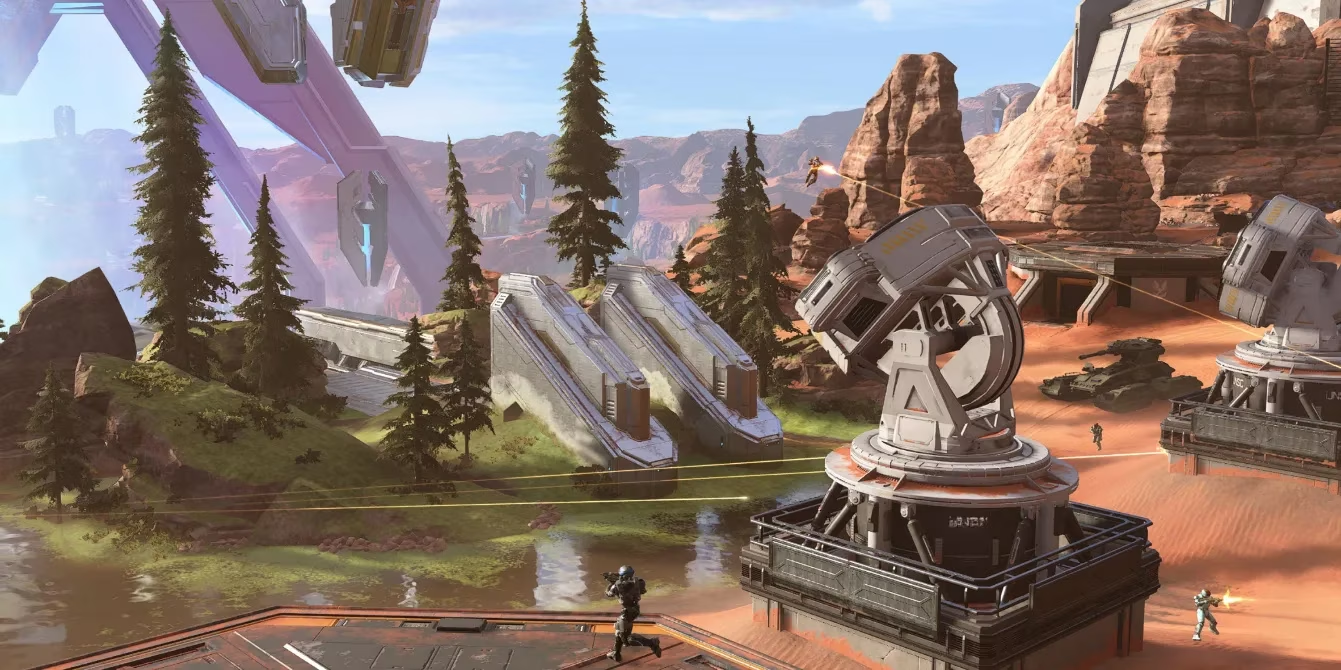
Fast forward to 2026, and things have picked up considerably. Seasons roll out with more regularity now, each bringing new maps (remember the Oasis map?), modes, and Battle Passes. There’s a steady rhythm—not exactly a flood of content, but enough to keep the dedicated player base checking in every few months. The core loop remains fantastic though; that gunplay is still the main reason you’ll find yourself grinning at 2 a.m. and thinking, “Just one more match.” The free-to-play model means there’s always a healthy population, even if the live-service incentives aren’t always the most dazzling.
But don’t get me wrong—if you’re expecting a Fortnite-level content machine, you’ll be disappointed. It’s more of a trusty Warthog than a sparrow: reliable, fun for a ride, but don’t expect a new paint job every week. Still, there’s something comforting about that.
Time Investment: How Long to 100%?
Time is the real currency in live-service games, and Halo Infinite respects it—mostly. The campaign, as mentioned, will take you around 11 hours if you stick to the main path. Want to hunt down every skull, Spartan core, and audio log? That’ll push you closer to 27 hours. For an FPS, that’s nothing to sniff at.
Multiplayer is a different beast. Each season brings a Battle Pass—both a Premium (paid) one and a Free track that gives you about half the goodies. Climbing to level 100 used to be a grind that would make a super-soldier weep; these days it’s far more manageable, but you’re still looking at around ten hours or more per pass. If you’re the type who wants every cosmetic, expect a part-time job’s worth of commitment spread across the year. Casually dipping in for new maps or events, though? That’ll only cost you a few hours every couple of months. The game is perfectly content to let you drift in and out. There’s a kind of low-pressure charm in that.
The Cost of Being a Spartan
Money talk, friend. First off, if you’re a Game Pass subscriber, Halo Infinite is free. That makes the campaign an absolute no-brainer for any fan. Sure, you’re paying Microsoft monthly, but why not partake? If you buy the game outright, it retails for $60 but frequently goes on sale for as low as $30—a steal considering the campaign alone.
Then there are the Premium Battle Passes. Every several months, a new one drops for a standard $10 per season. By 2026, you could be looking at a fair few of them, but remember: you are under zero obligation to buy a single one to enjoy multiplayer. They add cosmetics for your Spartan—some cool, most kind of “meh.” The campaign doesn’t need them at all. So your wallet can stay comfortably stowed unless you’re a fashion-conscious super-soldier.

What Fans Say in 2026
Opinions have matured, but the core split remains. Branden Lizardi, a voice from earlier days, might still say this: “Infinite is by no means the best Halo, and its stray from more linear design… is something I hope they don’t maintain.” But lore fans and casual players? They’ll eat up the narrative and cinematics. Amanda Hurych’s take—“The campaign is absolutely worth it… the gunplay is incredibly satisfying”—still rings true, though she’d probably add that the live-service model has only just begun to feel decent.
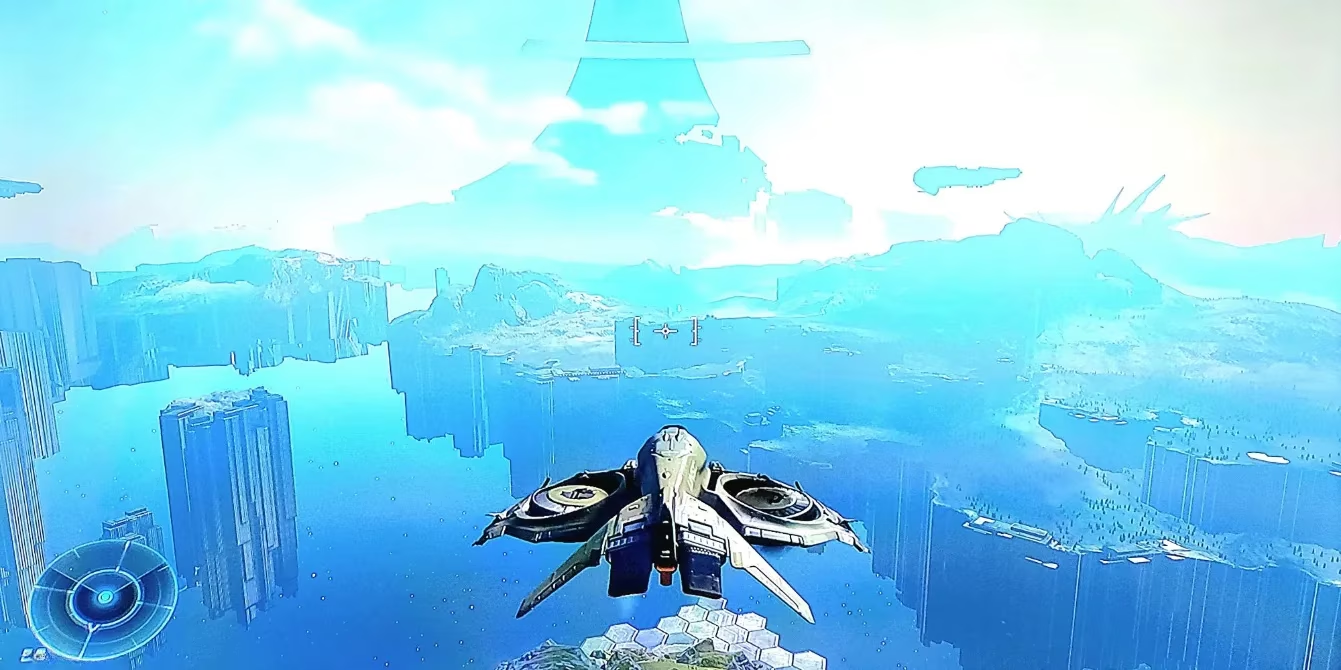
In 2026, the community hums with a resigned affection. The multiplayer sandbox, especially when you’re zipping around in a Wasp and soaking in that Zeta Halo skybox, can be magical. The campaign’s emotional beats stay with you. But everyone wonders what could have been if those updates had arrived faster, if the world had felt more diverse. It’s a game that settled for “pretty good” instead of “legendary.”
Final Verdict: Is It Worth It?
Here’s the thing: Halo Infinite in 2026 is like that old comfy battle rifle you can’t quite throw away. The campaign is a must-experience for the story alone, and the multiplayer, now better supported, delivers the kind of gunplay that’ll yank you back every time. The open-world sandbox, while repetitive in structure, gives you a degree of freedom that classics never offered. If you’ve got Game Pass, there’s no reason to skip it. If you’re buying on sale, the campaign alone covers the cost.
Just go in with the right expectations. This isn’t a game that’s going to blow your mind with an avalanche of new content every month. It’s a slow-burn companion—one that’s learned to waltz rather than sprint. And sometimes, that’s exactly what a Spartan needs.
Comments