Halo Infinite Forge mode's beta launch brought scalable objects and scriptable AI, fueling community-created maps and promising future PvE encounters.
When Halo Infinite's Forge mode launched as a beta on November 8, 2022, it signaled a new chapter for one of the series' most beloved creative tools. 343 Industries had spent considerable time answering community questions ahead of the release, and those answers revealed an ambitious vision that extended far beyond simple map editing. Over the years since, that vision has continued to unfold, shaping Forge into a deeper and more flexible experience.
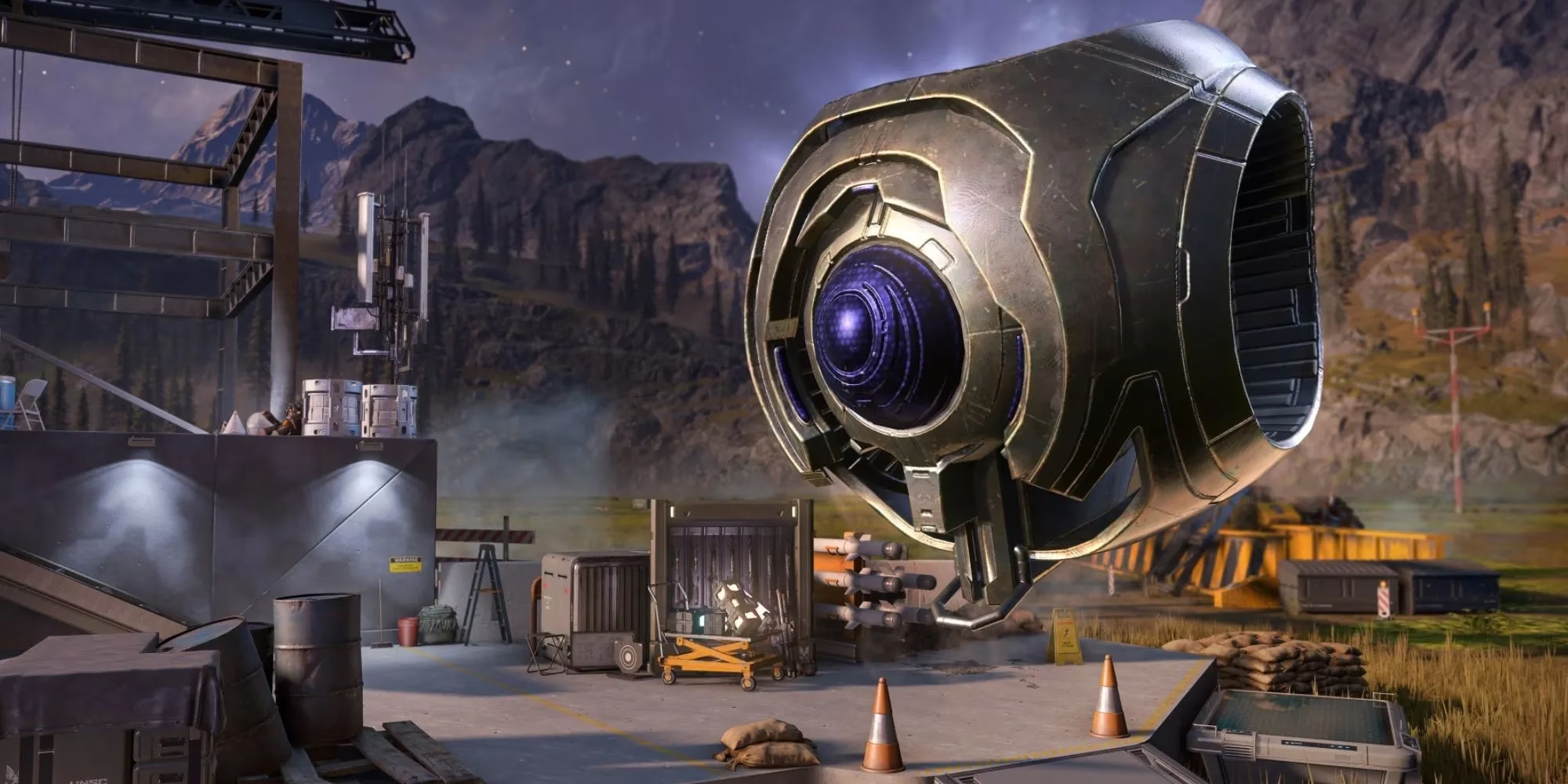
🛠️ The Foundation of Infinite's Forge
Forge had come a long way since its introduction in Halo 3. What began as a way to tweak weapon spawns on default maps gradually evolved into dedicated sandbox maps. Infinite's iteration took another major leap by introducing scalable objects and scriptable AI, giving creators unprecedented control over their environments. The potential, as the developers described it, had become endless.
A matchmaking playlist based entirely on community-created maps was part of the plan. However, 343 Industries was careful not to rush that process. The studio intended to wait an appropriate amount of time after Forge's release so that high-quality creations could filter through naturally. Some standout designs might eventually earn a place in the Halo Championship Series rotation, further blurring the line between official and community-made content.
👥 Collaboration and Early Technical Limits
Eight players could participate in a Forge session at the same time. A last-minute bug, however, required every player to enter the game simultaneously in order to build together. The team considered fixing this issue a top priority, acknowledging that smooth cooperative editing was crucial for larger creative projects.
Another notable limitation in the initial release involved campaign AI. Players would not be able to integrate internal campaign AI into Forge at launch. Despite that restriction, there was genuine interest from the developers in exploring this avenue further. For creators interested in building PvE experiences, the future possibility of AI-driven encounters remained especially exciting.
🧱 Asset Factions and the Long Road Ahead
The initial asset library focused primarily on UNSC and Forerunner designs. Work was already underway to finish the Forerunner asset pack, after which the team planned to move on to Banished assets. Once those were completed, factions like the Covenant would be considered for future additions.
| Asset Origin | Initial Availability | Planned Expansion |
|---|---|---|
| UNSC | Included at beta launch | Continued refinement |
| Forerunner | In final stages at launch | Asset pack completion |
| Banished | Not yet available | Next priority after Forerunner |
| Covenant | Not yet available | Considered for future addition |
This structured approach revealed a clear priority system, with each faction receiving attention in waves rather than all at once.
🎮 From Map Editor to Game Engine
One of the most revealing aspects of the launch was the philosophy behind Forge's direction. The decision to turn Forge from a map editor into a broader game engine had been made early in development. The team drew inspiration from a quote by Tom French:
"If you give them a toy, they'll make toys. If you give them a tool, they'll make experiences."
That guiding principle helped explain why so many advanced systems were being included or planned.
The beta version was just the beginning. Several features were already slated for the near future, and their scope pointed toward even greater experimentation. Those planned additions included:
-
🗺️ The ability to edit developer maps
-
🎲 A mini-game game mode
-
🤖 AI spawning tools
-
💧 The ability to add water to maps
Each of these features represented a step away from traditional map editing and toward a more complete creative toolkit. Water, for instance, extended environmental storytelling possibilities, while AI spawning tools promised to unlock complex scenario design.
🌐 The 2026 Landscape
By 2026, many of the features that were only promises during the beta have become integrated parts of the Forge experience. The evolution from a simple editor to a full-featured creative platform has allowed the community to produce everything from competitive arena layouts to narrative-driven PvE missions. The initial limitations around simultaneous entry and campaign AI have been addressed over time, reflecting the studio's stated priorities.
Forge's impact now extends well beyond casual map creation. Community-made maps regularly appear in matchmaking, and some have entered competitive rotations. The decision to treat Forge as a game engine rather than a toy has proven influential, encouraging creators to build experiences rather than isolated objects. What began as a beta launch in late 2022 has matured into one of Halo Infinite's defining features, continuing to shape how players interact with the game's universe.
Comments