DanBrindleyArt rebuilt Minecraft's Nether in Halo Infinite Forge, capturing blocky voxel charm in a sci-fi sandbox.
In the crowded world of user-generated content, some crossovers feel like a dare. One Halo Infinite player took that dare and rebuilt Minecraft’s Nether dimension inside Forge mode. The project came from DanBrindleyArt, a creator whose early Forge experiments turned heads when footage began circulating. In 2026, with Forge now a mature pillar of Halo Infinite, the Nether build still reads like a fascinating time capsule. It captures the moment when blocky voxel logic collided with a sci-fi sandbox and somehow produced a cavern that felt instantly recognizable.
Why the Nether build caught attention
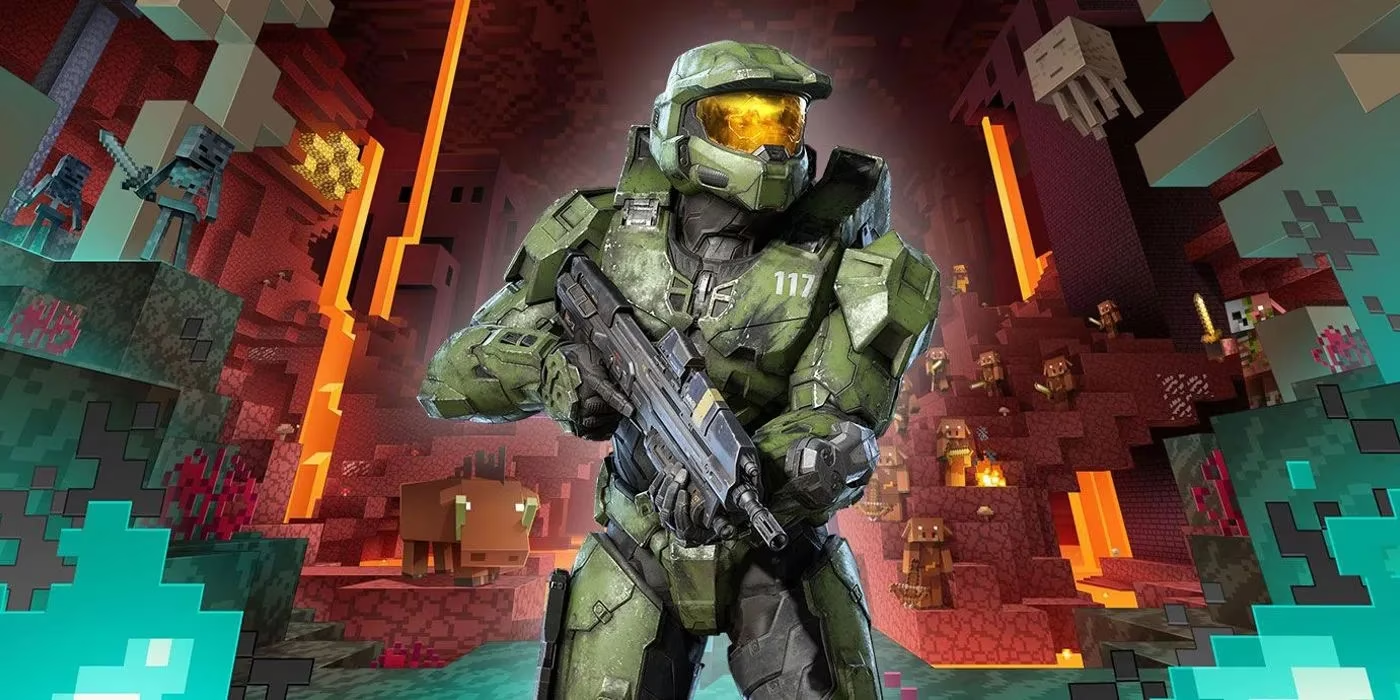
The video walked viewers through a small cavern that looked as if it had been pulled straight out of Minecraft. The scene included a Ghast, the floating white mob that has haunted Nether expeditions for years, and it leaned hard into the blocky voxel style that Mojang’s block-building game is known for. That detail mattered. Halo generally favors higher-resolution textures, smooth surfaces, and detailed sci-fi architecture. Recreating a voxel look inside Forge meant fighting the engine’s natural visual language, not simply copying it.
DanBrindleyArt reportedly built the Nether scene as a second Minecraft project after an earlier recreation of one of the game’s villages. The two projects together suggested a clear interest in translating Minecraft’s modular charm into Halo Infinite’s creative toolkit. The Nether build was not an official crossover, and it did not need to be. It worked because it understood the source material: dark caverns, blocky terrain, eerie lighting, and a single recognizable enemy that sells the illusion.
From leak to legacy: how the build got out
The context around the build is almost as interesting as the build itself. Forge mode had not yet been released to everyone when the footage appeared. A chosen few had early access, while an in-development version was unintentionally accessible to players in Halo Infinite’s campaign co-op beta. That access led to multiple leaks, with players sharing experiments from a mode that was still rough around the edges. One player even remade Mario Kart inside Forge. DanBrindleyArt’s Minecraft village and Nether recreations were part of that same wave of early creativity.
At the time, a Forge beta was expected to launch in September, and a full release date had not been announced. In 2026, that timeline is history. Forge has been available for years, and the community has built everything from remakes to original competitive arenas. Looking back at the Nether build makes the early leak era feel more impressive. The creator was working with an unfinished version of the toolset, yet the result still communicated Minecraft immediately.
Halo and Minecraft have a history of crossing over
The crossover energy did not begin with Forge. An official Halo Mash-Up Pack for Minecraft released years earlier, bringing maps based on Halo multiplayer maps and campaign locations, re-textured weapons and items, character and mob skins, and more. It was updated over time to introduce characters from Halo 5: Guardians and Halo Infinite. Fans also made their own crossovers, including a custom Halo ring skybox for Minecraft. The Forge Nether build is the mirror image of that exchange: this time, Halo hosted a piece of Minecraft.
| Element | Why it stands out |
|---|---|
| Voxel illusion | Forge normally favors smooth sci-fi geometry, so the blocky look required deliberate restraint |
| Ghast inclusion | A single mob can carry huge recognition value for Minecraft players |
| Cavern scale | The small space keeps the scene readable and focused |
| Early-tool limitation | The build appeared during leaks, before the full Forge feature set was available |
| Sequel effect | The earlier village build showed this was not a one-off experiment |
What 2026 creators can learn from it
For players browsing Forge maps in 2026, the Nether recreation is a useful lesson in silhouette and suggestion. A crossover does not need a full recreation of every biome, mob, and mechanic. It needs a few strong signals that the audience can recognize at a glance. The blocky cavern did that. The Ghast did that. The dark, enclosed space did that. Creators who want to build crossovers today can borrow the same philosophy: start with a recognizable shape, use lighting to set mood, repeat modular forms, and let one iconic detail do a lot of work.
-
🧱 Build with a clear silhouette before adding detail.
-
🕯️ Use lighting to sell atmosphere, especially in cave-like spaces.
-
👾 Add one recognizable character or mob when it reinforces the theme.
-
🧩 Keep the scale manageable so the reference stays readable.
-
🎮 Playtest from a player’s viewpoint, not just an editor’s overhead view.
The bigger picture
The Nether build is not the most complex Forge map ever made, and it does not need to be. Its value comes from timing and clarity. It showed that Halo Infinite’s creative tools could host entirely different visual identities, even before the full mode was in everyone’s hands. In 2026, Forge is a content engine, and crossovers are common. Still, this early Minecraft Nether recreation remains a charming example of fans filling the gap between two beloved games with nothing more than patience, imagination, and a very blocky cavern.
Comments