Halo Infinite's Forge beta launched with the Winter Update, giving all players free access to create, test, and share maps.
When Halo Infinite’s Forge mode entered its beta phase through the Winter Update, it arrived almost a full year after the game’s launch. 343 Industries packaged the release with a lengthy FAQ that answered community questions and set expectations. The beta tag was not a warning that access would be restricted; instead, it signaled that the toolset was still evolving. Every Halo Infinite player could use Forge from November 8 as part of a free update. More importantly, 343 Industries confirmed that the mode would not be removed later and that player-made content would not vanish. That promise gave creators confidence to invest time in ambitious projects.
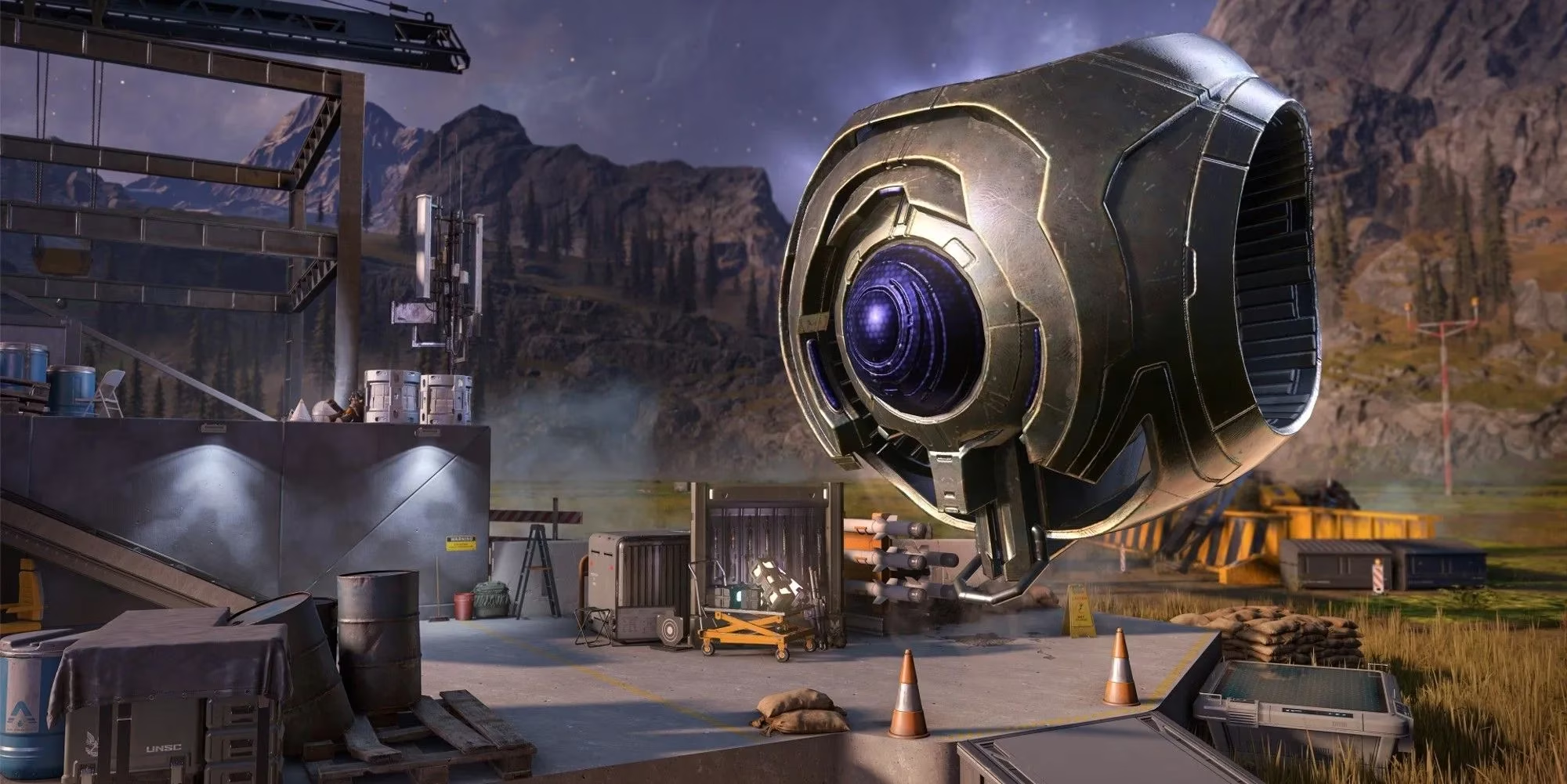
A Beta With Full Community Access
The distinction between a beta and a limited trial mattered. Forge was technically unfinished, but it was not gated behind invitations, purchases, or temporary events. The entire player base could open the editor, experiment with geometry, and publish creations. In the years since, this open approach has become one of Halo Infinite’s most enduring strengths. The 2022 beta laid the groundwork for a creation community that treated Forge as a platform rather than a side mode. Even in 2026, the impact of that decision is visible in the variety of maps, modes, and social experiences that trace their lineage to the Winter Update.
Launch Quirks and the Eight-Player Session Bug
The FAQ also outlined a few limitations. Although Forge was designed to support eight players in a session, everyone had to join at the beginning. A bug prevented late arrivals, so creators could not start a session and invite others afterward. 343 Industries described this as a temporary issue that would hopefully be fixed soon. The limitation did not stop small groups from testing maps, but it added friction to larger playtests. For a mode built around collaboration, that bug was notable. It showed that Forge’s beta was not just about editing tools; it was also about the social infrastructure around them.
From Community Canvas to Matchmaking Rotation
Another major question concerned matchmaking. 343 Industries confirmed that some Forge creations would eventually enter Halo Infinite’s map rotations. However, that process was not automatic. Maps needed to be tested and approved by the team before they could appear in official playlists. Since the first wave of creations would only begin arriving after the beta went live, even the best day-one maps were still several steps away from a larger Halo stage. This cautious approach protected matchmaking quality while leaving the door open for community-made content to become official. By 2026, that pipeline has become a familiar part of Halo Infinite’s ecosystem, even if only a small fraction of creations ever make the jump.
Early Creations Showed the Depth of the Toolset
Even before the beta opened to everyone, creators who gained early access demonstrated how deep Halo Infinite’s Forge had become. Their projects included a recreation of The Upside Down from Stranger Things and an arcade version of Halo Infinite inside Halo Infinite. These examples were more than novelties. They proved that the editor could support custom geometry, scripting, and layered game logic in ways that previous Forge modes could not. The comparison to earlier Halo games was unavoidable. Forge had grown from a map editor into a broader creation engine.
Why the Beta Still Matters in 2026
The 2022 beta was a turning point. It gave players a shared space to build, test, and share ideas. It also established rules that still shape the community: creations are persistent, access is open, and official recognition is possible but earned through testing. In 2026, Halo Infinite’s Forge community continues to benefit from those early decisions. The beta’s rough edges, such as the session bug and the slow matchmaking pipeline, are remembered as growing pains rather than dealbreakers. What remains is a robust creative toolset and a player base that treats it as an essential part of the game. For a mode that arrived almost a year after launch, Forge has more than justified the wait.
Comments