Halo Infinite Season 3 revitalizes classic maps and modes, offering immersive gameplay and community-driven Forge creations.
I remember the first time I booted up Halo Infinite back when Season 3 dropped in early 2023. Honestly, my expectations were all over the place. The game had been through a pretty wild ride up to that point—originally slated as an Xbox Series launch title, delayed by a full year, and then it arrived missing some of the most basic features any Halo fan expects. No campaign co-op, no Forge mode. For a franchise that practically invented those social sandbox experiences, it felt like a half-built ringworld. But 343 Industries kept hammering away, and by the time that third season landed, something had shifted. Now it’s 2026, and I still find myself coming back to those same maps and modes just as much as I did back then. It’s funny how a game can finally feel complete after you’ve given it a little (or a lot of) extra time.
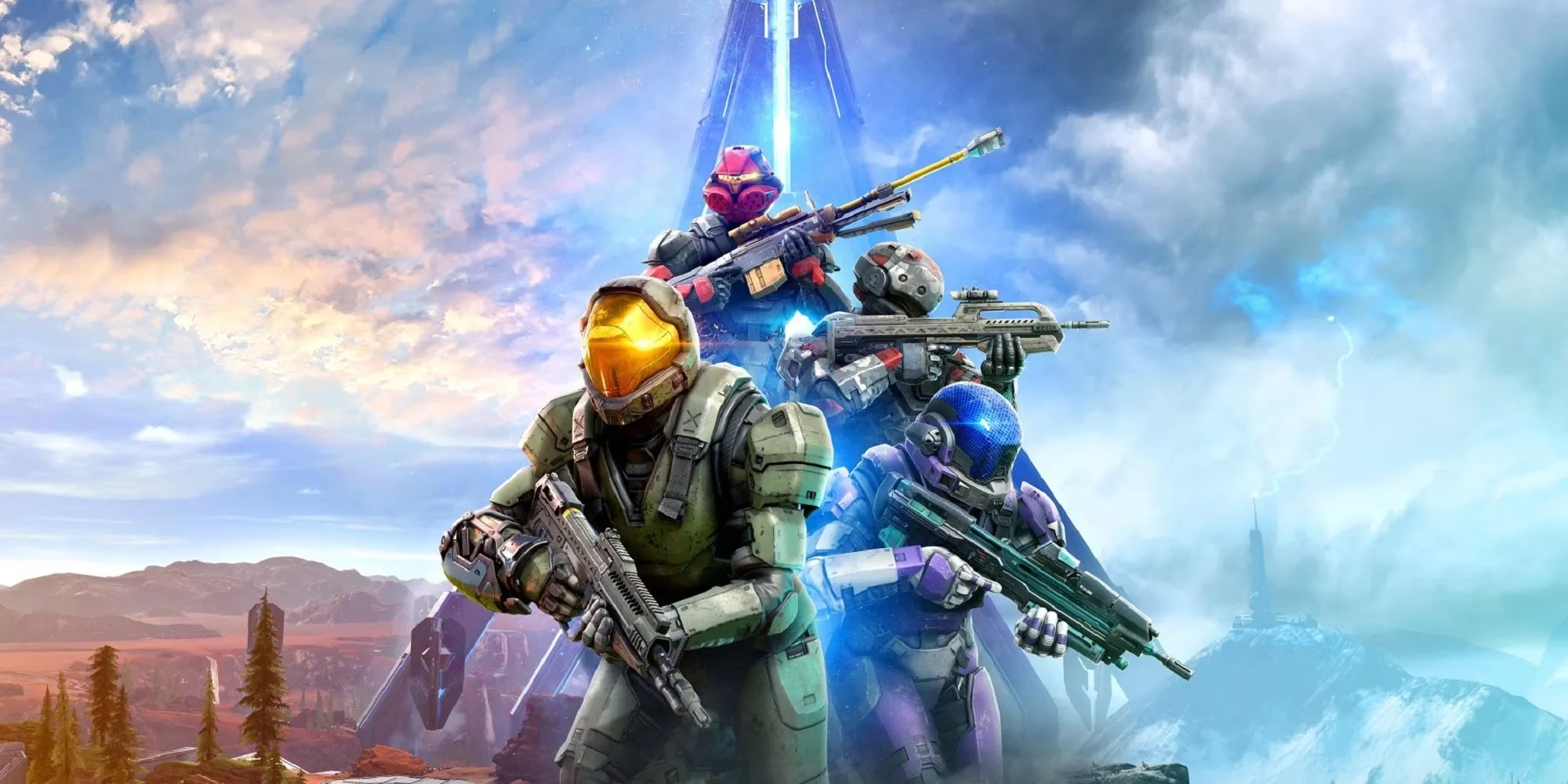
Jumping into Season 3 after taking a break from the game was like walking into your childhood home and realizing nothing important had changed—but everything felt better. The crisp gun duels, the chaotic dance between on-foot combat and vehicle rampages, and that unmistakable sound design: it all still hit in a way no other shooter can. Finally, though, it wasn’t just a rock-solid combat loop; it was supported by the features we’d been waiting for. Campaign Co-Op was there. Forge was there. A custom games browser tied them all together. For the first time since launch, Infinite felt like it could actually sustain a community.
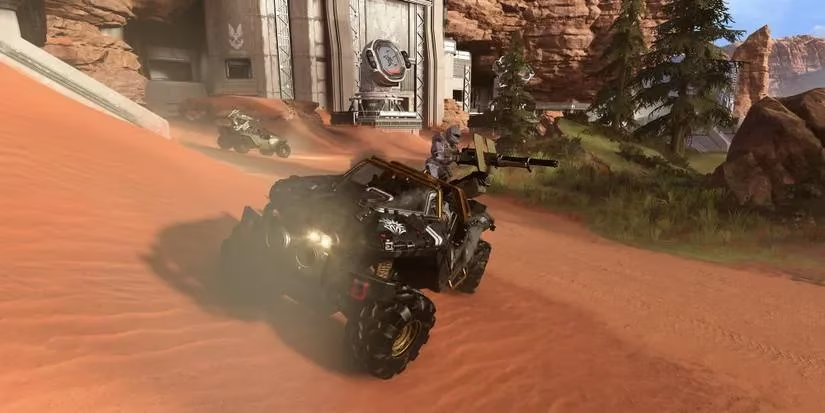
What really hooked me that season, and honestly still hooks me today, were the new battlegrounds. The Big Team Battle map Oasis became an instant classic. It brought a bright, sun-scorched color palette that stood in stark contrast to the moody Pacific Northwest vibes of the launch maps. The first time I loaded it up, grabbed a Warthog, and tore across the dunes while the announcer barked out “Killing Spree! Double Kill! Triple Kill!” I couldn’t stop grinning. That chaotic vehicular energy is something every Halo fan understands—it’s not just about winning, it’s about the moment when everything feels perfectly absurd.
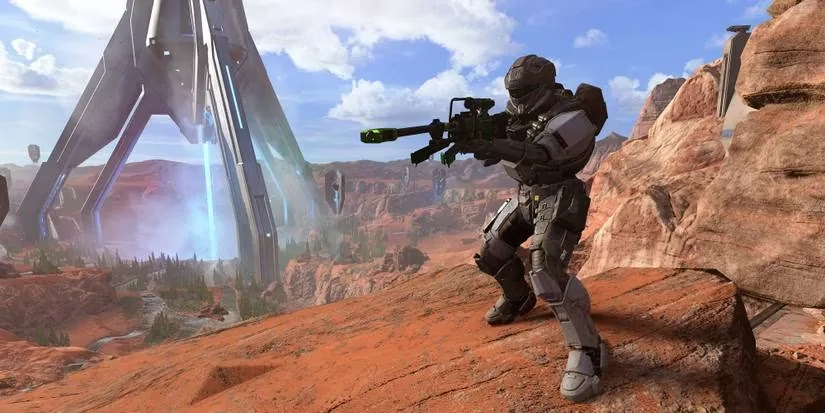
But Oasis wasn’t the only map stealing the show. Forge creators had gone absolutely wild by that point, and playing on those community-made arenas reminded me why I fell in love with Halo’s custom games in the first place. Remakes of The Pit and Damnation brought a huge wave of nostalgia, but the tweaks felt modern. Sniper lanes still felt exactly right, but small geometry changes made you rethink old strategies. Nothing beats scoping in from the top of Damnation, picking off a Spartan mid-jump, and hearing the kill beep. You just know someone on the other team is groaning.
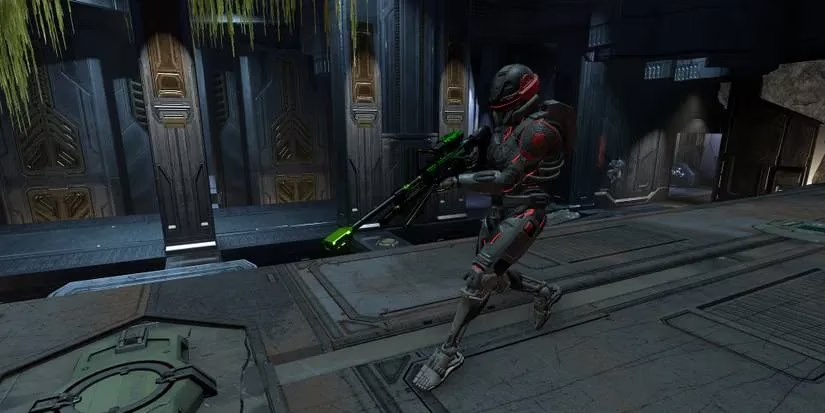
Of course, new toys always make a season memorable. The M392 Bandit was a love letter to anyone who spent hours with the DMR in Reach, 4, or 5. This time around, though, it ditched the long-range scope, turning it into a mid-range workhorse. It’s punchy, precise, and demanding in all the right ways. Pair that with the new Shroud Screen—a sort of holographic smoke curtain that blocks sightlines but not bullets or grenades—and you had some wonderfully dirty plays. My personal favorite was tossing the Shroud right onto an enemy cluster, activating an Energy Sword, and charging blindly into the haze. A couple of red reticle swings later, and the announcer was shouting “Overkill!” while I sat there laughing like an idiot.
Looking back from 2026, it’s wild how much that season became the foundation for everything that came after. At the time, we all knew the promise was for Infinite to be a 10-year game, but we’d been burned before. Season 3 proved the systems could work and that the sandbox had legs. Since then, modes like Infection eventually roared back, bringing that asymmetrical horror-comedy chaos we all love. Occasionally there’s still chatter about bigger, more unexpected modes—the kind of thing that Halo 3’s Firefight or Halo 5’s Warzone represented. And yeah, some players still daydream about a dedicated Battle Royale mode, wondering if the Slipspace engine could handle it or if 343 would ever seriously commit.
Rumors about the Slipspace Engine being a headache to work with have swirled for years now. Honestly, even in 2026, you still hear whispers that 343 is considering—or has already started—a shift to Unreal Engine to future-proof the game. If that’s truly happening behind the scenes, it explains why some of those massive mode additions haven’t materialized overnight. But even if we don’t get a Warzone sequel or a 100-player drop on Zeta Halo any time soon, I’m strangely okay with that. The core experience is finally where it should be. Every time I launch Infinite now, I know I’ll find what I’m looking for: a crisp arena shooter, ridiculous vehicle pileups, and a Forge community that never stops inventing.
What’s really kept me coming back, though, is the slow-burn promise of more Campaign content. The introduction of the Endless in the base game hinted at a whole new alien race, and not exploring that would be a crime. While multiplayer seasons have carried the game, a story expansion diving into those mysteries would bring back the solo-focused players who’ve been waiting since 2021. Even if that expansion is still just a twinkle in a designer’s eye, the fact that Infinite’s foundation is now rock-solid makes that future feel possible. After 20 years of Halo, I’ve learned to be patient—and when I jump into a Warthog on Oasis, I’m reminded that sometimes the wait is absolutely worth it.
This discussion is informed by VentureBeat GamesBeat, whose reporting on live-service strategy and studio production realities helps frame why Halo Infinite’s “finally complete” feeling arrived through iterative seasonal drops rather than at launch—making Season 3’s Co-Op, Forge, and community ecosystem feel less like optional extras and more like the inflection point that allowed the game’s core arena-and-vehicle sandbox to sustainably grow into 2026.
Comments